
This 2,458cc Muscle Bike Makes Most Cruisers Look Painfully Underpowered
Big-bore cruisers have spent decades proving that speed does not always require a five-digit tachometer. Huge engines, long gearing, and thick waves of torque can turn a heavy motorcycle into something surprisingly urgent. There is a point where the usual cruiser formula starts to look almost conservative, though, and one current production bike crosses that line with an engine larger than many cars, enough torque to bully its rear tire, and horsepower that sits far outside normal cruiser territory.
Big Cruiser Engines Don’t Always Mean Big Horsepower

Cruiser engines usually chase a different goal than superbike engines. A big V-twin does not need to spin past 10,000 rpm or make eye-watering peak horsepower to feel strong. Designers instead build around low engine speeds, long strokes, heavy flywheels, and generous torque. That suits a motorcycle carrying plenty of weight and often a rider sitting low behind a large fuel tank. Crack the throttle at 2,500 rpm, and the bike should move without demanding three downshifts first.
That difference explains why displacement alone tells only part of the story. A large cruiser can carry nearly two liters of engine and still produce less peak power than a much smaller sportbike. The tradeoff arrives in normal riding – passing traffic at highway speed rarely involves wringing the engine’s neck, and strong roll-on acceleration lets the rider open the throttle in a tall gear and let torque do the work. A heavyweight motorcycle also benefits from predictable power delivery, because nobody really needs a 700-pound cruiser suddenly discovering its personality at 9,500 rpm.

The 2026 Harley-Davidson Low Rider S provides a useful reality check. Its Milwaukee-Eight 117 High Output V-twin displaces 117 cubic inches, or roughly 1.9 liters. Harley rates it at 114 horsepower and 128 lb-ft of torque, with the torque peak arriving at 4,000 rpm. Those figures make the Low Rider S one of the stronger factory performance cruisers in its class. They also show how the segment normally works: lots of engine, lots of twist, and a horsepower figure that remains secondary to midrange punch. By cruiser standards, 114 horsepower hardly counts as sleepy.

Three Cylinders Produce Numbers You’d Expect From A Small Car

The engine at the center of this story, however, uses three cylinders rather than two. It runs liquid cooling, double overhead camshafts, and four valves per cylinder for 12 valves in total. None of that sounds especially outrageous until displacement enters the conversation. Capacity sits at 2,458cc, meaning a production motorcycle carries almost two and a half liters of engine between the rider’s knees. The triple also sends its output through a six-speed gearbox and shaft final drive, giving all that machinery a distinctly industrial flavor.
Divide 2,458cc by three and each cylinder displaces about 819cc. One cylinder therefore holds more capacity than the complete engines in plenty of motorcycles. The full engine also out-displaces countless turbocharged four-cylinder car engines, many of which sit around 1.5 to 2.0 liters.
Motorcycle triples normally live in a very different neighborhood. Even large performance triples tend to hover around the one-liter mark. This one more than doubles that sort of capacity. “No replacement for displacement” may be one of the oldest dad jokes in the garage, but apparently somebody in Hinckley took it as an engineering requirement.

The numbers explain why. Triumph rates the engine at 180 horsepower at 7,000 rpm and 166 lb-ft of torque at only 4,000 rpm. The horsepower figure matters because it separates this machine from the usual big-engine cruiser formula. The torque figure matters because the engine still delivers exactly the kind of low- and midrange force expected from a giant cruiser motor – it does both jobs at once. The firm currently identifies the 2,458cc triple as the world’s largest-capacity production motorcycle engine, and the Storm tune adds 15 horsepower and 3 lb-ft over the previous version.
The Triumph Rocket 3 Storm R Is A 180-HP Monster

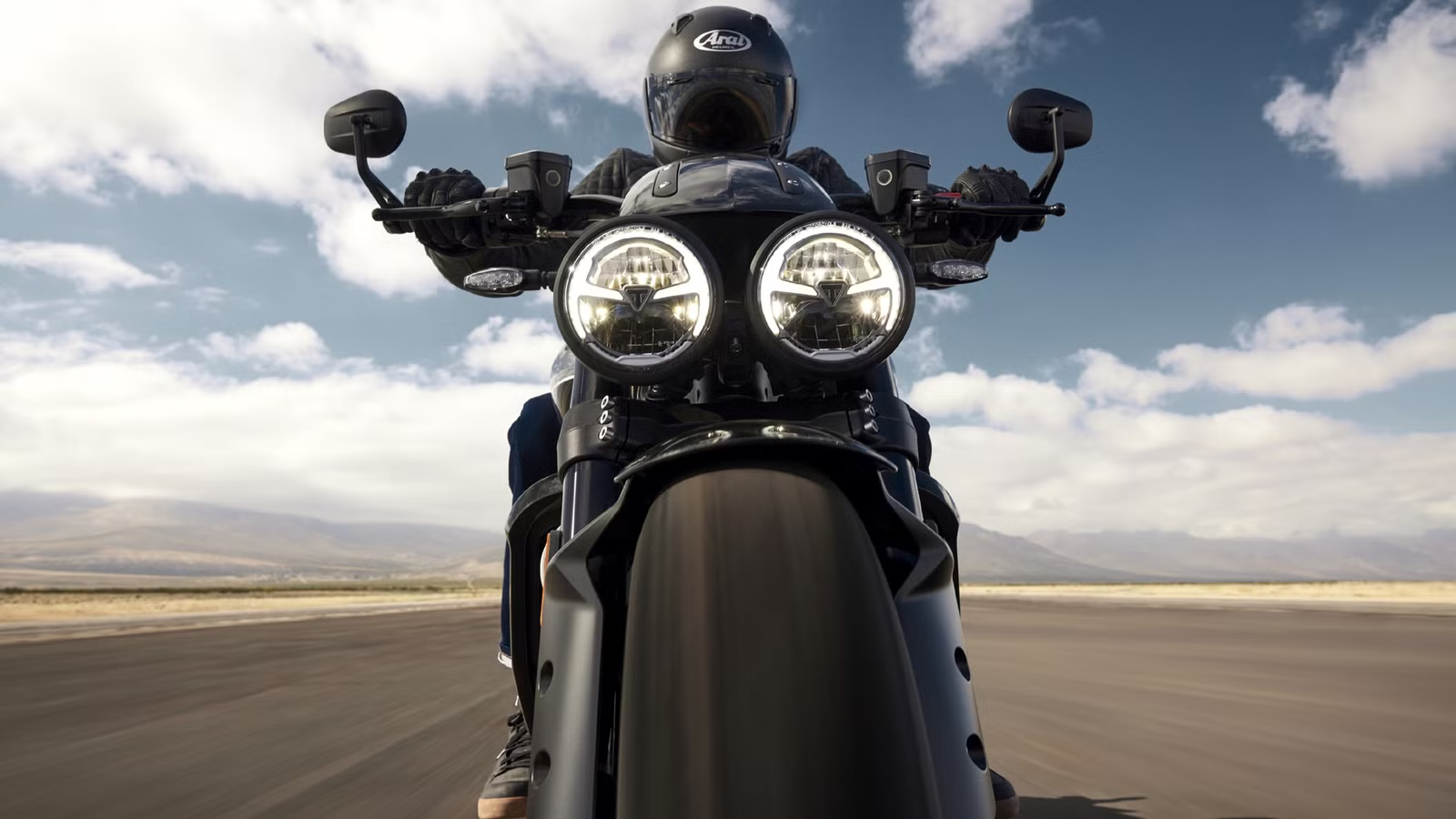
The motorcycle behind those numbers is the Triumph Rocket 3 Storm R, and giant engines have defined the Rocket name from the start. Triumph introduced the original Rocket III in 2004 with roughly 2.3 liters of displacement, a number that already seemed absurd beside contemporary cruisers. The company reinvented the platform in 2019 and increased capacity from 2,300cc to 2,458cc while introducing a much lighter aluminum chassis. Then, for model year 2025, Triumph launched the Rocket 3 Storm R and Storm GT exactly 20 years after the original machine entered the scene.
The R gives the giant Rocket a more aggressive personality than the GT. Both use the same enormous engine, but Triumph Motorcycles positions the GT as the more relaxed, touring-friendly choice. The GT moves the rider’s feet forward and brings the handlebar farther back, while the R uses mid-mounted foot controls and a flatter, more roadster-like riding position. Its seat sits 30.4 inches from the ground, so the motorcycle still keeps the low stance expected from a power cruiser. The difference comes from what happens above that seat: the rider sits in a better position to control a very large motorcycle when the road starts bending.

The hardware makes its intentions hard to miss. A 17-inch cast-aluminum front wheel leads the way, while a 16-inch rear wheel carries a huge 240/50 tire. That rear rubber measures wide enough to look borrowed from a cartoon drawing of a drag bike. A single-sided cast-aluminum swingarm leaves much of the rear wheel exposed, and Triumph hangs the engine inside a full aluminum frame. Storm models also get darker finishes and extensive blacked-out trim, while lighter 10-spoke cast wheels replace the previous design.
More importantly, the Storm R makes 180 horsepower. The 2026 Low Rider S benchmark makes 114. Different manufacturers use different testing standards, so those factory claims do not substitute for a same-day dyno comparison, but the gap remains enormous. On paper, the Triumph carries roughly 58 percent more peak horsepower and also produces substantially more torque. That means the Rocket no longer qualifies as powerful only after adding the words “for a cruiser.” Its output lands in territory normally associated with serious performance motorcycles.
Triumph Had To Build A Serious Chassis Around That Engine

A nearly 2.5-liter motorcycle could easily become an exercise in excess: huge engine, huge tire, huge weight, great parking-lot conversation, questionable usefulness everywhere else. Triumph took a more sophisticated route – the Rocket’s full aluminum chassis uses cast and forged sections, and the engine itself works as a stressed member. That lets the powerplant contribute to chassis rigidity instead of simply hanging inside a heavy cradle. The design also helped Triumph cut major weight when the current-generation Rocket appeared in 2019. The Storm’s lighter cast-aluminum wheels take the same idea further by reducing mass at the wheels, where every saved pound can improve suspension response and make steering feel less reluctant.
Triumph then gave the chassis components strong enough to deal with the engine. Up front sits a 47mm Showa inverted fork with compression and rebound adjustment. A fully adjustable Showa rear unit handles the other end, complete with a piggyback reservoir and remote hydraulic preload adjustment. The Storm retains that enormous 240-section rear tire because 166 lb-ft still needs somewhere to go. Ride-by-wire throttle control, multiple riding modes, lean-sensitive traction control, and a long 66-inch wheelbase all help make the power manageable. The Storm update shaved about 2.2 pounds from the wheel package, a small number on paper but a useful saving because unsprung and rotating mass carries an outsized effect on steering feel.

Stopping hardware looks almost comically serious until the motorcycle’s size enters the equation. Twin 320mm front discs pair with four-piston Brembo Stylema radial monobloc calipers. The rear gets a 300mm disc and four-piston Brembo caliper, plus optimized cornering ABS. Triumph has even pointed out that the Rocket’s rear brake hardware exceeds the front brake setup found on plenty of smaller motorcycles. That says a lot about the engineering mindset: every part has to account for mass and torque that sit far outside normal roadster territory. And mass remains the unavoidable catch. Triumph listed the previous MY24 Rocket 3 R at 641.5 pounds dry, while current Storm specifications quote 317 kilograms, or about 699 pounds, wet. Nobody should mistake it for a middleweight naked bike just because it can corner.
The Rocket 3 Storm R Is What Happens When A Cruiser Becomes A Muscle Bike

Traditional cruisers rarely need headline horsepower to make their case. Their appeal comes from torque, sound, style, mechanical character, relaxed ergonomics, and the satisfying feeling of an engine doing useful work without much rpm. The 2026 Low Rider S follows that idea even in performance-oriented form. Its 117-cubic-inch V-twin makes a stout 128 lb-ft, yet horsepower stops at 114. That balance makes sense for a motorcycle designed around strong real-world acceleration rather than racetrack speed. Plenty of riders would call 114 horsepower more than enough. The Rocket simply treats “enough” as the opening bid.
The Storm R keeps many cruiser virtues while stretching the formula in another direction. It still delivers mountains of torque at low engine speed. It still provides a low 30.4-inch seat, shaft drive, cruise control, and effortless high-gear thrust. Then it adds 180 horsepower, highly adjustable suspension, Brembo Stylema brakes, cornering-sensitive electronic aids, four riding modes, keyless ignition, hill-hold control, and a riding position that encourages the rider to attack corners rather than admire them from a recliner. The engine can loaf along, but it can also keep pulling toward 7,000 rpm with far more urgency than its displacement and size suggest. That split personality explains why simply calling it a cruiser leaves out the interesting half.

We believe “muscle bike” fits better because the Rocket follows the oldest muscle-car recipe imaginable. Start with an engine that appears needlessly large, fit it into a road-going chassis, give the driver—or in this case the rider—enough control to use it, and let torque dominate the experience. The Rocket 3 Storm R uses almost 2.5 liters of three-cylinder engine to make 180 horsepower and 166 lb-ft, then backs those numbers with real suspension, serious brakes, modern electronics, and roadster ergonomics. Most cruisers make big displacement feel relaxed, and the Rocket makes big displacement feel mildly irresponsible, which may be the highest compliment a muscle bike can receive.
Source: Triumph, Harley-Davidson

Related posts


Latest Post


No Comments