
Honda Just Cut $500 Off the NX 500 — Here’s What That Means for Entry-Level ADV Buyers Right Now
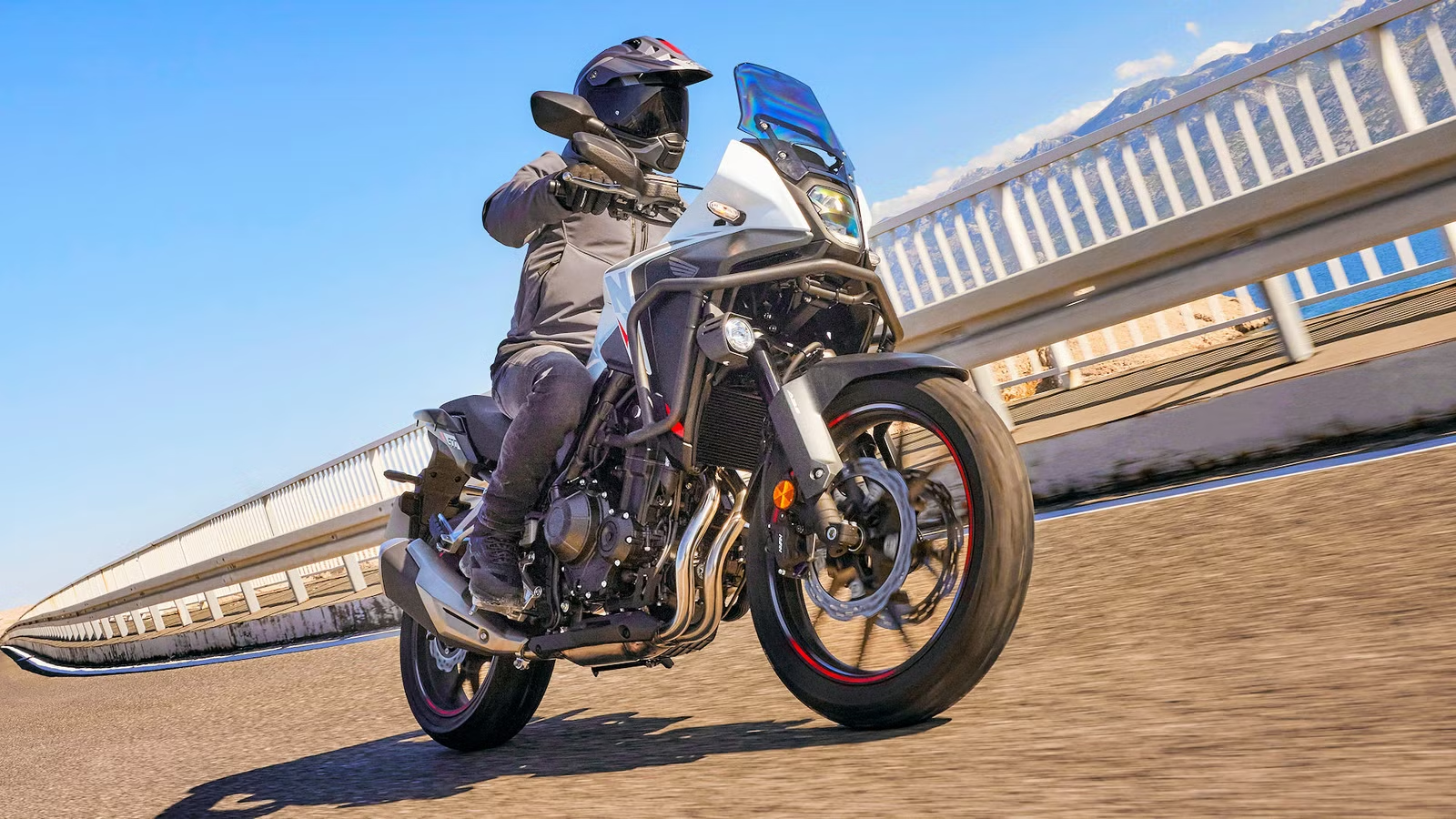
Honda has trimmed $500 off the 2026 NX 500’s US MSRP, dropping it from $7,399 to $6,899 — a move that’s genuinely unusual in a market where new motorcycle prices have drifted steadily upward. The cut lands the NX 500 under the $7,000 psychological threshold for the first time, and it puts Honda’s entry-level adventure bike in direct dollar-range conversation with two rivals that have been quietly eating its lunch on price.
For anyone cross-shopping the sub-$7K ADV segment right now, this changes the math. The 2026 Kawasaki KLE 500 sits at $6,599 and the 2026 Royal Enfield Himalayan 450 runs between $5,999 and $6,599 depending on color. The NX 500 is still the most expensive of the three, but the gap has shrunk enough that price alone is no longer the conversation-stopper it was at $7,399.
How the Three Bikes Now Stack Up on Price
At $6,899, the NX 500 sits $300 above the KLE 500 and between $300 and $900 above the Himalayan 450. That’s a tighter spread than it sounds. When you factor in destination charges, dealer fees, and the inevitable first-year gear spend, a $300 difference between the Honda and the Kawasaki can evaporate quickly — and it no longer requires a buyer to actively rationalize away the price delta before they even get to the spec sheet.

The Himalayan 450’s lower floor ($5,999 for base colors) is still a meaningful gap, but the Royal Enfield’s pricing structure is a bit of a sliding scale — the top colorways push it to $6,599, which is only $300 under the NX 500. At that point, the decision stops being about sticker price and starts being about what each bike actually offers.
What the NX 500 Brings to the Table — and Where It Trails

The NX 500 is built on Honda’s well-regarded parallel-twin platform, shared with the CB500 family. It’s a smooth, refined motor with a broad powerband that suits newer riders without feeling underpowered as skills develop. Honda’s fit, finish, and long-term reliability reputation are genuine differentiators in a segment where some buyers are making their first-ever new-bike purchase.
The Himalayan 450, by contrast, leans harder into off-road credentials. Its 21/17-inch wheel setup, adjustable seat height (ranging from 805mm to 845mm depending on configuration), and 7.9 inches of suspension travel give it a more capable dirt-road résumé than the NX 500’s more road-biased geometry. The Himalayan also packs a 4-inch TFT display with full-map navigation and USB-C charging — features that punch above its price point. The KLE 500, Kawasaki’s reentry into the small-ADV space, brings its own reliability pedigree and a slightly lower seat height that appeals to shorter riders.
Seat height and weight are often the deciding factors at this end of the market, where many buyers are newer to riding. The NX 500’s seat height and overall ergonomics sit in a middle ground — accessible, but not the lowest barrier to entry in the group.
Does the Price Cut Actually Move the Needle?

Probably yes — but not because $500 is life-changing money at the dealership. The real effect is psychological. At $7,399, the NX 500 felt like it was asking buyers to pay a Honda premium on top of an already stretched entry-level budget. At $6,899, it reads as competitive rather than aspirational, and that reframes how a shopper approaches the comparison.
Honda’s dealer network is also a factor that doesn’t show up on any spec sheet. For a first-time buyer who wants convenient service, warranty support, and the confidence of a brand with deep US roots, that network has real value — and it’s something neither Royal Enfield nor Kawasaki can fully match at the local level in every market.
The NX 500 isn’t the cheapest option, and it isn’t the most off-road-capable one either. But for entry-level ADV buyers who prioritize long-term reliability, a refined twin-cylinder engine, and the peace of mind that comes with Honda’s service infrastructure, the $6,899 price point makes it genuinely competitive in a way the 2025 model wasn’t. That’s what a $500 cut can do when it lands in the right place.

Related posts


Latest Post


No Comments