
Do BMW M Cars Really Hold Their Value Better in 2026?
Article Summary
- BMW M cars generally retain more value than their standard counterparts, but the advantage is often surprisingly small.
- The M2 and M4 Coupe are among the strongest performers, losing just 32.2% and 35.5% over five years.
- The standard 3 Series and X6 buck the trend by depreciating less than their full-fledged M equivalents.
Part of the allure of buying the full-fat M model over the base model is performance. But there are several other benefits often used to sell the more expensive car over the entry level version. Value, for example. An oft-repeated mantra of M car owners (and to-be M car owners) is that the M version will hold value better, ostensibly due to enthusiast appeal, lower production numbers, and overall desirability. When we took a look at deprecation across M and base models last year, we found that the premise mostly held up. One year later, how do the numbers look? We consult the data from iSeeCars and find out how much value M cars lose over five years compared to base, non-M counterparts.
M2 vs. BMW 2 Series

In 2026, the M2 is doing even better than it was last year. The data indicates that the M2 loses just 32.2% of its value over five years. That’s good for any car, let alone a luxury sports coupe — three words that usually spell immediate depreciation. If you were wondering, it’s also an improvement by 8% over last year’s figures. The 2 Series Coupe is no slouch either, losing only 36.4% of its value over five years. Meanwhile, the 2 Series Convertible lost 44.3% of its total value. Still a strong showing, but the M2 is clearly the better “investment.”
M3 vs. BMW 3 Series
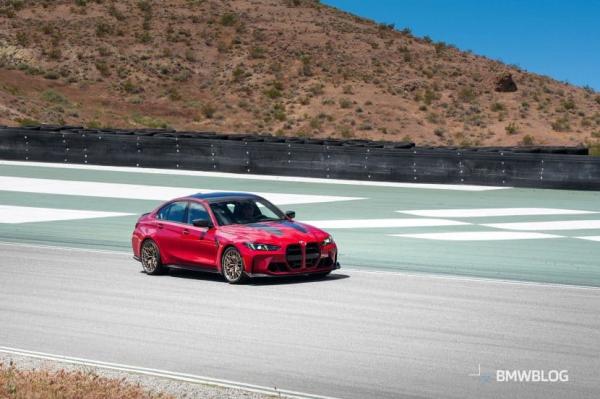
The M3: a cornerstone of the BMW M lineup and institution for driver and machine connectivity. Surprisingly, it doesn’t hold its value as well as the newcomer M2: the M3 loses 47.5% of its value over five years. That’s still excellent retention for a car like this. The standard 3 Series? It actually loses slightly less value over the same time period. The 3er retains 53.2% of its value, accounting for a 46.8% loss. A pretty close race, but one the M3 loses nonetheless. The 3 Series PHEV loses 50.1% of its value over five years, making it technically the real loser. Which is a shame, since it’s a hugely underrated hybrid.
M4 (Coupe and Convertible) vs. BMW 4 Series


The M4 Coupe puts up some of the strongest numbers in BMW’s entire lineup. It loses just 35.5% of its value after five years, compared to 40.2% for the standard 4 Series Coupe. That makes the M4 the clear winner, although both two-doors perform exceptionally well by luxury-car standards. The convertibles are considerably closer. The M4 Convertible loses 44.8% of its value, while the regular 4 Series Convertible loses 45.7%. In other words, opting for the full-fat M car barely costs you anything extra in depreciation. Not a bad deal considering how much more car you’re getting. If you were wondering, the Gran Coupe loses 50.5% of its value over five years.
X3 M vs. BMW X3
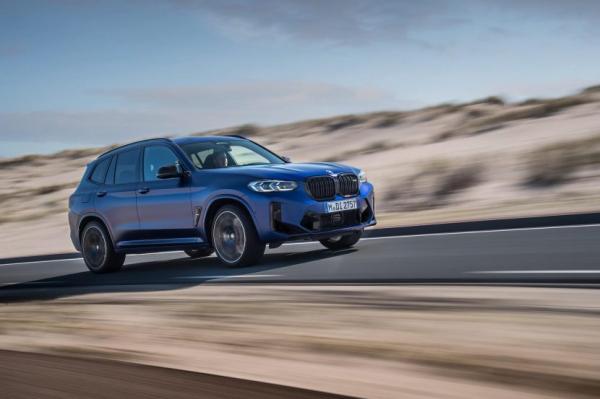
The X3 M is another case where the M version comes out ahead. It loses 47% of its value over five years, while the standard BMW X3 loses 49.6%. It isn’t a dramatic difference, but it is enough to give the high-performance model the victory. The discontinued X3 plug-in hybrid fares worse than both, losing 52.8% over the same period. Overall, the X3 family remains fairly consistent: none of the three versions escapes substantial depreciation, but the X3 M’s stronger retention makes its higher initial price a little easier to justify.
X4 M vs. BMW X4
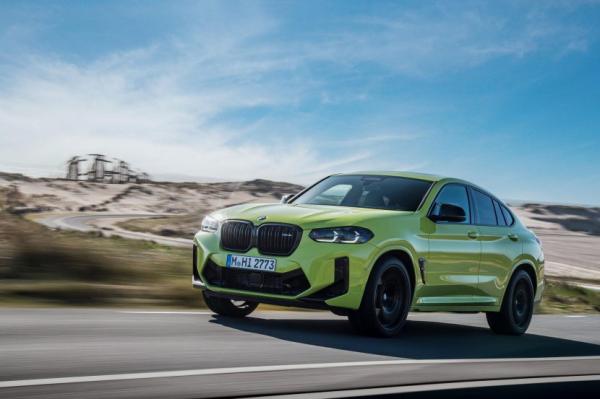
Things could hardly be closer between the X4 M and the standard X4. The full-bore M model loses 49% of its original value after five years. The regular X4 loses 49.4%. That four-tenths-of-a-percentage-point difference is practically a rounding error, but it technically hands the win to the X4 M. More importantly, the data suggests that buyers aren’t penalized much for choosing the more powerful and expensive version. Either way, expect to lose roughly half of the vehicle’s original value by the time its fifth birthday rolls around.
X5 M vs. BMW X5

The X5 M also manages to outperform its more sensible sibling, although not by much. The performance SUV loses 52.4% of its value over five years, while the regular X5 loses 53.1%. That is only a seven-tenths difference, making this another nearly dead-even matchup. The X5 plug-in hybrid performs worse, losing 56.4% over the same period. With a new generation of the X5 inbound, a shakeup is almost guaranteed for values over the next few years. But we’ll have to wait and see.
X6 M vs. BMW X6
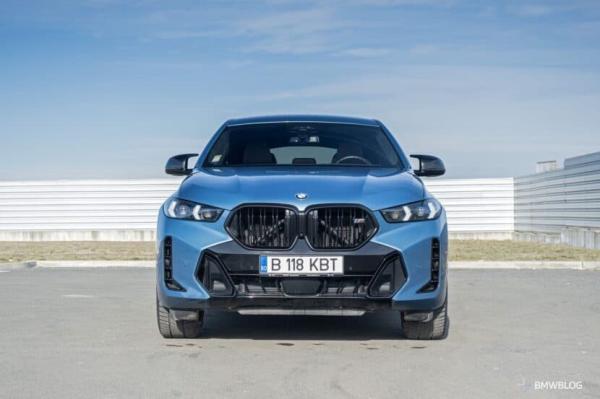
Here, the standard model finally gets one back. The X6 M loses 52.6% of its value after five years, while the regular X6 loses a slightly more reasonable 50.2%. A difference of 2.4 percentage points is not enormous, but it is one of the clearer victories for a non-M model in this comparison. Both versions still lose more than half their original value, though. So, while the standard X6 technically makes the stronger financial case, neither vehicle is exactly a depreciation-proof place to park your money.
M5 vs. BMW 5 Series
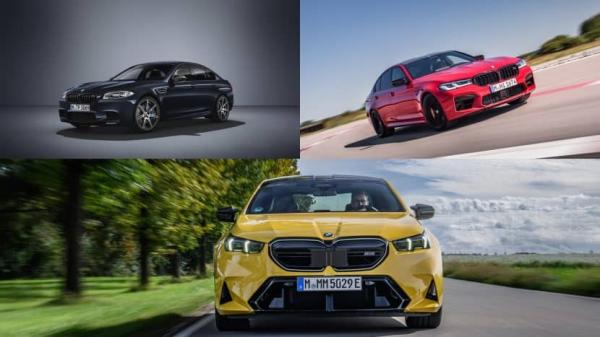
This one gets complicated, and you can refer to our M5 depreciation tracker for a little more insight. iSeeCars still has info for the gas-powered F90 M5, which retains 47.7% of its original value after five years, equating to a 52.3% loss. That is better than the standard 5 Series, which loses 55.9%. The newer G90 and G99 hybrid M5 models complicate the comparison. The M5 plug-in-hybrid sedan loses 55.6%, while the M5 Touring is projected to lose only 48.9%. Meanwhile, the regular 5 Series plug-in hybrid fares worst of all, losing 59.2%. There are a lot of numbers here, but the takeaway is relatively simple: the M5 generally holds its value better, and the wagon is the strongest performer of the bunch.
M8 vs. BMW 8 Series
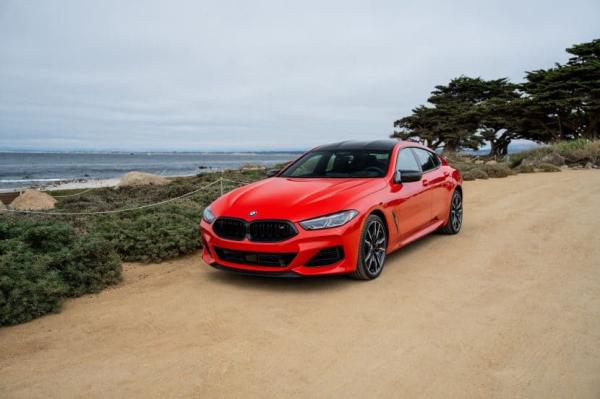
The M8 and standard 8 Series are astonishingly close across virtually every body style. The M8 Coupe loses 47.4% of its value after five years, while the regular 8 Series Coupe loses 47.5%. The convertible comparison narrowly swings the other way: the M8 Convertible loses 49.7%, compared to 49% for the standard model. Finally, the M8 Gran Coupe loses 54.4%, while its 8 Series counterpart loses 55.7%. There is no decisive winner here. The Gran Coupe offers the clearest victory over its base counterpart. However, the coupe loses the least value over time. Regardless of which engine or body style you choose, an 8 Series is going to shed a significant amount of value over five years.
Verdict: Do M Cars Really Hold Their Value Better?
Across all models, it’s generally safe to say that yes, M cars hold value better than base models. But it’s a generalization: some models, that simply isn’t true at all. There’s hardly a pattern to follow, either: the 3 Series and X6 have little in common, but both retain value better than the M-badged equivalents. We’ll say this: a whole two percentage points over five years is a price we’re willing to pay if it means a hundred or so extra horsepower and a smattering of other go-fast bits. Granted, it’s also worth remembering that dollar for dollar, the M car is still frequently losing more money than the base model. For example: the X5 M starts at $132,450, but a base X5 starts at $69,750. The former loses $69,403 — nearly the base car’s entire MSRP — while the latter loses $37,037. Still worth it? Only you can decide.
Source: iSeeCars

Related posts





Latest Post


No Comments