
Why Pontiac Buried The Banshee Before It Killed The Corvette
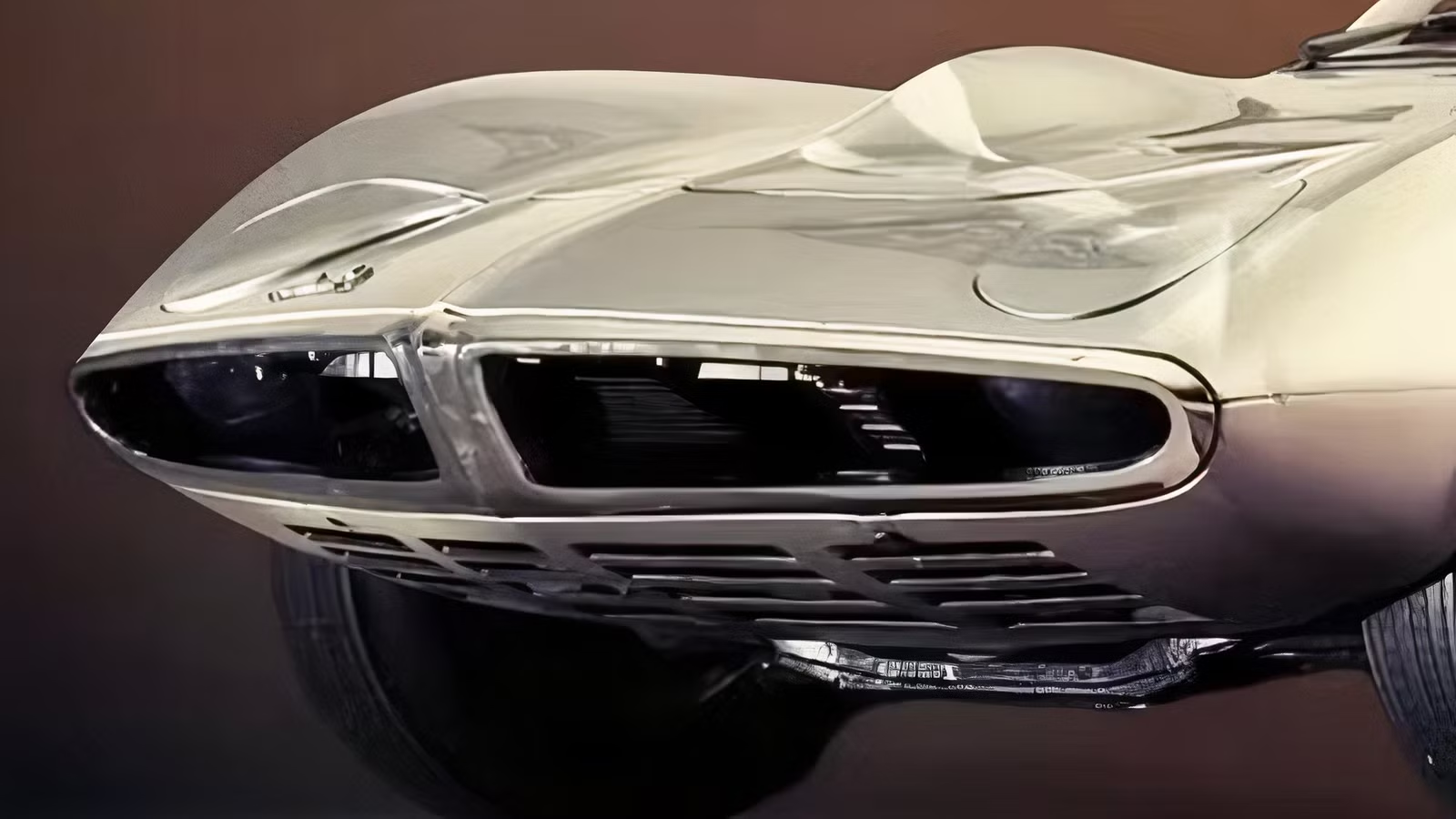
In 1965, General Motors looked at a finished, drivable, production-priced sports car and told Pontiac to kill it.

This wasn’t a sketch that never left the studio or a clay model that ran out of budget. Pontiac in the early ’60s was a division on a genuine hot streak — Wide-Track styling, the GTO, Royal Pontiac’s Bobcat drag cars — a brand that had earned the right to want more. The XP-833 fit the bill perfectly.
Two running prototypes, a price point that undercut the Corvette by nearly $1,700, and a weight advantage that would have left Chevy’s flagship in its mirrors. GM was having none of it and shut it down, which some people today call an act of corporate self-sabotage.
Pontiac Was Playing Offense Building A Corvette Rival
It’s easy to forget how close Pontiac came to irrelevance before the performance era kicked in. J. Patrick Wright, author of On A Clear Day You Can See General Motors, described the division before its revival as “really in trouble,”— likening it to an old person’s brand that had lost its nerve.
That changed fast when John DeLorean arrived under chief engineer Pete Estes and general manager Semon “Bunkie” Knudsen. By 1959, the Wide-Track redesign had added 5 inches to the front track and 4.5 inches to the rear, giving Pontiac a stance and a story to sell. The GTO was still a few years away, but the division was already winning NHRA events through Royal Pontiac’s Bobcat drag-prep program and outselling both Buick and Oldsmobile.
This was a brand that had earned its performance reputation the hard way. So when Ford’s Mustang hit the market in 1964 and started breaking sales records, Pontiac didn’t reach for a four-seat pony car. Design work on the XP-833 had already started in August 1963, with the explicit goal of building a genuine two-seat sports car.

Pontiac’s Wildest 1969 Concept That Rewrote Muscle Car Design
Detroit chased stripes and big V8s, but one secret Pontiac concept aimed higher. This lost halo car may be 1969’s boldest idea.
GM Swiftly Pulled The Plug On The Pontiac Banshee

Pontiac built two fully drivable XP-833 prototypes: a silver hardtop coupe and a white convertible. Both rode on a compact 90-inch wheelbase steel chassis wrapped in a fiberglass body. The same construction logic as the Corvette, but lighter and cheaper to produce.
The coupe used a 230-cubic-inch overhead-cam inline-six with a single-barrel carburetor, good for 165 hp. The convertible got a heavy-hitting 326-cubic-inch V8 fed by a Mickey Thompson cross-ram intake with twin four-barrel carburetors, pushing around 250 hp through a four-speed manual. Two engines, two buyer profiles, one platform. Exactly the kind of flexible lineup that makes a production car viable.
Weight is where the Banshee made its clearest argument. The coupe came in at around 2,100 pounds; the V8 convertible around 2,300 pounds. The six-cylinder hardtop alone weighed nearly 1,000 pounds less than the C2 Corvette, and even the V8 version undercut the Chevy flagship by a massive margin, threatening to alter GM’s entire performance hierarchy.

Bill Collins, the engineer running point on the project under DeLorean, was certain that a 6.4-liter Tri-Power V8 would have followed as a production option, which would have put around 360 hp into a car nearly 400 pounds lighter than an equivalent Corvette. DeLorean was already calling it a “Mustang fighter” internally, partly because it was true and partly because “Corvette killer” would have quickly ended the conversation. He had a 421-cubic-inch V8 in mind for the performance tier later down the road.
The styling came from a team that included Jack Humbert, Ned Nickles, Paul Gillan, and Chuck Jordan. While design chief Bill Mitchell famously accused Pontiac of stealing the “Coke-bottle” proportions from Chevrolet’s internal Mako Shark II project, the XP-833 wore the look beautifully. The long hood, short rear deck, and triple-slit taillights would become the definitive GM performance aesthetic of the late ’60s—but it was Chevrolet, not Pontiac, that got to debut it on a two-seater.
The Corvette Veto’d The Pontiac Banshee

DeLorean’s production cost estimate for the Banshee came in around $2,500. A base Corvette at the time stickered around $4,300. That massive price gap was the whole problem. Pontiac built a sports car that made the Corvette look like an overpriced luxury cruiser.
The XP-833 pulled that off by using roughly 80% existing GM and Pontiac A-body components. It was engineered from the start to be cheap to build, and the numbers showed it. That kind of cost structure is inherently designed to be accessible, and GM knew exactly what accessible meant for Corvette’s position in the market.

GM’s protection of the Corvette ran deep and predated the Banshee by years. GM strictly mandated that no division could surpass the Corvette’s power-to-weight ratio. Pontiac even engaged in a bit of corporate deception to play by the rules: when they updated their small V8, it actually displaced 336 cubic inches—larger than Chevy’s 327—but Pontiac kept calling it the “326” to fly under the corporate radar. That same restrictive logic would surface again decades later when a proposed V8 for the mid-engine Fiero was shut down before it got started.

When the XP-833 made its way through GM’s executive review, Chevrolet leadership didn’t debate it, they moved to end it. The project was killed in 1965, with Corvette cannibalization cited as the reason. At the time, the Corvette was selling at its strongest pace of the decade: 22,229 units in 1964, 23,562 in 1965, and 27,720 in 1966. GM was not going to let an internal rival touch that trajectory.
The final irony is sitting an official GM memo dated September 10, 1965, addressed to design chief Bill Mitchell, instructed his staff to rework clay models for a “Chevrolet design for the two-passenger version coupe,” using the package logic Pontiac had proven could work. The two-seat market belonged exclusively to Chevrolet, and GM corporate leadership ensured it stayed that way. Pontiac’s dream was dissolved into Chevy’s upcoming product cycle.
The Pontiac Nobody Expected Was Faster Than A Mustang
Pontiac’s final performance car carried a Corvette engine and left the Mustang GT standing. Barely anyone noticed before the brand was gone.
The Prototypes GM Ordered Destroyed

When GM canceled the XP-833, both prototypes were supposed to go to the crusher — standard procedure for shelved projects that could create legal or competitive headaches. Bill Collins and Pontiac master mechanic Bill Killen had other ideas. They sealed both cars in shipping crates and left them in storage, keeping them, as Collins put it, “out of sight and out of mind.”
It worked. In 1974, working through GM’s own Purchasing Department, Killen bought SP-5 (the silver six-cylinder coupe) and Collins acquired SP-6, the white V8 convertible. The prototypes had been sitting hidden for nearly a decade by the time their rescuers got the paperwork done.
The coupe has since become one of the most significant surviving American concept cars in existence. It carries fewer than 1,500 original miles, appeared at the 2001 Meadow Brook Hall Concours d’Elegance, and made its MCACN debut in 2025. At Barrett-Jackson in 2006 it sold for $214,500; RM Sotheby’s put a $400,000–$600,000 estimate on it in 2010; the asking price later reached $1.2 million and is now listed as “call for price.”
Collins never forgot what GM had done. When DeLorean walked out of GM in 1973, he brought Collins with him to work on a new independent sports car venture; the DMC-12. The men who built the Banshee spent the rest of their careers trying to finish what GM wouldn’t let them start.
Pontiac’s Forgotten OHC Six-Cylinder Was Decades Ahead Of Its Time
This forgotten engine bridged American muscle and European sophistication, introducing innovations still used in modern cars today.
The Decision That Ended Pontiac’s Chance At A Sports Car

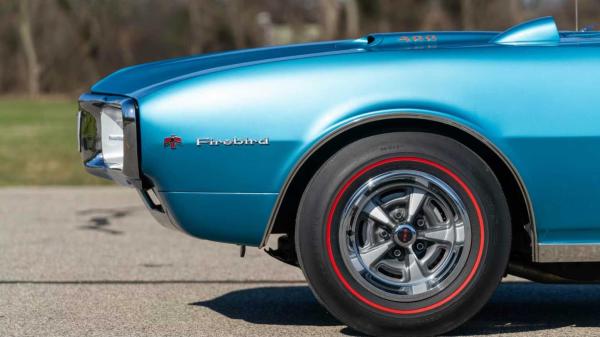
Pontiac walked away from the XP-833 fight with the Firebird — a four-seat pony car bolted to the same platform as the Chevrolet Camaro. That was the trade: give up the two-seat sports car you designed, engineered, and priced for production, and you can have a corner of the segment Chevy was already dominating.
The Banshee wasn’t a design study or a show car built for auto show lighting. It had a VIN, a title, two running drivetrains, and a production cost that put it nearly $1,700 below the base Corvette. GM pulled the rug right out under Pontiac, stopping them from building the sports car.

The Corvette wasn’t under threat from the Banshee, yet it was being protected from having to compete with it. It’s the distinction that defined what Pontiac was allowed to become. A division capable of building a lighter, cheaper, faster sports car was told to stand down, and it never fully recovered the identity it would have had.
The Banshee’s styling ended up inspiring the C3 Corvette anyway. GM took the design, handed it to Chevrolet, and released it in 1968 as the very car the Banshee had been forbidden from threatening. Pontiac got no credit, or a halo model to anchor its performance image for the decade ahead.
The silver coupe is still out there. Having recently left the Connecticut dealership where it spent years on display, it is now safely preserved in a private collection. It remains a fitting, rolling monument to what corporate self-protection actually costs.
Sources: General Motors, Barrett-Jackson, Pontiac Oakland Club, Barchetta via Youtube

Related posts





Latest Post


No Comments