How Much It Costs To Replace A Hyundai Tucson Hybrid Battery In 2026
8 minutes reading
Monday, 3 Aug 2026 12:00 0 7 autotech
Preparing for long-term battery replacement costs is essential when you evaluate hybrid crossover ownership. High-voltage battery pack replacements cost thousands of dollars out of warranty, making future maintenance a critical calculation. Smart buyers focus heavily on low running costs, prioritizing fuel economy alongside predictable long-term ownership expenses.
The Hyundai Tucson Hybrid delivers a strong value proposition in this competitive segment. You benefit from low fuel bills and Hyundai’s ten-year, 100,000-mile warranty. This extensive coverage protects you against premature hybrid battery expenses, keeping your overall ownership costs low while providing practical everyday efficiency.
A hybrid vehicle’s battery capacity gradually declines due to a combination of chemical degradation and usage patterns. This degradation is completely dependent on the vehicle and how much it has been driven, but the symptoms will remain the same across the segment. With time and use, the lithium-ion or nickel-metal hydride cells within the battery pack experience wear as a result of repeated charging and discharging cycles. This causes the electrodes to deteriorate and the electrolyte to break down.
Factors like high temperatures, rapid acceleration, and frequent deep discharges accelerate this process. An HEV’s battery management system plays a role in regulating voltage and temperature, but as the cells age, this system becomes less effective at balancing the charge between individual cells, leading to uneven wear. After 200,000 miles, a hybrid battery typically loses between 20 and 30 percent of its original capacity, depending on driving habits and environmental conditions.
Hyundai’s Contribution To The Hybrid Industry
2026 Hyundai Tucson Hybrid front wheelHyundai
Hyundai stands among the select group of automakers leading current gasoline-electric hybrid development. Toyota and Honda hold major portions of the global hybrid market. However, the South Korean automotive giant competes aggressively through its Hyundai and Kia lineups. Genesis currently sells no hybrid models. The luxury brand plans to introduce hybrid powertrains in the near future.
Your options expand rapidly when you look through the group’s current portfolio. Millions of dollars in research and development yield a massive catalog of efficient vehicles. You can choose from compact sedans, spacious midsize cars, practical crossovers, and family-sized SUVs.
Rear 3/4 shot of 2026 Hyundai Tucson HybridHyundai
These hybrid vehicles utilize advanced electric motors alongside turbocharged four-cylinder engines. You benefit from immediate torque delivery during daily driving. You also achieve impressive fuel economy figures on extended highway trips. Regenerative braking systems capture energy during deceleration and feed power back into high-voltage battery packs.
Hyundai engineers design these hybrid systems to operate smoothly without disrupting your driving experience. Automatic transmissions deliver predictable gear changes rather than relying on a noisy continuous variable transmission. You gain a balanced combination of modern utility, dynamic performance, and long-range efficiency across the entire model range.
How Much A Hybrid Battery Replacement Costs On The 2026 Tucson
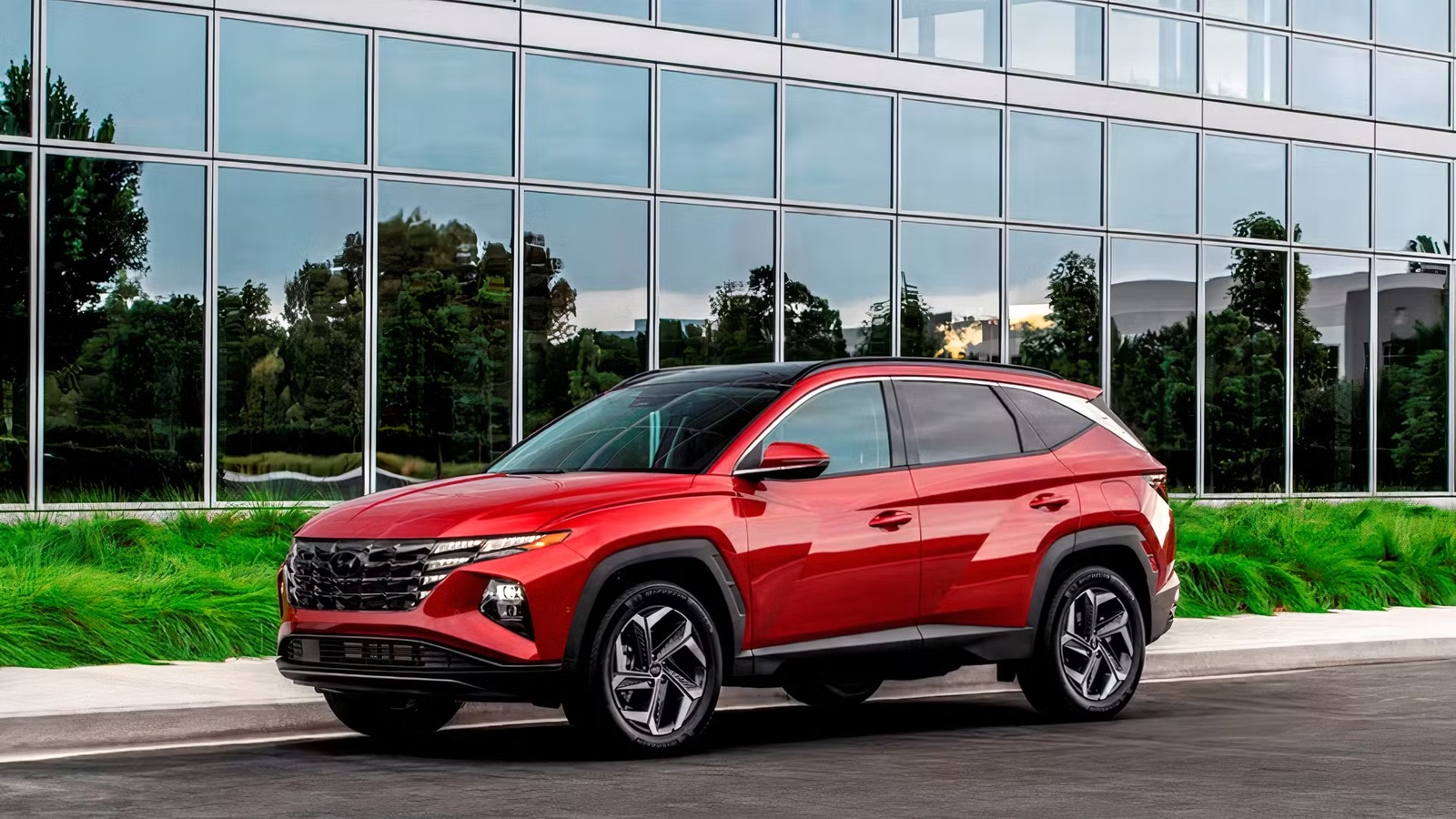
Front 3/4 shot of 2023 Hyundai Tucson Hybrid parkedHyundai
Replacing the high-voltage battery pack in your 2026 Hyundai Tucson Hybrid typically costs between $3,500 and $6,000, with labor accounting for an additional $150 to $500 of the total bill. Hyundai protects your investment with a 10-year or 100,000-mile high-voltage battery warranty that covers factory defects and replacement if total capacity drops below 70 percent.
However, Hyundai excludes coverage if the pack suffers damage from vehicle collisions, improper routine maintenance, neglect, unauthorized electrical modifications, or non-genuine aftermarket components. With proper cooling system maintenance and regular care, you can expect the battery to last between 10 and 15 years or 100,000 to 200,000 miles before requiring a complete unit replacement.
The Tuscons Hybrid Has A Good Reputation In The U.S.
Rear 3/4 shot of 2026 Hyundai Tucson Hybrid driving on roadHyundai
As far as reliability is concerned, the 2026 Hyundai Tucson Hybrid proves to be a dependable option. J.D. Power gives the model an 81/100 consumer-verified overall score, consisting of 83/100 for quality and reliability, 83/100 for the driving experience, 83/100 for resale, and 71/100 for the dealership experience. iSeeCars indicates that the compact HEV SUV will have an average lifespan of 9.3 years or 121,763 miles, with a four percent probability of hitting the 200,000-mile mark without any noteworthy issues.
The primary service interval is 7,500 miles or 12 months. At every 7,500 miles, the service requires synthetic engine oil, an oil filter, tire rotation, and a full hybrid system inspection. You replace the cabin air filter at 15,000 miles and the engine air filter at 30,000 miles. Major service items like spark plugs, brake fluid, and engine coolant require replacement at 60,000 miles. Hyundai includes complementary routine maintenance for the first three years or 36,000 miles. Annual maintenance costs average $350 in year one and reach $780 by year five, totaling $2,700 across five years.
A Perfectly Balanced HEV Drivetrain
Underhood shot of the 2025 Hyundai Tucson Hybrid showing the 1.6-liter turbocharged 4-cylinder hybrid systemHYUNDAI
Under the hood of the 2026 Hyundai Tucson Hybrid remains the South Korean brand’s turbocharged 1.6-liter gasoline direct-injection four-cylinder engine that produces 178 horsepower and 195 pound-feet of torque. This works in tandem with a permanent magnet synchronous electric motor that contributes 64 hp and 195 lb-ft of torque, resulting in a combined system output of 231 hp and 258 lb-ft of torque.
Hyundai pairs this with a six-speed automatic transmission specifically tuned for hybrid integration, delivering power through the standard HTRAC mechanical all-wheel drive system. With this, you can expect to cover a 0-to-60 MPH acceleration sprint in 7.1 seconds, while the brand limits its top speed to 120 MPH.
Impressive Fuel Efficiency Standards
2026 Hyundai Tucson Hybrid low front action shotHyundai
The Hyundai Tucson Blue SE is the most efficient option of the range, achieving an EPA-estimated consumption of 38/38/38 MPG on the city/highway/combined cycle, together with a 521-mile range estimate from the 13.7-gallon tank. This results in an annual fuel cost of $1,200, and a cost of $2.09 to drive 25 miles, meaning you’ll save $2,000 in fuel costs over five years compared to the average new vehicle sold in the U.S.
The rest of the range reflects a 37/36/36 MPG consumption estimate on the same cycle, with a 493-mile range claim. The result is an annual fuel cost of $1,350, and a cost of $2.27 to drive 25 miles. Expect to spend about $38 to fill the tank.
Side shot of 2026 Hyundai Tucson Hybrid front cabinHyundai
The new Blue SE trim establishes a technology-focused entry-level offering. Standard entertainment on this base trim includes a 12.3-inch color touchscreen featuring wireless Apple CarPlay and Android Auto, paired with a six-speaker audio system and the Bluelink+ connected car system. You also get dual-zone automatic temperature control, stain-resistant cloth upholstery, and a 4.2-inch color digital instrument cluster.
Stepping up to the SEL adds a hands-free smart liftgate, an eight-way power-adjustable driver’s seat with two-way lumbar support, and heated front seats. It also enhances the exterior with 18-inch alloy wheels and roof side rails, while the interior gains rear air conditioning vents for improved passenger comfort.
The SEL Convenience, now a standalone trim that replaces the previous SEL Convenience package. This level introduces the dual-curved 12.3-inch display architecture, which combines a fully digital instrument cluster with the central infotainment screen for a panoramic look. High-end convenience features include the Hyundai Digital Key 2, which allows smartphone-based access. You also get a power tilt-and-slide sunroof, and a wireless device charging pad. Elevating the interior is H-Tex leatherette-trimmed seating surfaces, a leather-wrapped steering wheel, and 64-color ambient cabin lighting that allows for extensive personalization.
Limited Trims Offer A Luxurious Feel
Shot of 2026 Hyundai Tucson Hybrid seatsHyundai
The Limited trim sits as the flagship model, upgrading the cabin to an eight-speaker Bose Premium Audio system and a 12-inch head-up display. The cabin is fully outfitted with genuine leather seating surfaces, ventilated front seats, heated rear seats, and an Integrated Memory System for the driver’s seat and side mirrors.
Advanced technological highlights exclusive to the Limited include the Remote Smart Parking Assist, allowing the car to pull into tight spots via the key fob. There’s also a Surround View Monitor, and a Blind-Spot View Monitor that displays a live camera feed of the vehicle’s flank within the instrument cluster.
In terms of optional extras, Hyundai typically keeps its hybrid configurations focused, meaning most equipment is locked into the trim levels rather than offered as individual add-on packages. However, you can opt for premium exterior paint colors, such as Serenity White Pearl or Ultimate Red, priced at $450.
Pricing An Influential Success Factor
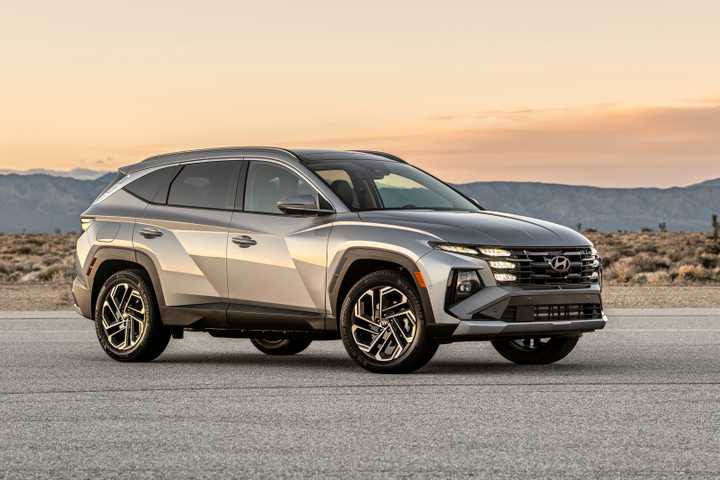
Rear 3/4 shot of 2026 Hyundai Tucson Hybrid parkedHyundai
The 2026 Hyundai Tucson Hybrid lineup now consists of four primary trim levels, starting with the entry-level SE at an MSRP of $30,950. Moving up the range gets you access to the Hybrid SEL for $32,400, followed by the Hybrid SEL Convenience at $34,540. The flagship trim for the 2026 model year remains the Hybrid Limited, carrying a starting MSRP of $41,825. There’s an additional $1,600 that you’ll need to spend on the destination fee.
Base Trim Engine
1.6L Smartstream I4 Hybrid
Base Trim Transmission
6-speed automatic
Base Trim Drivetrain
All-Wheel Drive
Base Trim Horsepower
178 HP @5500 RPM
Base Trim Torque
195 lb.-ft. @ 1500 RPM
Base Trim Fuel Economy (city/highway/combined)
38/38/38 MPG
Base Trim Battery Type
Lithium ion (Li-ion)
Make
Hyundai
Model
Tucson Hybrid
Sources: Hyundai, J.D. Power, iSeeCars, and the EPA.











No Comments