This Hybrid Could Be The Only Car You Need For 20 Years
12 minutes reading
Sunday, 2 Aug 2026 20:00 0 64 autotech
Longevity in a mainstream car is one of the biggest reasons why a lot of us keep choosing models made by Toyota, Honda, and Chevrolet. Some of the most obvious long-lasting vehicles out there that have proved their worth are the Land Cruiser, Suburban, and Accord, and we have seen countless examples hitting over 250,000 miles with just simple maintenance.
When it comes to 2026 cars, though, things can be a little more difficult to predict. There is more tech in cars now, engines aren’t generally as overbuilt, hybrid systems can be complicated, and there are a lot of components that rely on electronics to keep them working. There is a Toyota hybrid sedan, though, that, despite being up-to-date and well-equipped, should last you for 20 years.
Front 3/4 action shot of 2026 Toyota Corolla driving on roadToyota
The cars that survive for decades usually aren’t the ones trying hardest to impress you in the first five minutes. The cars that earn a reputation for running well past 100,000 miles usually share a common trait: they avoid unnecessary complexity, are equipped with proven mechanicals, and focus on getting the basics right. As one of the most long-lasting cars ever, the Toyota Corolla is a clear example of this philosophy.
For decades, the Corolla has built a reputation around simple engineering, affordable maintenance, and powertrains built to handle years of daily abuse without demanding too much attention. The 2026 Corolla continues that approach with a lineup built around efficiency and practicality rather than chasing headlines.
White 2026 Toyota Corolla Rear 3/4 ViewToyota
Its compact footprint makes it easy to live with, while Toyota’s focus on proven hybrid technology gives most people confidence that it won’t become a financial burden years down the road. As proven many times before, it’s the type of vehicle that has become a long-term companion — one that doesn’t need to be exciting every morning, but one that starts reliably, runs efficiently, and keeps doing its job year after year.
Why Long-Term Reliability Is More Important Than Flashy Features
Front 3/4 shot of 2026 Nissan Altima in red parkedNissan
The modern auto market is full of impressive technology, so the challenge today is finding a car that is still going to feel useful later on. The 2026 U.S. Initial Quality Study says that tech is now determining how reliable a car is perceived to be.
With effectively every new vehicle coming equipped with an infotainment system, there are downsides to convenience; the survey says that infotainment system problems account for 44.4 problems per 100 vehicles (PP100) in the mainstream market and 38.3 PP100 in the luxury segment, or, thanks to Android Auto and Apple CarPlay connectivity problems, an increase of 1.4 PP100 year-on-year.
Shot of 2025 Nissan Altima interior showing front cabinNissan
Models like the 2026 Altima get a simple technology equipment list that includes a 12.3-inch touchscreen, Nissan Safety Shield 360, and ProPILOT Assist; no adaptive suspension, no air suspension, no premium materials that age quickly, and fewer complex electronics compared to luxury sedans.
You get a comfortable cabin, decent highway manners, efficient engines, and a more traditional formula that, for the most part, doesn’t need changing. Models like the Altima show that reliability is about predictable performance, reasonable ownership costs, and easy-to-live-with technology.
The Hidden Costs That Separate Great Vehicles From Good Ones
Front 3/4 shot of 2026 Kia Niro Hybrid parkedKia
Vehicle ownership costs are on most of our minds, and while there is no doubt that the BMW X5 is a great SUV and is reliable for a luxury SUV, it does have high ownership costs. The 2026 X5 is rated 81 out of 100 for reliability on J.D. Power, but, according to RepairPal, has an annual repair bill of $1,166.
On the other hand, models like the Kia Niro have both reliability and more manageable repair costs. The 2026 Niro is rated 74 out of 100 for reliability, but has an average annual repair bill of just $474. For those looking to keep spending in check, this is what makes a good vehicle a very good one.
Front 3/4 view of the 2026 BMW X5 xDrive50e parkedIsaac Atienza | TopSpeed
Both are good SUVs for different reasons; the X5 combines power, a luxury interior, and usability, while the Niro brings exceptional fuel efficiency, a versatile build, and a well-sorted ride. However, if you are planning on keeping one of the two for hundreds of thousands of miles, only one sounds like a great long-term choice in terms of finances.
Why The Toyota Camry Hybrid Keeps Outlasting The Competition
Front 3/4 action shot of 2026 Toyota Camry driving on roadToyota
Taken together, this is why the Toyota Camry Hybrid makes for a very compelling long-term companion. The highest mileage Camry Hybrid was recently recorded with over 530,000 miles on the clock, thanks to simple maintenance, its low-stress engine, and all-around Toyota-grade build quality. This high-mileage 2018 Camry Hybrid is not an anomaly either; Camrys are built for the long-term.
The 2026 Toyota Camry Hybrid is built in a similar way, despite being from different generations (8th and 9th), and iSeeCars estimates that a Camry Hybrid has an expected lifespan of 172,612 miles. They also say that it has a 32.3 percent chance of reaching 200,000 miles. Bear in mind, this will require proper maintenance on your part.
Built To Handle Hundreds Of Thousands Of Miles
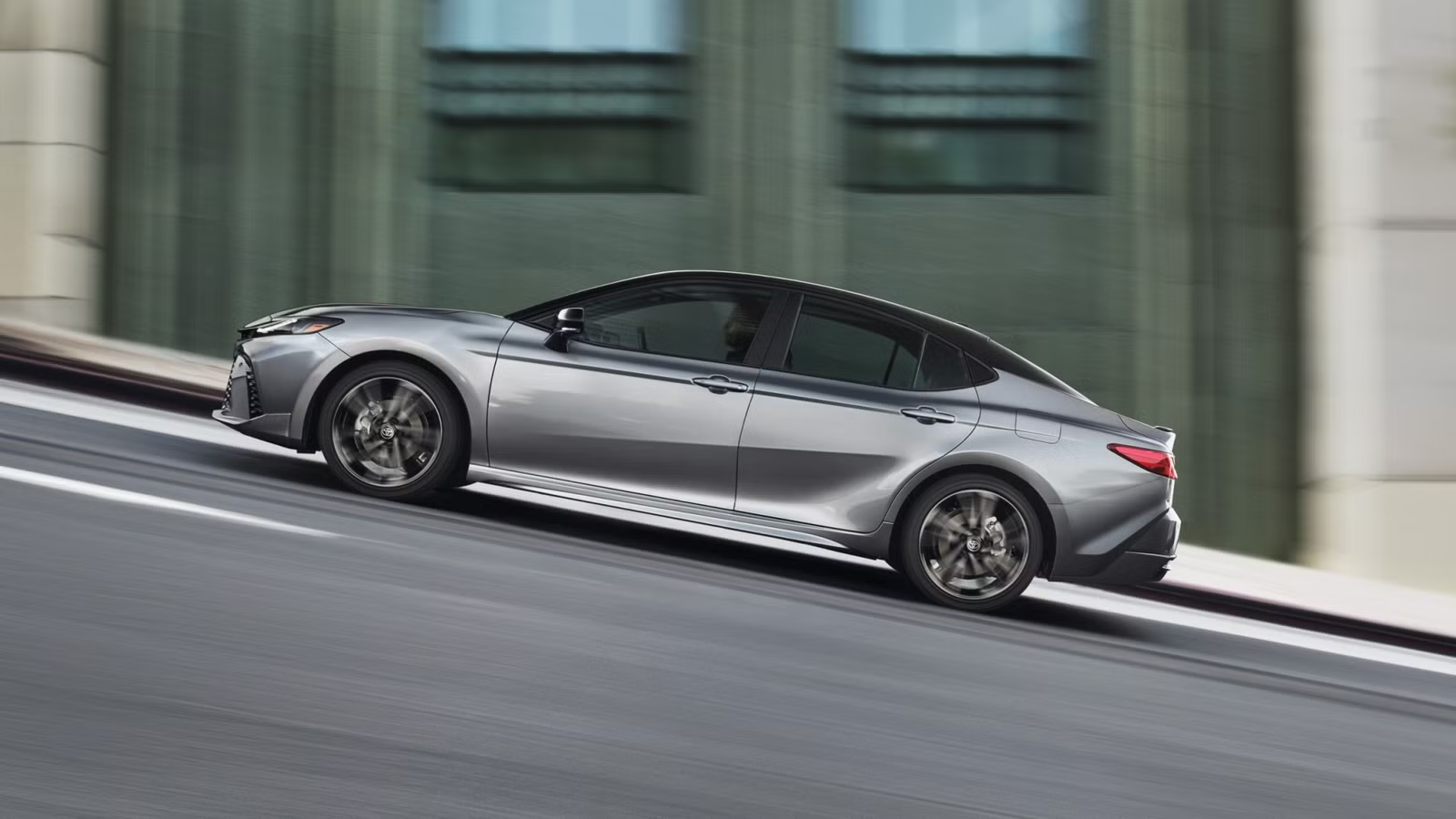
Profile action shot of 2026 Toyota Camry driving on roadToyota
One of the biggest reasons why the new Camry Hybrid has the potential to be a high-mileage vehicle is because Toyota hasn’t tried to reinvent the wheel. Instead, it has refined a formula that’s been proving itself for more than 20 years already. Every 2026 Camry Hybrid is equipped with Toyota’s fifth-generation Hybrid System, which pairs a 2.5-liter naturally aspirated Dynamic Force inline-four with an electric motor and a CVT.
Combined horsepower output is a modest 225 (FWD) or 232 (AWD), and engine torque output is 163 pound-feet. Peak horsepower is produced at 6,000 rpm and torque wound out at between 3,600 and 5,200 rpm. That means, with the assistance of the motor, the combustion engine is never truly under heavy loads and isn’t the sole source of power at low city speeds.
Rear 3/4 action shot of 2026 Toyota Camry Hybrid driving on roadToyota
The same kind of thinking has been used for the bodywork and chassis. The TNGA-K platform is now a thoroughly proven architecture, and delivers exceptional rigidity while keeping vibrations in check. This helps reduce vibration transfer to the suspension and body components over time.
Toyota has also gotten very good at battery management. Instead of the battery being allowed to fully charge and discharge through its full capacity, Toyota equips the Camry Hybrid with software that keeps it working in its optimal window. It’s not the most exciting setup, but it does help prevent degradation over the years. This is where the Camry Hybrid makes a good case for lasting over two decades; it is relatively simple.
Close-up shot of 2026 Toyota Camry engine bayToyota
Toyota is renowned for being a brand that rolls out vehicles that reward you with low maintenance costs, and the new Camry Hybrid is estimated to be the same. According to Edmunds, it will cost $38,340 to own a front-wheel-drive base-model LE for five years, and up to $48,081 for an all-wheel-drive XSE.
This includes five-year maintenance costs of up to $3,872, repair costs of up to $887, $7,921 for insurance, and $13,704 in depreciation. Toyota is a trusted brand and renownedly reliable, and power output is sensible, so insurance costs are kept low. Toyota also engineered the entire drivetrain to reduce wear: regenerative braking at low speeds helps brake pads and rotors last longer, the electric motor assists with low-speed starts, and parts are generally cheaper than those from high-end brands, keeping overall costs down.
Close-up shot of 2026 Toyota Camry wheelToyota
Then there is the primary advantage of a hybrid sedan: fuel efficiency. FuelEconomy.gov says that the least efficient 2026 Camry Hybrid model is the AWD XSE, which can achieve 43 combined mpg, and the most efficient model is the front-wheel drive LE, which can achieve 51 combined mpg (52 mpg city/49 mpg highway). This is estimated to cost you between $1,200 and $1,400 a year for gas, or between $3,750 and $4,750 less than the average modern vehicle over five years.
Of course, over five years, costs look good, and multiplying these estimates by four to give the 20-year figure won’t be accurate, as you’ll also need to think about bigger repair jobs and worsening fuel efficiency. However, thanks to the generally high-quality build of Toyota models, the low-stress engine, refined architecture and hybrid system, and typically manageable repair costs, there should be a good deal of confidence in keeping a Camry Hybrid for a long time.
How The Camry Hybrid Compares To Other Hybrid Sedans
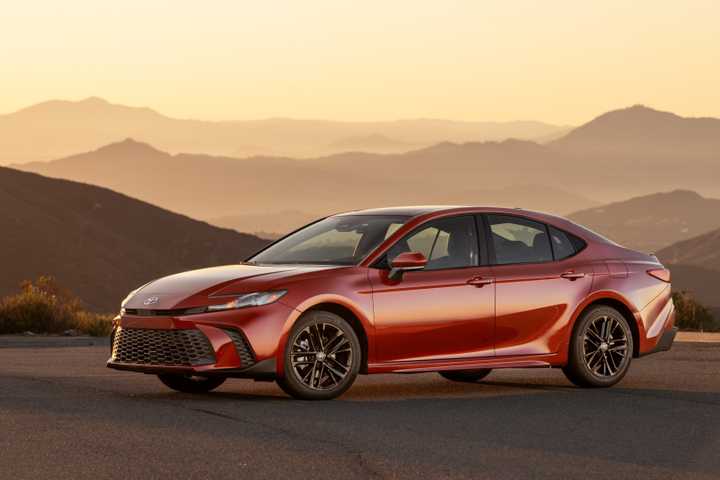
Front 3/4 shot of 2026 Toyota Camry parkedToyota
The hybrid sedan market is a well-catered-for one in 2026, and the 2026 Camry Hybrid is up against some tough competition. J.D. Power rates the ’26 Camry 82 out of 100 overall and 80 out of 100 for reliability , which puts it tied for third place overall with the 2026 Honda Accord, but behind the new Kia K5, the Hyundai Sonata, and the Nissan Altima.
The K5 and Sonata are both rated 83 out of 100 overall, while at the top, the new Altima is rated 84 out of 100. So, the Camry Hybrid is not that far behind. However, on more specific points, it does better than its rivals.
Where It Pulls Ahead Of Its Biggest Rivals
Shot of 2026 Toyota Camry lineupToyota
Compared to the Honda Accord Hybrid, Nissan Altima, and Kia K5, the Camry Hybrid is more fuel-efficient. The Accord Hybrid has a maximum combined mpg rating of 48, and the Altima and K5 can achieve 30 combined mpg. The most efficient Hyundai Sonata Hybrid can achieve the same combined mpg rating as the Camry Hybrid, and costs the same for gas per year. The Camry Hybrid’s driving range on a full tank is also greater, at 663 miles.
That range is better than the Kia K5 (474 miles), the Nissan Altima (486 miles), and the Honda Accord Hybrid (614 miles). Only the Sonata Hybrid has a longer range, at 673 miles. However, this can be attributed to the slightly larger fuel tank; the Camry Hybrid has a 13-gallon tank, and the Sonata has a 13.2-gallon tank.
2026 Toyota Camry Hybrid Nightshade Edition rear third quarter accelerating viewToyota
According to CarEdge, the five-year costs for the Camry Hybrid are different from Edmunds’ estimation, at $34,297. However, this still makes it a lot cheaper compared to its closest rivals, with the Accord costing $37,216 over five years, the K5 costing $39,853 over five years, the Sonata costing $42,786 over five years, and the Altima costing $43,708 over the same time.
The Camry Hybrid also has a longer estimated life expectancy than its closest competition; iSeeCars estimates the Sonata will last 119,244 miles, the Altima will last 143,362 miles, and the Accord will last 161,910 miles. With a life expectancy of 172,612 miles, the Camry Hybrid is estimated to last at least 10,000 more miles than even the bulletproof Accord.
The Only Compromises You Should Know About
POV shot of 2026 Toyota Camry interior showing cockpitToyota
Longevity-wise, a new Camry Hybrid looks ideal, especially when you consider the 15.1 cubic feet of storage space, 42.1 inches of front legroom, and 38 inches of rear legroom. However, you will have to bear some things in mind. While the ride is built for complacent everyday driving, it is not sporty. After twenty years of driving one, it is safe to presume you’ll be comfortable not pushing it hard through back roads alongside sports sedans and smaller cars.
Speed is also not its forte. The quickest 0–60 mph times have been clocked in the high 6-second range, regardless of whether you opt for front-wheel drive or all-wheel drive. Lastly, Toyota’s hybrid batteries do last for years, but at around 150,000 miles, you will need to replace the Camry Hybrid’s HEV battery, and it will cost you $3,000 (in 2026). We can’t tell the future, but in 20 years, it is likely to cost a bit more.
The Toyota Camry Hybrid Could Be The Smartest Long-Term Car You Can Buy
Front action shot of 2026 Toyota Camry in silver being drivenToyota
The biggest thing the new Camry Hybrid has going for it is Toyota’s bulletproof build behind it and its relatively simple design. Toyota hasn’t loaded it up with adaptive suspension systems, a high-strung turbo, or adaptive engine systems. The design is largely simple; you get a good amount of interior space, and durable materials are used throughout the cabin. Despite the hybrid system and decent cabin tech, the Camry follows a relatively traditional sedan formula, and it works.
Starting prices for the new Camry Hybrid lineup are also appealingly low. The base trim LE has a starting price of $29,600; the SE, $32,100; the Nightshade, $33,100; the XLE, $34,800; and the XSE, $36,000. Depreciation rates of Toyota models, including the Camry, are some of the best on the market, but in 20 years, that isn’t likely to matter, especially if you have put 200,000+ miles on the clock. However, the estimated low ownership costs and decent equipment will matter.
Shot of 2026 Toyota Camry interior showing front cabinToyota
The LE gets fabric-trimmed seats, an eight-inch touchscreen, Qi wireless charging, and a 7-inch digital cluster. The Camry SE and Nightshade trims are equipped with SofTex upholstery; you also get a leather-wrapped steering wheel and an available 12.3-inch display and gauge cluster.
The XLE is equipped with leather and microfiber-trimmed seats, better acoustic glass, LED ambient lighting, and an auto-dimming rearview mirror. At the top, the XSE has perforated leather-trimmed heated seats, a nine-speaker JBL audio rig, and a 12.3-inch dual-screen setup, while a 10-inch HUD is available. It is the most luxurious trim available, but it is still not over the top.
Front 3/4 action shot of 2026 Toyota Camry Hybrid being drivenToyota
In a market obsessed with bigger screens, subscription features, and increasingly complex drivetrains, the new Camry Hybrid feels refreshingly traditional in all the right ways.
It’s designed to last rather than just impress, blending proven hybrid tech with real-life usability, space, and low running costs. If you are looking for a hybrid sedan with the intention of driving it until the odometer looks ridiculous, few new vehicles make a stronger case than the Camry Hybrid.
Base Trim Engine
2.5-liter Four-Cylinder Hybrid
Base Trim Transmission
CVTi-S CVT
Base Trim Drivetrain
Front-Wheel Drive
Base Trim Horsepower
184 HP @6000 RPM
Base Trim Torque
163 lb.-ft. @ 5200 RPM
Make
Toyota
Model
Camry
Segment
Midsize Sedan
Sources: Toyota, Edmunds, CarEdge, iSeeCars, FuelEconomy.gov, Kelley Blue Book, and J.D. Power.












No Comments