
The Motorcycle That Delivers Harley Style Without Harley Ownership Costs
Full-dress touring bikes occupy a unique corner of the motorcycling world. They are rolling expressions of cross-country freedom for generations of riders with a thumping V-twin engine pulsing beneath a teardrop fuel tank. For many, that image is inseparable from one particular iconic brand – Harley-Davidson. However, entering that prestigious heavy-touring club has traditionally required a hefty financial investment.

We’re not talking about just the dealership desk, but throughout the entire lifespan of the motorcycle. Fortunately for long-distance enthusiasts, you do not need an American emblem on the tank to enjoy the grand-touring lifestyle. One veteran Japanese heavyweight cruiser provides the full-dress touring experience, unmistakable styling, and a big-bore V-twin muscle at a fraction of the price.
Why Harley-Style Touring Motorcycles Hold Massive Appeal
There is something inherently romantic about saddling up a big-displacement touring rig and heading toward the horizon. The classic full-dress tourers remain the gold standard for highway comfort, offering unmatched wind protection, luggage capacity, and relaxed power. Harley-style touring motorcycles have lasted because they sell an experience as much as a means of transportation. They promise presence, comfort, and a sense of occasion, mixing old-school cruiser proportions with serious long-distance capability in a way that still resonates with riders.


That appeal is especially strong for those who prefer a bike that looks substantial in the parking lot and calm on the freeway. The formula is familiar – a characterful V-twin, low-slung ergonomics, and enough comfort to make all-day riding feel effortless. It is a style built around emotional pull, and that emotional pull is exactly why buyers keep returning to this category even when there are more modern alternatives. For riders who value traditional American cruising aesthetic over sport-touring urgency, nothing else quite scratches the itch.
The Hidden Costs Of Owning A Traditional American Tourer

While the appeal of traditional full-dress American tourers is undeniable, the financial reality of owning one can be daunting. The sticker price is only part of the equation. Once you factor in dealer markups, premium accessories, scheduled service, and the temptation to personalize a bike that already carries a strong brand identity, the total ownership costs can climb quickly. That is where the value proposition becomes more complicated.

Buyers may love the image and heritage, but many eventually realize they are paying extra for a brand as much as for the touring hardware itself. That is precisely why many experienced riders have started looking for alternatives that deliver the same touring experience without the same financial burden and this Japanese tourer does exactly that.
The Kawasaki Vulcan 1700 Voyager Is The Closest Thing To A Harley Without The Harley Price
MSRP: $20,199

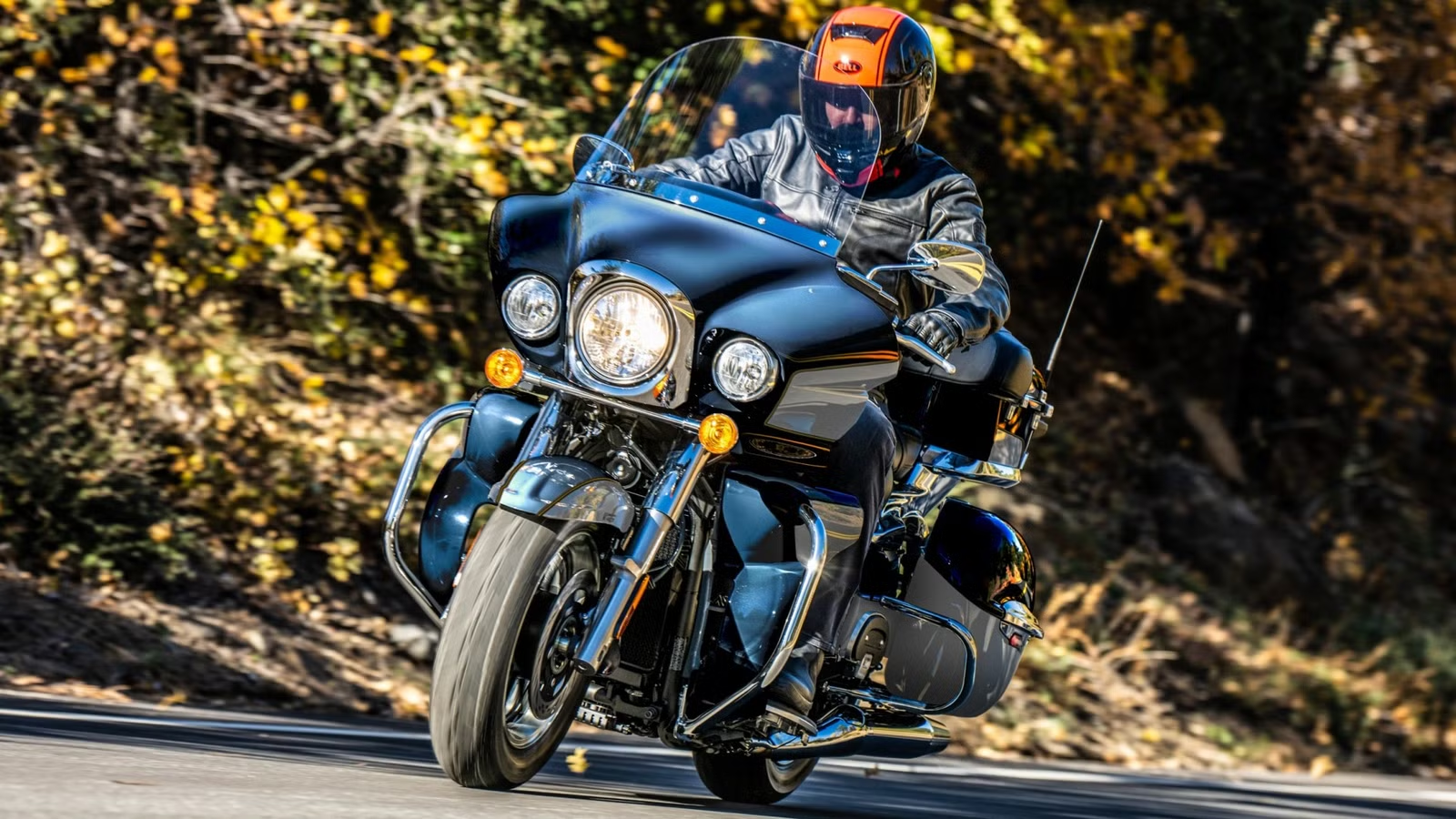
The motorcycle in context is the Kawasaki Vulcan 1700 Voyager. At first glance, it looks exactly like what many riders imagine when they think of a classic American full-dress tourer. It has the classic American touring silhouette with a large frame-mounted fairing, integrated hard saddlebags, cruise control, and substantial road presence that define the segment. Yet its pricing and ownership experience are typically far more approachable than comparable American alternatives.

Retailing at an MSRP of $20,199 before taxes, it undercuts comparable traditional tourers by nearly $12,000 while offering a fully equipped ride straight off the showroom floor. Kawasaki has not attempted to build a sport-tourer disguised as a cruiser. The Vulcan 1700 Voyager embraces traditional touring-cruiser values completely, which is what makes it such a compelling alternative for riders who want the classic experience rather than a modern reinterpretation of it.
A 1,700cc V-Twin Built For Relaxed Long-Distance Riding

At the heart of the Kawasaki Vulcan 1700 Voyager is a massive 1,700cc liquid-cooled 52-degree V-twin engine. That size and layout matter because they shape the bike’s personality more than peak output figures ever will. However, talking about numbers, it develops 82 horsepower at 5,000 RPM and a peak torque of 107.6 pound-feet at as low as 2,750 RPM. This is a motor designed to loaf along effortlessly on the interstate, deliver strong low-end torque, and make passing feel easy without demanding constant shifting.
Power is routed through a smooth six-speed transmission featuring a tall overdrive sixth gear, allowing the engine to turn low RPMs at highway speeds for quiet, relaxed cruising with reduced vibration. Kawasaki also includes several features that enhance long-distance usability, including electronic cruise control, electronic throttle valves, and a shaft final drive. The shaft drive is particularly important because it eliminates the regular cleaning, adjustment, and replacement requirements associated with chain-driven motorcycles.
Traditional Cruiser Styling With Standard Touring Features

One of the Vulcan 1700 Voyager’s biggest strengths is that it looks complete straight from the factory. Many touring motorcycles require expensive option packages to achieve the fully equipped appearance that riders want. The Voyager arrives with a large frame-mounted fairing, integrated hard saddlebags (10.5 gallons each) paired with a massive color-matched top trunk (13.2 gallons) that can easily hold two full-face helmets, a spacious passenger backrest, floorboards for both rider and passenger, and a tall windscreen as standard equipment.

The flowing fenders, abundant chrome accents, and the overall styling create the unmistakable silhouette of a classic American touring motorcycle. Kawasaki has also equipped the Vulcan 1700 Voyager with a four-speaker AM/FM/WB audio system with SiriusXM compatibility, intercom-headset support, and integrated touring instrumentation. There is also electronic cruise control and Kawasaki’s Advanced Coactive-braking Technology (K-ACT) II ABS. The latter intelligently links front and rear brakes for optimum stopping force and stability.
Japanese Reliability With Lower Ownership Costs Makes the Difference

This is where the Vulcan 1700 Voyager separates itself from many traditional American touring motorcycles. It comes out of the box fully equipped with touring essentials at a lower MSRP than rivals, and even routine service items like oil filters, brake pads, tires, and drive belts cost significantly less than competitors. Moreover, Japanese engineering is legendary for exceptional reliability, and the Voyager is no exception. It truly shines over years of ownership with minimal drama.
This Might Be The Cheapest Way To Experience Classic American Touring

The flagship touring segment includes several respected alternatives, but the Kawasaki Vulcan 1700 Voyager occupies a particularly interesting position among them. Against rivals, the Voyager’s advantage is not that it outmuscles everything else; it is that it delivers the basics right without costing a bomb. When evaluating full-dress tourers, the price-to-performance ratio of the Kawasaki Vulcan 1700 Voyager becomes undeniable.

Competing full-dress motorcycles like the Harley-Davidson Street Glide Limited (starting at $32,999) and the Indian Roadmaster (starting at $34,999) cost over $12,000 more upfront than the Kawasaki Vulcan 1700 Voyager (starting at $20,199). The Harley-Davidson Street Glide Limited is the obvious emotional benchmark, and the Indian Roadmaster brings prestige and a richly appointed feel, but the Kawasaki answers with a similar touring package and a lower entry price, making it the smartest way to experience classic American touring.
Source: Kawasaki

Related posts



Latest Post


No Comments