
The Used Lexus SUV That Owners Keep For A Reason
Once reserved for the wealthy, used luxury SUVs like the BMW X5, Mercedes-Benz GLE, and Audi Q7 are now within reach for a fraction of their original $70,000-plus price tags. The allure is obvious: plush cabins, cutting-edge tech, and badge prestige—all at a steep discount. But beneath the surface, these engineering marvels hide a catch.

As cutting-edge features age, repair bills for turbo engines, air suspension, and digital systems can quickly erode any sense of a bargain, reminding buyers that luxury always comes at a price—sometimes long after you’ve driven off the lot. Yet one Japanese luxury SUV ignored the industry’s obsession with constant reinvention—and years later, that decision has made it one of the smartest used luxury SUVs money can buy.
Why Some Luxury SUVs Struggle To Age Gracefully
Expensive Repairs And Complex Technology Hurt Long-Term Ownership
But before revealing the luxury SUV that quietly bucked the trend, it’s worth taking a closer look at what the data says. Dependability studies speak volumes. European luxury SUVs continue to dazzle with performance, refinement, and tech, yet Japanese brands have steadily built a reputation for bulletproof reliability. According to J.D. Power’s Quality & Reliability ratings, the 2020 BMW X5 scored 81/100, while the 2020 Mercedes-Benz GLE and the 2019 Audi Q7 lagged with 69/100 apiece. Even with BMW leading its class, these models remain vulnerable to sharp depreciation and rising maintenance costs as the years roll on.

Ironically, the same features that make new luxury SUVs so compelling can morph into liabilities as they age. For owners, the honeymoon lasts as long as the warranty; beyond that, maintenance often grows more complex and costly.

As Steven Elek, head of auto data analytics at Consumer Reports, puts it: “The difference in maintenance costs between brands can amount to thousands of dollars over a decade. Expensive luxury vehicles, in particular, tend to be among the costliest to maintain long-term.”
The 2010–2023 Lexus GX 460 Quietly Built A Loyal Following
Old-School SUV Engineering Wrapped In Lexus Luxury

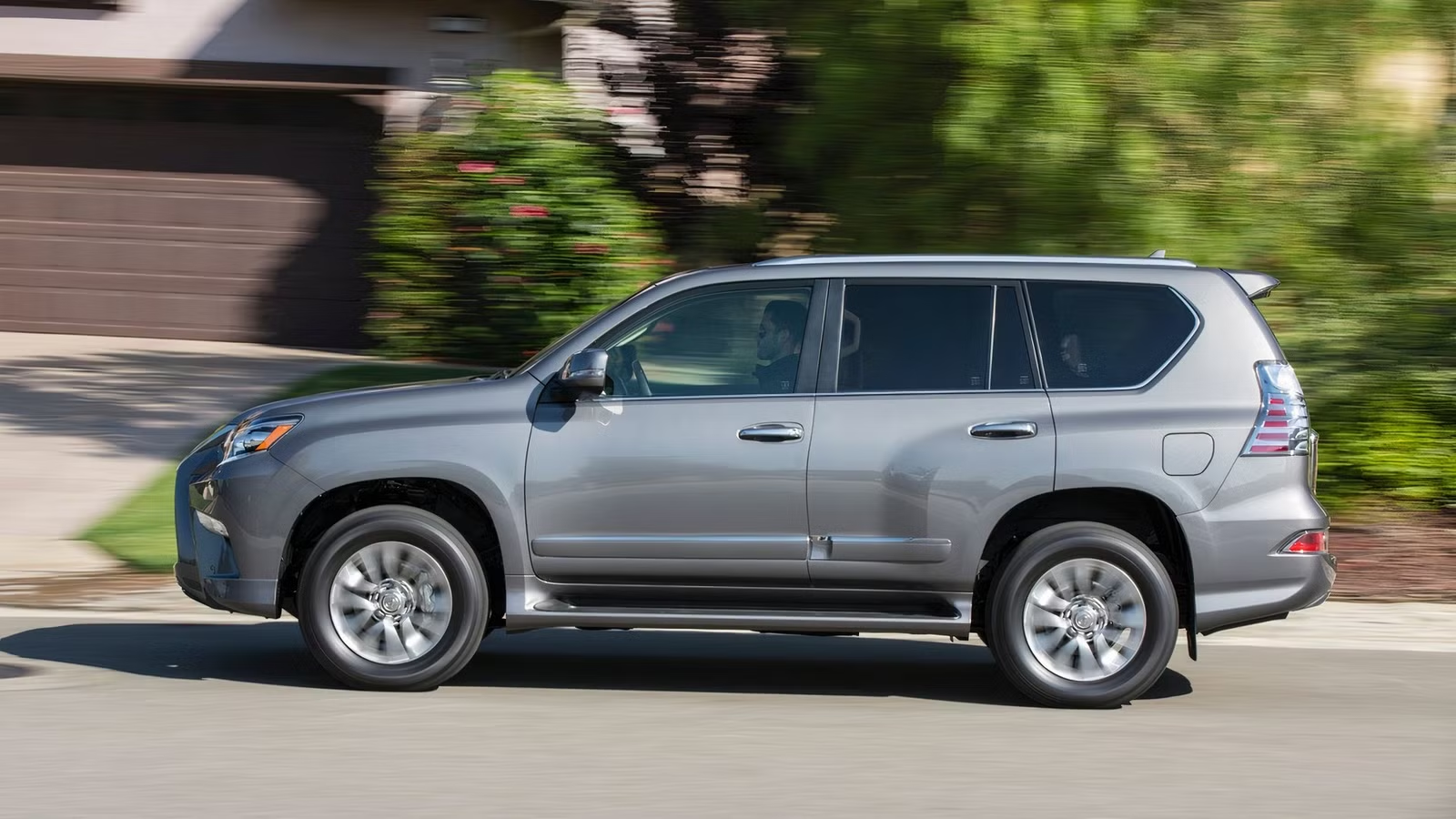
Introduced in 2010, the GX 460 entered the market as competitors embraced lighter unibody designs and cutting-edge drivetrains. Lexus chose a different route, refining its proven platform—shared with the legendary Toyota Land Cruiser Prado—rather than reinventing the wheel. While rivals focused on on-road dynamics, the GX stayed true to its roots with body-on-frame construction, full-time four-wheel drive, and a low-range transfer case—features built for real adventure, not just showroom appeal.
While rivals chased every new trend, the Lexus GX 460 stood firm. From 2010 to 2023, Lexus focused on refining its trusted mechanicals instead of constant reinvention—a strategy that’s made the GX one of the most sought-after used luxury SUVs today. J.D. Power’s Quality & Reliability ratings have remained consistently strong across multiple GX 460 model years, including an 89/100 score for the 2012 model and another 89/100 for the final 2023 version. The results reinforce the enduring value of Lexus’ proven engineering.
Inside, The GX Delivers Uncompromising Comfort And Quality

Lexus favored time-tested materials and meticulous build over fleeting tech trends, creating a cabin that ages with grace. Excellent sound insulation, plush seating, and thoughtful touches—such as heated and ventilated seats, tri-zone climate control, and the available Mark Levinson audio system—guarantee a tranquil, luxurious environment for years to come. As Duncan Brady observed in his MotorTrend review, “Luxurious high-quality materials and a smooth, isolated ride quality remind the driver that this is a Lexus, not a Toyota.”
Consistency is the GX’s hallmark. Instead of frequent redesigns, Lexus opted for thoughtful updates—tweaking styling, infotainment, and safety features—while keeping the trusted V8, six-speed automatic, and body-on-frame chassis unchanged. This approach makes 2014 and newer models especially desirable among enthusiasts.

As Car and Driver stated in its review, “it doesn’t stack up that well against today’s more modern mid-size luxury SUVs,” yet the GX is “in rarefied air when it comes to off-road capability.” While critics sometimes saw this as a weakness, it became one of the GX’s greatest strengths.
What Makes The GX 460 So Durable
A Proven V8 And Body-On-Frame Simplicity Still Matter

The Lexus GX 460’s durability begins under the hood with Toyota’s naturally aspirated 4.6-liter V8, producing 301 horsepower and 329 pound-feet of torque. While not as powerful as some turbocharged rivals, this engine is renowned for its smoothness, refinement, and long-lasting reliability.
2010–2023 U.S. Lexus GX 460 Specifications
|
Specification |
2010–2023 U.S. Lexus GX 460 |
|---|---|
|
Engine |
4.6-liter naturally aspirated V8 (1UR-FE) |
|
Power |
301 hp |
|
Torque |
329 lb-ft |
|
Transmission |
6-speed automatic |
|
Drivetrain |
Full-time four-wheel drive |
|
Transfer Case |
Two-speed with low-range |
|
Chassis |
Body-on-frame |
|
Seating |
7 (later models could be configured with 5 in some trims) |
|
Towing Capacity |
6,500 lb |
|
Fuel Tank |
23.0 gallons |
The GX’s relaxed powertrain translates directly to the driving experience. As Dorian notes, it “rides with a cushy composure that’s uncommon for a body-on-frame SUV.” The trade-off perfectly sums up the GX’s philosophy: prioritizing lasting durability over outright efficiency. Fuel economy remains its biggest compromise, returning an EPA-estimated 15 mpg city, 19 mpg highway, and 16 mpg combined.

Additionally, models equipped with the Kinetic Dynamic Suspension System (KDSS) deliver outstanding off-road wheel articulation without sacrificing on-road comfort. Features like Crawl Control and Multi-Terrain Select further enhance capability when conditions get tough. This emphasis on robust, proven engineering is a hallmark that sets the GX apart.
Why Owners Hold Onto Them For So Long
Reliability And Everyday Usability


Practicality is a core strength of the GX. With seating for up to seven, a 6,500-pound towing capacity, and true off-road credentials, it remains a remarkably versatile luxury SUV. Fold the second and third rows, and cargo space expands to 64.7 cubic feet—ready for luggage, camping gear, or bigger hauls. The cabin isn’t perfect, though. As Jared Rosenholtz observed for CarBuzz, the GX is “deceptively tight in the interior,” with a third row best suited for children on longer journeys.

Perhaps the greatest endorsement of the GX 460 isn’t found in a reliability survey—it’s in the way owners and the market continue to value it years after leaving the showroom. Browse dedicated Lexus forums, and it’s not uncommon to find examples with well over 200,000 miles still serving as dependable daily drivers, often with owners citing little more than routine servicing and preventive maintenance.
That Confidence Is Reflected In The Used Market

On Bring a Trailer, clean, low-mileage GX 460s consistently attract enthusiastic bidding, with well-preserved 2021 examples frequently selling for more than $40,000—strong money for an SUV that has already absorbed much of its initial depreciation. Kelley Blue Book paints a similar picture. A 2020 Lexus GX 460, which carried a starting MSRP of $56,815 when new, still commands a fair purchase price of around $36,000 today. Even more impressively, KBB describes the GX as maintaining “exceptionally high resale values” and ranks the 2021 model among the top 10 percent of SUVs for depreciation, having lost just 25% of its value over three years.
Perhaps that’s why so many owners refuse to sell them. It has become a vehicle that buyers actively seek out because of its reputation. In today’s market, reputation often carries more weight than specifications.
Why The GX 460 Still Feels Like A Smart Used Luxury SUV
The Rare Luxury SUV That Prioritized Longevity Over Trends

Bargains like a decade-old BMW X5, Mercedes-Benz GLE, or Audi Q7 often turn into money pits as the costs of complex technology and repairs accumulate. The Lexus GX 460 takes a different route. The result is more predictable ownership costs. RepairPal reports the GX 460’s average annual maintenance at $770—less than the segment average—and only nine percent of repairs are severe.

Strong resale values, high J.D. Power reliability scores, and Toyota’s reputation all reinforce its status as one of the smartest used luxury SUV buys. In a market where long-term costs often outweigh flashy features, the GX’s focus on endurance stands out as its defining advantage. That, perhaps, is the GX’s greatest achievement. It wasn’t engineered to dominate comparison tests or showcase the latest technology. It was designed to remain dependable long after many of its rivals had become expensive liabilities. In today’s used luxury market, that philosophy is more valuable than ever.
Sources: Lexus, J.D. Power, Kelley Blue Book, RepairPal

Related posts





Latest Post


No Comments