
The Japanese Cruiser Making 124 LB-FT At 2,500 RPM For Around $5,000 Used
Big V-twin cruisers usually come with big price tags, especially when they carry a famous American badge. However, the used motorcycle market offers some interesting alternatives. One Japanese heavyweight produces a massive 124 lb-ft of torque at just 2,500 rpm, packs nearly 1.9 liters of displacement, and can cost around $5,000 used. It also delivers the sound, styling, and highway manners that cruiser enthusiasts love. Better still, its traditional appearance hides some clever engineering. Of course, that much motorcycle for so little money comes with a few quirks worth knowing about.
Big V-Twin Cruisers Have Traditionally Come With Big Expectations

American heavyweight cruisers have always promised more than basic transportation. Large-displacement V-twin engines, deep exhaust notes, low seats, and imposing styling define the experience. Harley-Davidson remains the cultural benchmark, thanks to its long history and unmistakable identity. These motorcycles favor comfortable highway cruising over outright speed, with enough low-end muscle to make passing effortless. For enthusiasts, the engine’s rumble matters almost as much as its performance.
Horsepower takes a back seat to torque in this segment. Riders want an engine that pulls strongly without constant gear changes, especially when carrying a passenger or luggage. Unfortunately, certain Harley-Davidson models command strong used prices because of their reputation and loyal following. Buyers who simply want the classic big-twin experience might find better value elsewhere.
One Japanese Heavyweight Took The American Formula To An Extreme


Japanese manufacturers have spent decades building cruisers inspired by American motorcycles. However, one particularly ambitious heavyweight took the formula further than most. Its enormous, nearly 1.9-liter, air-cooled V-twin featured traditional pushrods and an unmistakable exhaust rumble. The engine prioritized strong acceleration at low speeds rather than high-rpm performance. A five-speed transmission and belt final drive reinforced its relaxed character.
Underneath the classic styling, though, the engineering was surprisingly sophisticated. Yamaha combined modern fuel injection, an aluminum chassis, and clever combustion technology with the traditional V-twin layout. Even the exhaust featured a system designed to improve power delivery. The result was an old-school cruiser with some distinctly modern tricks up its sleeve.
The Yamaha XV1900 Delivers 124 LB-FT Of Torque For Around $5,000 Used

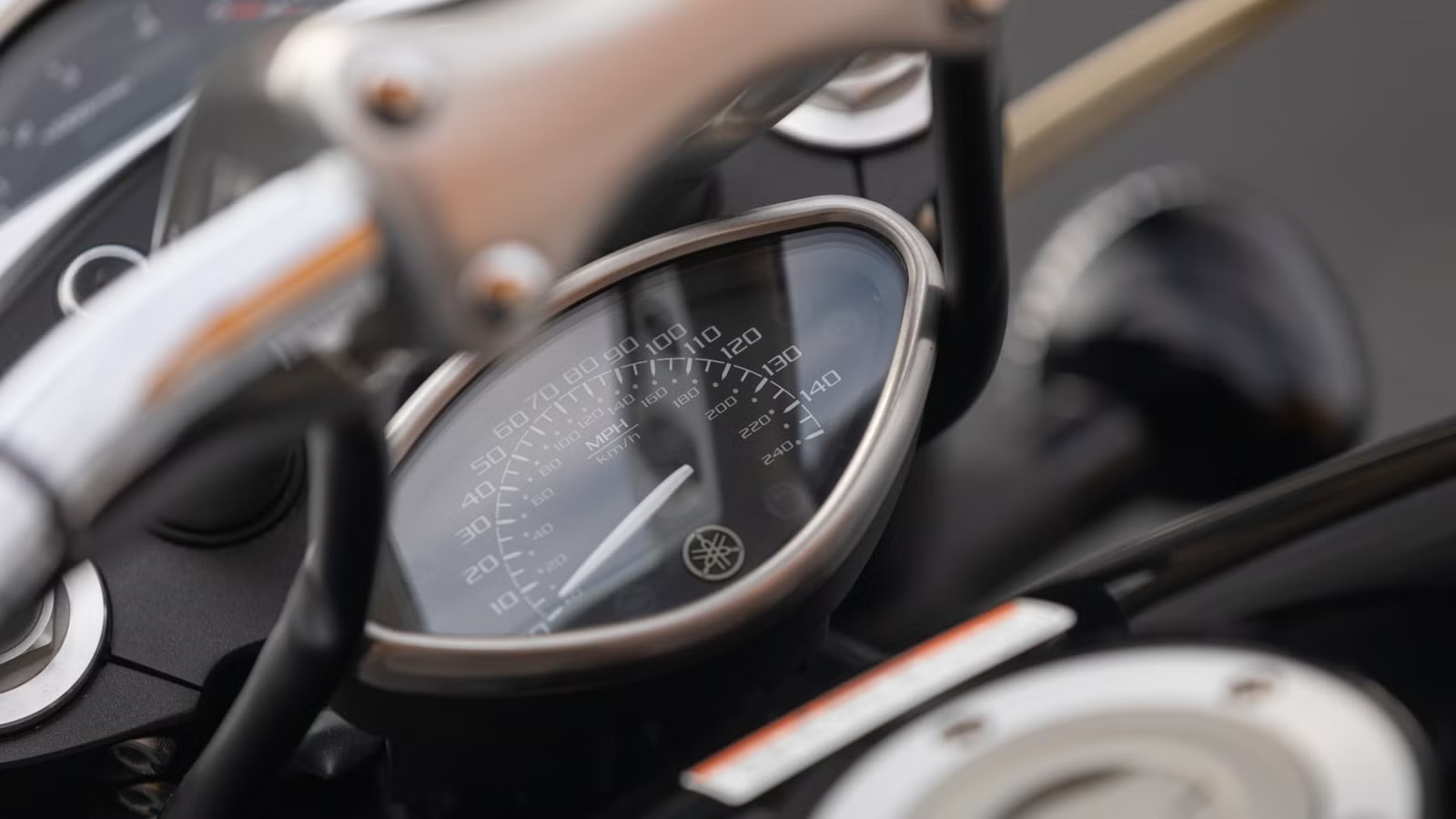
The motorcycle is the Yamaha XV1900, a heavyweight cruiser family introduced for the 2006 model year. Its American character was so convincing that experts described it as the only Japanese cruiser that’s “more Harley than Harley.” Despite the XV1900 designation, the engine actually displaces 1,854cc, or approximately 113 cubic inches. The 48-degree, air-cooled V-twin produces around 124 lb-ft of torque at just 2,500 rpm. Its 100mm bore and 118mm stroke underline Yamaha‘s focus on strong low-speed pulling power.
Some published specifications quote approximately 100 horsepower at the rear wheel, but torque remains the main attraction. The five-speed gearbox lets riders exploit that substantial low-rpm output, while the belt final drive provides smooth power delivery without regular chain lubrication. Highway cruising feels effortless, and overtaking rarely demands frantic downshifting.

Yamaha offered three main versions. The Roadliner delivered traditional cruiser styling with relatively little touring equipment. The Stratoliner added long-distance comforts, including a windshield, saddlebags, and passenger backrest. The Raider, introduced for 2008, went in a different direction with stretched, chopper-inspired styling and a massive 210-section rear tire.
More recently, RideApart highlighted an XV1900 advertised for $5,000 with approximately 6,000 miles. Although that particular listing is historical, used examples can still appear around the same price today. Naturally, condition, mileage, and equipment affect what buyers actually pay.
Old-School Cruiser Looks Hide Some Surprisingly Clever Engineering
One of the XV1900’s most interesting features is Yamaha’s EXUP (Exhaust Ultimate Power Valve) system. Usually associated with sportier motorcycles, this exhaust valve helps optimize power delivery at low and middle engine speeds. Yamaha also fitted two spark plugs per cylinder to improve combustion, along with dual engine balancers to reduce unwanted vibration. Oil-assisted cooling around critical cylinder-head areas helps manage heat. These features give the enormous V-twin a refined character without removing the satisfying pulse that cruiser enthusiasts expect.
The aluminum chassis is another highlight. Yamaha’s Roadliner frame weighed approximately 37 pounds, considerably less than the steel frame used on the earlier Road Star. An aluminum swingarm and carefully managed weight distribution further improve handling. Contemporary reviews praised the motorcycle’s stability and surprisingly agreeable cornering manners.
However, physics still gets the final word. Depending on the version, an XV1900 can weigh roughly 735 to more than 800 pounds ready to ride. That’s a lot of motorcycle to maneuver through tight parking lots or crowded city streets. Skipping leg day probably isn’t advisable.
The XV1900 Is A Bargain, But Its Ownership Quirks Are Hard To Ignore
Owners frequently praise the XV1900’s strong engine, dependable performance, and enjoyable handling. Some even consider it more reliable than American and European cruisers they’ve previously owned, although these personal experiences don’t establish a broader reliability ranking.
Long-term ownership reports suggest that a properly maintained example can provide years of enjoyable riding. Still, certain complaints deserve attention. Some riders find the stock seat uncomfortable over longer distances, while others report annoying wind buffeting with particular windshield setups. The motorcycle’s sheer weight also makes low-speed maneuvering more demanding than its relaxed highway manners suggest.
Routine maintenance brings a few frustrations, too. The air filter sits beneath the fuel tank, complicating what should be a simple replacement. Oil changes require removing three drain plugs because of the engine’s dry-sump lubrication layout. It’s not particularly difficult work, but it takes more effort than the bike’s straightforward appearance suggests.
Of course, used buyers should also avoid treating low mileage as automatic proof of good health. Service history, storage conditions, tire age, brake condition, and final-drive belt wear deserve close inspection. However, a well-maintained XV1900 around $5,000 offers enormous displacement, serious low-end torque, and classic cruiser presence for remarkably little money. For riders who value the experience more than the badge, that’s a compelling combination.
Source: Yamaha, RideApart

Related posts


Latest Post



No Comments