
5 Best Cooling Mods For Your Car This Summer
Extreme summer heat is bad for us, but worse for cars. Every part of a vehicle’s cooling system has to work harder to keep engine, transmission, and intake temperatures under control when ambient temperatures climb; add in stop-and-go traffic, spirited driving, towing, or long highway trips, and factory cooling systems can quickly reach their limits.

While modern vehicles are designed to handle everyday driving in hot weather, enthusiasts, truck owners, and anyone pushing their vehicle beyond normal conditions can benefit from a few strategic upgrades. Better cooling doesn’t just help maintain performance; it can also reduce wear, improve reliability, and extend the lifespan of expensive components. Whether you’re preparing a track toy for summer events or keeping a tow rig happy on long grades, these are five of the best cooling mods worth considering.
Upgrade To A High-Performance Aluminum Radiator
The radiator is the centerpiece of any engine cooling system. Upgrading to a high-performance aluminum unit is one of the most effective ways to improve heat management. Aluminum versions, compared to many factory radiators, typically feature larger cores, wider coolant passages, and more efficient fin designs that allow them to dissipate heat faster.

When temperatures soar or the engine is under sustained load, the benefits become substantial. A larger aluminum radiator gives coolant more surface area to shed heat before circulating back through the engine, helping maintain stable operating temperatures even in demanding conditions.
For older vehicles whose original radiators have become clogged or less efficient over time, this upgrade is particularly helpful. This modification also delivers great results for heavily modified street cars, engine-swapped projects, and trucks that spend their summers towing campers or boats. A built LS-swapped muscle car, for example, produces considerably more heat than the factory cooling system was ever designed to handle, while a high-mileage Ram with a Cummins diesel can benefit from every bit of additional cooling capacity, especially if it’s hauling a fifth-wheel trailer.
Maintaining lower operating temperatures can reduce stress on hoses, gaskets, and other cooling system components over the long term, even if the temperature gauge rarely climbs into the danger zone. Relying only on the temperature gauge is sometimes not enough.
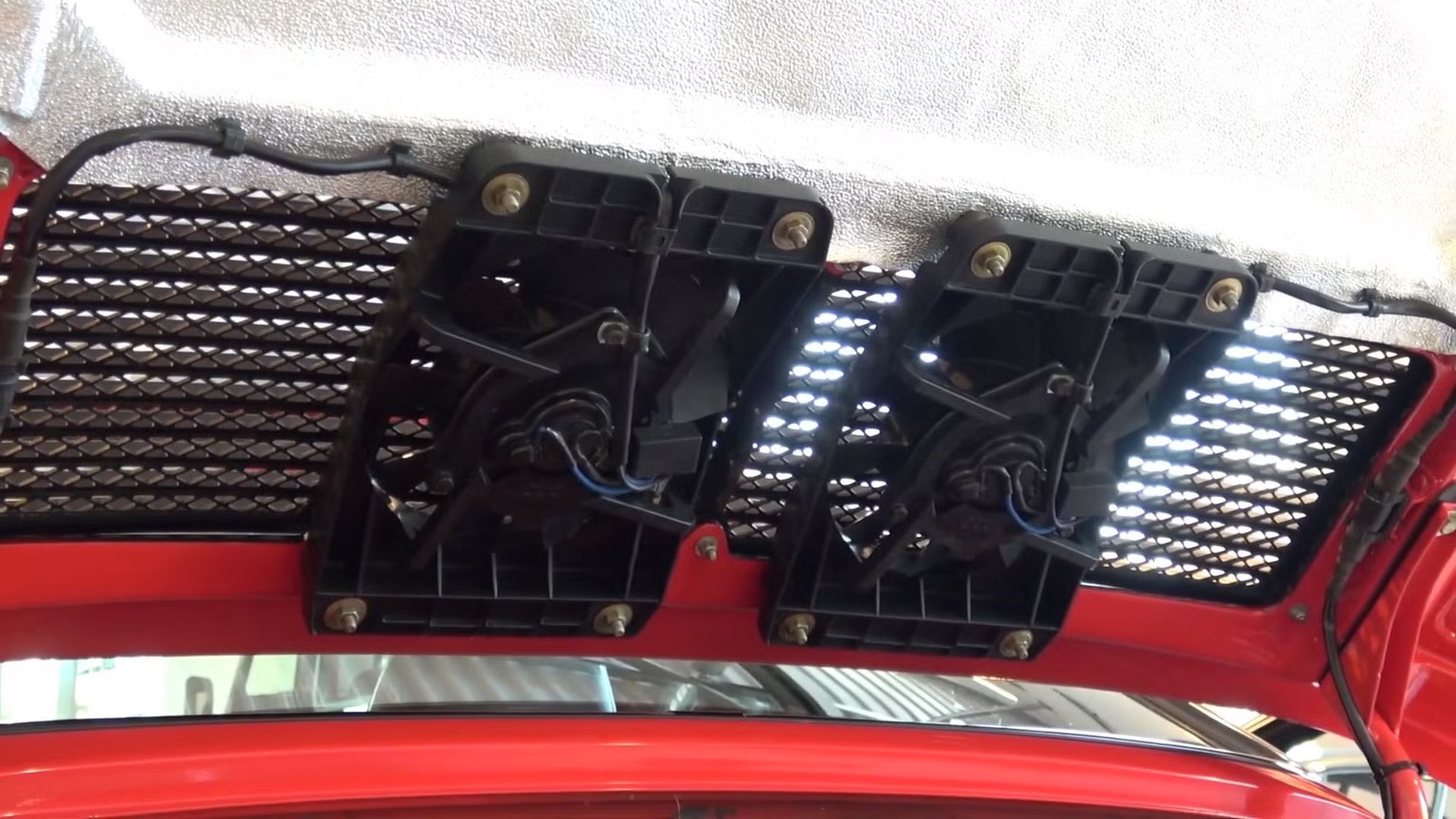
Install High-Flow Electric Cooling Fans
If cooling capacity is vital, so is airflow. Natural airflow through the grille does most of the cooling work at highway speeds, but when you’re stuck in traffic or idling with the air conditioning blasting on a 100-degree afternoon, it’s a different case entirely. Compared to many stock fan setups, high-flow electric cooling fans move significantly more air through the radiator, particularly at low speeds. They can deliver consistent airflow exactly when it’s needed most because they aren’t dependent on engine RPM like traditional mechanical fans.
With this modification, engine temperatures stay more stable during extended idle periods, while the air conditioning also performs better because the condenser receives improved airflow. Drivers who spend a lot of time commuting through city traffic often notice this improvement.
Even performance enthusiasts appreciate the flexibility of electric fans. Many aftermarket systems allow adjustable temperature settings or staged fan operation, letting the fans respond more precisely to changing conditions. Whether you’re crawling through downtown traffic or waiting in the staging lanes at the drag strip, improved airflow helps keep temperatures under control.
Add An External Engine Oil Cooler
Motor oil does far more than just lubricate moving parts; it also plays a critical role in carrying heat away from pistons, bearings, and other internal engine components. Oil’s capacity to protect the engine under heavy loads is compromised when oil temperatures rise and viscosity begins to drop.
In such cases, an external oil cooler routes oil through a dedicated heat exchanger before it returns to the engine and helps keep oil within its ideal operating temperature range. Cooler oil maintains its protective properties longer, especially during prolonged periods of hard driving.
Since turbochargers generate enormous amounts of heat that are transferred directly into the oil supply, turbocharged engines benefit tremendously from an external oil cooler. Likewise, track-day cars, autocross builds, and heavily modified street machines often experience sustained oil temperatures that exceed what factory systems were designed to handle.
This modification is also worthwhile for work-oriented vehicles. A diesel pickup towing a heavy trailer through mountain passes during the middle of summer puts tremendous stress on engine oil. Lower oil temperatures help preserve lubrication, reduce thermal breakdown, and contribute to longer engine life over thousands of miles.
Fit An Auxiliary Transmission Cooler

Heat is one of the biggest enemies of any automatic transmission. As transmission fluid temperatures climb, the fluid loses its ability to lubricate internal components effectively, accelerating wear on clutches, seals, and bearings. Factory transmission coolers are usually adequate for normal commuting, but towing, hauling, off-roading, or climbing long grades in extreme heat can quickly overwhelm the stock setup. That’s where an auxiliary transmission cooler comes into the picture.
Installed in front of the radiator, an external cooler gives transmission fluid an additional opportunity to shed heat before returning to the transmission. Lower operating temperatures help maintain fluid quality and reduce long-term wear, which translates to significantly longer transmission life.
Truck owners stand to gain the most from this modification. Whether you’re pulling a travel trailer with a Ford F-150, hauling equipment in a Chevrolet Silverado, or towing a race car with a Ram 2500, keeping transmission temperatures under control can prevent expensive repairs down the road. It’s also a worthwhile investment for SUVs that regularly tow boats or campers throughout the summer.
Upgrade To A Larger Performance Intercooler (Turbocharged Cars)

Turbochargers create more power by compressing incoming air, but there is a downside: compression generates heat. Hot intake air is less dense, reducing power and increasing the likelihood of engine knock. That’s why turbocharged vehicles rely on intercoolers to cool compressed air before it enters the engine. A larger, more efficient performance intercooler removes more heat from the intake charge, helping the engine maintain consistent power even during prolonged driving in high temperatures.
The biggest advantage comes in preventing heat soak. Anyone who has attended a summer track day has experienced it: after several hard laps, intake temperatures climb, the intercooler becomes saturated with heat, and engine performance starts to fade. The same thing can happen during repeated highway pulls or even after sitting in stop-and-go traffic on a 95-degree day before accelerating onto the interstate.
A larger intercooler provides more thermal capacity, allowing it to resist heat soak longer and recover more quickly. For turbocharged cars like a Subaru WRX, a boosted Toyota GR86, or a modified Volkswagen GTI, that means more consistent horsepower, lower intake temperatures, and improved engine efficiency throughout even the hottest summer drives.
The gains aren’t always about making more peak power. In many cases, they are about making sure the engine delivers the same performance on the tenth acceleration run as it did on the first, something every turbocharged enthusiast can appreciate when temperatures are working against them.
Source: JS Speedshop, YouTube, hdautoparts

Related posts





Latest Post


No Comments