
The All-New Toyota RAV4 PHEV Claims GTI-Beating Speed — Here’s What The Numbers Actually Mean
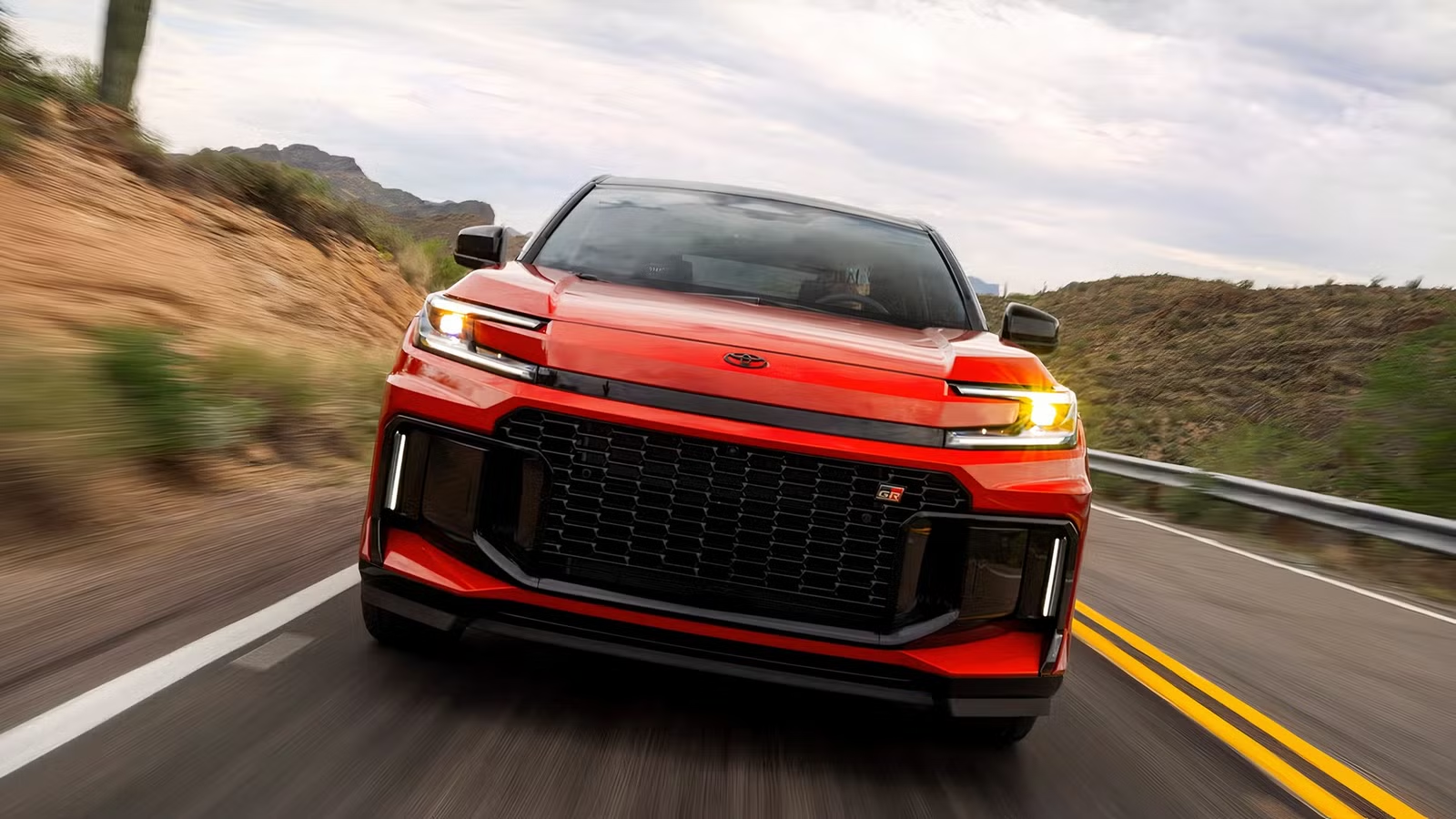
A family SUV outrunning a Golf GTI sounds like the setup to a joke. For the all-new Toyota RAV4 Plug-In Hybrid, it’s apparently the headline. A straight-line test published this week put the new RAV4 PHEV ahead of Volkswagen’s benchmark hot hatch, and the result has generated genuine buzz among compact SUV shoppers and performance enthusiasts alike.

The comparison matters because the Golf GTI has been the default answer to “what’s the most fun practical car you can buy?” for decades. When a five-seat family SUV starts showing up in the same sentence, it’s worth pausing to understand what’s actually happening under the hood — and whether the numbers tell the whole story for someone shopping in this segment.
How the RAV4 PHEV’s Combined System Output Changes the Performance Equation
The key to understanding the RAV4 PHEV’s acceleration claim is how plug-in hybrid systems produce power. Unlike a conventional petrol engine, a PHEV combines an internal combustion engine with one or more electric motors, and the combined system output — the number that matters at the wheels — is typically higher than either source alone. Electric motors deliver their full torque instantly, from zero rpm, which is exactly the kind of thrust that wins short drag races.

The Golf GTI, in its current form, produces around 241 horsepower from a turbocharged 2.0-liter four-cylinder. That’s a strong number for a front-wheel-drive hatchback, and it translates to a 0-60 mph time in the mid-five-second range under good conditions. The RAV4 PHEV’s combined system, drawing on both its petrol engine and electric motor, is engineered to deliver a meaningful power advantage over that figure — and critically, it routes drive to all four wheels through Toyota’s electric AWD setup, which puts power down more effectively off the line than a front-driver can manage.
The result, according to the test, is a RAV4 PHEV that moves through the 0-60 sprint faster than the GTI. That’s a real outcome, not a rounding error.
Apples and Oranges — Or a Genuine Shift in What Family SUVs Can Do?

It’s fair to push back on the comparison. The Golf GTI is a driver’s car built around a specific experience: a tight, responsive chassis, a short-throw manual gearbox option, and a sense of connection that a 4,000-pound SUV isn’t designed to replicate. Straight-line speed is one metric, and the GTI has never been primarily about drag racing. Buyers who want a GTI are buying something the RAV4 PHEV simply isn’t — a compact, agile hatchback that rewards enthusiastic driving on a winding road.
That said, the RAV4 PHEV’s performance figures do reframe what buyers in the compact SUV segment should expect. For someone who previously assumed a family-oriented PHEV would be slow and uninspiring, the idea that it can match or beat a respected hot hatch off the line is genuinely useful information. It signals that choosing a practical, fuel-efficient SUV no longer means accepting a performance penalty.
The broader trend supports this. Plug-in hybrids have been quietly closing the gap with performance-oriented petrol cars in real-world acceleration tests, partly because the electric motor’s instant torque delivery is so effective in the low-speed range where most everyday driving happens. The RAV4 PHEV is a beneficiary of that engineering progress.
What This Means for Buyers Considering the New RAV4 PHEV

For the practical buyer, the GTI comparison is less about bragging rights and more about recalibrating expectations. The new RAV4 PHEV arrives as a genuinely quick vehicle by mainstream SUV standards, with the added benefit of electric-only range for daily commuting and the fuel economy advantages that come with PHEV architecture. The Carbuzz analysis of the RAV4 PHEV’s electric range advantage over the BMW X5 — at a price point roughly $34,500 lower — underscores that this generation of RAV4 PHEV is positioned as a value-performance proposition, not just a green-credentials purchase.
The AWD system is worth noting for buyers in colder climates or those who want genuine all-weather confidence. Toyota’s electric rear motor setup provides traction benefits that go beyond acceleration — it’s a meaningful real-world advantage over front-wheel-drive alternatives in the segment.
Whether the RAV4 PHEV belongs in the same conversation as the GTI for driving enjoyment is a different question, and one that a spec sheet can’t fully answer. But on the numbers that matter most to a family SUV buyer — space, efficiency, all-weather capability, and now, acceleration — the new RAV4 PHEV makes a stronger case than this segment has seen in some time.
The GTI comparison will grab headlines, but the real story is simpler: the new RAV4 PHEV is fast enough that performance is no longer a reason to rule it out. For buyers who want practicality and efficiency without feeling like they gave something up, that’s a meaningful shift.

Related posts





Latest Post


No Comments