
Toyota Says Its Own PHEV Tech Isn’t Tough Enough For Real Truck Duty—And That’s A Big Deal For Tundra Fans
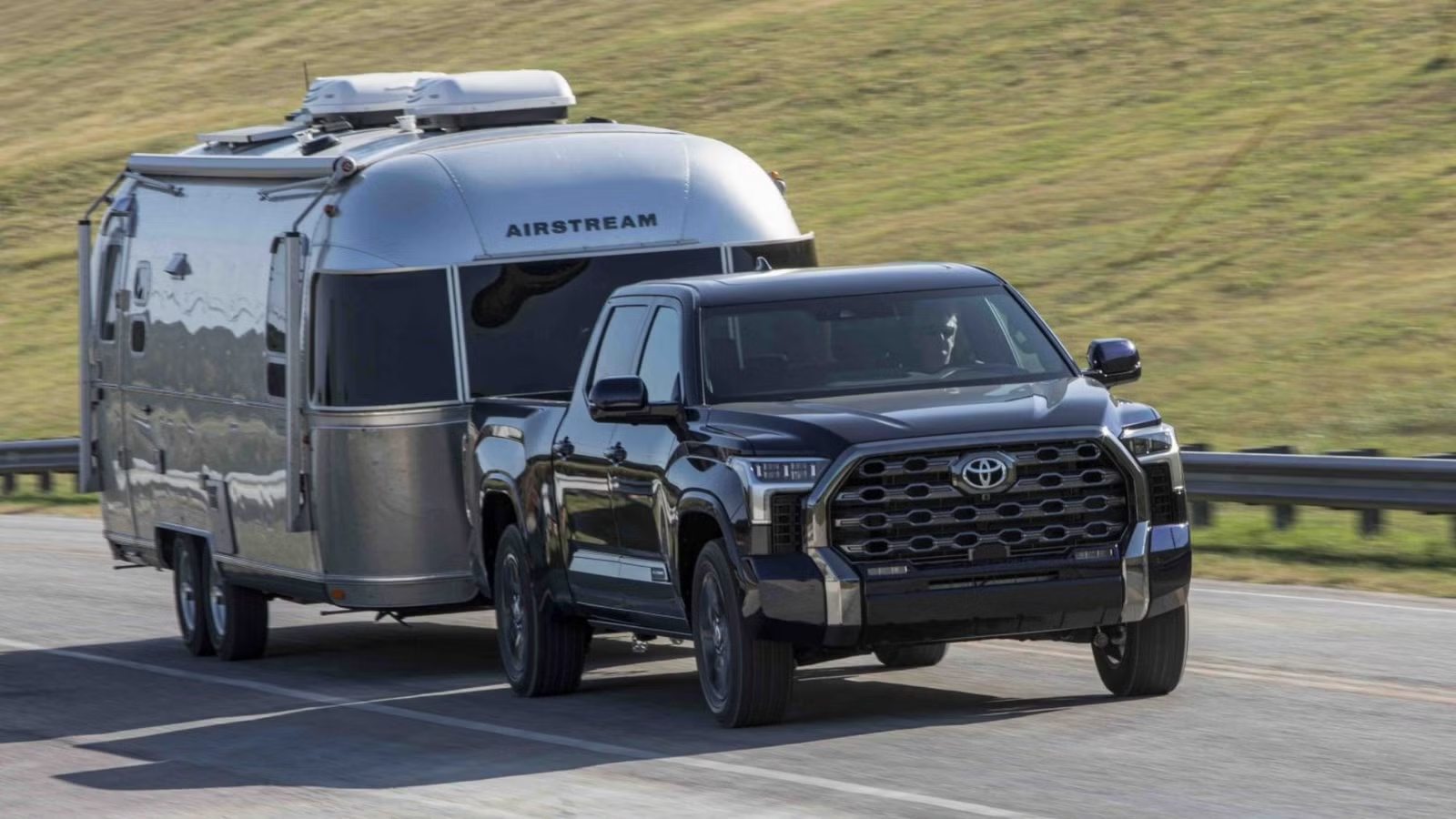
Toyota built its reputation on hybrid technology that works — the Prius proved it, the RAV4 Hybrid reinforced it, and the Tundra’s twin-turbocharged hybrid V6 brought that philosophy to full-size trucks. So when Toyota executives publicly state that plug-in hybrid technology isn’t yet capable of handling serious truck workloads, that’s not a minor footnote. It’s a significant strategic signal from the brand that arguably invented the mass-market hybrid.

Toyota confirmed this week that it won’t rush a plug-in hybrid version of the Hilux—its global workhorse truck—to market, citing potential compromises to payload and towing capacity. The admission carries weight well beyond one international model. For Tundra loyalists watching Toyota’s powertrain roadmap, it raises a pointed question: if PHEVs can’t handle Hilux duty, what does that mean for the next-generation Tundra?
What Toyota Actually Said—And Why It Matters
Toyota executives were direct: a plug-in hybrid Hilux isn’t coming because the technology would compromise the truck’s core capability. Payload and towing capacity—the numbers truck buyers actually use to spec a vehicle against a job—would take a hit that Toyota isn’t willing to accept. The concern isn’t purely about peak output. It’s about durability under sustained stress: battery cycling during a full day of hauling, thermal management when towing at highway speeds for hours, and the weight penalty a large battery pack imposes on a vehicle where every kilogram of payload matters.

Those aren’t abstract engineering concerns. A PHEV system that works well for a commuter SUV faces a fundamentally different stress profile in a truck. Towing a loaded trailer for 300 miles depletes a plug-in battery in the first few minutes, after which the system runs as a conventional hybrid—but now with the added weight of a large battery pack it can no longer use. That weight comes directly out of payload and towing ratings. Toyota’s engineers, it seems, ran that math and didn’t like the answer.
The Hybrid Pioneer’s Uncomfortable Contradiction

There’s an obvious tension here. Toyota is simultaneously rolling out the RAV4 PHEV ahead of schedule, expanding plug-in hybrid options across its SUV lineup, and publicly stating that PHEV technology has real limits when truck-grade workloads enter the picture. The brand that made hybrids mainstream is now drawing a line between what plug-in systems can do in a crossover and what they can do under genuine working-truck conditions.
The Tundra’s current powertrain—a 3.5-liter twin-turbocharged V6 paired with a 48-volt mild hybrid system—reflects a different philosophy: use electrification to sharpen throttle response and improve efficiency without the complexity or weight of a full plug-in system. That approach has drawn some criticism from buyers who wanted more electric range, but Toyota’s latest statement suggests the brand views that trade-off as intentional, not a gap to be filled.
Rivals Are Betting Differently—And Taking On Real Risk

Ford, GM, and Ram are all moving toward PHEV or extended-range electric architectures for their full-size trucks, betting that buyers will accept some capability trade-offs in exchange for lower fuel costs and EV-eligible incentives. The Ford F-150 PowerBoost hybrid has already shown that electrification and serious towing can coexist—though it uses a conventional hybrid setup, not a plug-in. Ram’s upcoming PHEV architecture and GM’s work on extended-range systems push further into plug-in territory, with towing figures that look competitive on paper.
Whether those numbers hold up under sustained real-world load—a horse trailer on a mountain grade, a job site where the truck runs accessories all day—is exactly the question Toyota says it isn’t satisfied with yet. It’s a conservative position, but Toyota’s track record of letting competitors move first and then entering with a more refined product is well established. The Tundra hybrid arrived later than some expected, and it arrived working.
What This Means For The Next Tundra’s Powertrain

Reading Toyota’s Hilux statement against the Tundra’s trajectory points toward a few likely outcomes over the next three to five model years. A full plug-in hybrid Tundra appears unlikely in the near term—the same payload and towing concerns that ruled it out for the Hilux apply equally, and probably more so, for a full-size North American truck where capability benchmarks are higher and buyer expectations are less forgiving. A gas-only or conventional hybrid path looks more probable for the mainstream Tundra lineup.
For any GR-badged or high-output Tundra variant—the kind of truck that would prioritize performance over efficiency—a gasoline powertrain seems even more firmly locked in. GR’s engineering philosophy centers on weight reduction and mechanical purity; adding a large battery pack runs counter to both. If a GR Tundra ever materializes, expect it to stay on the twin-turbo V6, possibly with tuning that prioritizes output over economy. Tundra fans hoping for a plug-in option haven’t been told never, but Toyota has made clear they’ve been told not yet, and that’s a meaningful distinction from the brand that’s usually first to prove a hybrid concept works.

Related posts
Latest Post


No Comments