
The Toyota Sedan That Shares Its DNA With A Lexus ES For Half The Price
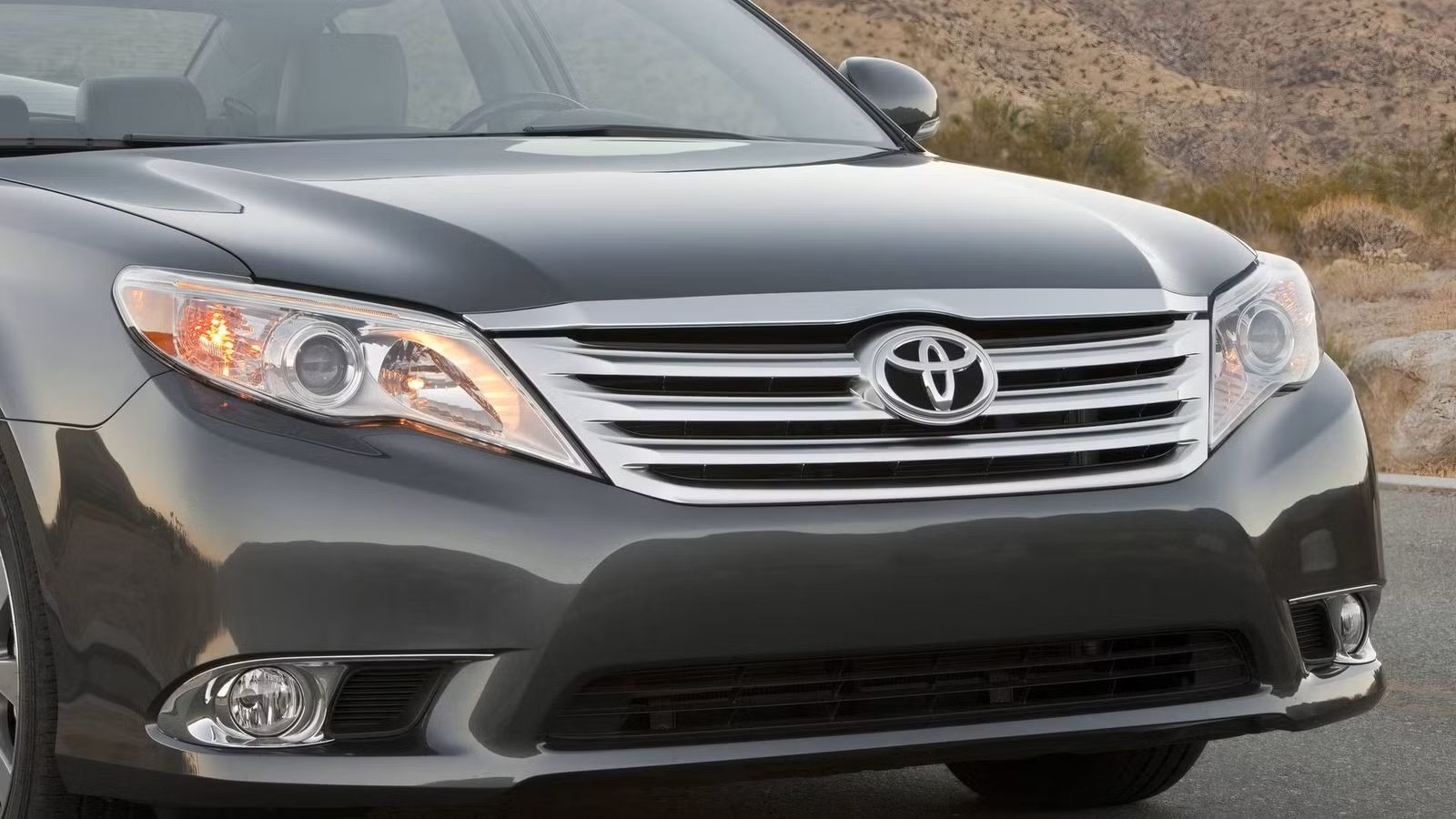
There’s a peculiar kind of car buyer who quietly enjoys knowing something the rest of the market hasn’t figured out yet. They’re not chasing status. They’re chasing value, engineering, and the satisfaction of paying Toyota Camry money for something that, mechanically, has no business costing that little. This is a story for that buyer.

Because somewhere between the badge-obsessed used-car market and the reality of what’s actually bolted underneath these cars, a full-size Toyota sedan has been hiding in plain sight, wearing the same platform, the same V6, and much of the same interior hardware as a Lexus ES from the same era, while trading for roughly half the price. It’s not a knockoff, a tribute, or a poor man’s substitute. It’s the same car, built on the same line, engineered by the same people, sold under a badge that simply doesn’t carry the same resale premium. This is the used-car equivalent of finding out the store-brand cereal is made in the same factory as the name brand.
Why This Toyota Feels Suspiciously Like A Lexus Without Carrying The Luxury Badge
Badge value is one of the strangest forces in the used car market. Two vehicles can roll off adjacent stations on the same assembly line, share the same chassis engineers, the same suspension tuning philosophy, and even the same parts bins, yet one depreciates like a luxury car and the other depreciates like an appliance, purely because of what badge sits on the trunk lid.


That’s the story with this particular Toyota. It was never marketed as a budget alternative to anything. It was Toyota’s flagship sedan, the car the brand built to compete directly with Lexus, Buick, and sedan-class rivals from Detroit. But because it wore a Toyota badge instead of the Lexus “L,” the used market has spent two decades quietly discounting it against a mechanical twin that, on paper, isn’t meaningfully better.
The Shared Platform, V6, And Cabin Refinement That Make The Avalon A Genuine Lexus ES Alternative

Start with the bones. The 2005–2012 Toyota Avalon and its contemporary Lexus ES were built from the same platform family, with nearly identical wheelbases, overall lengths, and suspension architecture: struts up front, a multi-link setup out back, tuned for the same brief of quiet, isolated, effortless cruising. This wasn’t a case of “inspired by” engineering. It was shared-DNA engineering, the kind that happens when two products come out of the same corporate parts bin and the same design studio philosophy.
Consumer Reports has made this comparison directly, noting how closely the two cars track each other in structure and road manners. That’s not a coincidence; it’s a function of Toyota building both cars to satisfy overlapping customer expectations without duplicating the engineering spend twice.

Under the hood, both cars used the same basic V6 architecture from this era, and the interior treatment followed suit. Soft-touch dash materials, acoustic glass and extensive sound deadening, available ventilated front seats, a power rear sunshade, wood-tone trim, and a hushed cabin that prioritized isolation over sportiness—these weren’t Lexus-exclusive touches trickled down to a lesser trim level. They were shared standard-and-optional equipment across both cars, because both were engineered to the same “quiet luxury cruiser” target.
The result is a sedan that doesn’t just look like a Lexus alternative from the spec sheet. It drives like one, rides like one, and, critically for a used buyer two decades removed from the original sticker price, costs like the Toyota it was badged as, not the Lexus it was engineered alongside.
How The 280-Horsepower 2GR-FE V6 Delivers Luxury-Car Performance With 300,000-Mile Durability

The heart of the value case is the engine, and it’s arguably the most important part of the whole equation. The 2005 Avalon introduced the 3.5-liter 2GR-FE V6, a naturally aspirated engine producing 280 horsepower at 6,200 rpm and 260 pound-feet of torque at 4,700 rpm, numbers that, at the time, actually eclipsed the contemporary Lexus ES 330’s output. That’s worth sitting with for a second; in its debut year, the “cheaper” Toyota sedan was putting down more power than its Lexus counterpart.
It’s worth noting that some later Toyota applications of the 2GR-FE, used in different vehicles and states of tune, have been documented producing up to 314 horsepower. That figure doesn’t apply to the Avalon-spec engine covered here. 280 horsepower is the number for this car, and it’s still a genuinely strong output for a naturally aspirated V6 from this era, especially one prioritizing refinement over aggression.

This engine has developed a reputation as one of the most bulletproof V6s Toyota has ever built, with documented examples routinely running 250,000 to 350,000 miles on nothing more than standard maintenance, and a meaningful number pushing past 400,000 miles without major internal work. The engine’s stock internals are robust enough that tuners and even boutique performance builders—Lotus among them—have used the 2GR-FE as a foundation for forced-induction builds pushing 400 to 450 wheel horsepower, a testament to how much headroom Toyota engineered into the design from the factory.
A big part of that longevity comes down to a decision that seems small but pays dividends over hundreds of thousands of miles: the 2GR-FE uses a timing chain rather than a timing belt. That eliminates one of the most expensive routine maintenance items on comparable luxury V6s, along with the risk of catastrophic engine damage if a belt is neglected past its service interval. For a used buyer, that’s not a minor footnote; it’s the difference between a scheduled, predictable expense and a five-figure engine-replacement gamble.
The Predictable Maintenance Costs That Keep This Stealth Sedan Affordable To Own

No engine is entirely maintenance-free, and the 2GR-FE is no exception. But what separates this Toyota from genuine luxury-brand ownership isn’t the absence of wear items, it’s how predictable, well-documented, and affordable those wear items are.
The most common service point is the water pump, which typically needs attention somewhere between 90,000 and 120,000 miles. On many applications, the water pump is driven by the timing chain assembly, so replacement is a planned, known-interval job rather than a surprise failure, exactly the kind of maintenance a buyer can budget for in advance rather than fear.

Beyond that, owners and independent shops have documented occasional timing cover gasket seepage as the engine accumulates miles, along with early-production VVT-i oil line updates that Toyota addressed as the engine matured through its production run. None of these are structural weaknesses. They’re the kind of predictable, well-known maintenance items that any 15-to-20-year-old vehicle accumulates, and critically, they’re cheap and straightforward to address compared to the equivalent luxury-brand repair bills.
That’s Really The Crux Of The Ownership Case

A Lexus ES from this same era, sharing the same core engine and platform, comes with the same wear items, but often at luxury-brand labor rates, luxury-brand parts pricing, and luxury-brand dealership service expectations. The Avalon carries the same mechanical realities without the badge-inflated invoice.
Why A $7,000–$15,000 Toyota Avalon Is One Of The Smartest Used Luxury-Car Buys You Can Make Today
This is where the math gets genuinely compelling. Clean examples of the 2005–2012 Avalon, including cars with six-figure mileage and full service history, currently trade in the $7,000 to $15,000 range depending on condition, mileage, and trim. A comparable Lexus ES from the same generation and mileage bracket typically commands a meaningful premium over that range, often several thousand dollars more for a car that shares its platform, its interior philosophy, and in early years, its horsepower disadvantage relative to the Avalon.
That Gap Is The Badge Tax In Its Purest Form

You’re not paying for a materially different car when you step up to the Lexus. You’re paying for three letters on the trunk, a slightly different grille treatment, and a dealership experience that includes a nicer waiting room. For a buyer who understands where luxury-car pricing actually comes from, platform engineering, powertrain refinement, cabin isolation, and long-term durability, the Avalon offers nearly all of that value proposition at a fraction of the entry cost. You get a timing-chain V6 with a 300,000-mile reputation, a cabin built to the same quiet-luxury brief as its Lexus sibling, and maintenance costs that stay firmly in Toyota territory rather than luxury-brand territory.
The badge might say Toyota. The engineering underneath says otherwise. And for the buyer willing to look past the trunk lid lettering, that disconnect is exactly where the value lives.
Sources: Toyota, KBB, iSeeCars, RepairPal

Related posts





Latest Post




No Comments