
UK YouTuber’s Porsche Taycan Was Called ‘Worthless’ At Trade-In—And The Numbers Are Brutal
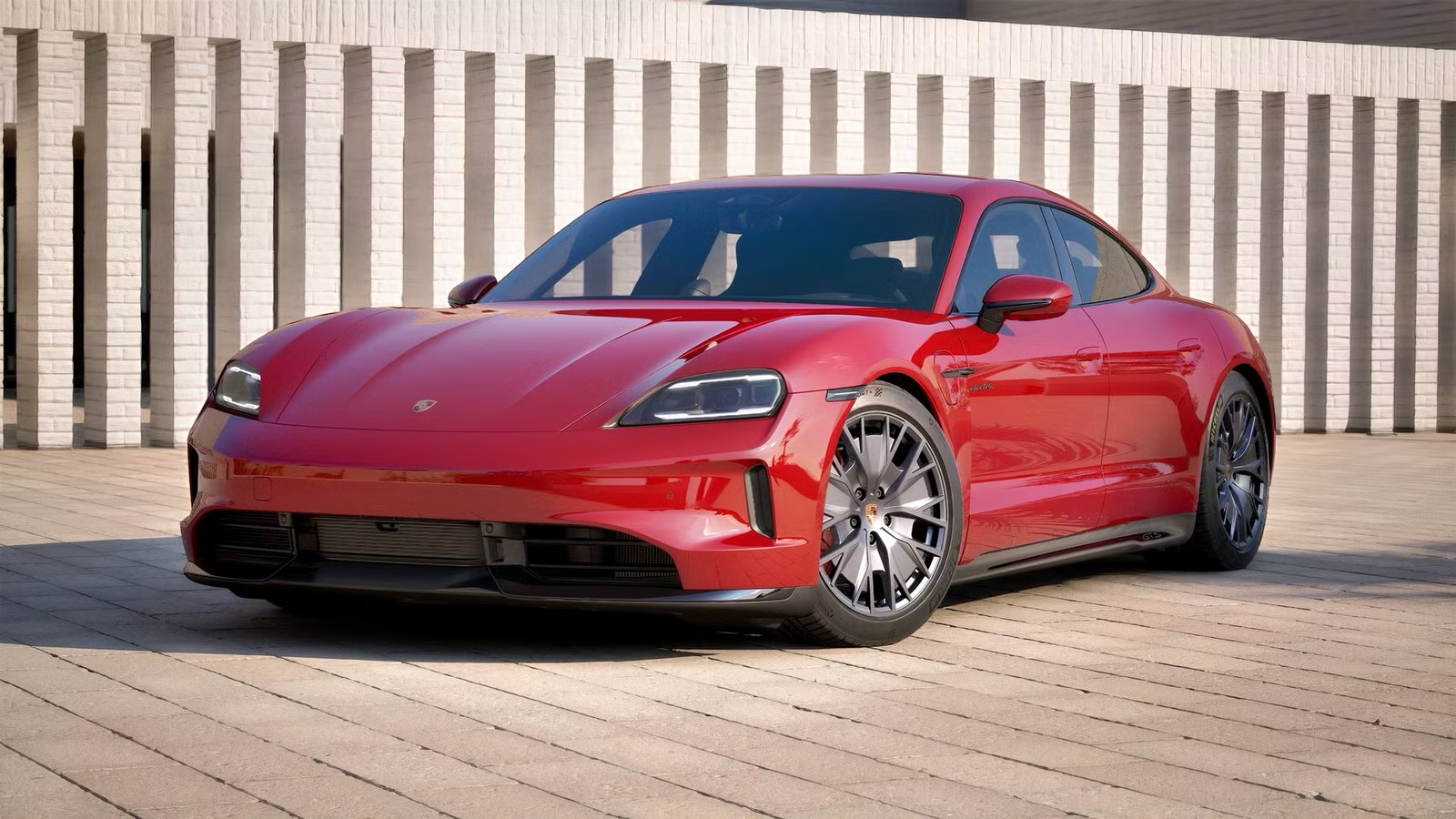
A UK YouTuber walked into a Porsche dealership hoping to trade his Taycan toward a used 911 and walked out with a reality check that’s resonating far beyond his subscriber count. The dealership’s valuation came back at near-zero—a figure so low it effectively rendered the electric sports sedan worthless as a trade-in asset. For anyone who bought into the idea that a Porsche badge would insulate them from EV depreciation, this story is a cold splash of water.

The Taycan was supposed to be different. When it launched, Porsche’s first purpose-built EV carried the promise of the brand’s legendary residual values—the same halo that keeps used 911s trading at premiums years after production ends. That promise, at least in the current used-car market, appears to be broken.
What Happened At The Dealership
The YouTuber, based in the UK, brought his Porsche Taycan to a dealership with a straightforward goal: trade it in and put the value toward a used 911. What he got instead was a valuation that left him—and the viewers watching—staggered. The dealership’s assessment put the Taycan’s trade-in value at a figure so far below what he’d paid that it was described, in his own words, as ‘worthless.’

The dealership’s reasoning centered on a market that has shifted dramatically against early-generation EVs. Battery technology is advancing quickly, newer EV competitors have arrived with longer range and faster charging, and buyer appetite for used electric vehicles—particularly at premium price points—has softened considerably. Dealers carrying used EVs face their own risk: if the car sits on the lot, the depreciation clock keeps ticking. That risk gets priced into the trade-in offer, and the seller absorbs the discount.
Taycan Values Have Fallen Hard Since Launch

The Taycan debuted with a base price well above £80,000 in the UK, positioning it squarely as a six-figure luxury proposition. Early buyers paid conquest premiums in some markets. Today, the used market tells a very different story. First-generation Taycans—particularly those from the 2020 and 2021 model years—have seen depreciation rates that significantly outpace what Porsche buyers have historically expected.
The contrast with the 911 is stark. The 911 loses just 4 to 20 percent of its value over five years, a retention rate that makes it one of the strongest depreciating assets in the automotive world. The Taycan, despite wearing the same badge, is not behaving like a 911. It’s behaving like a first-generation EV—because that’s exactly what it is. Battery degradation concerns, rapid model-year updates, and an expanding field of EV competitors have all compressed residual values in ways that Porsche’s internal projections and buyer expectations didn’t fully anticipate.
Why Luxury EVs Are Depreciating Faster Than Expected

The Taycan’s situation isn’t unique—it’s the sharpest example of a broader pattern hitting premium EVs across the board. Several forces are working against resale values simultaneously. Government incentive structures in multiple markets favor new EV purchases, which pulls buyers away from the used market and suppresses demand for second-hand electric cars. At the same time, rapid improvements in battery range and charging infrastructure mean that a three-year-old EV can feel genuinely outdated against current-model alternatives.
There’s also a compounding factor specific to the Taycan: reports that Volkswagen Group is weighing cuts to its model lineup, with the Taycan among the nameplates under review. Even if the model survives, the uncertainty around its future creates hesitation among used-car buyers and dealers alike. A nameplate with an unclear production horizon is a harder sell on a forecourt, and dealers price that uncertainty into what they’ll offer at trade-in.
For luxury buyers, the math is particularly painful. A £100,000-plus purchase that loses 50 percent or more of its value in three to four years represents a cost of ownership that rivals—or exceeds—the running costs of a comparable internal-combustion car, even accounting for fuel savings.
What This Means For Anyone Considering A Premium EV

The Taycan trade-in story is a useful data point for any buyer weighing a six-figure EV purchase today. The assumption that a prestigious badge automatically translates to strong residuals doesn’t hold in the current EV market. Buyers should stress-test their expectations: model the depreciation at 40 to 50 percent over three years rather than the 20 to 25 percent that premium ICE cars have historically delivered, and factor that into the total cost calculation before signing.
Leasing, rather than buying outright, shifts the residual-value risk back to the finance company—which is one reason lease penetration on premium EVs remains high. For those committed to buying, timing matters: waiting for a second or third model-year generation, once the steepest depreciation curve has already played out for early adopters, can represent significantly better value. The YouTuber’s dealership conversation, uncomfortable as it was, is exactly the kind of real-world data point that prospective buyers need to see before committing.

Related posts



Latest Post


No Comments