The Hybrid SUV That Quietly Beats 50 MPG Without A Plug
12 minutes reading
Tuesday, 21 Jul 2026 20:00 0 59 autotech
As good as the modern-day SUV market is for providing easy road manners, comfortable cabins, and tech additions, fuel economy has become one of the main selling points. There was a time, not that long ago, when even the most fuel-efficient SUVs couldn’t break the 25 combined mpg mark; today, things are different.
Since plug-in hybrid and hybrid SUVs have become a staple on the U.S. market, we are seeing SUVs offer mpg ratings that were once reserved for small-engined hatchbacks and coupes. This 2026 hybrid SUV can achieve over 50 combined mpg, all without the need for plug-in technology.
Hybrids vs. Plug-In Hybrids: Which One Actually Makes More Sense?
Front 3/4 action shot of 2024 Lexus NX 450h+ driving on roadLexus
The hybrid versus plug-in hybrid debate has become far more relevant in 2026 now that almost every major automaker offers both options in the compact SUV segment. On paper, plug-in hybrids appear to be the obvious winners.
Models like the 2026 Toyota RAV4 Plug-In can travel around 50 miles on electricity alone before switching to hybrid driving, potentially allowing drivers to complete their weekday commute without using any gas. It also has an estimated MPGe rating of 102. However, the impressive efficiency figures depend almost entirely on one thing: remembering to plug the vehicle in.
Front 3/4 shot of 2026 Toyota RAV4 HEV Limited StormCloud parkedToyota
This is where conventional hybrids still have an advantage. Models like the 2026 Honda CR-V Hybrid and Hyundai Tucson Hybrid deliver outstanding real-world fuel economy (between 36 and 40 combined mpg) without requiring any change to driving routines. Toyota’s decision to offer the redesigned 2026 RAV4 as hybrid only across the standard lineup is probably the clearest sign that brands recognize most drivers still value simplicity just as much as outright efficiency. Unless drivers have reliable home or workplace charging and drive predictable daily distances, a traditional hybrid often delivers a better balance of cost and convenience.
Where Plug-In Hybrids Have The Advantage
Front 3/4 action shot of 2026 Mazda CX-90 driving on roadMazda
Plug-in hybrid vehicles still take an important place in the market because they can deliver the best of both worlds when used properly. Models like the new Mazda CX-70 PHEV can be charged up at home for most daily errands using electricity alone. From a full charge, drivers get an all-electric range of 32 miles, while retaining the gas engine and hybrid system, which can offer up to a 520-mile range for vacations or long highway journeys.
Performance is another area where plug-in hybrids often stand out more than non-plug-in models. Their generally larger battery packs and more powerful electric motors usually kick out more combined horsepower than conventional hybrid models, so you get better acceleration and smoother low-end speeds.
Front 3/4 shot of 2025 Toyota RAV4 PHEV XSE Supersonic Red parkedToyota
As an example, the 2026 RAV4 Hybrid has 236 combined horsepower, whereas the PHEV variant has 324 combined horsepower. 0–60 mph times are also noticeably different, with the HEV RAV4 posting a seven-second sprint time and the RAV4 PHEV capable of five to 5.6-second sprint times.
For drivers willing to stay on top of charging, the benefits include lower running costs, quieter urban driving, and noticeably better performance from a PHEV, making it a worthwhile upgrade over a conventional hybrid.
Why Hybrids Still Win For Everyday Convenience
Front 3/4 action shot of 2026 Toyota Grand Highlander Hybrid driving on roadToyota
Except for the extra system that needs maintaining, hybrid SUVs ask almost nothing more of us to drive them. The battery charges automatically through regenerative braking and the engine, meaning drivers simply need to fill the tank and go. This year’s front-wheel-drive Kia Sportage Hybrid routinely achieves 41 mpg in the city, 44 mpg on the highway, and 42 mpg combined, while still offering the same practicality, cargo capacity, and long-distance flexibility as its gas-only rivals.
That kind of convenience becomes especially apparent on road trips or in households without dedicated charging points. There is no need to plan around public charging, install expensive home equipment, or remember to plug in after a long day. In many cases, hybrids also cost considerably less than comparable PHEV models, thanks to their simpler hardware, making their lower purchase price easier to justify when fuel savings are still exceptional.
The 2026 Kia Niro Punches Way Above Its Weight With 53 Combined MPG
Front 3/4 action shot of 2026 Kia Niro Hybrid driving on roadKia
Without the need for a more complicated plug-in system, and available ata competitive price, the 2026 Kia Niro Hybrid makes PHEVSUVs look slightly redundant. Starting prices for the base trim are $27,390, and there are four trims available: the LX, the EX, the SX, and the SX Touring. The EX has a starting price of $30,190; the SX, $33,390; and the SX Touring, $35,790.
Aside from its low starting price, the biggest accolade for the new Kia Niro Hybrid is that it can achieve over 50 combined mpg. FuelEconomy.gov estimates that the LX, EX, and SX trims can achieve 53 combined mpg (53 mpg city/54 mpg highway), while the SX Touring trim can achieve a still impressive 49 combined mpg (53 mpg city/45 mpg highway).
A Hybrid Powertrain That Keeps Fuel Stops To A Minimum
Close-up shot of 2026 Kia Niro Hybrid engine bayKia
There is just one powertrain option for the new Kia Niro Hybrid: a 1.6-liter inline-four mated to a 32-kW electric motor and a 1.32-kWh battery. Power is routed through a six-speed automatic transmission, and front-wheel drive is the only drivetrain configuration. Niro Hybrid horsepower is modest at 139, but the 195 pound-feet of torque is respectable.
Speed is not the Niro HEV’s forte, and 0–60 mph times have been clocked in the low 11-second range; however, that’s not the point of it. The point of it is to cut down on the number of times you have to stop at gas stations on road trips. FuelEconomy.gov says that the most fuel-efficient Niro HEV trims have a full-tank range of 588 miles, while the slightly thirstier SX Touring can still offer 544 miles from a full tank.
Clever Packaging Makes It More Practical Than It Looks
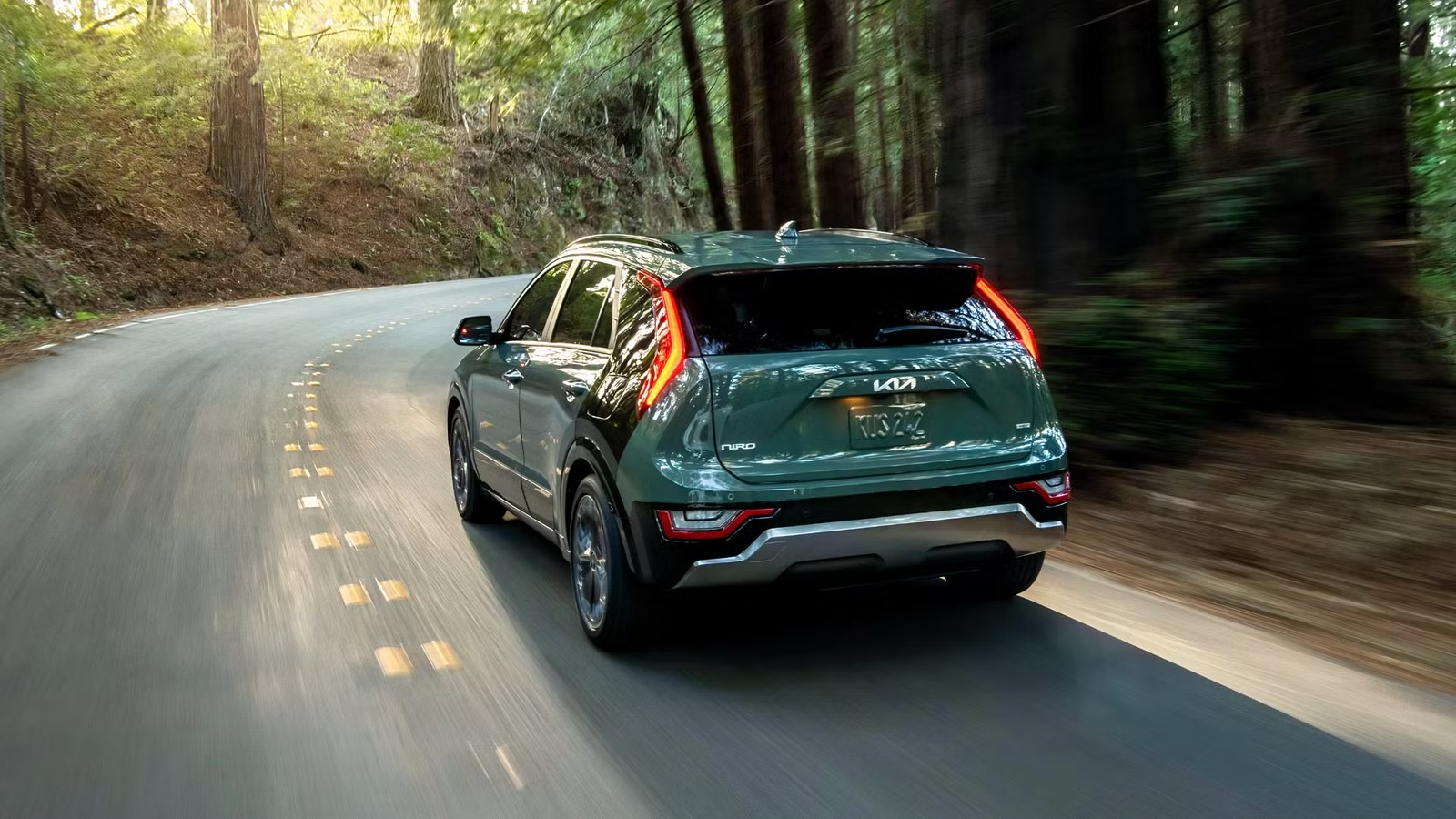
Rear 3/4 shot of 2026 Kia Niro Hybrid parkedKia
The 2026 Niro Hybrid is a compact crossover SUV, and a relatively small one at that. It measures in at 174 inches long by 71.9 inches wide, and rides on a 107-inch wheelbase. This makes it well suited to city driving (alongside the high city mpg ratings). Plus, there is a commendable amount of room inside.
Kia says front headroom is 40.5 inches, front legroom is 41.5 inches, rear headroom is 39.5 inches, and rear legroom is an impressive 39.5 inches. On top of that, with all the seats in place, 22.8 cubic feet of cargo space is available in the trunk.
Rear shot of 2026 Kia Niro Hybrid cargo areaKia
With the rear 60:40 split-folding seats tucked away, that cargo capacity grows to 63.7 cubic feet. It is also equipped with underfloor storage, a wide hatch opening, an available power liftgate, and a variable-height floor that can either be lowered to make loading easier or raised to make a completely flat cargo area.
The Features That Make The 2026 Kia Niro Easy To Live With
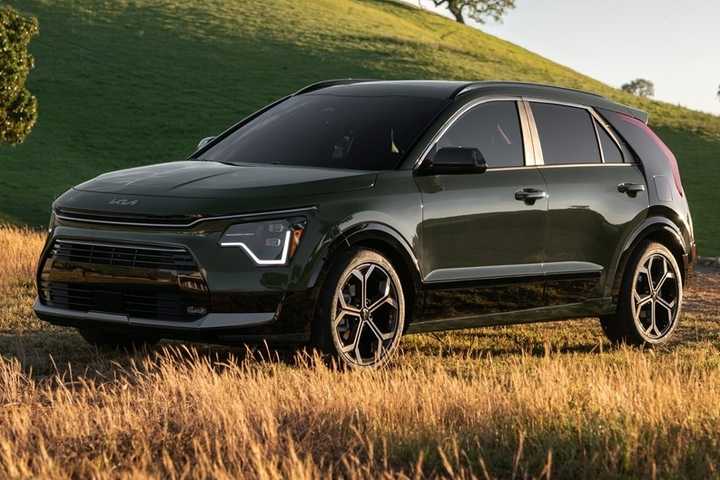
2026 Kia Niro Hybrid Front 3/4 Shot Parked On A FieldKia
2026 Kia Niro Hybrid reviews on Kelley Blue Book have rated it 4.3 out of 5 overall, which includes ratings of 4.5 out of 5 for performance, 4.6 out of 5 for quality, and 4.8 out of 5 for value, reliability, styling, and comfort. 100 percent of owners who left a review said they’d recommend buying one. J.D. Power ratings are a little more modest, at 75 out of 100 overall, but it is apparent that Kia has not forgotten that a modern SUV can’t just be efficient and easy to load, but also a good all-rounder in terms of equipment.
Comfort, Technology, And Safety Come Standard
Shot of 2026 Kia Niro Hybrid interior showing front cabinKia
The Niro Hybrid’s efficiency is what will get a lot of us through the showroom door, but it is the everyday usability that makes it easy to live with. Even on lower trims, Kia avoids the bare-bones approach that many fuel-focused SUVs take, giving the Niro a cabin that feels modern. Buyers should not expect BMW-level refinement; it is simple but effective.
Technology is one of the strongest points: an eight-inch touchscreen, wireless Apple CarPlay and Android Auto, multiple USB-C charging points, auto climate control, remote keyless entry, and a digital instrument display are all standard. As you move up into the higher trims, things actually get surprisingly premium for its price.
Shot of 2026 Kia Niro Hybrid rear seatsKia
The EX and SX trims get Kia’s dual 10.25-inch panoramic displays, built-in navigation, Digital Key 2.0, wireless phone charging, and an available Harman Kardon audio system. You also get features like heated and ventilated front seats, a heated steering wheel, and a power driver’s seat in the higher trims.
Every 2026 Niro Hybrid grade also gets Kia’s Drive Wise safety suite, which, alongside the generous room for you, passengers, and cargo, makes a good case for it as a family SUV. The safety suite includes Forward Collision Avoidance Assist, Lane Keep Assist, Driver Attention Warning, and Rear Occupant Alert, while higher trims get Highway Driving Assist, a Surround View Monitor, and Navigation-based Smart Cruise Control. All this results in a 7.4 out of 10 safety rating by iSeeCars.
Low Ownership Costs Add To Its Everyday Appeal
Front 3/4 shot of 2026 Kia Niro Hybrid parkedKia
There would not be much point in buying a hybrid SUV without seeing tangible cost benefits; this is where the Niro Hybrid makes a strong case for itself. FuelEconomy.gov says that it will cost you between $1,150 and $1,250 a year for gas, between $1.96 and $2.12 to drive 25 miles in one, and $46 to fill the 11.1-gallon tank. This translates to gas savings of between $4,750 and $5,250 over five years compared to the average modern vehicle.
Real cost to own figures vary, but as an average, Kelley Blue Book estimates it will cost you $52,028 to own a 2026 Niro Hybrid for five years. This includes $16,935 in depreciation and $35,093 in out-of-pocket expenses. CarEdge estimates that it will cost you $39,164 to own a Niro Hybrid for five years, giving it a “B-” value rating, while Edmunds breaks it down a little further.
Rear 3/4 action shot of 2026 Kia Niro Hybrid driving on roadKia
According to Edmunds, the five-year true cost to own a base-trim LX is $31,708; for an EX, $33,888; for an SX, $35,792; and for the top-tier SX Touring, $39,013. There are financial trade-offs for the highest trims, but to put these costs into perspective, Edmunds also estimates that it will cost you between $35,543 and $43,903 to own the always venerated RAV4 for the same time.
Why The New Kia Niro Is One Of The Best Value Hybrid SUVs On Sale In 2026
Profile shot of 2026 Kia Niro Hybrid parkedKia
The main attraction of the new Niro Hybrid is its low starting prices, solid equipment list, and 50+ combined mpg rating. There are some drawbacks to consider, such as the slightly lacking fit and finish compared to some higher-end hybrid SUVs and some mixed responses regarding overall refinement, but as a value-focused and efficient SUV, it is hard to beat.
Even compared to its PHEV counterpart, the Niro Plug-in Hybrid, which offers up to 33 miles of all-electric range, faster 0–60 mph times (9.6 to 9.8 seconds), a total range of 510 miles, and a 108 combined MPGe rating, the Niro Hybrid still holds its own.
Shot of 2026 Kia Niro Hybrid interior showing cockpitKia
Close-up shot of 2026 Kia Niro Hybrid touchscreenKia
FuelEconomy.gov says that the 2025 Niro PHEV will cost you $950 for gas and electricity per year, or up to $6,250, on average, in fuel savings over five years compared to the average modern vehicle. This makes it considerably cheaper than the Niro HEV to run. However, there is no 2026 model in the U.S., and used prices are still sitting between $34,100 and $39,500. In other words, it would take several years of moderate driving to realize any meaningful savings, and buyers must also factor in the added complexity of the plug-in system.
The hybrid SUV market is thriving, and the RAV4 Hybrid continues to distinguish itself with a top-end combined mpg rating of 43, Toyota-grade dependability, and a maximum cargo capacity of 70.4 cubic feet. However, its combined mpg rating is still notably lower than what the Niro Hybrid achieves, and the price range of $31,900 to $43,300 is noticeably higher than the Niro lineup.
Front 3/4 shot of 2026 Kia Niro Hybrid parked on drivewayKia
Buyers can opt for the highest Niro Hybrid trim for the most in terms of affordable comfort and technology, a slightly sportier ride and stance, and a minor reduction in mpg ratings due to the 18-inch alloy wheels (the other trims get 16-inch wheels), or they can choose a lower trim and still get most of what is expected from a modern hybrid SUV.
This is where the new Niro Hybrid gets things right: the fundamentals are solid. The entry-level trim is affordable; the top trim remains accessible; Kia has a reasonably good and growing reliability reputation; space is abundant for its city-friendly size; the mpg ratings are impressive both in the city and on the open road; and there is a strong suite of equipment and comfort features that make it feel like a well-thought-out value SUV rather than a stripped-out one.
Base Trim Engine
1.6L I4 Hybrid
Base Trim Transmission
6-speed auto-shift manual
Base Trim Drivetrain
Front-Wheel Drive
Base Trim Horsepower
103.5 HP @5700 RPM
Base Trim Torque
106.3 lb.-ft. @ 4000 RPM
Base Trim Fuel Economy (city/highway/combined)
53/54/53 MPG
Base Trim Battery Type
Lithium polymer (LiPo)
Make
Kia
Model
Niro
Sources: Kia, FuelEconomy.gov, J.D. Power, iSeeCars, Edmunds, CarEdge, and Kelley Blue Book











No Comments