
The Honda Adventure Bike That Feels Built For Riders Over 50
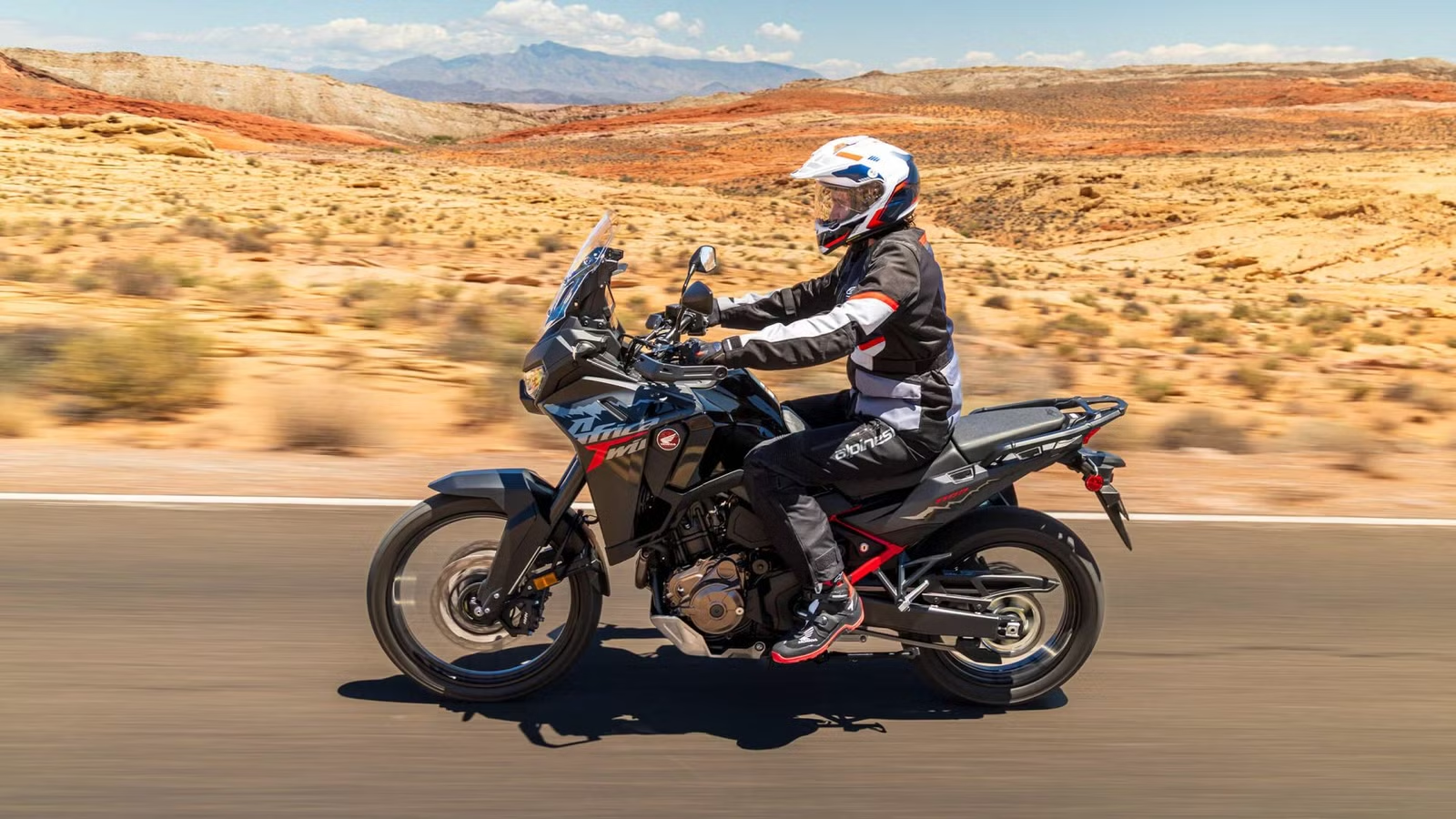
Adventure bikes are usually sold through images of youth, aggression, and alarming levels of physical confidence. There’s always someone standing on the pegs, charging across a desert, or launching a fully loaded machine over terrain that would make most riders reconsider their weekend plans. It’s exciting marketing, but it can also make the entire category look unnecessarily punishing to anyone whose knees have recently started contributing their own soundtrack.

Priorities often change after decades of riding. Peak horsepower and extreme trail capability may become less important than smooth power delivery, useful wind protection, supportive ergonomics, manageable controls, and suspension that doesn’t turn broken pavement into a chiropractic referral. The ideal adventure bike isn’t necessarily smaller, slower, or less adventurous. It simply removes some of the physical strain that can make a long ride stop being enjoyable.
What Riders Want From An Adventure Bike Changes With Age
Experience has a way of separating useful performance from showroom theater. Towering suspension, razor-sharp throttle response, and rally-bike proportions can still look spectacular, but they’re harder to appreciate while paddling backward out of a sloped parking space. A rider who once wanted the most aggressive machine available may eventually care more about confidence at a stop, comfort after several hours, and getting home without every joint filing a formal complaint.

That doesn’t mean older riders have lost their appetite for serious motorcycles. Many still want enough performance for loaded touring, mountain roads, gravel tracks, and two-up travel. The difference is that they may no longer see unnecessary difficulty as a virtue. One flagship adventure bike addresses that shift by keeping the range, power, presence, and versatility expected from the category while using its technology to reduce effort rather than simply decorate the dashboard.
The Right Technology Can Make A Large Motorcycle Easier To Live With

Advanced electronic features can either help the rider or create another menu to study while wearing winter gloves. A large touchscreen and dozens of settings aren’t automatically useful, especially when basic adjustments are buried beneath several layers of digital archaeology. However, an automatic transmission, electronic suspension, cruise control, cornering-sensitive rider aids, and selectable power delivery can genuinely reduce fatigue when they’re integrated properly.
The ideal setup should make a heavyweight motorcycle calmer without making it dull. It needs enough torque to carry a passenger and luggage, a large fuel tank for long days, sensible road manners, and real ability beyond pavement. More importantly, the rider shouldn’t have to constantly work around the motorcycle’s size. That combination leads directly to a machine whose Dakar-inspired bodywork hides a surprisingly practical approach to growing older on two wheels.
The Honda Africa Twin Adventure Sports ES Feels Built For Riders Over 50

That motorcycle is none other than the Honda Africa Twin Adventure Sports ES, the most touring-focused version of Honda’s flagship ADV. It carries a base MSRP of $17,799, and is more than just a standard Africa Twin with a larger tank and a few expensive boxes checked. Its wheel sizes, suspension, transmission, seat, and overall equipment package give it a distinctly road-biased character.
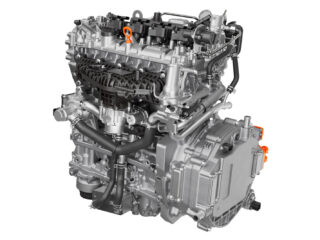
Power comes from a 1,084cc liquid-cooled parallel-twin with a Unicam SOHC cylinder head, four valves per cylinder, a 10.5:1 compression ratio, and a 46mm throttle body. Honda pairs it with programmed fuel injection, an optional six-speed Dual-Clutch Transmission, and a chain final drive. The engine’s relatively long 81.5mm stroke supports the broad, smooth torque delivery that matters far more on a loaded touring bike than chasing a dramatic number near the rev limiter.

Its chassis further separates it from the more dirt-oriented standard model. The moretouring-oriented Adventure Sports ES uses a 19-inch front wheel wearing a 110/80 tire, while the rear remains an 18-inch unit with a 150/70 tire. Both are wire-spoked and tubeless. The smaller front wheel sharpens its road manners, lowers the front end, and contributes to a more accessible 33.7-inch seat height, which can be adjusted to 32.9 inches in its lower position.
The DCT Option Removes Work Without Removing Control

Honda’s DCT eliminates the clutch lever and conventional foot shifter, allowing the motorcycle to change gears automatically. The rider can still take control through handlebar-mounted paddle shifters, so the system doesn’t remove involvement when a particular gear is needed for a corner, descent, or loose surface. Updated control logic also aims to make low-speed operation and gear changes more natural, an important detail when managing a large motorcycle in traffic.

The benefit becomes clearer after several hours in the saddle. There’s no clutch to hold at stoplights, no repeated shifting through congestion, and less strain on hands carrying old injuries or reduced strength. DCT isn’t only an accessibility feature, either. By handling routine gear changes, it lets the rider devote more attention to braking, road position, traction, and the wandering crossover driver currently treating lane markings as gentle suggestions.
Its Touring Hardware Matters More Than Its Rally Image
The Africa Twin Adventure Sports uses Showa EERA electronic suspension, with a 45mm inverted fork offering 8.3 inches of travel and a Pro-Link rear shock providing 7.9 inches. Electronic adjustment reduces the need to reach for tools or wrestle with a preload collar when adding luggage or a passenger. Four electronic preload settings allow the chassis to be configured from the handlebar, making meaningful suspension changes more likely to happen instead of being postponed indefinitely.
A 6.6-gallon fuel tank gives the bike serious touring potential, while cruise control takes some tension out of long highway runs. The reshaped Adventure Sports seat uses revised foam density, and the large fairing provides the wind protection expected from the model’s continent-crossing brief. A 6.5-inch glove-friendly TFT touchscreen includes Apple CarPlay and Android Auto, along with Bluetooth audio connectivity when paired with a compatible headset.
It Has Just The Right Amount Of Tech To Keep You In Control

Its six-axis inertial measurement unit supports throttle-by-wire and the broader electronics package. Riders get seven levels of Honda Selectable Torque Control, four power-delivery modes named Tour, Urban, Gravel, and User, plus a three-mode ABS system. That system offers On-Road, Off-Road, and a setting that disables rear ABS for more aggressive dirt riding. None of this turns the bike into a lightweight dual sport, but it gives the rider useful ways to tailor its behavior.
Braking hardware consists of dual 310mm front discs with radial-mounted four-piston calipers and a 256mm rear disc with a single-piston caliper. The chassis uses a 61.8-inch wheelbase, 27.5 degrees of rake, and 4.2 inches of trail. Those figures support stability without making the bike excessively lazy on pavement, while its compact parallel-twin layout and centralized heavy components help keep the mass from becoming quite as intimidating once the motorcycle is moving.
Growing Older Doesn’t Mean The Adventure Has To Get Smaller

The Africa Twin Adventure Sports ES DCT isn’t built around lowering expectations. It still has the fuel capacity, suspension travel, passenger space, luggage potential, and rough-road credibility required for genuine adventure touring. What it removes is some of the repetitive work. The transmission handles shifting, the suspension handles major setup changes electronically, and the riding aids provide a safety net without demanding that the rider surrender control.
That may make it especially attractive to riders over 50, but none of its strengths are age-exclusive. Younger commuters, high-mileage tourers, and anyone who doesn’t believe exhaustion proves authenticity can benefit from the same package. Honda hasn’t made adventure smaller here. It has made a large and capable motorcycle easier to enjoy, which becomes increasingly valuable whether your knees make suspicious noises or still have a few silent years left.
Source: Honda Powersports

Related posts


Latest Post


No Comments