
The 1987 Nissan 300ZX Was The Forgotten Z — And A $8,500 Listing Shows Why Collectors Are Finally Noticing
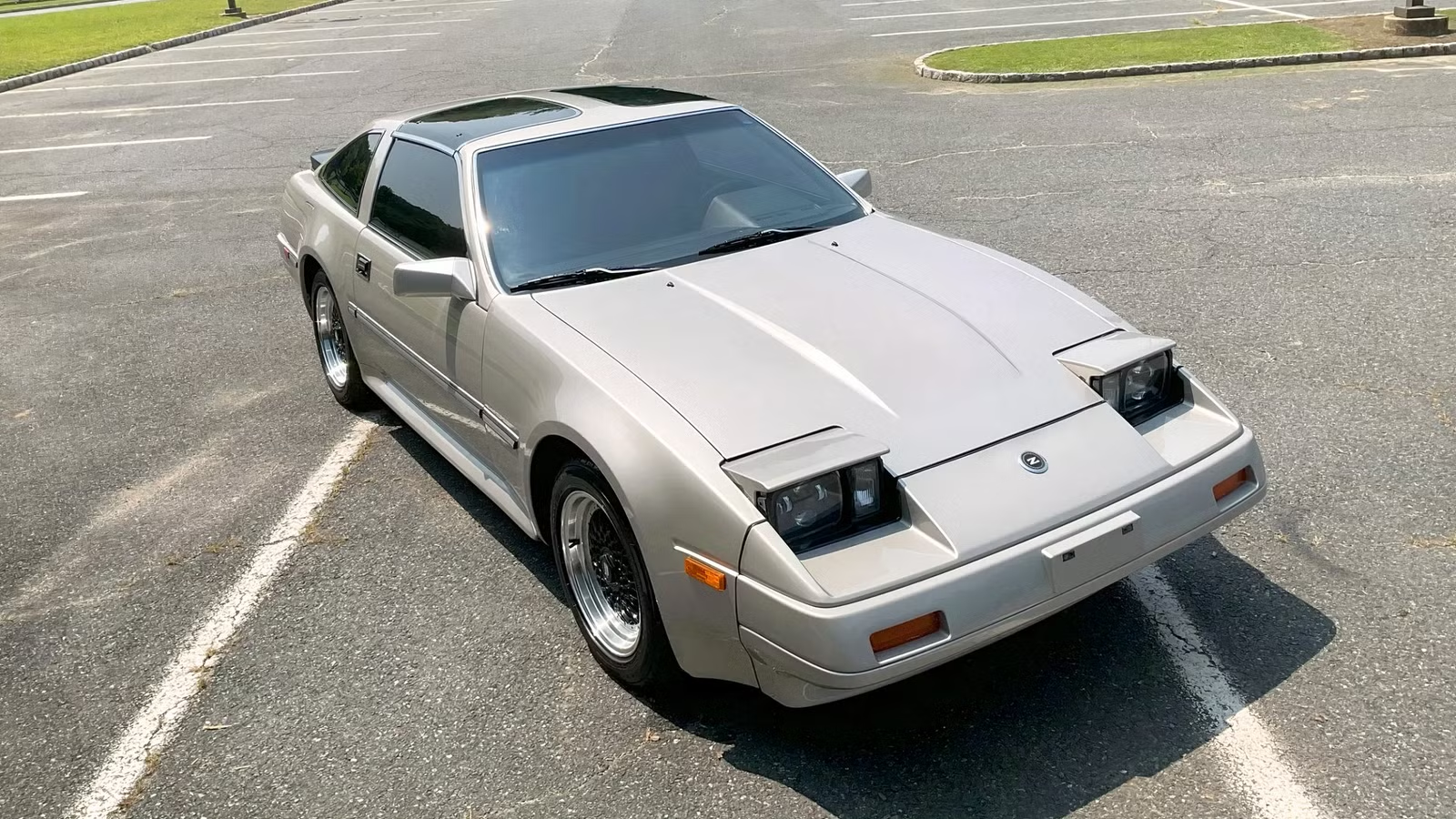
A 1987 Nissan 300ZX just appeared on the market for $8,500, and the listing is doing more than offering a deal on a 40-year-old sports car. It’s a snapshot of a broader shift: the Z31 generation, long dismissed as the forgettable bridge between the original S30 lineage and the celebrated Z32, is finally entering the collector conversation on its own terms.

For years, the Z31 lived in an awkward position — too recent to be a classic, too analog-era to feel modern, and perpetually overshadowed by the Z32 that replaced it in 1990. That’s changing. Rising interest in 1980s Japanese sports cars, a renewed appreciation for period-correct digital instrumentation, and a turbocharged variant that delivers genuine performance have all conspired to push the Z31 off the sidelines. This listing, described by Jalopnik as “a tenderly-treated slice of 80s nostalgia,” arrives at exactly the right moment.
Images are for illustrative purposes only. The original Craigslist listing is linked at the end of the article.
What The $8,500 Listing Actually Represents

The car in question is a 1987 300ZX — mid-run Z31, which spanned the 1984 through 1989 model years. At $8,500, it sits at the upper edge of what the Z31 market has traditionally tolerated, but that number is increasingly defensible. Clean, well-maintained examples have been creeping upward as the supply of unmodified, rust-free survivors thins out. The Jalopnik framing — “does this push all the right buttons?” — is telling. A few years ago, that question wouldn’t have been worth asking. Now it is.
Condition is everything at this price point. The Z31 is old enough that deferred maintenance, rust in the rear quarters, and tired turbos are the norm rather than the exception. A listing that presents as genuinely cared-for is a rarer find than the asking price suggests, which is part of why this one drew attention.
The Z31’s Case: Digital Dashes, Turbos, And A Design That Aged Differently Than Expected

The Z31 was never short on ambition. Nissan offered the 300ZX in base and turbocharged configurations throughout its production run, with the turbocharged 3.0-liter V6 producing around 200 horsepower — respectable for a Japanese sports car in the mid-1980s. The 50th Anniversary edition, released in 1986 to mark Nissan’s corporate milestone, added two-tone paint and interior upgrades that now read as peak period-correct spec.
Then there’s the interior. The Z31’s digital dashboard — with its sweeping digital speedometer and multi-function display — was genuinely futuristic for 1984. It reads differently now: not dated, but deliberately of its era, the same way a DeLorean’s brushed stainless or a Ferrari Testarossa’s side strakes have become retroactively desirable rather than embarrassing. Collectors who came of age in the 1980s are now in their 40s and 50s, with the disposable income to chase the cars they couldn’t afford then. The Z31’s interior is exactly what that demographic remembers wanting.
The exterior has followed a similar trajectory. The Z31’s wedge profile and pop-up headlights — once considered generic compared to the Z32’s more sculpted body — now look like exactly what they are: clean, purposeful 1980s Japanese sports car design. The market for that aesthetic has never been stronger.
Why The Z31 Spent So Long In The Z32’s Shadow

The Nissan Z32, which arrived for 1990, was simply a harder car to argue with. Twin-turbocharged variants, a more aggressive body, and a reputation that extended into motorsport made it the Z that enthusiasts fixated on. The Z31 got squeezed from both directions — the Z32 above it, and the original S30-series 240Z and 260Z below it, both of which had already achieved classic status.
There’s also the matter of the Z31’s turbocharged variants requiring more maintenance attention than the naturally aspirated versions, which pushed some early buyers toward the cleaner Z32 market when prices were still close. That dynamic has now inverted. Z32 prices — particularly for clean twin-turbo examples — have climbed well past the point of casual entry. The Z31 suddenly looks like the accessible on-ramp to Z-car ownership that the Z32 used to be.
Where The Z31 Market Goes From Here

The Z31 isn’t at Z32 money yet, and it may never reach those heights — the Z32’s motorsport legacy and broader cultural footprint give it a ceiling the Z31 probably can’t match. But that’s not the point. The Z31 is moving from “cheap driver” territory into the early stages of genuine collector interest, which means the window for finding clean examples at sub-$10,000 prices is narrowing.
For buyers who understand what they’re looking at — turbocharged variant, documented history, unmodified interior with the digital dash intact — an $8,500 ask on a well-preserved 1987 example is a number worth taking seriously. The Z31’s moment may be arriving later than it deserved, but it does appear to be arriving.
Source: Craigslist, Jalopnik

Related posts

Latest Post


No Comments