
Driving in Portugal: What UK drivers need to know
Taking your car to Portugal, or hiring one when you get there? Here’s what UK motorists should check before setting off.
Portugal is a popular destination for British holidaymakers, and it’s easy to see why. Lisbon and Porto offer city breaks with plenty of history and culture, while the Algarve remains one of Europe’s best-known coastal holiday regions. Away from the obvious tourist routes, a car can also open up smaller towns, rural areas, Atlantic beaches and inland scenery that’s harder to reach by public transport.

For UK drivers, Portugal is also a mixed-use destination. Some people will take their own car from Britain, usually travelling through France and Spain to get there. Many more will fly in and hire a car at the airport, especially for holidays around Faro, Lisbon or Porto. The road rules are broadly the same either way, but the paperwork, insurance and practical checks can be different.
Driving in Portugal is not usually difficult, but it does need a bit of preparation. You’ll be driving on the right, road signs and speed limits are in kilometres, many motorways use tolls, and some routes use electronic tolling that can catch visitors out if they haven’t set up payment properly.
If you’re taking your own car from the UK to Portugal, remember that the rules apply in every country you drive through, not just your final destination. Depending on your route, you’ll also need to check our guides to driving in France and driving in Spain before you set off.
Documents you need to drive in Portugal

You must carry your full UK driving licence when driving in Portugal. For most UK drivers with a photocard licence, you don’t need an International Driving Permit for a short visit to Portugal. If you still have a paper licence, or your licence was issued outside Great Britain, check the latest UK government guidance before travelling.
You should also carry your passport. If you’re taking your own car, carry proof of insurance and the car’s V5C registration document. If your car is more than three years old, take the MOT certificate as well.
If the car isn’t registered in your name – for example, if it’s leased, financed, hired or borrowed – you should take written permission from the registered keeper. For leased or hired cars, this usually means a VE103 certificate.
You no longer normally need a European insurance “green card” for Portugal, but you should still check with your insurer before you go. Some UK policies only provide the minimum third-party cover abroad unless you arrange extended European cover.
Hiring a car in Portugal
For many UK visitors, hiring a car in Portugal will be much more practical than driving all the way from Britain. It’s usually straightforward, but the details matter.
Check the insurance excess before booking. Some cheap rental deals come with a large excess if the car is damaged, stolen or returned with certain types of damage. Tyres, wheels, windscreens, underbody damage and lost keys may be excluded from basic cover.
If you buy separate car hire excess insurance before travelling, make sure you understand how it works. You may still have to pay the rental company first and claim the money back afterwards.
Before driving away, take photos or video of the car, including the wheels, bumpers, glass and interior. Make sure any existing damage is marked on the rental paperwork or app.
Portugal’s toll system is one of the most important hire-car checks. Ask the rental company how tolls are handled, whether the car has an electronic toll device, what administration fees apply and what you need to do if you use an electronic-toll road. Don’t assume tolls are included in the rental price.
Also check the fuel policy, mileage limits, emergency contact number and whether you’re allowed to drive outside Portugal. Cross-border travel into Spain may need permission from the rental company.
UK stickers and number plates
Your car must show that it’s from the UK. A number plate with a UK identifier and Union flag is accepted in Portugal. If your number plate still has a GB badge, an EU flag, a national flag such as England, Scotland or Wales, or no country identifier at all, you need to display a separate UK sticker on the rear of the car.
The old GB sticker is no longer valid for UK cars driving abroad.
Rules of the road
Portugal drives on the right. Roundabouts run anticlockwise, overtaking is on the left, and you should move back to the right after passing another vehicle on motorways and dual carriageways.
For UK drivers, the first few miles can feel strange, especially when leaving an airport, ferry port, petrol station or hotel car park. Take it gently at first and pay particular attention at roundabouts, junctions and slip roads.
Vehicles already on a roundabout generally have priority. At junctions, follow signs and road markings carefully rather than assuming that the larger-looking road automatically has priority.
Do not enter a junction if you can’t clear it without blocking traffic. This is especially important in busy towns, where narrow streets and parked vehicles can leave little room to manoeuvre.
Portugal has plenty of narrow roads in older towns and villages. If you meet another vehicle where there isn’t enough room to pass, the driver closest to a passing place may be expected to give way, even if that means reversing. On steep roads, take your time and don’t let local traffic pressure you into rushing.
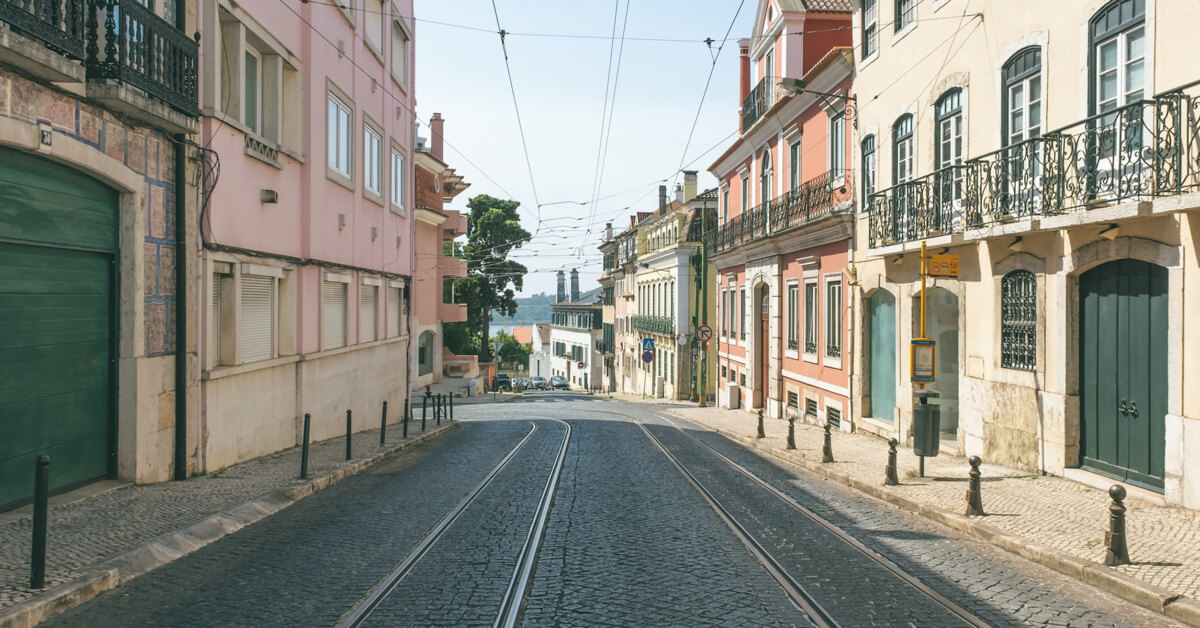
Trams operate in some Portuguese cities, especially Lisbon and Porto. Give them space, don’t block tracks and be ready to stop when passengers are getting on or off.
Horns shouldn’t be used casually. In built-up areas and at night, they should only be used where necessary to avoid danger. Flashing your lights is usually a better way to warn another road user of your presence.
Portugal’s traffic lights use red, amber and green, but there isn’t a red-and-amber phase before green as there is in the UK. Do not turn right on a red light unless a sign or signal specifically allows it.
Mobile phone use while driving is not allowed unless you’re using a permitted hands-free system. Set up your navigation, music and calls before moving off.
Seatbelts must be worn where fitted. Children under 12 years old and less than 150cm tall must use a suitable child restraint. If you’re using a rear-facing child seat in the front passenger seat, the passenger airbag must be switched off.
Speed limits in Portugal
Portugal uses kilometres per hour, not miles per hour. Speed limits can vary by road type, vehicle type and local signs, so always follow the signs in front of you.
Unless signs say otherwise, the usual limits for cars are:
| Road type | Speed limit |
|---|---|
| Built-up areas | 50km/h (31mph) |
| Normal roads outside built-up areas | 90km/h (55mph) |
| Roads restricted to motor vehicles | 100km/h (62mph) |
| Motorways | 120km/h (74mph) |
Lower limits are common in towns, villages, around schools, on narrow roads, at roadworks and on mountain or coastal routes. Motorhomes, vehicles towing trailers and some larger vehicles may have lower limits, so check before travelling if that applies to you.
Speed enforcement can include fixed cameras, mobile checks and unmarked vehicles. Fines can be issued at the roadside, and serious offences can become expensive very quickly.
Speed camera detectors and radar jammers are not allowed. The position around satnav or app-based camera warnings can vary across Europe, so check the current rules for Portugal and any countries you’re driving through before relying on them.
Alcohol limits
Portugal has a lower drink-drive limit than England, Wales and Northern Ireland. The standard blood alcohol limit is 0.5g/l (which is the same as Scotland).
For new drivers with less than three years’ experience and for some professional drivers, the limit is lower at 0.2g/l.
The safest advice is simple: if you’re driving, don’t drink. Even a small amount of alcohol can affect judgement and reaction times, especially when you’re driving on the right, reading unfamiliar signs, dealing with heat or driving at night.
Portuguese police can carry out roadside checks, and penalties can be serious. If you’re involved in a collision, you should expect alcohol testing to be part of the process.
Motorways, tolls and breakdowns
Portugal has a good motorway network, but many motorways are toll roads. Some use conventional toll booths where you pay by card or cash. Others are exclusively electronic, with no toll booth where you can simply stop and pay.
This is one of the biggest traps for visiting drivers. If you’re driving your own car, check your route and set up toll payment before using an electronic-toll motorway. Systems such as EasyToll or visitor toll products can link your payment card to your vehicle registration, but the details can change and you should use official toll information before travelling.
If you’re hiring a car, ask the rental company how tolls are handled before you leave the desk. Many rental cars have an electronic toll device, but there may be daily hire charges, toll charges and administration fees. Get this clear before you drive onto a motorway.
If you break down, move as far away from traffic as safely possible. Put on your high-visibility jacket before leaving the car, use your hazard lights, place a warning triangle if needed and safe to do so, and move passengers away from the road.
European breakdown cover is strongly recommended if you’re taking your own car. Recovery, storage, replacement transport and bringing a car back to the UK can become expensive quickly.
If you’re in a hire car, contact the rental company once everyone is safe. Don’t arrange repairs yourself unless the rental company has told you to do so.
Low-emission zones and city restrictions
Portugal doesn’t have the same widespread low-emission-zone system as some other European countries, but there are still local restrictions to watch for.
Lisbon has reduced-emission zones, known as ZER zones, that restrict access for some older or more polluting vehicles. Other city-centre traffic restrictions, access controls or temporary limits may also apply locally.
If you’re driving into Lisbon, Porto or another major town or city, check the official local rules before travelling. This is especially important if you’re driving an older car, a diesel vehicle, a van, a motorhome or a foreign-registered vehicle.
For many visitors, the easiest option is not to drive into the middle of a large city at all. Use hotel parking, park-and-ride, public transport or a car park outside the busiest area where possible. It’s often cheaper and less stressful than dealing with narrow streets, restricted zones and expensive parking.
What you should carry in the car
You should carry a high-visibility jacket when driving in Portugal and keep it somewhere you can reach from inside the car. If you have to leave the car after a breakdown or collision, put it on before getting out.
A warning triangle is strongly recommended. It may not always be listed in the same way for foreign-registered vehicles as for Portuguese-registered vehicles, but you need a safe way to warn other drivers if your vehicle is stranded.
Your headlights must not dazzle oncoming traffic. Some modern cars allow you to switch the beam pattern or tourist mode through the settings menu. Others may need stick-on beam deflectors.
A first-aid kit, spare bulbs, fire extinguisher, torch, water and phone charging cable are all sensible to carry, even where they are not the main legal requirement for visiting UK drivers. Many European driving kits include several of these items, but check the contents rather than assuming everything is covered.
Parking in Portugal
Parking rules vary by town and city, and enforcement can be strict. Don’t park where signs or road markings prohibit it, near junctions, bends, pedestrian crossings, tram stops, taxi ranks, building entrances or anywhere your car blocks access.
In built-up areas, you should normally park facing the direction of travel unless signs say otherwise. On narrow streets, think carefully before leaving the car anywhere that could make it difficult for buses, emergency vehicles or local traffic to pass.
Lisbon, Porto, Faro and other towns and cities use ticket machines, parking meters and controlled zones. Check signs carefully, because rules can vary by street and time of day.
If you park illegally, your car may be clamped or towed, and you’ll usually have to pay release fees as well as any fine.
Fuel, charging and route planning
Petrol is gasolina and diesel is gasóleo. Fuel stations are common on motorways and main roads, although rural areas and late-night journeys need more planning.
Motorway service areas usually offer fuel, food, toilets and sometimes electric car charging, but prices may be higher than away from the motorway. Some automatic fuel pumps may require card payment.
If you’re driving an electric car, Portugal has a public charging network, but access and payment can vary. Plan charging stops before travelling, take more than one payment option and check whether your charging app or RFID card works in Portugal.
In summer, plan around heat as well as distance. Keep water in the car, avoid running the fuel or battery too low, and be realistic about long journeys in very high temperatures.
Emergency numbers in Portugal
If you need emergency help in Portugal, dial 112. This is the European emergency number and can be used for ambulance, fire or police assistance.
The European emergency number 112 can be called free of charge from a mobile or landline. You should be able to get help in English, although this may depend on where you are and who answers the call.
If you break down on a motorway or fast road, don’t stay in the car if it’s unsafe. Put on your high-visibility jacket, move everyone away from traffic if possible, and call for help from a safe place.
If you’re in a hire car, contact the rental company once everyone is safe. Don’t arrange repairs yourself unless the rental company has told you to do so.
Common mistakes by UK drivers in Portugal
The first mistake is failing to understand tolls before setting off. Portugal’s mix of conventional and electronic toll roads can be confusing, especially for foreign-registered cars and hire cars. Sort out payment before you use the motorway, not afterwards.
The second is underestimating distance. Portugal may look compact compared with Spain, but a long drive from the UK is still a serious journey, and routes from northern Portugal to the Algarve can take longer than visitors expect.
The third is assuming city driving will be easy. Lisbon and Porto can mean steep hills, trams, narrow streets, one-way systems, limited parking and local restrictions. If you don’t need a car in the city centre, you’re often better off leaving it parked.
Hire-car insurance is another common trap. Check the excess, photograph the car, understand what’s excluded and know who to call if something goes wrong.
Finally, don’t forget Spain and France if you’re driving from the UK. You’ll need to comply with their rules before you reach Portugal.
Checklist for driving in Portugal
Before leaving the UK, check that you have:
- Driving licence
- Passport
- V5C registration document, if taking your own car
- Proof of insurance
- MOT certificate, if required
- UK sticker or UK number plate identifier
- VE103 or written permission, if needed
- Headlamp beam adjustment or deflectors
- High-visibility jacket
- Warning triangle
- Toll payment plan for Portuguese motorways
- European breakdown cover
- First-aid kit
- Torch
- Phone charging cable
- Offline maps or paper map
- Water and screenwash
If you’re hiring a car, check before driving away that you have:
- Rental agreement
- Insurance and excess details
- Emergency contact number for the rental company
- Fuel policy
- Toll payment details
- Cross-border permission, if needed
- Required safety equipment
- Photos or video of any existing damage
Portugal can be a very enjoyable country to drive in, but it rewards preparation. Sort the tolls, check your route and think twice before taking a car into the middle of a busy city.
Read more:

Related posts



Latest Post


No Comments