
Tested: 2026 Mazda CX-5 – Full review, price & features
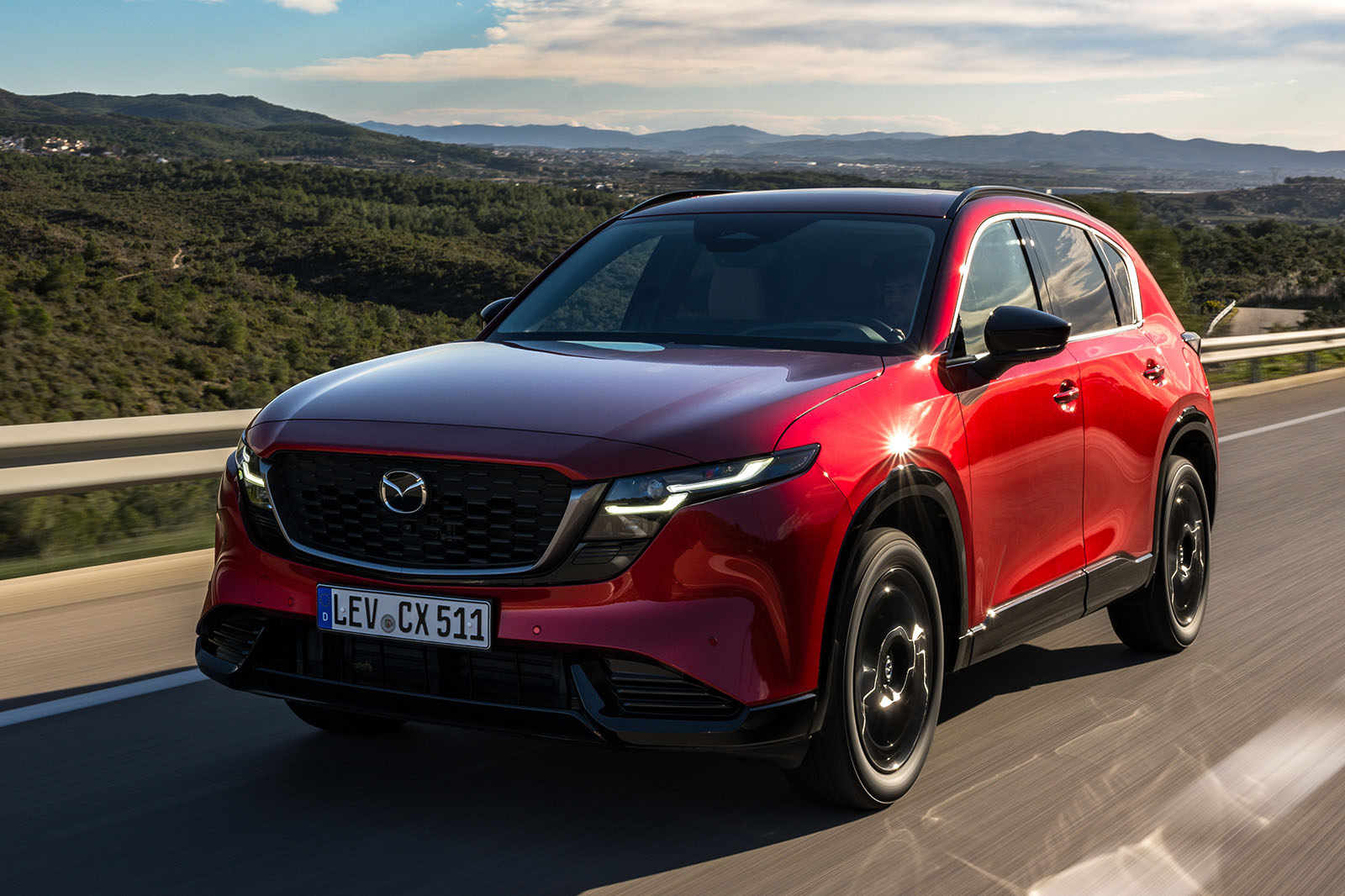
So how much space does some additional metal in the wheelbase give you? Our road test rule confirms an improvement, the new car offering 1090mm of front leg room and 760mm in the back, versus respective measurements of 1070mm and 730mm for the Mk2. These are incremental differences but they are discernible in practice and make the CX-5 more versatile than ever.
More notably, it gets the better of the current VW Tiguan, and not only in leg room – head room is more generous for all occupants. Note also that Mazda has lengthened the rear-door apertures, as well as engineering the doors themselves to open to around 90deg – all the easier for installing child seats, and for adult ingress.

There’s also a bigger boot with the seats in place (583 litres, up by 61 litres) and a cavernous 2019 litres when the new 40/20/40-split folding rear bench is lowered (easily done with quick-release handles either side of the load bay). The loading lip is low and there’s some handy underfloor storage, though this is sacrificed in order to house a Bose subwoofer on higher trims.
Elsewhere Mazda’s now trademark quality is still on display, with plush materials for the price point, and a solid finish giving the CX-5 an upmarket ambience. You can also expect the usual choice of interesting textures and lighter colours for the dashboard and upholstery, right across the range. Opting for either the light or tan colour schemes instantly elevates the Mazda’s cockpit above the fairly dour norm in the segment.
In terms of layout, the CX-5 is twinned with the new 6e EV (which doesn’t have the tall gearlever, of course). It is smart and fairly minimalistic, but it does deviate from Mazda’s old driver-centric, simplicity-first approach.

For starters, the new car bundles almost all of its frequently used functions into the new Google-underpinned central infotainment screen.Depending on the trim level it’s either a 12.9in or 15.6in unit, but regardless of size you get the same functionality, which means you have to stab at the display to change the climate control settings or adjust the audio volume. The only physical controls are buttons for the rear window heater, screen demister and hazard warning lights.
In practice it works crisply enough, but not with the same eyes-on-the-road ease and finger-pleasing tactility as the old car’s knurled metal knobs. Mazda claims it was customer demand that forced the change, although the voices were louder on the other side of the Atlantic, in the huge US market.Then there’s the instrument cluster, which has ditched the classic, carefully rendered LCD analogue clocks of the outgoing model in favour of BMW-style quadrants at the corners.

Related posts





Latest Post


No Comments