
The Engine That Made One Japanese Motorcycle Nearly Legendary For Reliability
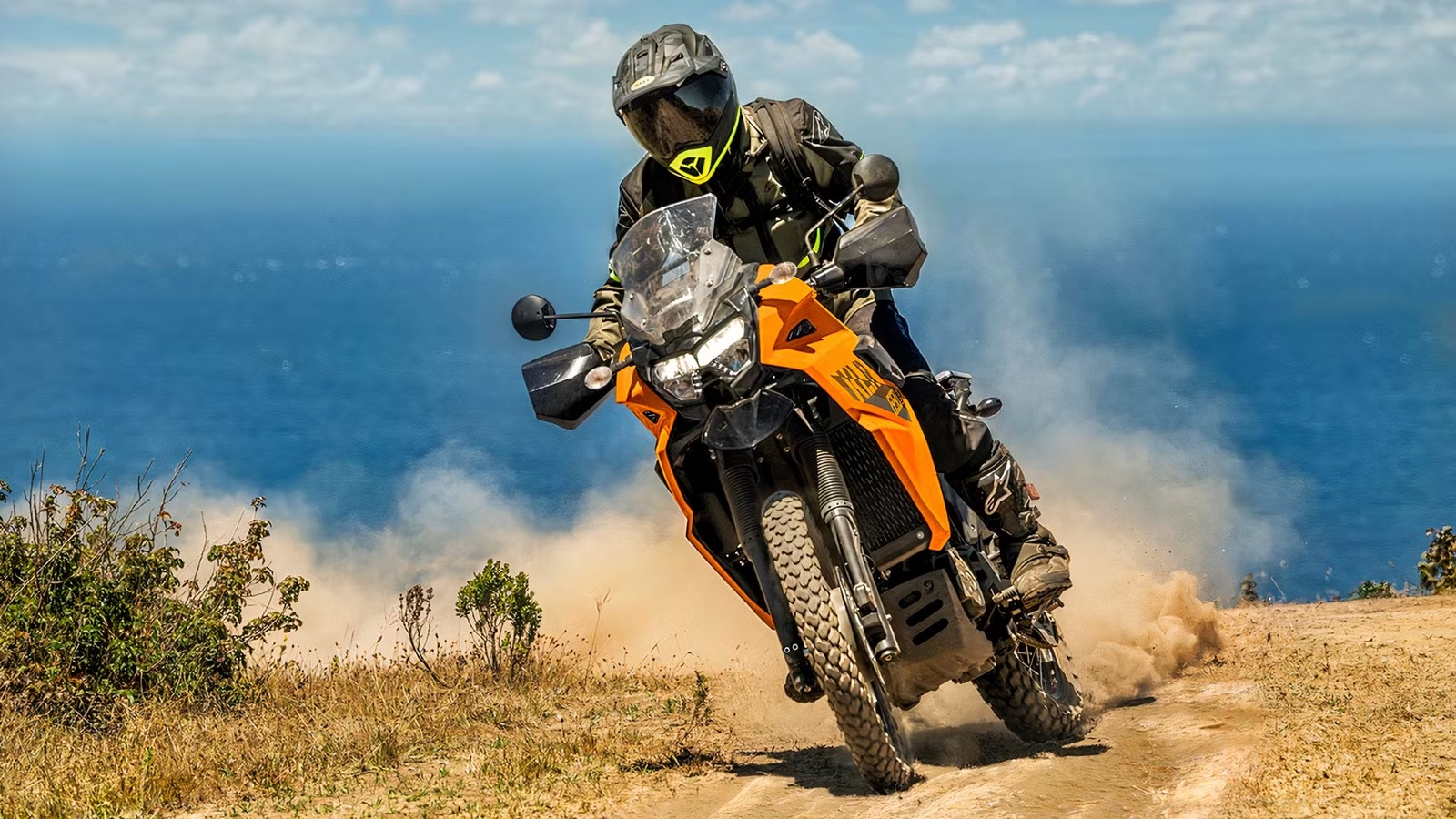
Kawasaki built its first big-bore dual-sport motorcycle single in 1987, at a time when adventure bikes and the riding itself barely existed as a category. Most manufacturers at the time treated a dirt-capable street bike as a niche afterthought. But the idea behind such a motorcycle was simple. One machine, with one engine, was built cheaply enough that a working rider could actually afford it, and rugged enough to handle the rough stuff and the highway commute leading up to it. In fewer words, reliability has to be the underlying theme of such a bike. The robustness of the cycle parts would then carry it from the best to the worst of road conditions and back.
Two Decades Of Standing Still Built A Reliability Reputation

The engine underneath those cycle parts is where most of the reliability equation resides. While all Japanese manufacturers chased horsepower figures and redesigned their now iconic sport bikes every few years through the late 1980s and 1990s, Kawasaki’s dual-sport platform barely changed at all. A rider who bought one in the first model year and a rider who bought one a decade later were, mechanically speaking, riding close to the same machine. This also meant that a fix that was worked out on an early example still applied to one built years afterward.
That kind of continuity is rare in this industry, and it shapes how a reputation actually spreads into decades. A reliability record built on a bike redesigned every few years resets with each new version, because nobody yet knows whether the changes would carry the old bike’s strengths forward or introduce new problems. A record built on a platform that stays in production for two decades compounds instead.

Owners pass along what they learn to the next owner, and mechanics who had serviced one from new could still recognize niggles and gremlins on one built years later. By the time online forums showed up to speed that exchange along, the shared knowledge base was already a generation deep, and it kept growing from there. One bike embodied this formula better than any other — but it came with a hidden flaw that every owner eventually had to reckon with.

The Kawasaki KLR650 Wears The Reliability Reputation Better Than Others In Its Class

That platform is the Kawasaki KLR650, which replaced the smaller KLR600 back when it first came out and has since then carried the formula through three separate model generations. The 2008 update sharpened the chassis and extended fuel range, and a fuel-injected version arrived much later in 2022, still built around the same basic engine layout beneath the newer electronics. At $6,999, it undercuts most machines aiming at the same do-it-all idea, and the reputation built over decades is exactly why buyers keep reaching for it even now.
The 652cc Single Trades Peak Output For Durability

The current 652cc engine is a liquid-cooled DOHC single with a 100mm bore and an 83mm stroke, running a 9.8:1 compression ratio through electronic fuel injection and a 40mm throttle body. Kawasaki claims 40 horsepower at 6,000 rpm and 39.1 pound-feet at 4,500 rpm, which are frankly modest numbers now produced by much smaller machines, and a far cry from the most powerful single-cylinder out there.
But what might seem like a drawback is intentional: the engine was tuned for durability over peak performance. Power runs through a five-speed gearbox and a sealed chain final drive, both about as basic as a modern motorcycle gets. The one widely known weak point, however, is the counterbalancer chain’s tensioning lever, a part owners have nicknamed and routinely swap for a stronger aftermarket piece.
The Doohickey Fix Became A Rite Of Passage

Owners call it the doohickey, a spring-loaded lever that keeps the counterbalancer chain from developing slack. If the spring weakens or the lever cracks, that chain can jump and lock the crankshaft solid with no warning. Kawasaki’s 2008 redesign made the lever sturdier, but the replacement spring ran too long to hold proper tension, and the 2022 fuel-injected model kept that same Gen2-era tensioner rather than starting over—a decision the company has tied to how few warranty claims the part actually generates.
That is probably due to owners taking matters into their own hands, as they stopped waiting to find out which side of that statistic they would land on. Swapping in a stronger aftermarket lever and torsion spring became something new buyers did on delivery day rather than waiting for it to eventually fail. This process has turned into a shared ritual of sorts now, even after the bike’s three decades of existence.
Why Kawasaki Left The 651cc Single Mostly Alone For Decades

It’s common knowledge that Kawasaki has the engineering chops to modernize a small single whenever it chooses to. The company’s own KLX300, updated as recently as 2024, runs a modern DOHC liquid-cooled thumper with digital fuel injection and a chassis tuned for regular trail riding, which is plenty proof that the modernization was well within reach the whole time. The 652cc unit’s unchanged architecture has been a deliberate choice that tracks back directly to the KLR650’s price.
You see, a dual-sport that’s redesigned every few years to squeeze out more power and less weight also costs more to build every few years. The KLR650’s architecture carried over from generation to generation, meaning less of it needed re-engineering or re-certifying for emissions with each update. Every dollar Kawasaki saved by skipping a new cylinder head redesign and numerous certifications kept the bike’s price in check. Otherwise, that cost trickles down to the end customer, pushing up the bike’s price point and reducing the audience it could potentially reach.
Owners Keep Pushing This Engine Past 100,000 Miles

That wider buyer base is also a reason for this engine’s popularity, as being around for decades means that the KLR650’s quirks are now well-documented across many forums. Six-figure mileage on this engine shows up constantly in these accounts. One example crossed 100,000 miles with only a fuel pump and a set of water pump seals replaced outside normal wear and tear items like tires and brake pads, and nothing structural ever failed underneath.
Long-term owners who have run more than one KLR650 through the years even report combined totals well past a staggering 400,000 miles across their small fleets. There’s even a single bike pushing past 170,000 miles that shows up often enough in owner circles. For some, these mileage figures might raise an eyebrow, but for KLR owners, it’s pretty much the norm, so even used buys are a safe bet.

This kind of endurance is exactly why the platform keeps appearing on routes built to punish a motorcycle. Alaska’s Dalton Highway is one such route, where riders heading to Prudhoe Bay have leaned on this bike because they can travel light with simple tools—rarely needing them, given the reliable adventure legend that is the KLR650.
Source: Kawasaki

Related posts

Latest Post


No Comments