The Luxury SUV That Can Reach 250,000 Miles Without Becoming A Money Pit
9 minutes reading
Saturday, 18 Jul 2026 15:00 0 47 autotech
The modern premium automotive market operates on a carefully calculated timeline of planned obsolescence. Step into a contemporary luxury showroom, and you are surrounded by technological tours de force: twin-turbocharged engines squeezed for maximum efficiency, complex multi-link air suspensions that actively read the road, and dual-clutch transmissions that shift in milliseconds. For the first owner, protected by a comprehensive factory warranty, this represents the pinnacle of premium motoring. However, once that warranty boundary is crossed and the digital odometer ticks past 100,000 miles, a stark operational shift occurs. The second or third owner frequently steps straight into the “second-owner trap,” watching their aspirational status symbol transform into a devastating financial burden.
The structural architecture of a modern sport utility vehicle dictates its ultimate lifespan long before it ever rolls off the assembly line. The vast majority of modern luxury SUVs have transitioned to unibody construction, a car-like design where the vehicle’s body and chassis are integrated into a single sheet-metal structure. While unibody crossovers offer superior ride comfort, car-like handling dynamics, and optimized crumple zones, they are fundamentally limited when subjected to the long-term structural fatigue of high-mileage operation. Over hundreds of thousands of miles, the constant flexing of an integrated sheet-metal shell over road imperfections gradually degrades structural rigidity, leading to interior rattles, suspension misalignment, and eventual structural fatigue.
Conversely, body-on-frame architecture mounts a separate, distinct body shell onto a heavy-duty steel ladder frame. This commercial-grade foundation is inherently overbuilt, designed to isolate the cabin from direct torsional stress and impact forces. While this layout introduces trade-offs in ultimate handling agility and weight efficiency, the structural dividend paid at the 200,000-mile mark is immense. A body-on-frame vehicle distributes physical stress across a thick, rigid steel frame rail network rather than flexing thin body panels. This ensures the vehicle’s underlying geometry remains intact through decades of continuous service.
The Perils Of Over-Engineering
Front 3/4 shot of 2025 BMW X7 xDrive40i in blue parkedBMW
The traditional definition of luxury has long focused on transient attributes like cabin insulation, acceleration, and digital interface responsiveness. Yet, there exists a more profound, engineering-driven definition of premium motoring: true mechanical longevity. To build a luxury SUV capable of crossing the 250,000-mile threshold without becoming a financial money pit requires an entirely different engineering philosophy. It demands a prioritization of component durability over immediate marketing appeal. True longevity means that reaching a quarter-million miles should be achieved through predictable, low-cost preventive maintenance rather than catastrophic, multi-thousand-dollar structural or mechanical failures that force a vehicle to the scrap heap.
The relentless pursuit of fuel economy regulations and marketing-driven performance figures has forced many luxury manufacturers down a dangerous path of hyper-complexity. To extract high horsepower from small displacements, European premium brands heavily rely on complex, high-strung turbocharging systems, variable valve lift systems with razor-thin operating tolerances, and direct injection systems running at extreme pressures. These configurations generate immense thermal and mechanical stress within the engine bay, rapidly degrading plastic cooling lines, oil seals, and delicate electronic sensors over time.
2022 BMW X7 X-Drive rear 3-4 exterior shotBMW
Furthermore, the integration of hyper-complex electrical networks, which often utilize multiple interconnected Electronic Control Units (ECUs) communicating over fiber-optic buses, creates an environment prone to phantom electrical gremlins as wiring looms age. When an adjustable air suspension bag perishes, or an active roll-bar actuator fails, the repair cost frequently exceeds the residual value of a ten-year-old vehicle. By prioritizing cutting-edge, unproven technologies to capture initial buyers, manufacturers create vehicles that are structurally and financially unviable for high-mileage ownership. To survive a quarter-million miles, a vehicle needs an architecture that rejects this fragility in favor of deliberate, uncompromised mechanical simplicity.
Revealing The King: The Lexus GX 460
The Secret Identity: A Land Cruiser In A Tuxedo
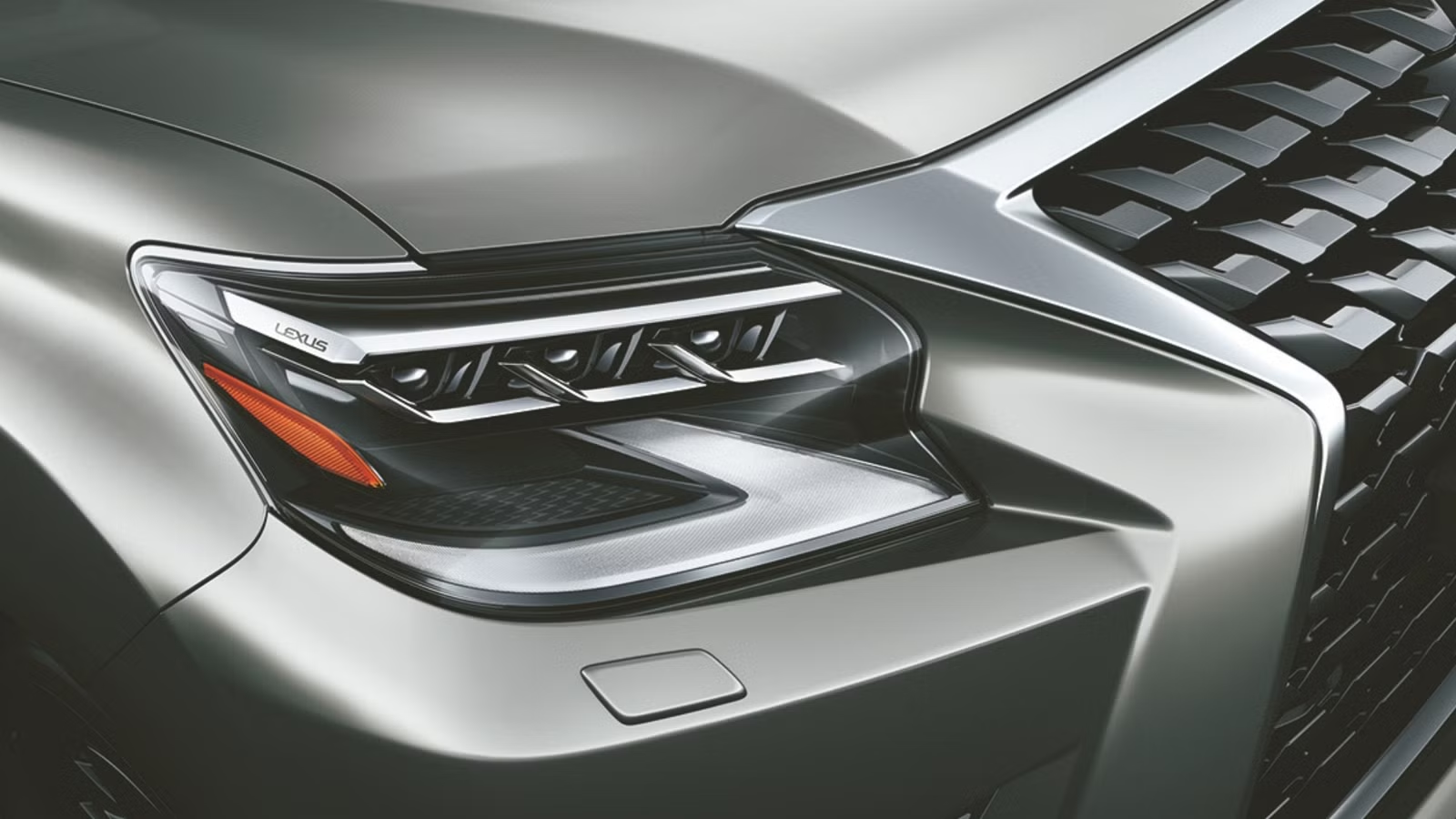
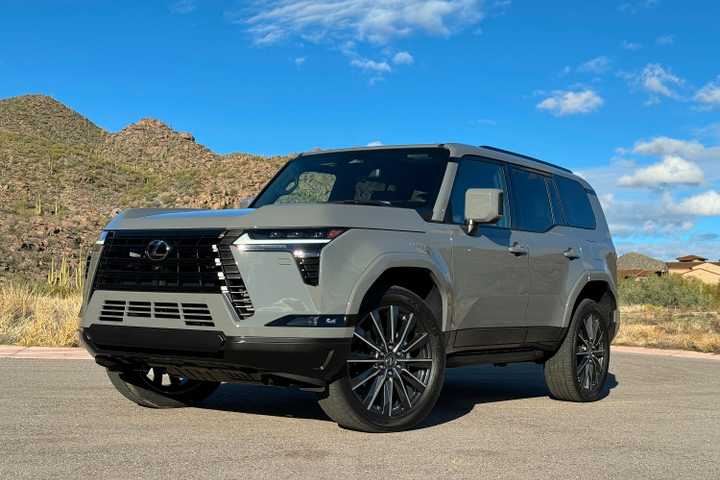
Front 3/4 of 2020 Lexus GX 460 parked in a hillLexus
When seeking an absolute exception to this high-mileage degradation, one specific vehicle dominates the American used market: the second-generation Lexus GX 460, produced from 2010 through 2023. The secret to this vehicle’s unparalleled longevity lies hidden beneath its soft semi-aniline leather, real wood trim, and premium audio systems. The GX 460 is not a glorified luxury crossover; it is a mechanical twin to the globally revered Toyota Land Cruiser Prado (the 150-series platform).
This is not a mere marketing metaphor; under the skin, the GX 460 shares the exact same heavy-duty, boxed steel ladder frame used by international fleet and commercial buyers who deploy these vehicles into the world’s most unforgiving terrain. It utilizes an identical, incredibly robust solid rear axle assembly and an independent front suspension system designed with oversized control arms and heavy-duty ball joints built to withstand decades of physical abuse. By building the GX 460 on this ultra-rugged global platform and refusing to alter its core architecture for over a decade, Lexus created a luxury vehicle with a commercial-grade foundation that thrives long after unibody rivals have rattled themselves apart.
The Deliberately Old-Fashioned V-8 Drivetrain That Makes 250,000 Miles Routine
Close-up shot of 2015 Lexus GX 460 engine bayLexus
At the center of the GX 460’s durability is its naturally aspirated 4.6-liter V-8 engine, designated internally as the 1UR-FE. While competitor brands rushed fragile, high-pressure turbochargers to market to secure minor efficiency gains, Lexus stuck to an exercise in understressed mechanical design. Producing a modest 301 horsepower, this V-8 operates far below its actual thermal and structural capacity, meaning internal components like pistons, bearings, and valvetrain are never pushed to their structural limits. It relies on a robust timing chain system rather than a rubber belt, completely eliminating a common point of catastrophic engine failure.
This understressed powerplant rejects modern drivetrain gimmicks like dual-clutch setups or hyper-sensitive 9- or 10-speed gearboxes. Instead, it pairs with a heavy-duty, six-speed torque-converter automatic transmission sourced from Aisin. Power is permanently routed through a full-time 4WD system via a rugged mechanical Torsen limited-slip center differential and a genuine, dual-range two-speed transfer case. Free from fragile, electronically actuated clutch packs that burn out over time, this entirely analog, mechanical configuration handles continuous load, heat, and high-mileage wear with absolute indifference.
The High-Mileage Ownership Reality
The Total Cost of Ownership (TCO) Advantage
The true financial genius of owning a high-mileage Lexus GX 460 lies in its unique Total Cost of Ownership (TCO) structure. When a European luxury SUV suffers a component failure, owners are typically forced to purchase proprietary, low-volume parts imported directly from Europe at astronomical markups. The labor required to service these vehicles is equally costly, often requiring specialized diagnostic computers and highly specific technician training.
Because the GX 460 shares the vast majority of its mechanical, braking, suspension, and filtration components with high-volume stablemates like the Toyota 4Runner, Tundra, and Sequoia, parts availability is widespread and highly affordable. A replacement alternator, water pump, or brake caliper can be sourced from any local auto parts retailer at standard passenger-car pricing. Furthermore, the mechanical layout of the vehicle is straightforward and analog, allowing independent repair shops across North America to perform routine maintenance easily. This parts synergy keeps long-term maintenance costs remarkably flat, ensuring the vehicle does not become a financial burden as the miles accumulate.
Known Weak Points To Anticipate
Lexus GX 460 V-8 powertrainLexus
Despite its legendary status, no machine can cheat physics indefinitely; reaching 250,000 miles requires targeted, preventative maintenance. The GX 460 exhibits a few well-documented, predictable mechanical vulnerabilities that buyers must monitor:
Secondary Air Injection Pump: This emissions component can draw in moisture over time, causing internal fan blade failure. Upgraded replacement kits or factory recalls generally mitigate this issue permanently.
Timing Cover Oil Seep: The factory silicone sealant along the front timing cover can develop a slow, weeping oil leak over extended periods. While rarely catastrophic, repairing it is labor-intensive due to the component access requirements.
Chassis Corrosion: Because the vehicle utilizes a traditional steel box frame, it is highly susceptible to road salt accumulation in northern climates. Regular underbody washing and professional anti-corrosion coatings are absolutely mandatory to prevent frame rot before the quarter-million-mile mark.
The Alternative Contenders
The Full-Size Alternative: Lexus LX Series
Front 3/4 view of the 2021 Lexus LX 570Lexus
For buyers requiring a larger footprint and even greater structural capacity, the Lexus LX series, encompassing the older LX 470 and the subsequent LX 570, presents an alternative pathway to ultra-high mileage. Built alongside the flagship full-size Toyota Land Cruiser at the specialized Yoshiwara plant in Japan, the LX series represents the absolute pinnacle of Toyota’s durability engineering, with a design life cycle intended for severe global environments.
Engine bay of the 2021 Lexus LX 570Lexus
While the LX 570’s 5.7-liter V-8 (3UR-FE) is virtually indestructible, the vehicle features a highly complex Hydraulic Automatic Height Control (AHC) suspension system. This system provides incredible ride quality and wheel articulation, but pressure accumulators and fluid lines require specialized, expensive servicing as they approach fifteen years of service.
The Daily Commuter Option: Acura MDX
Front 3/4 action shot of 2026 Acura MDX driving on roadAcura
If the truck-like driving dynamics, high step-in height, and substantial fuel consumption of a body-on-frame V-8 SUV do not align with a buyer’s daily commuting needs, the Acura MDX serves as a highly reliable crossover alternative. Utilizing a unibody foundation shared with the Honda Pilot, the MDX balances premium cabin appointments with car-like handling and efficient fuel economy.
2020 Acura MDX Sport Hybrid engineAcura
Under the hood, the MDX relies on Honda’s long-running, naturally aspirated 3.5-liter V-6 engine architecture. This powerplant features a highly robust valvetrain and stable electronic systems, routinely passing the 200,000-mile mark with basic maintenance. The trade-off remains structural: as a front-wheel-drive-based unibody crossover, it lacks the heavy-duty chassis components, ultimate wheel bearing size, and off-road resilience of the Lexus GX, making it a suburban pavement cruiser rather than an all-terrain machine.
The dream of owning a luxury vehicle that can reliably reach 250,000 miles requires moving past the sleek marketing campaigns of the new-car market and focusing instead on fundamental mechanical engineering. Most modern luxury marques require owners to constantly trade off advanced technological complexity against long-term operational durability.
Front action shot of a 2015 Lexus GX 460 driving off-roadLexus
By utilizing heavy-duty, commercial-grade body-on-frame foundations, opting for simple, understressed naturally aspirated powertrains, and benefiting from shared global parts bins, vehicles like the Lexus GX 460 redefine the concept of value within the premium segment. While the initial acquisition cost of these highly reliable platforms remains strong on the pre-owned market, the long-term dividend paid in the form of stress-free, high-mileage operation makes them the definitive choice for the smart luxury buyer.












No Comments