
The Nissan Altima Keeps Defying The Sedan Death Narrative—Here’s Why It’s Still Selling
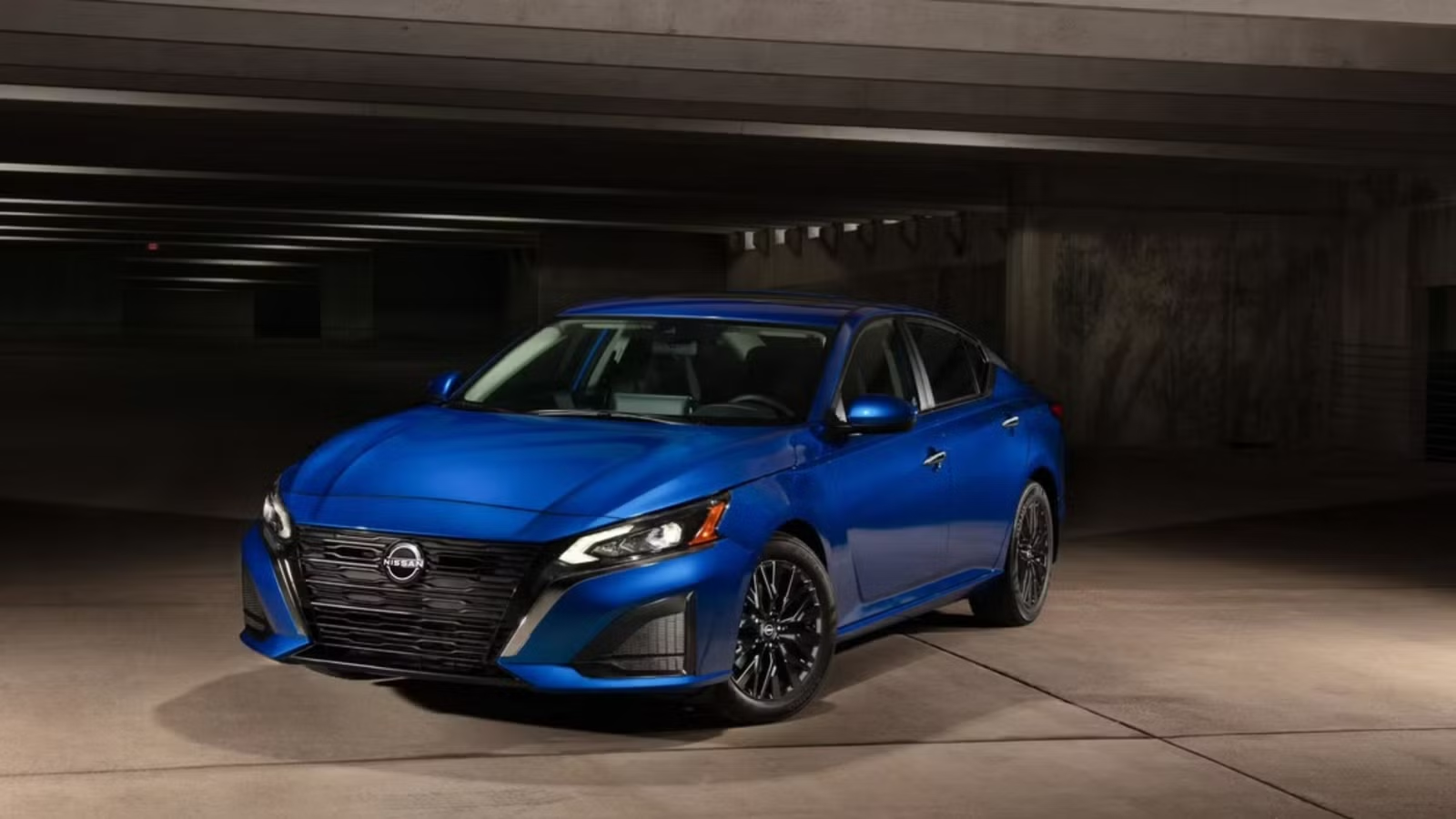
The Nissan Altima has spent years outlasting a narrative that should have buried it. While the broader sedan segment shed buyers to crossovers and SUVs, the Altima kept moving metal—quietly, without fanfare, in a market that kept declaring the family sedan extinct. Now, Nissan has confirmed the Altima is being discontinued after eight years on its current generation, ending a run that proved more durable than almost anyone expected.

The timing matters. Nissan had reportedly wanted to replace the Altima with an electric sedan, but that plan didn’t come together. So the car that cheated death repeatedly is finally being retired—not because buyers stopped showing up, but because the product roadmap ran out of road. That distinction is worth unpacking, because it says something real about who was actually buying Altimas and why.
Eight Years Is A Long Time To Keep A Sedan Alive
The current Altima generation launched in 2018 and never received a full redesign. In most segments, an eight-year product cycle is a slow fade toward irrelevance. In the mid-size sedan segment—where the Honda Accord and Toyota Camry refresh on tighter schedules—it’s an eternity.

And yet the Altima held on. Nissan kept it competitive through trim shuffles and modest updates rather than a ground-up replacement, which kept costs down and pricing accessible. The base Altima has consistently slotted below $28,000, undercutting the entry points of most compact crossovers with comparable interior space. For buyers who genuinely don’t need the ride height and are skeptical of paying a crossover premium for the same cargo capacity, that math has remained attractive.
What Actually Kept The Altima Selling

Three factors tend to prop up sedan sales numbers in a crossover-dominant market, and the Altima likely benefited from all three in varying degrees.
First, pricing. A well-equipped Altima SV or SR has consistently landed in the $28,000–$32,000 range—territory where a comparable crossover like a RAV4 or CR-V starts to stretch toward $35,000 once you add meaningful features. For budget-conscious buyers, the value proposition is straightforward: more car, less money, lower insurance costs, and better fuel economy on the highway.
Second, fleet and rental volume. Mid-size sedans have long been workhorses for rental fleets, and the Altima’s combination of rear-seat room, fuel efficiency, and low acquisition cost made it a natural fit. Fleet sales inflate raw volume numbers, which is worth keeping in mind when reading headline figures—retail demand and total sales aren’t always the same story.
Third, genuine retail loyalty. There’s a segment of practical sedan shoppers who have never fully converted to crossovers and aren’t planning to. They find the lower center of gravity more confidence-inspiring, the fuel economy more predictable, and the pricing more honest. The Altima, without much marketing noise, served that audience consistently.
Why Nissan Is Pulling the Plug Now

The discontinuation isn’t a sales failure story—it’s a product-planning story. Nissan confirmed it had intended to replace the Altima with an electric sedan, a move that would have kept the nameplate alive while transitioning the lineup toward electrification. That replacement didn’t materialize on schedule, leaving the aging current-gen Altima without a successor to hand off to.
Nissan is also reshuffling its broader U.S. lineup at the same time, adding new models — including a returning Xterra — while cutting others. The Altima’s exit is part of that larger rebalancing, not a standalone verdict on sedan viability. The Rogue Plug-In Hybrid is also being dropped in the same round of cuts.
For buyers currently cross-shopping an Altima against a RAV4 or CR-V, the practical takeaway is straightforward: the 2026 model year is the last one. Inventory will run down, and there won’t be a 2027 to wait for. If the Altima’s price-to-space ratio was the deciding factor, that window is closing.
The Altima’s run illustrates something the sedan-death narrative tends to flatten: a car doesn’t have to top segment sales charts to justify its existence. It has to serve a specific buyer well enough to keep them coming back. The Altima did that for eight years on an aging platform, in a market that was actively rooting against it. Whether Nissan eventually delivers the electric sedan it originally planned will determine whether that buyer loyalty has anywhere left to go.

Related posts



Latest Post


No Comments