
10 Harley-Davidsons That Keep The American V-Twin Dream Alive
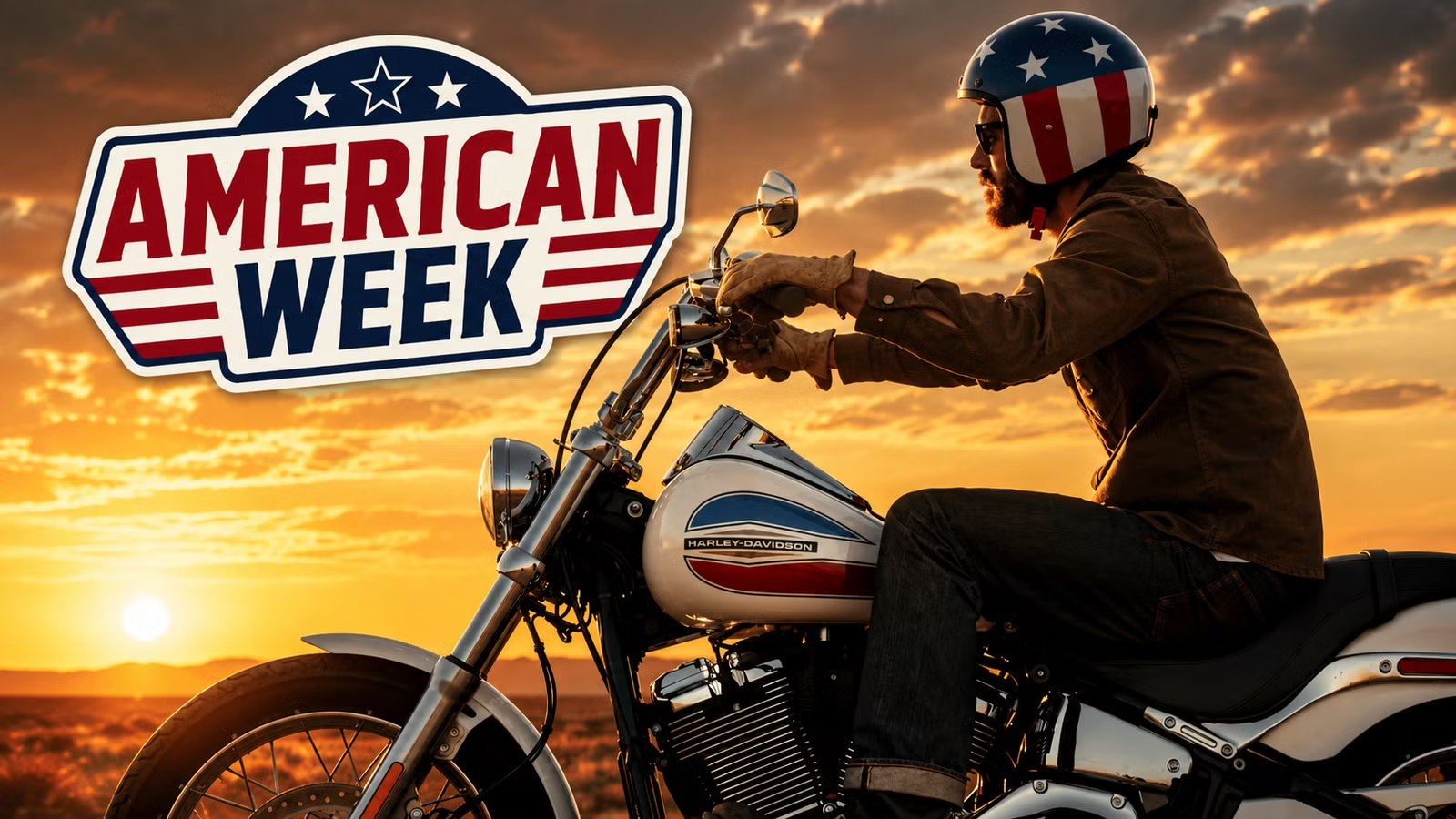
Route 66 turns 100 years old in November 2026. Along its surviving stretches through the Midwest and Southwest, riders still follow the same ritual their grandfathers did. A full tank, a map that barely matters anymore, and a roaring V-twin to travel it. Harley-Davidson built its name on rides like these, and even as the company folds modern tech into its current lineup, a good chunk of the 2026 range still leans hard into the retro look and appeal of American cruisers that turned a grandfather’s road trip into a grandson’s inheritance.

A hundred years of American motorcycling culture distilled into the pure feeling of freedom on the open road. It’s what the brand still signifies today, and every bike on this list still runs a V-twin, still tracing its lineage back to something Harley built decades ago. Ranked from the least to the most expensive, these Harleys keep the American dream well and truly alive.
2026 Harley-Davidson Nightster Special
Price: $12,499
The Nightster Special is the cheapest way onto this list, but don’t mistake it for a bargain-basement deal. It’s an everyday Harley that feels special in every way. Harley pulled the flat-track stance of the old XR750 into a modern chassis, then mounted a liquid-cooled Revolution Max 975T under a peanut tank that looks every bit as period-correct as the air-cooled Sportsters it replaced. At 483 lbs, it’s the lightest bike here by a wide margin, and flicks through parking-lot U-turns and tight switchbacks with none of the heft that the older Sportsters carried.


The 91 horsepower peaks at a high 7,500 rpm, so it wants to be revved out rather than lugged like an old cruiser—a personality that older air-cooled Sportster owners never got to feel. Showa suspension and a 4-inch TFT display bring the underpinnings fully into 2026, and cornering ABS plus traction control come standard. It’s a bit limited for longer runs, though: a 3.1-gallon tank paired with an estimated 52 mpg caps range at a little over 160 miles, but it won’t shy away from offering every bit of fun that a Harley can deliver.
|
Engine |
Power |
Torque |
Transmission |
|
975cc, liquid-cooled V-twin |
91 HP |
72 lb-ft |
6-Speed |
10 Cruisers That Make The Most Sense For American Riders
While there are some impressive locally made cruisers on the list, we’ve also thrown in a handful of metric examples from all over the world
2026 Harley-Davidson Street Bob
Price: $14,999

The Street Bob is Harley’s answer to the question of how little a Big Twin cruiser actually needs to look right. Solo seat, minimal fenders, a single round headlight, and blacked-out everything strip the Softail platform down to its bobber essentials. It’s a look chop-shops have been recreating on stock Harleys since the 1950s and part of the appeal that makes it just right as your first big Harley.

Under that stripped shape sits the Milwaukee-Eight 117 Classic V-twin making 98 horsepower and a stout 120 lb-ft of torque at just 2,500 rpm, so it pulls even from low revs needing fewer downshifts. At 646 lbs, it carries real heft compared to the Nightster Special, but that mass sits low and centers the bike through slow corners rather than making it feel clumsy. A 30-degree rake and 64.2-inch wheelbase keep the steering reasonably quick despite its size, and the six-speed box spreads that torque out comfortably to highway speed. Where it comes up short is range. A 3.5-gallon tank and an estimated 47 mpg put the real-world range at around 160 miles, a bit tight for a bike built to look like it belongs on an open highway.
|
Engine |
Power |
Torque |
Transmission |
|
1,923cc, V-twin |
98 HP |
120 lb-ft |
6-Speed |
2026 Harley-Davidson Super Glide
Price: $15,999

Super Glide revives the nameplate that started Harley’s whole factory-custom era. The original 1971 FX paired a Sportster front end with a Big Twin frame and engine, and it was the first factory bike built to look like something a rider had customized himself—a rolling piece of Americana, if you will. The latest 2026 revival leans into that lineage with a stepped seat, staggered shotgun-style pipes, and just enough chrome to look dressed-up for the Fourth.

It shares its Milwaukee-Eight 117 Classic engine with the Street Bob, so the power numbers match, but where it separates itself is in fuel capacity, with a 5-gallon tank stretching its estimated range out past 200 miles. However, that extra tank capacity and trim also add weight. At 656 lbs, it’s heavy despite sharing a chassis and drivetrain with the lighter Street Bob. Even then, riders reminiscing about the FX history will not only feel the performance upgrade but can also relive the joy of custom motorcycling through a factory package.
|
Engine |
Power |
Torque |
Transmission |
|
1,923cc, V-twin |
98 HP |
120 lb-ft |
6-Speed |
2026 Harley-Davidson Sportster S
Price: $15,999

Sportster S is the one bike here that doesn’t pretend to be old and retro. Where the rest of this list leans on nostalgia, the S borrows its DOHC, liquid-cooled Revolution Max 1250T from the Pan America adventure bike and wraps it in a low, muscular stance that owes more to the discontinued V-Rod than to any air-cooled Sportster whose name it shares. It’s a bit of a rule breaker like the V-Rod was and probably why old-school riders are still sleeping on it.

It’s one of the quickest bikes on this list, with 121 horsepower at 7,500 rpm from a 502 lbs curb weight, giving it the best power-to-weight ratio here. A 160-section front tire and 180-section rear give it a planted, drag-bike stance that looks the part standing still. The aggressive geometry has a cost though. Ground clearance sits at just 3.5 in, the lowest figure on this list, so the floorboards touch down early once a corner tightens up, a trait that riders coming from a Softail or from the Sportster’s own Nightster siblings will notice immediately. But it’s a unique expression of a future-forward Harley cruiser.
|
Engine |
Power |
Torque |
Transmission |
|
1,252cc, liquid-cooled V-twin |
121 HP |
93 lb-ft |
6-Speed |
5 Harley-Davidsons You Should Buy New (And 5 That Are Better Bought Used)
You can get a used 122-horsepower Harley-Davidson cruiser, co-developed with Porsche, for under $10,000.
2026 Harley-Davidson Low Rider S
Price: $18,999

The Low Rider S revives the drag-bar, blacked-out attitude of the original 1977 FXS, the bike that first paired a stripped Super Glide chassis with a factory custom treatment aimed squarely at street performance. Harley builds the latest one around the Milwaukee-Eight 117 High Output engine, a tuned version of the same 117 ci V-twin that makes 114 horsepower and 128 lb-ft of torque.

A 28-degree rake and 63.6-inch wheelbase keep it more agile than the touring end of Harley’s lineup. What’s also unique about the Low Rider S is the use of inverted forks, a rarity on a Harley cruiser, holding the front end steadier under cornering and braking loads. It’s still a hefty bike though, at 670 lbs, it’s heavier than the Street Bob or Super Glide despite sharing the same basic architecture. It’s a power cruiser that manages to have something for everybody.
|
Engine |
Power |
Torque |
Transmission |
|
1,923cc, V-twin |
114 HP |
128 lb-ft |
6-Speed |
2026 Harley-Davidson Heritage Classic
Price: $19,999

Heritage Classic is the most deliberately old-fashioned bike on this list, and it commits harder to that bit than anything else here. Styled after Harley’s 1950s and ’60s FL touring bikes, sitting on the same Softail chassis underpinning the Street Bob and Super Glide, and powered by the Milwaukee-Eight 117 Classic, the Heritage Classic is a mile-muncher that tips a hat to retro American motorcycling while boasting modern tech and reliability.

Making 98 horsepower and 120 lb-ft of torque, the Heritage Classic is tuned for low-rpm pull, which suits its light-touring intent. Standard saddlebags and a removable windscreen add the capability out of the box. The tradeoff is its weight and overall cargo space. At 719 lbs, it’s the heaviest bike so far on the list, and the 1.6 cu ft of storage is modest, to say the least, for a bike wearing this much touring gear.
|
Engine |
Power |
Torque |
Transmission |
|
1,923cc, V-twin |
98 HP |
120 lb-ft |
6-Speed |
2026 Harley-Davidson Fat Boy
Price: $22,599

The unique look of the solid disc wheels aside, it was Arnold Schwarzenegger and the Terminator flick that made the Fat Boy recognizable at a hundred yards since 1990. The look and appeal of the bike became so iconic that Harley hasn’t touched that formula to date. The Lakester-style cast wheels wrap a 160-section front and a genuinely massive 240-section rear, giving it the fat-tire silhouette that has cemented the look in pop culture.

Power comes from the Milwaukee-Eight 117 Custom, with 103 horsepower and 126 lb-ft of torque arriving at a lazy 3,000 rpm. At 694 lbs, it stays true to its name, and the 240-section rear tire steers more heavily at slow speeds, needing deliberate effort to turn in as it drags along the intended line. Even then, the Fat Boy remains an easy recommendation, as it values character over everything else.
|
Engine |
Power |
Torque |
Transmission |
|
1,923cc, V-twin |
103 HP |
126 lb-ft |
6-Speed |
10 Harley Motorcycles That Last Practically Forever
From touring models to cruisers, all of these Harley-Davidson bikes are built to last.
2026 Harley-Davidson Breakout
Price: $22,999

The Breakout takes the Fat Boy’s fat-rear-tire formula and stretches it out into something closer to a factory chopper, albeit keeping things practical and usable. A skinny 21-inch front wheel wrapped in a 130-section tire sits way out in front of a 34-degree rake, the most laid-back steering geometry on this list, while that same 240-section rear tire from the Fat Boy dons the back. The result is a long 66.7-inch wheelbase, giving the whole machine a low, stretched profile that looks great. It’s one of the reasons to love the Breakout.

Those include the Milwaukee-Eight 117 Custom engine tune for the same low-rpm shove as the Fat Boy, necessary to get the thick rear end moving. While the ride is still plush, the stretched-out geometry makes slow-speed maneuverability require noticeably more effort, but it’s a fair trade for riders chasing the custom drag-bike look.
|
Engine |
Power |
Torque |
Transmission |
|
1,923cc, V-twin |
103 HP |
126 lb-ft |
6-Speed |
2026 Harley-Davidson Street Glide
Price: $24,999

The Street Glide carries the iconic Batwing fairing that has defined the Harley touring line since 1969, when it first appeared on the FLH Electra Glide. The Street Glide nameplate itself showed up in 2006 as a blacked-out, stripped-down alternative to the fully dressed Ultra models. The 2026 version keeps that fork-mounted fairing, with a rounder, more traditional silhouette than the sharknose Road Glide.

Power comes from the same Milwaukee-Eight 117 found across most of Harley’s Big Twin range, with 105 horsepower and 130 lb-ft of torque. It boasts 2.42 cu ft of hard saddlebag space for proper touring capability. While still weighing a hefty 811 lbs, it’s lighter than the Road Glide by 27 lbs. It’s pricey, sure, but luxurious, stylish, and still cheaper than a Honda hatchback.
|
Engine |
Power |
Torque |
Transmission |
|
1,923cc, V-twin |
105 HP |
130 lb-ft |
6-Speed |
2026 Harley-Davidson CVO Road Glide ST
Price: $44,999

What happens if you build a Road Glide to race, and then let owners buy it? Well, the CVO Road Glide ST is what you get, and it’s Harley’s answer to a question that nobody was really asking. Despite that, the Road Glide ST is a masterpiece in American engineering and worthy of the high price tag and the bucketloads of drool. Draped in carbon fiber bodywork that shaves weight, and wearing the graphics package from the race team livery that’s been winning the MotoAmerica Mission King of the Baggers championship, the Road Glide ST looks unlike any other Harley on the road.

Under the fairing sits a Milwaukee-Eight 121 High Output-tuned engine that’s exclusive to the CVO ST models, producing 127 horsepower and 145 lb-ft of torque, the strongest numbers on this entire list. Fully adjustable Showa suspension and Brembo brakes back that power up with real racetrack pedigree. At $44,999, however, it asks $19,000 more than the standard Road Glide—but for 22 more horsepower, 15 more lb-ft of torque, and a whole lot of race-inspired exotica that sets it apart while being considerably more attainable than the CVO Road Glide RR.
|
Engine |
Power |
Torque |
Transmission |
|
1,977, V-twin |
127 HP |
145 lb-ft |
6-Speed |
Source: Harley-Davidson

Related posts

Latest Post


No Comments