
The Forgotten Big-Block Monster That Deserved More Fame
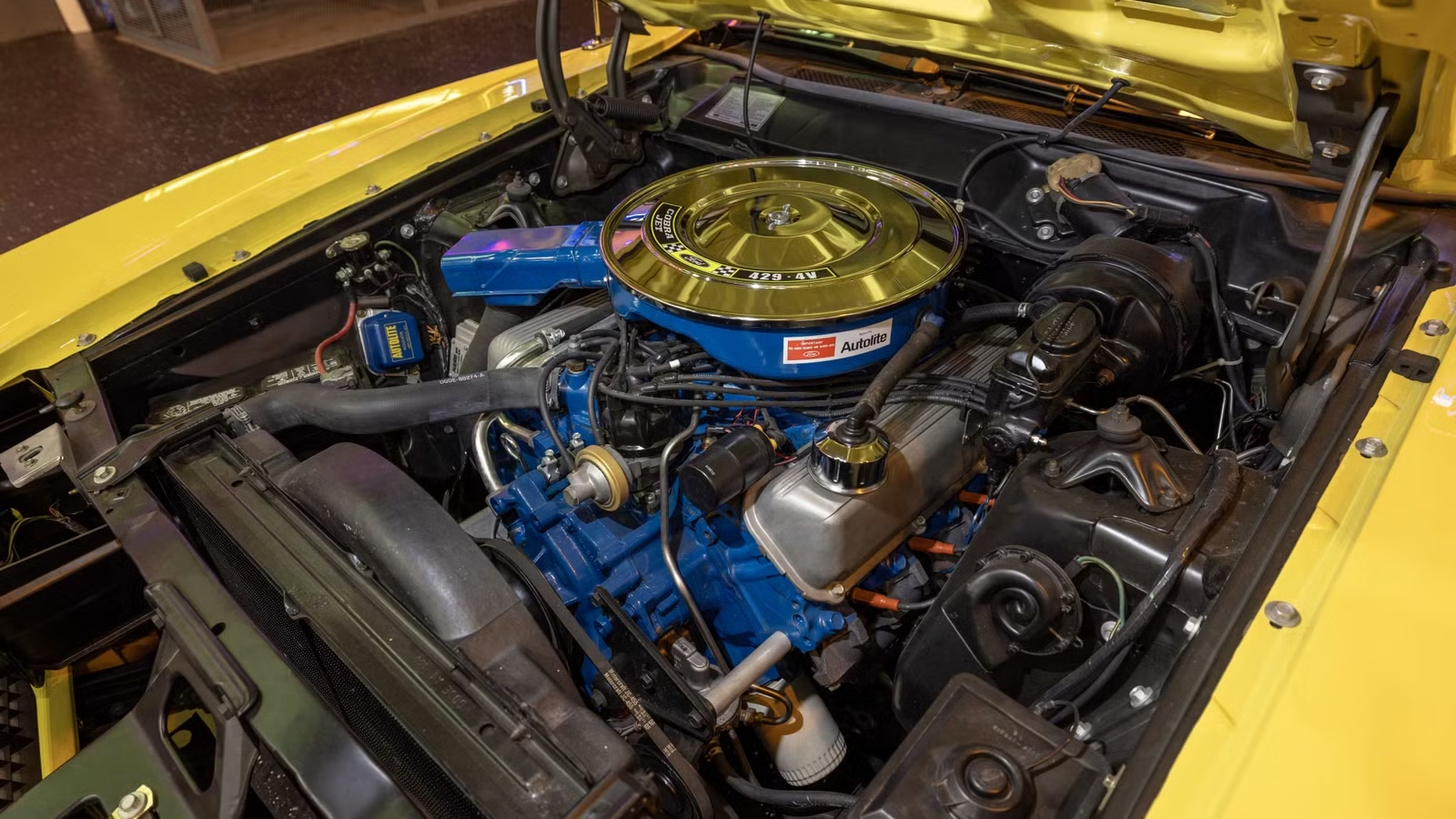
In 1970, Ford’s performance identity had a single address: the Mustang. The Mach 1, the Boss 302, the Boss 429. Every press launch, every advertisement, every poster on every wall pointed to Dearborn’s pony car as the definitive performance statement from the blue oval. What the marketing department was too busy to talk about was a completely redesigned intermediate sitting in the same showroom, wearing a flat-black hood and a Cobra badge, that had just won Motor Trend’s Car of the Year and could run a mid-13-second quarter mile on the right day. The Mustang got the posters. This car delivered the results. And then, somehow, it got forgotten.
When Ford’s Best Performance Car Wasn’t A Mustang

The muscle car landscape of 1970 was defined by a small number of cars that the automotive press had decided were the benchmarks. The Chevelle SS 454 LS6. The Plymouth Road Runner 440 Six Pack. The Buick GSX Stage 1. These were the cars that appeared in the serious road tests, the cars that the drag strip community talked about, and the cars that commanded attention by existing. Ford’s entry into that conversation wore Mustang badging in almost every piece of coverage the brand produced.
What was being ignored was a mid-size Ford that Motor Trend had put head-to-head against the Chevelle SS 454 LS6 and the Road Runner 440 Six Pack in a December 1969 road test. The Chevelle won that test, running 13.8 seconds in the quarter mile. The Ford was in that test, running against the two benchmark cars of the era, competing directly and receiving none of the cultural recognition that either of its competitors would go on to accumulate over the following five decades. The Chevelle became an icon. The Road Runner became a cartoon. Ford’s entry in that test became a trivia question.


The 1970 model year brought a complete redesign. The car became lower, wider, and more aerodynamic, gaining five inches in length on a 117-inch wheelbase. Motor Trend awarded it Car of the Year for 1970, recognizing the styling, the chassis development, and the performance hardware as the complete package that Ford had not previously offered in the intermediate segment. The aerodynamic development was not incidental: the same platform had taken David Pearson to the 1968 NASCAR Grand National championship, and the 1969 season produced an even more serious homologation exercise that dominated the superspeedways before NASCAR changed the rules to stop it. That story belongs in a separate conversation and makes the road car’s obscurity even harder to explain.
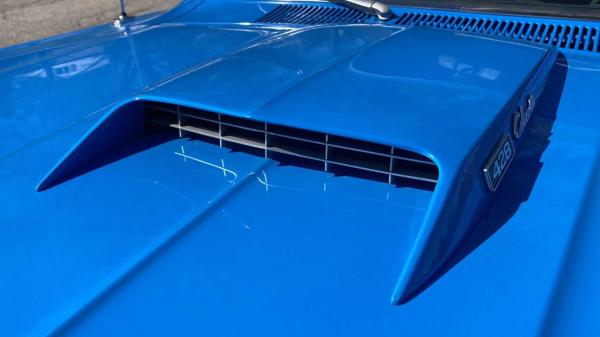
The Cobra trim that sat at the top of the performance lineup came standard with a four-speed close-ratio transmission, Hurst shifter, competition suspension, flat-black hood treatment, twist-style exposed hood latches, and seven-inch-wide wheels wrapped in F70-14 raised-white-letter tires. The Shaker hood scoop was optional. The interior was deliberately sparse; the Cobra was conceived as a budget performance car in the same spirit as the Road Runner, delivering maximum hardware for minimum expenditure. What the buyer got for their money was access to a 429-cubic-inch engine family that the automotive press had not yet finished exploring when the muscle car era ended the following year.
Rarest Ford Muscle Car Produced In The ’70s
Ford produced some true unicorn muscle cars during the 1970s, but this one is by far the rarest.
Meet The 1970 Ford Torino Cobra

|
Model |
Engine |
Power |
Torque |
0-60 mph |
Quarter Mile |
|---|---|---|---|---|---|
|
1970 Ford Torino Cobra (429 SCJ, 4-speed) |
7.0-liter V8 (429 cu in) Super Cobra Jet |
375 hp |
450 lb-ft |
~5.8 sec |
13.89 sec @ 101 mph |
|
1970 Chevrolet Chevelle SS 454 LS6 |
7.4-liter V8 (454 cu in) |
450 hp |
500 lb-ft |
6.0 sec |
13.44 sec @ 108 mph |
|
1970 Plymouth Road Runner 440 Six Pack |
7.2-liter V8 (440 cu in) |
390 hp |
490 lb-ft |
~6.3 sec |
~14.0 sec @ 99 mph |
The Torino Cobra arrived for 1970 with three configurations of the 429-cubic-inch big-block. The Thunder Jet produced 360 hp. The Cobra Jet produced 370 horsepower with a hydraulic-lifter camshaft, single four-barrel Holley carburetor, dual exhausts, and high-rise intake manifold. Only 7,675 Cobra models were built in 1970, making the Cobra the second-rarest 1970 Torino behind the GT Convertible. The Cobra Jet was the engine that Motor Trend tested in its December 1969 comparison, recording 0–60 in 6.0 seconds and a 14.5-second quarter mile with a C-6 automatic and 3.50 rear axle. The same test placed the Torino directly against the Chevelle LS6 and the Road Runner 440 Six Pack. While the Chevelle was faster, the Torino was still there.
The SCJ Drag Pack – The One To Have

Above the standard Cobra Jet sat the Super Cobra Jet, and above that sat the Drag Pack option that transformed the SCJ into something approaching a factory race car wearing license plates. The Drag Pack specification added four-bolt main bearing caps, a solid-lifter camshaft, forged pistons, an external engine oil cooler, and a 780 CFM Holley carburetor. The buyer also chose between a 3.91:1 Traction-Lok or a 4.30:1 Detroit Locker rear differential to put the power to the ground. The factory rated this combination at 375 horsepower, a figure that period documentation confirms substantially understated actual output, with independent estimates placing real-world power above 425 horsepower. In period testing with a four-speed manual, an SCJ Drag Pack Torino ran 13.89 seconds at 101 mph on street tires. Only 241 Torinos were produced with the SCJ engine and Drag Pack option. The SCJ Drag Pack Torino Cobra is the holy grail of Torino collecting, and 241 examples is the entire supply.
The Car That Won NASCAR And Still Got Ignored

The 1968 NASCAR season ended with David Pearson winning the championship in a Torino-based SportsRoof body. Ford’s response to that success was not a marketing campaign built around the road car. It was a more aerodynamic race car. In the fall of 1968, Ford worked with Holman-Moody to develop a purpose-built homologation special for the 1969 season: a modified Torino with a six-inch extended nose cone, flush-mounted grille without a separate bumper, and a smooth hood profile designed specifically to reduce aerodynamic drag at superspeedway speeds. NASCAR’s rules required a minimum of 500 street-legal production examples to be built before the car could race. Ford built approximately 750 of them, all equipped with the 428 Cobra Jet producing 335 horsepower, and named the car after the Alabama superspeedway it was designed to conquer.
The Talladega did exactly what it was built to do. David Pearson won the 1969 NASCAR Driver’s Championship in a Talladega, with Richard Petty finishing second in one. Ford won 26 of 54 races that season and took the Manufacturer’s Cup. The dominance lasted until September 14, 1969, when the Dodge Charger Daytona debuted at the inaugural Talladega 500 and introduced a more extreme aerodynamic solution that Ford could not immediately match. NASCAR subsequently revised its homologation rules for 1970 to limit the aero modifications that had defined the 1969 season. The competitive window for the Talladega closed before the decade ended. What remained was a Torino lineup with two consecutive NASCAR championships in its history, a Motor Trend Car of the Year award, and a marketing department that spent its entire budget on a different car.
Ford Torino Generations (All Years, U.S.): Engines, Trims, Specs & Value
Here’s your guide to the Ford muscle car that pushed the envelope since the beginning.
Ford Built A More Extreme And Far Rarer Version Of The 1970 Torino For NASCAR

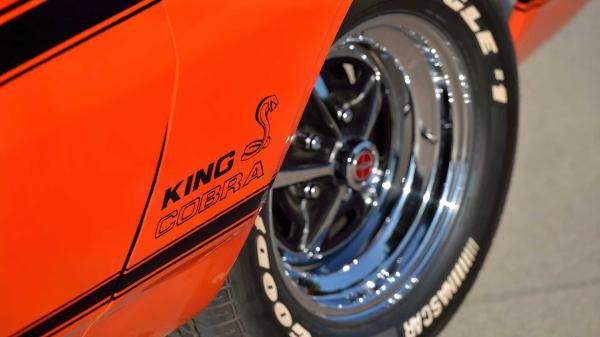
After getting absolutely destroyed by the Dodge Charger Daytona in 1969 and with Plymouth planning to unleash another Hemi-powered winged warrior in the 1970 NASCAR season, Ford needed a radical, nuclear-grade answer to claw back control. To lead the charge, Ford turned to Larry Shinoda, the legendary designer who had just jumped ship from GM, and gave him a simple task: take the completely redesigned 1970 Ford Torino and turn it into a 200-mph, wind-cheating missile for NASCAR. The result was the Torino King Cobra, an experimental NASCAR homologation special developed specifically to challenge Chrysler’s winged warriors.
By the time Shinoda was done with the design, the King Cobra looked radically different from the Torino fastback it was based on. The most obvious difference between the King Cobra and a standard Torino was its enormous aerodynamic nose. The King Cobra had a smooth, rounded front end that completely enclosed the grille and bumper area, creating a shape that looked more like an aircraft nose than the front of a muscle car. Unlike the Daytona and Superbird, however, the King Cobra retained a relatively conventional rear profile, which later proved to be one of its biggest weaknesses.

Underneath that futuristic, prototype skin lay some of the most legendary, high-performance powertrains Ford ever devised. Because these were test mules meant to evaluate both street and track viability, Ford equipped them with a mix of Boss 429 and Super Cobra Jet powerplants as engineers evaluated different combinations for both NASCAR competition and potential production.
NASCAR Killed The King Cobra Before It Could Race

While Ford intended to build enough King Cobras to satisfy NASCAR’s homologation requirements, the project never progressed beyond the prototype stage for various reasons. Part of the problem was technical. The aerodynamic nose created cooling challenges, while initial tests revealed terrifying aerodynamic lift at high speeds, mostly due to the lack of a big rear wing to pin it to the ground.
The bigger reason why Ford shelved the King Cobra project was NASCAR rule changes. As aerodynamic development accelerated during 1969, officials became increasingly concerned about the escalating speeds generated by the new generation of aero cars. Before Ford could homologate the King Cobra, NASCAR revised its rulebook, increasing the homologation minimum to 3,000 units and limiting aero cars to 305 cubic-inch engines. These changes effectively killed the King Cobra project before it took off. Only three examples were completed before development was halted, making the King Cobra one of the rarest Fords ever. Remarkably, all three cars are believed to survive today and are highly sought-after collector cars.
Ford’s Rarest Torino Was A Factory-Built Drag Weapon In Disguise
This Ford Torino was a rarely ticked option which could sprint the standing quarter in 13.6 seconds.
Collectors Have A Keen Interest The Torino Cobra

For decades, the Torino Cobra occupied a strange place in the muscle car world. It had nearly everything enthusiasts claim to value—big-block power, limited production numbers, documented NASCAR success, and performance capable of running with the best muscle cars of its era—yet it never enjoyed the same recognition as the Chevelle SS 454, Plymouth Road Runner, or Ford’s own Mustang. That lack of attention kept Torino values surprisingly affordable for years, making them one of the hobby’s best-kept secrets.
As prices for blue-chip muscle cars have continued climbing, however, collectors have started taking a second look. Finding a genuine LS6 Chevelle, Hemi Mopar, or Boss 429 Mustang has become increasingly expensive, pushing many buyers toward overlooked alternatives with comparable performance credentials. The Torino Cobra stands out because it offers more than just a big engine. It combines a 429-cubic-inch V8, available Super Cobra Jet and Drag Pack equipment, a Motor Trend Car of the Year-winning platform, and direct ties to one of Ford’s most successful periods in NASCAR competition. Those are credentials that would typically command far higher prices if they were attached to a more famous nameplate.
The market has begun reflecting that reality, although not to the same degree as some of its rivals. Rare variants such as the Twister Special and documented Super Cobra Jet Drag Pack cars have attracted growing attention at major auctions, while well-preserved Cobra Jet models continue to gain value as enthusiasts become more familiar with the Torino’s story. Even so, the Torino Cobra remains one of the few muscle cars from the peak of the horsepower wars that can still be purchased for a fraction of what many comparable competitors command.
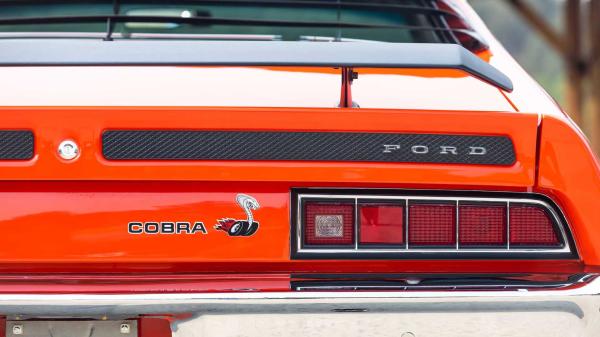
The Rarest Ford Torino Ever Made
The rarest Torino ever made predates the Gran Torino nameplate by a couple years. It was a 1970 Ford Torino released in a run of 90 units.
What One Is Worth Today

|
Model |
Fair |
Good |
Excellent |
Concours |
|---|---|---|---|---|
|
1970 Ford Torino Cobra (429 CJ) |
$22,000 |
$39,600 |
$66,000 |
$90,000+ |
|
1970 Ford Torino Cobra (429 SCJ) |
$45,000 |
$66,000 |
$90,000 |
$105,000+ |
|
1970 Chevrolet Chevelle SS 454 LS6 |
$85,000 |
$130,000 |
$175,000 |
$225,000+ |
Current market analysis puts the average insured value of the Torino Cobra at $50,380, a figure that has increased only six percent for big-block 429 cars over the past decade. The Chevelle LS6 that competed directly against it in period testing now trades at multiples of that figure. A clean 1970 GT Cobra Jet fastback changed hands for $55,000 in early 2025. The Twister Special, a Kansas-market variant finished in Grabber Orange with unique trim, sold for $198,000 in December 2024, demonstrating the ceiling available to documented rare variants. For a standard Cobra with the 429 CJ and matching documentation, the current market offers access to a Motor Trend Car of the Year winner that ran in the same class as the most celebrated muscle cars of 1970, at prices that have not yet reflected what that history is worth.
Sources: Hagerty, Street Muscle Magazine, Motor Trend, Mecum.

Related posts


Latest Post


No Comments