
The Forgotten GMC SUV That Beat A Ferrari
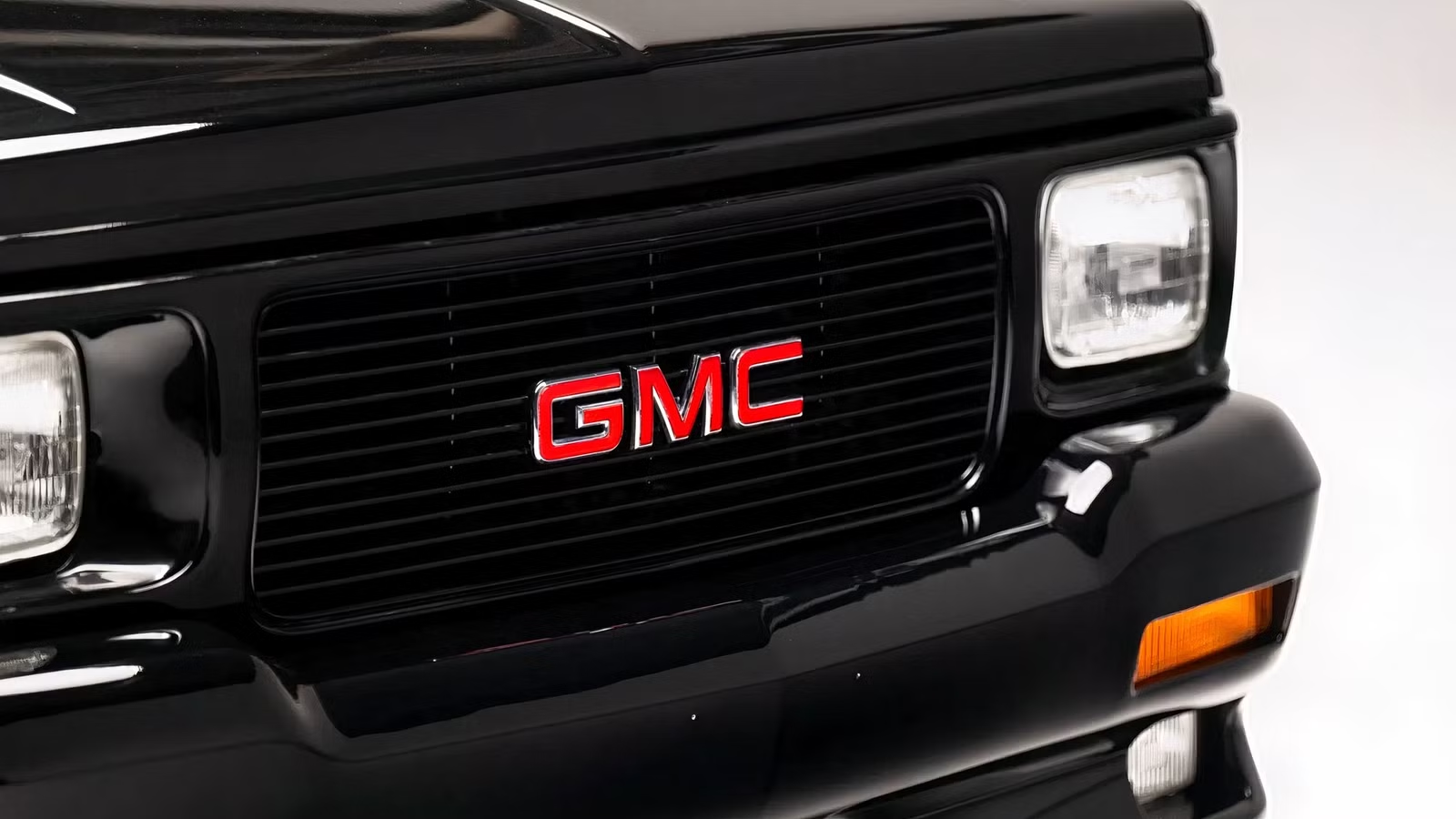
Today’s car market is teeming with performance SUVs, so it might be easy to forget they’ve actually not been around that long. The segment only took off during the late 1990s and early 2000s, right around the same time that SUVs were becoming increasingly luxurious. Before this transition, manufacturers were placing much greater emphasis on the “utility” part of sport utility vehicles, so the models available at the time leaned heavily toward rugged workhorses rather than luxury-packed, performance-oriented haulers. It was the Germans who really dialed up the sportiness factor in the early 2000s with models like the Mercedes-Benz ML55 AMG and Porsche Cayenne, yet the formula had already been established in America earlier on.

In our day and age, SUVs whose spec sheets look similar to those of supercars are by no means unheard of, with the Lamborghini Urus and BMW X5 M Competition being just a couple of good examples. But the concept seemed utterly absurd in the 1990s, when there was very little overlap between performance and sport utility vehicles. One automaker took it upon itself to break the ice long before others followed, though, pioneering the recipe that is still followed to a large degree all these years later. Outrageous acceleration and power output figures, little to no regard for off-roading capability, and aggressive styling cues hinting at what sat under the hood — these were a few of the key ingredients.
 23 autotech
The German Wagon Nobody Bought Is Secretly More Luxurious Than Modern SUVs
This German wagon makes every argument, ticks every box, and outclasses modern SUVs on every metric that matters.
GMC Did The Unthinkable At The Dawn Of The 1990s

Now, think of a teenager having his rebellious metalhead phase, and you’ve basically got GMC in the early nineties. The brand’s vicious Syclone took the pickup segment by storm (no pun intended) in 1991, as the most extreme high-performance truck the world had seen at the time. It came with a turbocharged 4.3-liter V6 making 280 hp, which could propel the Syclone from zero to 60 mph in a blistering 4.3 seconds. That’s just a tad slower than the Ferrari F40, for crying out loud, and the truck also boasted a quarter-mile time of 13.4 ticks. But GMC didn’t reserve this performance just for its pickup, because its sights were set on the SUV segment as well.
This American Pickup Truck Was Faster Than Some Ferraris (And Nobody Was Ready for It)
A turbocharged AWD American pickup changed the game in 1991 by outrunning Ferraris and proving trucks could deliver real supercar acceleration.
The GMC Typhoon Arrives As The World’s First Performance SUV

When the Syclone — of which 2,998 copies were produced — bowed out gracefully in 1992, it made room for the Typhoon to carry its thunderous spirit onto SUV territory. And that’s how the world’s first performance-focused SUV was born, featuring the same 4.3-liter turbocharged V6 as its pickup sibling. The engine’s Mitsubishi TD06-17C turbo offered 14 psi of boost, with air passing through a Garrett intercooler before reaching the intake manifold. And just like the Syclone, the Typhoon benefited from 280 hp at 4,400 rpm and 350 lb-ft of torque at 3,600 rpm. This power was distributed to all four wheels with a 65% bias at the rear, traveling through a four-speed automatic gearbox.
Typhoon Specifications
|
Engine |
4.3-Liter Turbocharged V6 (With Mitsubishi TD06-17C Turbocharger And Garrett Intercooler) |
|
Transmission |
4-Speed Automatic (GM 4L60) |
|
Drivetrain |
All-Wheel-Drive (35% Front / 65% Rear Torque Split) |
|
Horsepower |
280 HP @ 4,400 RPM |
|
Torque |
350 LB-FT @ 3,600 RPM |
|
0-60 MPH |
5.3 Seconds |
|
Quarter-Mile |
14.1 Seconds |
|
Top Speed |
124 MPH (Electronically Limited) |
The end result was a zero-to-60 time of 5.3 seconds, making GMC’s SUV slower than the Syclone but faster than a contemporary Chevy Corvette LT1, a V8-equipped Mustang, or even Ferrari’s 348 TS. Moreover, the Typhoon could finish the quarter-mile sprint in a very respectable 14.1 seconds, before hitting its electronically governed top speed of 124 mph. A low ride height, self-leveling rear suspension, and muscular looks were just a few of its other defining features. And whereas the Syclone could be had in any color so long as it was black, the Typhoon offered several color options. But unsurprisingly, most people still ended up choosing Midnight Black.
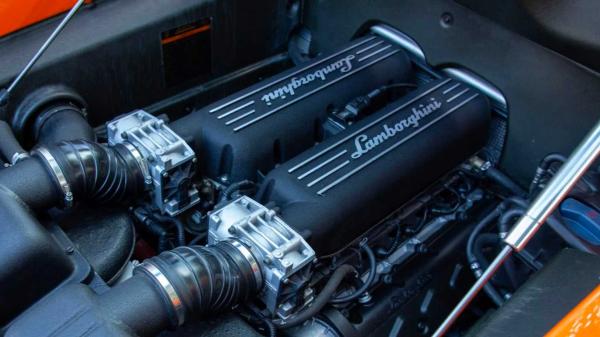
10 Factory Sleepers That Came With Engines From Supercars
These carmakers shoehorned their very powerful supercar engines into average family haulers.
Development And Production Run

The GMC Typhoon was based on the comparably tame Jimmy, and General Motors teamed up with Production Automotive Services (PAS) for its development. GM would build the standard Jimmy models and ship them over to PAS in Troy, Michigan, which was where the magic truly happened. PAS was essentially responsible for all the upgrades that defined the Typhoon, from the powertrain and suspension all the way up to the bodywork. The whole process was nearly identical to the Syclone’s development, and the 1992-model Typhoon had a base MSRP of $29,530. That number grew ever so slightly to $29,795 the following year, which is equivalent to just under $70k in today’s money.
GM’s pioneering performance SUV only stayed in production for two years, with a total of 4,697 units built during that time. There are precisely 2,497 copies of the 1992 model out there, while the other 2,200 are 1993 variants. The Typhoon’s low production numbers and short lifespan can be attributed to a couple of different factors: it being too niche to garner widespread interest, and the arduous assembly process, which saw PAS putting each vehicle together by hand. Its price tag was hefty, as well, demanding a significant premium over the Jimmy’s base price or other popular SUVs available at the time. Simply put, the world wasn’t ready for what the GMC Typhoon brought to the table, no matter how remarkable it was.
8 Forgotten Performance SUVs Faster Than A ’90s Ferrari
Some of the coolest hidden gems of the performance SUV world.
Short-Lived, But More Influential Than Most

Even though the Typhoon was only around for two years, its massive influence reaches as far as the present day. It was the first to show that SUVs with supercar performance were possible, thus laying the groundwork for future models like the AMG GLC 63 S E Performance, Cayenne Turbo, or Jeep Grand Cherokee Trackhawk to capitalize on the idea once buyers were actually ready for it. Just about every performance SUV on sale today owes a little something to the Typhoon as its distant ancestor, even if it was just a preview of all the great things that came to fruition later on. And having laid out that template for so many brands to adopt over the years, it’s certainly earned its place as one of automotive history’s most significant chapters.
Of course, the GMC Typhoon is highly collectible on today’s market, but prices tend to vary pretty wildly based on the vehicle’s mileage, condition and color option. Take, for instance, an Apple Red 1993 model with just 688 miles on the odometer, one of only 77 examples made in that color. It went under the hammer on Bring a Trailer for a whopping $226,000 in 2025, while a 272-mile Midnight Black specimen fetched $175,000 three years earlier. But those are the outliers, because you can generally expect to pay somewhere between $30,000 and $50,000 for a GMC Typhoon in decent shape. That’s still not exactly cheap, yet it does seem reasonable given the model’s rarity and significance.
Sources: Xtreme CFM, AOL, MotorTrend, Motor Biscuit, Car and Driver, Conceptcarz, Bring a Trailer, Classic.com

Related posts


Latest Post


No Comments