
6 Most Reliable Mercedes-Benz Engines Ever Built (6 To Stay Away From)
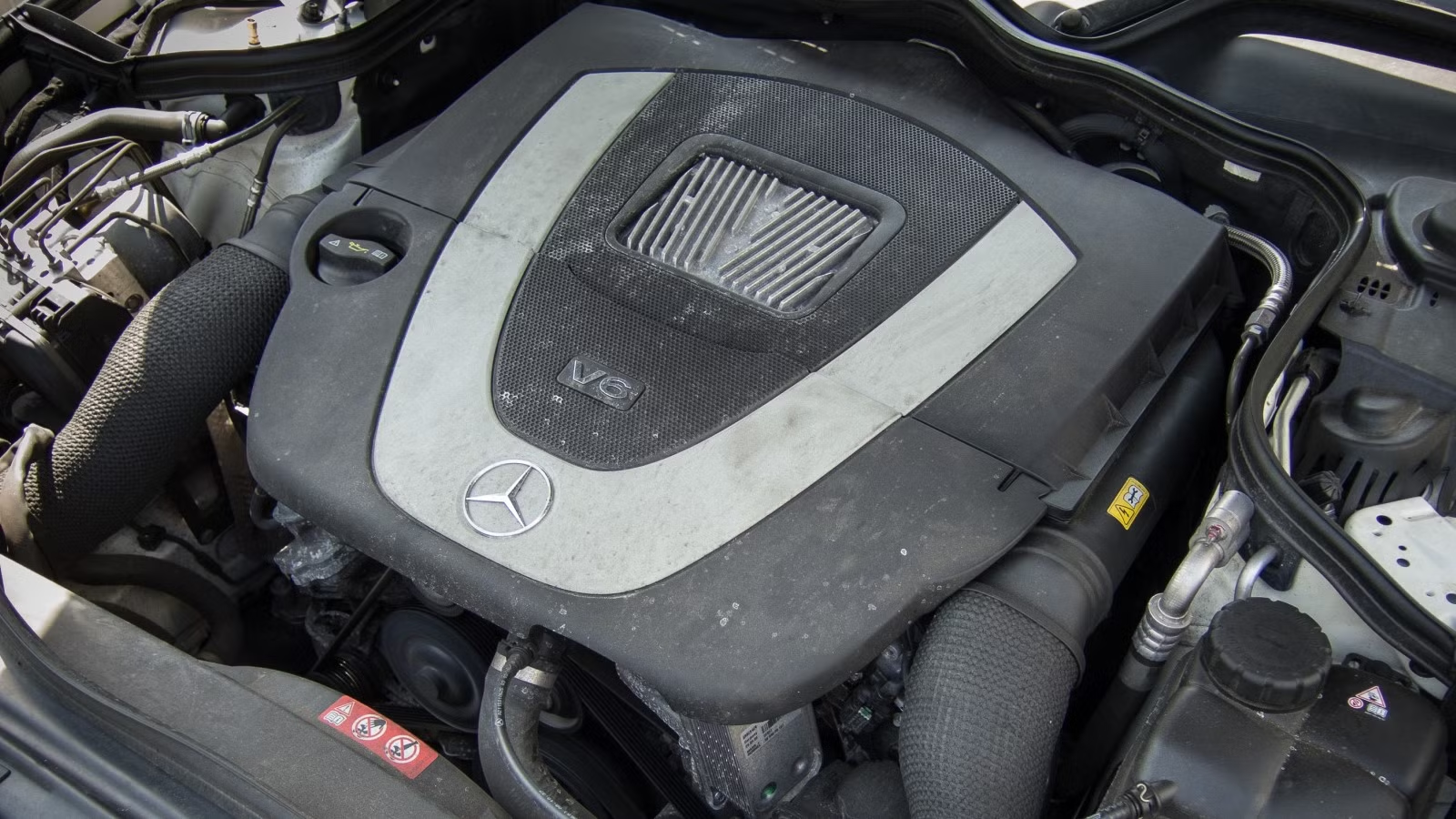
Few automakers have a stronger claim to the birth of the modern automobile than Mercedes-Benz, whose roots trace back to Carl Benz’s 1886 Patent-Motorwagen. The brand has since built its reputation on luxury, performance, and engineering excellence. With more than a century of development behind it, Mercedes-Benz has produced engines capable of racking up hundreds of thousands of miles with proper maintenance, including older designs often described as “over-engineered.”

Still, a three-pointed star under the hood doesn’t guarantee trouble-free motoring. Over the decades, Mercedes-Benz has also built engines plagued by costly mechanical flaws, an occasional downside of chasing increasingly sophisticated luxury and performance. Here, we examine both sides of the story, separating the engines with reputations for lasting the distance from those that deserve a closer look before you buy.

All data mentioned in this list of reliable and unreliable Mercedes-Benz engines were retrieved from reputed automotive websites like CarEdge, Consumer Reports, and CarSurvey.
12
Reliable: 3.0 Inline-Five OM617
Engine Specs
|
Manufacturer |
Mercedes-Benz |
|
Production Years |
1974-1991 |
|
Configuration |
Inline-5 |
|
Displacement |
3.0-Liter |
|
Power |
79-227 hp |
|
Torque |
124-184 lb-ft |
|
Fuel |
Diesel |
|
Noteworthy Applications |
1977–1981 Mercedes-Benz 300D, 1977–1981 Mercedes-Benz 300CD |
Produced between 1974-1991, Mercedes-Benz loaded their 300D with a cast iron 3.0-liter diesel engine known as the OM617. A five-cylinder engine to replace the outgoing OM616 quickly garnered a reputation for reliability, with many fleet vehicles approaching 620,000 miles as time passed.
Mercedes-Benz produced 2.7 million OM617 power plants over 17 years to cement the five-cylinder’s stubborn reputation as one of the best diesel engines in the world. A testament to Mercedes-Benz’s reliability is the 1979 Mercedes-Benz 300TD wagon that went up for sale in recent years. This old Merc crossed the auction block with a whopping 782,000 miles on the clock, thanks to the OM617 housed within.
Reliability Of Mercedes-Benz OM617 Engine
- Problems Owners Report: Timing chain and fuel pump failure due to lack of periodic maintenance
- Highest Mileage Reported On CarSurvey: 272,000 miles
11
Unreliable: 2.5 V6 M272

Engine Specs
|
Manufacturer |
Mercedes-Benz |
|
Production Years |
2004-2013 |
|
Configuration |
V6 |
|
Displacement |
2.5-Liter, 3.0-Liter, 3.5-Liter |
|
Power |
201-312 hp |
|
Torque |
181-269 lb-ft |
|
Fuel |
Gasoline |
|
Noteworthy Applications |
2005-2011 Mercedes-Benz C-Class, 2005-2011 Mercedes-Benz E-Class |
Produced between 2004-2017 to replace the M112 V6, Mercedes unleashed the entry-level 2.5-liter M272 V6 found on base-level cars such as the C230 and E230 vehicles. Producing a maximum of 201 hp and 181 lb-ft of torque, the DOHC V6 was your typical A to B power plant, or it was supposed to be.
In the early 2000s, Mercedes-Benz was undergoing a reliability crisis, and the cheaply built M272 engine block only worsened things. Certain early M272 engines developed premature balance-shaft sprocket wear, a problem that could disrupt valve timing and lead to expensive repairs. Timing chain issues causing premature wear to the surrounding components could also occur in as little as 100,000 miles. As a result, permanent check engine lights and misfires are standard on M272-powered cars.
Mercedes-Benz had to fight off a class action lawsuit in 2010 relating to faulty components within the M272 V6 engine. However, worst of all, they even ruined the glorious S-Class with the unruly M272.
Reliability Of Mercedes-Benz M272 Engine
- Problems Owners Report: Oil leakage from cam plugs, frequent breaking of the intake manifold plastic cover, timing chain problems due to balance shaft wear
- Highest Mileage Reported On CarSurvey: 77,671 miles
10
Reliable: 2.0 Inline-Four M111

Engine Specs
|
Manufacturer |
Mercedes-Benz |
|
Production Years |
1992-2003 |
|
Configuration |
Inline-4 |
|
Displacement |
1.8-Liter, 2.0-Liter, 2.2-Liter, 2.3-Liter |
|
Power |
121-194 hp |
|
Torque |
125-207 lb-ft |
|
Fuel |
Gasoline |
|
Notably Applications |
1993-2000 Mercedes-Benz C-Class (W202), 1992-2000 Mercedes-Benz E-Class (W124 and W210) |
Introduced in 1992 as the successor to the M102 gasoline four-cylinder, the Mercedes-Benz M111 powered a wide range of passenger cars. Its cast-iron block, broad application range and generally durable construction helped establish its reputation as one of Mercedes-Benz’s dependable four-cylinder families. The M111 found itself in the W124 E200, C200, and CLK200 Mercedes models with a maximum output of 189 hp and 199 lb-ft of torque, as featured on the gutless C200 Kompresser sports cars.
What the M111 lacked in performance, it made up for with reliability. As a result, many C200 models sporting the M111 are still on the market today. Mercedes’s little cast iron block has gone on to be considered one of the best four-cylinder engines in the world for its durability and efficiency wrapped up in a tiny package.
Reliability Of Mercedes-Benz M111 Engine
- Problems Owners Report: Head gasket failures, timing chain tensioner failure
- Highest Mileage Reported On CarSurvey: 216,000 miles
9
Unreliable: 2.1 Inline-Four OM651
Engine Specs
|
Manufacturer |
Mercedes-Benz |
|
Production Years |
2008-Present |
|
Configuration |
Inline-4 |
|
Displacement |
1.8-Liter, 2.1-Liter |
|
Power |
109-201 hp |
|
Torque |
184-368 lb-ft |
|
Fuel |
Diesel |
|
Noteworthy Applications |
2012-2018 Mercedes-Benz A-Class, 2008-2018 Mercedes-Benz C-Class, 2015-2019 Mercedes-Benz GLC |
Although Mercedes-Benz is credited today with the world’s most powerful four-cylinder engine, the OM651 produced in 2008 is the exact opposite.
Mercedes released the 2.1-liter inline-four for its A, B, and low-level C-Class models. The 2.1-liter iteration produced a maximum of 201 hp. The engine’s design was so it could sit both longitudinally and transversely, increasing flexibility. There was also the issue of the Euro 5 emissions standard, which forced Mercedes to fit environmentally friendly fuel injectors. Certain early OM651 variants fitted with Delphi piezoelectric injectors experienced injector failures, prompting a change to solenoid-injector configurations in affected applications.
The compact design also made the block challenging to work on. Furthermore, it could have been a more reliable Mercedes product, with regular leaks from front valve seals being a standard feature. Unfortunately, the OM651 also fell victim to timing chain failure, just like its fellow cheaply built power plants of the era. Early, high-output OM651 diesels fitted with Delphi piezoelectric injectors are the versions that deserve particular scrutiny. Buyers should confirm whether the injectors were updated and inspect the engine for timing-chain noise, oil leaks and other age-related faults before purchasing.
Reliability Of The Mercedes-Benz OM651 Engine
- Problems Owners Report: Frequent glow plug servicing (after every 50,000 miles), faulty fuel injectors, timing chain failures, front valve seal leakage
- Highest Mileage Reported On CarSurvey: 114,000 miles
8
Reliable: 3.0 Inline-Six OM606

Engine Specs
|
Manufacturer |
Mercedes-Benz |
|
Production Years |
1993-2001 |
|
Configuration |
Inline-6 |
|
Displacement |
3.0-Liter |
|
Power |
134-174 hp |
|
Torque |
155-243 lb-ft |
|
Fuel |
Diesel |
|
Noteworthy Applications |
1994-1996 Mercedes-Benz E 300 Diesel T Wagon, 1997-1999 Mercedes-Benz E 300 Turbodiesel Wagon, 1992-1995 Mercedes-Benz E 300 Diesel Sedan, 1997-1999 Mercedes-Benz S 300 Turbodiesel Sedan |
Smokey Nagata had the 2JZ, and Europe had the 1993 Mercedes-Benz OM606 3.0-liter inline-six, capable of 174 hp and 243 lb-ft of torque. It is not quite a performance engine, but the stubborn diesel epitomizes reliability. Mercedes-Benz produced the block between 1993 and 2001, featuring it exclusively in the automakers’ premium E, G, and S-Class range. Tuners were also keen to get their hands on the modest diesel engine, taking figures up to 500 hp with the help of a turbocharger.
The OM606 is widely regarded as one of the most bulletproof inline-six engines in the world, provided you change up the glow plugs occasionally.
Reliability Of The Mercedes-Benz OM606 Engine
- Problems Owners Report: Glow plug failure
- Highest Mileage Reported On CarSurvey: N/A
7
Unreliable: 3.0 V6 OM642
Engine Specs
|
Manufacturer |
Mercedes-Benz |
|
Production Years |
2005-2018 |
|
Configuration |
V6 |
|
Displacement |
3.0-Liter |
|
Power |
181-211 hp |
|
Torque |
295-398 lb-ft |
|
Fuel |
Diesel |
|
Noteworthy Applications |
2005-2007 Mercedes-Benz C320 CDI, 2005-2007 Mercedes-Benz E-Class CDI, 2012-2018 Mercedes-Benz GLS 350d |
Introduced in 2005, the OM642 was a 3.0-liter turbocharged V6 diesel that replaced several earlier inline-five and inline-six diesel engines in Mercedes-Benz’s passenger-car lineup. The 3.0-liter Mercedes engine was also featured in Chrysler products, such as the Jeep Commander and 300C until Daimler and Chrysler parted ways in 2007.
What ruined the engine’s reputation was a combination of low-quality gaskets, deteriorating ventilation valves, and of course, the 2018 recall surrounding emissions regulations. Furthermore, the OM642 also sported environmentally friendly Piezo injectors. Sadly, the polar-bear-friendly injectors regularly failed and caused black exhaust fumes on OM642-powered cars.
Reliability Of The Mercedes-Benz OM642 Engine
- Problems Owners Report: Melting of engine-layered plastics due to high temperatures from wear of crankcase ventilation valve, black smoke due to non-replacement of Piezo injectors, manufacturing of fuel flow control valve, low quality gaskets cause oil leaks in the engine block for engines manufactured before 2010.
- Highest Mileage Reported On CarSurvey: N/A
6
Reliable: 4.2 V8 M116

Engine Specs
|
Manufacturer |
Mercedes-Benz |
|
Production Years |
1969-1991 |
|
Configuration |
V8 |
|
Displacement |
3.5-Liter, 3.8-Liter, 4.2-Liter |
|
Power |
156-228 hp |
|
Torque |
196-229 lb-ft |
|
Fuel |
Gasoline |
|
Noteworthy Applications |
1971-1980 Mercedes-Benz C107, 1970-1972 Mercedes-Benz W108, 1969-1972 Mercedes-Benz W109, 1973-1980 Mercedes-Benz W116 |
Mercedes produced the M116 V8 between 1969 and 1991 to win over the American markets. The rigid cast iron block appeared on the longest-running S-Class series, providing the luxury sedan 228 hp mated to a Mercedes-Benz 4G-Tronic gearbox.
The 4.2-liter M116 is also featured on the highly reliable Mercedes-Benz SL420 (R107). In fact, the SL420 is the rarest of its kind. Only 2,148 models arrived with the sturdy 4.2-liter V8 power plant. The tried and tested M116 engine in 4.2-liter format was the penultimate iteration of the V8 engine block, which saw replacement in 1991 with the 4.2-liter DOHC M119.
Reliability Of The Mercedes-Benz M116 Engine
- Problems Owners Report: Timing chain issues, camshaft wear, worn-out valve guides.
- Highest Mileage Reported On CarSurvey: N/A
5
Unreliable: 5.5 V8 M273

Engine Specs
|
Manufacturer |
Mercedes-Benz |
|
Productions Years |
2005-2013 |
|
Configuration |
V8 |
|
Displacement |
4.7-Liter, 5.5-Liter |
|
Power |
335-382 hp |
|
Torque |
339-391 lb-ft |
|
Fuel |
Gasoline |
|
Noteworthy Applications |
2006-2011 Mercedes-Benz E 500, 2006-2012 Mercedes-Benz GL 500, 2006-2009 Mercedes-Benz CLK 500 |
The M273 was Mercedes-Benz’s naturally aspirated V8 successor to the M113, offered in 4.7- and 5.5-liter versions. Although it delivered substantially more power than the M272 V6, certain early M273 engines developed their own costly timing-system problems.
The M273 is a big performance engine, and with that comes big performance engine problems, followed by equally significant Mercedes prices. Some early M273 engines suffered premature wear of the timing-chain idler gear, while intake-manifold runner problems could also require expensive repairs. Buyers should verify the engine’s production details, investigate any timing-related symptoms and check whether known problems have been addressed.
Reliability Of The Mercedes-Benz M273 Engine
- Problems Owners Report: Oil leakage from the cam plug, poor quality of intake manifold plastic level, Timing chain problems, secondary pump failure, overheating due to engine thermostat failure, oil leaks from camshaft magnets for cars with over 50,000 miles
- Highest Mileage Reported On CarSurvey: 77,670 miles
4
Reliable: 2.6-Liter Inline-Six M103

Engine Specs
|
Manufacturer |
Mercedes-Benz |
|
Production Years |
1984-1997 |
|
Configuration |
Inline-6 |
|
Displacement |
2.6-Liter, 3.0-Liter |
|
Power |
158-188 hp |
|
Torque |
162-192 lb-ft |
|
Fuel |
Gasoline |
|
Noteworthy Applications |
Mercedes-Benz W124 300E, Mercedes-Benz R129 (300SL), Mercedes-Benz W126 (260SE) |
The mid-80s saw Mercedes-Benz come into its own with the impenetrable W201 190E and W124 models, later known as the C and the E-Class sedans. Both vehicles are considered the most reliable cars ever made by Mercedes-Benz, and both drew power from the equally dependable 2.6-liter six-cylinder M103 motor.
Thanks to its simplistic, over-engineered nature, the humble little block maxed out at 166 hp and 128 lb-ft of torque and could regularly cross over 200,000 miles and beyond. Mercedes-Benz created the W201 190E due to a £600 million project that transformed the company’s reputation for robust and dependable motor vehicles, and the M103 was one of its most reliable engines.
Reliability Of The Mercedes-Benz M103 Engine
- Problems Owners Report: Oil leaks, timing chain failure, head gasket failure
- Highest Mileage Reported On CarSurvey: 222,000 miles
3
Unreliable: 1.8-Liter Inline-Four M271
Engine Specs
|
Manufacturer |
Mercedes-Benz |
|
Production Years |
2002-2015 |
|
Configuration |
Inline-4 |
|
Displacement |
1.6-Liter, 1.8-Liter |
|
Power |
120-201 hp |
|
Torque |
200-228 lb-ft |
|
Fuel |
Gasoline |
|
Noteworthy Applications |
2003 Mercedes-Benz C-Class (W203), 2009-2013 Mercedes-Benz C-Class (W204), 2009-2013 Mercedes-Benz E-Class (W212), 2009-2013 Mercedes-Benz E-Class (C207), 2011-2015 Mercedes-Benz SLK-Class (R172) |
Introduced in 2002, the Mercedes-Benz M271 was a 1.6- or 1.8-liter inline-four offered in several naturally aspirated, supercharged and turbocharged configurations, depending on the version. The engine lurks beneath the Mercedes-Benz C, E, and SLK models.
The M271 is an early 2000s Mercedes-Benz product and shares the typical unreliable characteristics of the company at the time. Certain M271 variants can develop timing-chain and associated timing-component wear, which may cause rattling, rough running or engine-management faults. If the problem is ignored, the timing can shift far enough to cause serious internal damage.
Reliability Of The Mercedes-Benz M271 Engine
- Problems Owners Report: Power loss due to soot on valve stems, engine noise
- Highest Mileage Reported On CarSurvey: N/A

Related posts



Latest Post


No Comments