
2028 Lotus Esprit Type 135: Over 1,000 HP, Under 1.5 Tons
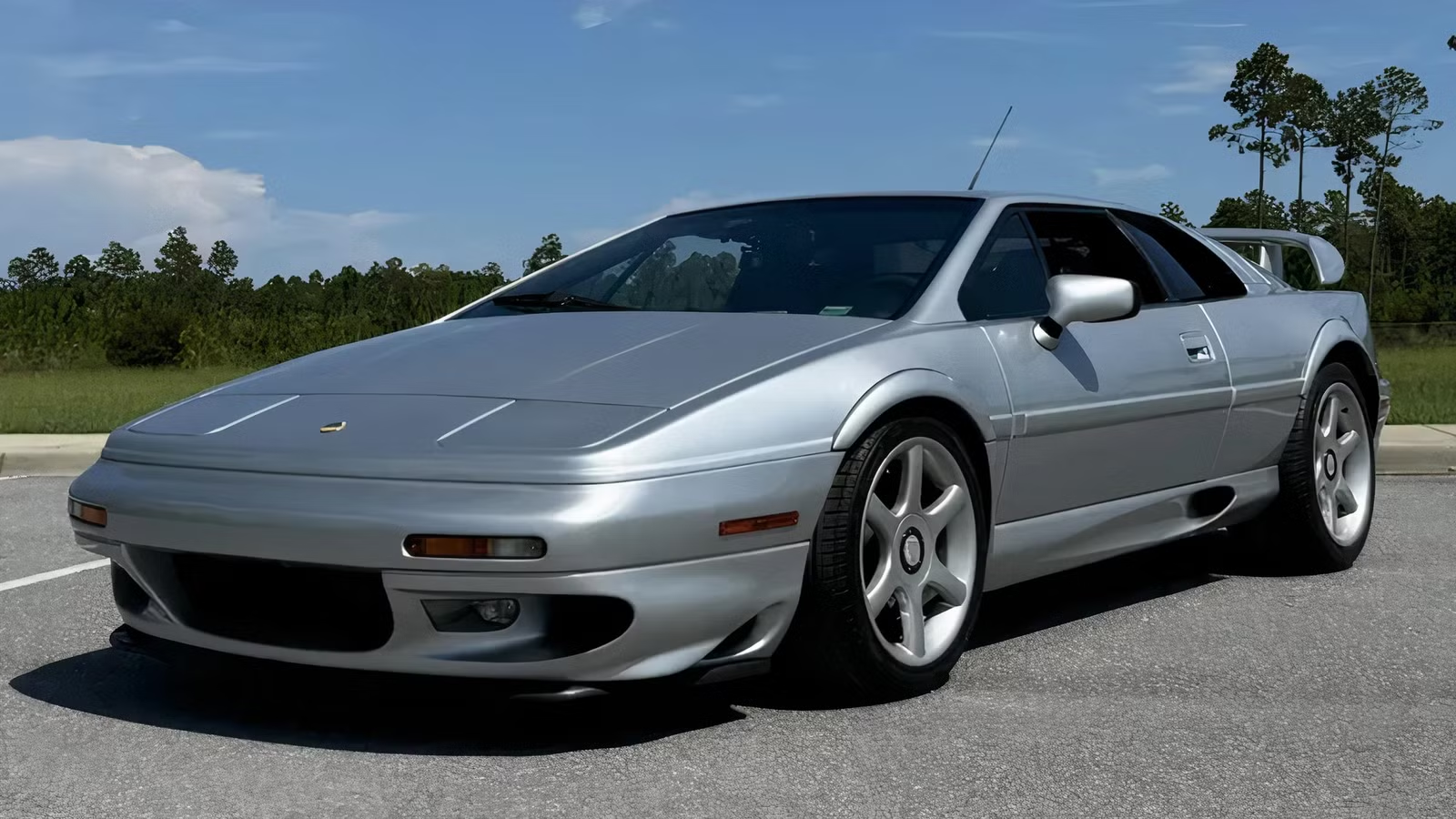
The Lotus Esprit is coming back with numbers that belong in genuine hypercar company. On an August 27 earnings call, CEO Feng Qingfeng confirmed the Type 135 — the production name for the revived Esprit — will arrive in 2028 as a mid-engine hybrid V8 supercar targeting more than 1,000 horsepower and a curb weight under 1.5 metric tons, or roughly 3,307 pounds. That combination puts it in the same performance bracket as the Lamborghini Revuelto SV, which makes 1,065 hp and hits 62 mph in 2.4 seconds.

This is not a restomod tribute or a limited-edition halo experiment. Lotus is describing the Type 135 as a clean-sheet factory car built to sit deliberately between the Emira sports car and the electric Evija hypercar — a bridge in the range that signals the brand’s return to combustion after years of EV-first strategy. A V6 variant is planned alongside the V8, and both powertrains are being developed by Horse, the Geely-Renault joint venture already supplying combustion hardware to Hethel.
What Those Numbers Actually Mean
More than 1,000 horsepower and under 3,307 pounds sounds straightforward until you consider what it takes to achieve it with a hybrid drivetrain. Feng was blunt with analysts: “Achieving that target with an 800V architecture, a hybrid system, a V8 engine and electric motor in [the car] just is not easy.”

For context, the Lamborghini Revuelto SV — currently one of the most powerful hybrid supercars in production — weighs considerably more than the Esprit’s target figure despite its 1,065 hp output. Lotus is chasing a power-to-weight ratio that would put the Type 135 in a very short list of road-legal cars. The Evija, Lotus’s own electric hypercar, makes 2,011 hp but tips the scales well north of two tons. The Type 135 is aiming for the opposite philosophy: less mass, more usable performance.
F1 Motor Tech Is the Key to Hitting the Weight Target

The engineering story behind the weight target centers on a Formula 1-derived electric motor concept Feng described in a separate interview earlier this year. A conventional 150-kilowatt motor can weigh up to 209 pounds. Lotus’s new design trims that to roughly 44 pounds — a reduction of more than 75 percent. That shift reframes the hybrid system from a weight penalty into part of the solution for hitting the sub-3,307-pound goal.
Power routes through a dual-clutch gearbox engineered to handle serious torque without adding unnecessary bulk. Lotus has not yet confirmed the final gear count, and the production plant for the Type 135 remains officially unannounced — though Autocar reports the car is expected to be built alongside the Emira at Lotus’s Hethel facility in Norfolk. The V8 will be a hybrid rather than a plug-in hybrid, a deliberate choice to reduce battery size and eliminate charging hardware, keeping mass in check where PHEV rivals like the Aston Martin Valhalla and Lamborghini Temerario have not.
Where the Esprit Fits in the Lotus Lineup

Feng framed the Type 135’s purpose directly: “The Type 135 will fill the gap between the Emira and Emeya, preserving the emotional connection Emira owners have with the Lotus mechanical handling, while leveraging V8 hybrid technology to approach the technical benchmark set by the Emeya.”
The V6 variant is particularly significant beyond the Esprit itself. Autocar reports the same engine is planned for the next-generation Emira replacement, meaning the Horse-developed V6 will underpin two models in the Lotus range. The Esprit’s design draws inspiration from the 2024 Theory 1 electric supercar concept — Autocar has published a teaser shot showing two large exhaust pipes where the concept’s electric rear end sat, a visual signal that combustion is back at the center of Lotus’s identity.
Feng named the Ferrari 849 Testarossa as the Type 135’s primary rival, which places the eventual price point in the neighborhood of that car’s entry figure. No official pricing has been confirmed. The Esprit’s return also fits inside Lotus’s Focus 2030 strategy, which formally commits the brand to a mix of combustion, plug-in hybrid, and battery-electric models — a significant departure from the all-EV plan Geely originally set for Hethel before abandoning it in 2024.
The open questions — final gear count, production location, and pricing — will fill in as prototypes surface. But the spec targets are on the table now, and they’re serious. For anyone who worried Lotus had left piston power behind for good, the Type 135 is a clear answer.

Related posts

Latest Post


No Comments