
10 Yamaha Motorcycles That Do Everything Well
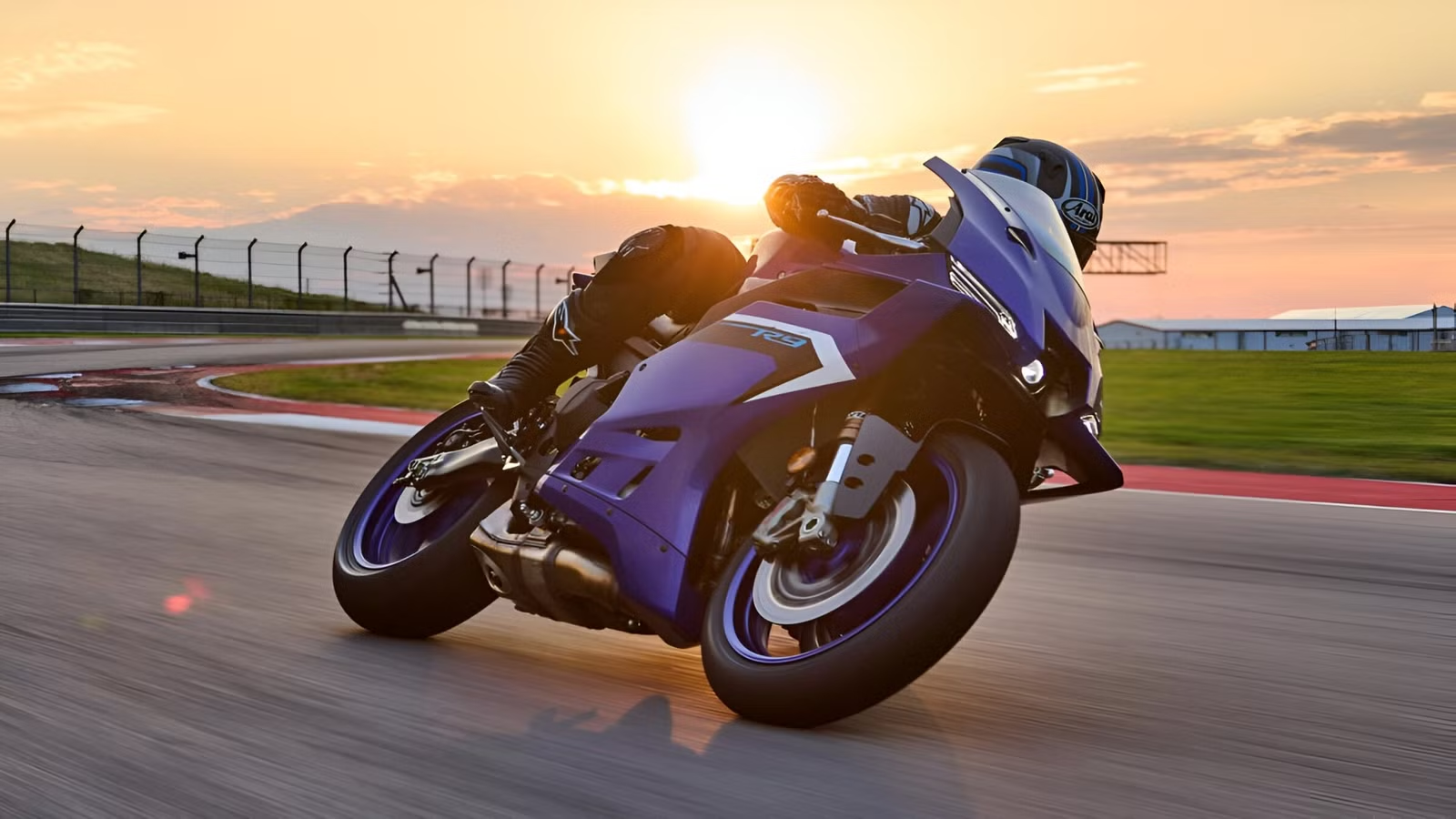
Yamaha motorcycles stand out for their rich legacy of engineering innovation, exceptional reliability, and rider-first design philosophy. These features make riding Team Blue bikes engaging and rewarding. Here, you’ll find ten such Yamaha motorcycles that are versatile and perform well across multiple roles. They range from streetfighters and sport bikes to ADVs, sport-tourers, and a timeless dual-sport. This list also includes two discontinued Yamaha motorcycles so good it almost feels criminal they axed them from the lineup.
This list is organized in descending order of price (new and old).
2026 MT-10
Price: $14,999
This is a flagship streetfighter from Yamaha that does urban, highway, and even track days without drama. It is essentially a stripped-down Yamaha R1, but with much more practicality and daily-rideable ergonomics. This has a 998 cc liquid-cooled mill with a short-stroke design and a 12.0:1 compression ratio to manage 163 horsepower and 82.6 pound-feet of torque. Power is sent to the rear wheel via a six-speed manual gearbox. An assist-and-slipper clutch and a two-way quickshifter are standard here.

The MT-10 is underpinned by the famed aluminum Deltabox (diamond) frame, with top-spec suspension and braking hardware. KYB supplies the suspension with full adjustability and 4.7 inches of travel at each end. Braking duties are taken care of by dual 320 mm discs up front coupled to radial four-piston fixed monoblock calipers. The electronics are top-shelf, too, and include power modes, engine brake control, wheelie control, and rear wheel slide control.

2026 Tracer 9
Price: $12,599

This is arguably Yamaha’s most complete motorcycle on sale today. The Tracer 9 is a do-it-all sport-tourer that balances performance, riding dynamics, comfort, and technology. A tried-and-tested CP3 mill powers this middleweight icon with 117 horsepower and 68.6 pound-feet of torque. Power is sent to the rear wheel via a six-speed manual gearbox. Its fuel economy rating is also commendable at 48 MPG.

Underpinning the Tracer 9 is a lightweight diamond main frame that emphasizes sportiness without compromising on comfort. The whole frame sits on 41 mm KYB inverted front forks with 5.1 inches of travel. The rear gets a monoshock with adjustable preload and rebound damping. It also comes with cool technology features. Notable ones include five ride modes, ride-by-wire, a variable speed limiter, slide control, and even wheelie control.
2026 YZF-R9
Price: $12,499

This bang-for-buck sports bike definitely deserves more attention. The R9 runs on a familiar inline-3 engine with 117.4 horsepower and 68.6 pound-feet of torque. That puts it right in the top tier of the midweight sports bike class. Power is sent to the rear wheel via a six-speed manual gearbox with a standard slip-and-assist clutch.

An aluminum twin-spar main frame serves as the centerpiece, balancing stiffness and weight savings. The chassis sits on fully adjustable 43 mm KYB inverted front forks and a fully adjustable rear monoshock. It offers 4.7 inches of travel up front and 4.6 inches of travel at the rear. The tech suite is grin-worthy, with notable features like a Black Slip Regulator, four power modes, a lean-sensitive brake control system, and a six-axis IMU.
2014-2024 FJR1300ES
Used Prices Start From $12,000

This forgotten Yamaha easily beats modern sport-tourers with its superior balance of sporty dynamics and comfort. A unique, old-school, even-firing inline-four engine powers the FJR1300ES. It produces 146 horsepower and 101.8 pound-feet of torque, sent to the wheel via a six-speed manual with a standard assist-and-slipper clutch and a final low-maintenance shaft drive system.

The engine serves as a stressed member of the aluminum diamond chassis to keep the weight down without sacrificing strength. The frame uses an electronic suspension with 43 mm inverted front forks with 5.3 inches of travel and electronically adjustable rebound and compression damping. The rear gets a fully adjustable monoshock with 4.9 inches of travel. Despite weighing 632 pounds, its adaptive underpinnings make this Yamaha a comfortable mile-muncher that also doesn’t shy away from spirited mountain runs.
2026 Tenere 700
Price: $10,999

The Yamaha Tenere 700 is the segment leader among middleweight adventure bikes. Its rugged construction and rally-inspired design help it tackle any terrain with confidence. A seasoned and bulletproof CP2 engine powers the Tenere 700. This produces 72.4 horsepower and 50.2 pound-feet of torque via a six-speed manual gearbox. A robust chassis and suspension combo underpins the Dakar-inspired design.

The off-road-ready chassis is suspended on 43 mm inverted front forks with full adjustability and 8.3 inches of travel. The rear gets a monoshock with 7.9 inches of travel and preload and rebound damping. Yamaha keeps the weight aggressively low at just 459 pounds. This helps greatly with the Tenere 700’s nimble riding dynamics. Ride-by-wire, two ride modes (Sport and Explorer), three ABS modes, and traction control make up the electronic package.
2026 XSR900
Price: $10,599

This neo-retro roadster looks gorgeous and is a versatile companion for commuting, canyon runs, and a comfy cafe night ride. The famed CP3 crossplane inline-three engine powers the XSR900, known for meaty mid-range torque. On the XSR900, this engine produces 117 horsepower and 68.6 pound-feet of torque. Power is sent to the rear wheel via a six-speed manual gearbox.

A lively chassis and suspension combination underpins the XSR900. It sits on a die-cast aluminum twin-spar frame borrowed from the MT-09. The chassis uses KYB suspension: inverted forks at the front and a monoshock at the rear. Both ends offer adjustability. Technology features are commendable too. Notable features include by-wire throttle, a six-axis IMU, ride modes, cornering traction control, three levels of slide control, selectable wheelie control, and a back slip regulator.
2026 MT-07
Price: $8,599

This streetfighter quietly defines Yamaha’s core philosophy of rider-centric motorcycles. The seasoned and efficient 689 cc CP2 mill produces 72.4 horsepower and 50.2 pound-feet of torque. Power is sent to the rear wheel via a six-speed manual gearbox. With a claimed fuel economy rating of 57 MPG, this spirited middleweight streetfighter is comfortable in the pocket as a daily runabout.

Underpinning the MT-07 is a lightweight, compact chassis designed to keep it agile and comfortable. It is suspended on 41 mm KYB inverted front forks with 5.1 inches of travel and a KYB monoshock with adjustable preload and rebound damping and 5.1 inches of travel. Notable electronic features that aid in its versatility include ride-by-wire, switchable traction control, and multiple ride modes.
2026 YZF-R3
Price: $5,499

This budget sports bike can do it all with conviction. A chirpy 321 cc parallel-twin powers the R3, producing 41.5 horsepower and 21.7 pound-feet of torque. Power is sent to the rear wheel via a six-speed manual gearbox. Also, given its relatively toned-down character, this engine delivers commendable fuel economy at 56 MPG.

Its underpinnings balance riding comfort and sporty dynamics. The R3 gets a lightweight diamond-style steel frame. It is suspended on 37 mm KYB inverted front forks with 5.1 inches of travel. The rear gets a preload-adjustable monoshock with 4.9 inches of travel. The tech suite is minimal but packs the essentials. Notable features include dual-channel ABS, an assist-and-slipper clutch, LED lighting all around, and smartphone connectivity using the Y-Connect App.
2025 XT250
Price: $5,499

This Yamaha dual-sport fuses old-school minimal charm with go-anywhere appeal. The XT250 is 46 years old and mostly uses the same underpinnings as the 1980s iteration. Its only major updates have been emission-norm-relevant bits. Staying largely unchanged has helped Yamaha fine-tune and refine this dual-sport to the point where it has no niggles.

The XT250 packs a super-durable single that produces 19 horsepower and 15 pound-feet of torque. A five-speed manual sends power to the rear wheel. Underpinnings are as simple as they get and include a semi-double-cradle steel frame. It is suspended on 35 mm telescopic front forks with 8.9 inches of travel and a preload-adjustable rear monoshock with 7.1 inches of travel.
2014-2024 Super Tenere ES
Used Prices Start From $5,500

This is an adventure motorcycle we wish Yamaha hadn’t discontinued. The Super Tenere ES is powered by a chirpy 1,199 cc mill that is liquid-cooled and has a relatively high compression ratio of 11.0:1 to produce 107.5 horsepower and 84 pound-feet of torque. Power goes to the rear wheel through a six-speed manual gearbox. What makes this tall-riding Yamaha so versatile for daily riding is its standard electronic suspension setup.

Now, thanks to depreciation, this flagship-grade ADV can be had for as low as $6,000. The Super Tenere ES sits on a steel double-cradle frame and rides on 43 mm inverted front forks with 7.5 inches of travel. The rear gets a monoshock with 7.5 inches of travel. Both ends offer fully electronic adjustability. The seat height is adjustable from the factory, and so is the windscreen. Notable electronic features include ride modes, ride-by-wire throttle, traction control, and cruise control.
Sources: Yamaha Motorsports and Cycle Trader

Related posts



Latest Post


No Comments