
10 Used American Sports Cars You Can Get For Less Than $20,000
For many enthusiasts, owning a V8-powered performance car or a genuine rear-wheel-drive sports coupe seems like an expensive dream. But the used market tells a different story. Thanks to depreciation, overlooked nameplates, and shifting buyer preferences, there are still plenty of American performance machines that deliver thrilling acceleration, engaging handling, and unmistakable character without demanding an exotic-car budget. Whether you’re after a rumbling muscle car, a nimble roadster, or a track-capable coupe, spending less than $20,000 can still put you behind the wheel of something truly special.

The key is knowing where to look. Some of the best values aren’t necessarily the newest or most famous models, but they offer the kind of driving experience that’s becoming increasingly rare in today’s market. Big naturally aspirated V8s, available manual transmissions, rear-wheel drive, and simple mechanical layouts make many of these cars just as enjoyable today as they were when they first hit the road.
Using current Kelley Blue Book Fair Purchase Prices as a benchmark, these 10 used American sports cars prove you don’t need a six-figure budget to enjoy authentic American performance. This list is sorted by the Kelley Blue Book Fair Purchase Price from highest to lowest.
10
2002 Pontiac Firebird Trans Am
KBB Fair Purchase Price: $17,050

2002 was a bittersweet year for Pontiac. This was the final production year before the Pontiac Firebird was discontinued, leaving the brand without a real identity. The brand became popular for its performance cars, especially during the muscle car era, and the Firebird Trans Am came with an LS1 engine that shared its basic architecture with the C5 Corvette. What was once one of the most common American sports cars has now become a collector’s item.
Powertrain Specifications

Ram Air versions of the 2002 Pontiac Firebird Trans Am produced 325 horsepower and 350 pound-feet of torque from the venerable 5.7-liter LS1 V8 engine. When optioned with a six-speed manual transmission, this RWD sports car could rip and roar with the best of them, achieving a sprint time of 4.8 seconds to 60 MPH.
9
2004 Ford Mustang Mach 1
KBB Fair Purchase Price: $16,100

The Mach 1 brought back one of Ford’s most celebrated performance badges from the muscle car era, giving drivers a modern version in the 2004 Ford Mustang Mach 1. One of the signature elements of this car is the functional Shaker hood scoop, which makes for a great look and brings more air into the engine. The Mach 1 is much rarer than a standard Mustang GT, giving this version strong long-term collector appeal.
Powertrain Specifications

Before the Coyote engine returned, this Mustang used a 4.6-liter V8 that churned out 310 horsepower and 335 pound-feet of torque. It could be had with either a five-speed Tremec manual or a four-speed automatic transmission, which routed power to the rear wheels. The Mach 1 achieved a 0-60 MPH sprint of 5.2 seconds, making it quick and formidable.
8
2011 Chevrolet Camaro SS
KBB Fair Purchase Price: $15,200

For eight years, the market was without a Camaro, but this fifth-generation model with the SS badge made up for that. The 2011 Chevrolet Camaro SS brought serious power to the party and rode on a more sophisticated chassis than previous Camaros, thanks to the Zeta platform. Like many other GM sports cars, this Camaro enjoys strong aftermarket support, making it easy for anyone to own and appreciate.
Powertrain Specifications

This Camaro SS was unique in that its power output varied depending on the transmission selected. With a six-speed automatic, the 6.2-liter LS3 V8 produced 400 horsepower and 410 pound-feet of torque, but with the six-speed manual, power increased to 426 ponies and 420 pound-feet of torque. With the manual transmission, enough power was sent to the rear wheels to send this Camaro SS to 60 MPH in only 4.6 seconds.
7
2011 Ford Mustang GT
KBB Fair Purchase Price: $14,700

The legendary 5.0 badge returned to the Ford Mustang GT for the 2011 model year, bringing recognizable and enjoyable power to the great American muscle car. Adding this powertrain turned the mundane Mustang into a real performance car, worthy of its name. The massive aftermarket support and impressive reliability continue to make the 2011 Mustang GT a favorite among enthusiasts.
Powertrain Specifications

Power for the 2011 Ford Mustang GT comes from the venerable Coyote engine, which is a 5.0-liter naturally aspirated V8 producing 412 horsepower and 390 pound-feet of torque. This power reaches the rear wheels through either a six-speed manual or automatic transmission, ensuring every driver can enjoy the Mustang. The 0-60 MPH time of 4.3 seconds absolutely got the attention of many driving enthusiasts when the GT arrived on the scene.
6
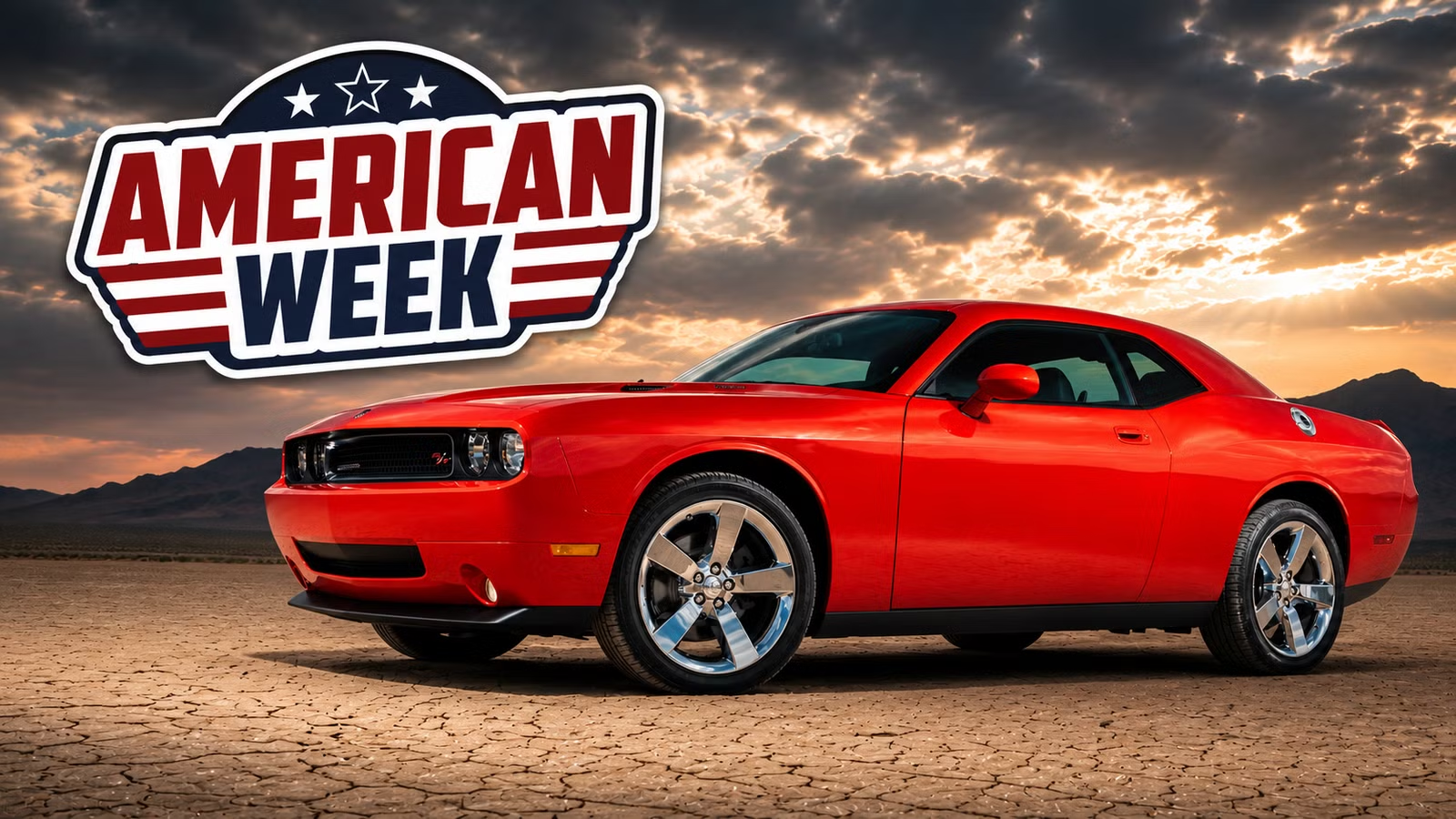
2009 Dodge Challenger R/T
KBB Fair Purchase Price: $12,650

Entering the second year of the Challenger’s return, Dodge added the R/T model to the mix. The 2009 Dodge Challenger R/T quickly became the sweet spot in the lineup. The modern Challenger’s retro styling harkens back to the 1970 Challenger while offering modern comfort and safety. The Challenger R/T has a large rear seat and trunk, making it a good car for road trips and everyday cruising.
Powertrain Specifications

A 5.7-liter HEMI V8 engine resides under the hood of every Dodge Challenger R/T, cementing its legacy as a trusted, performance-oriented engine. This car is another example of the transmission defining the power output: models equipped with a five-speed automatic transmission produce 372 horsepower, while those with the six-speed Tremec manual generate 376 ponies. The torque is 410 pound-feet regardless of transmission, and every model is RWD, giving a classic sports-car feel. The manual version could reach 60 MPH in 5.4 seconds, making it a quick and enjoyable modern classic.
5
2004 Pontiac GTO
KBB Fair Purchase Price: $11,200

If enthusiasts expected a Pontiac GTO that resembled the 1960s model, they were sorely disappointed when the 2004 version arrived. Sourced from Holden in Australia, the 2004 Pontiac GTO has become known as one of the most underappreciated sleeper cars of its time. While it’s sought after today, the ultra-conservative appearance hides the excellent chassis balance and impressive performance qualities that made the GTO truly special during the 2000s.
Powertrain Specifications

A naturally aspirated 5.7-liter LS1 V8 powers the Pontiac GTO, delivering 350 horsepower and 365 pound-feet of torque. There were two options offered in 2004: a four-speed automatic or a six-speed Tremec manual transmission. The manual was certainly the preferred option for driving enthusiasts. This RWD American sports car can reach 60 MPH in 5.3 seconds and could be a tremendous collector’s item in the future.
10 American Cars From The 1990s That Are Modern Classics
Cars are added each year to the list of new classics, look away now if you were born in the ’90s – these 1990s American cars are now modern classics.
4
2007 Pontiac Solstice GXP
KBB Fair Purchase Price: $9,300

It took a while for GM to provide a strong answer to the Mazda MX-5 Miata, but when they finally got the Pontiac Solstice GXP on the road, it was a formidable choice. The Solstice GXP provided substantially more power than the Miata, delivered excellent performance, and was a relatively uncommon car. While prices are extremely reasonable now, collector interest is growing, which could drive future prices higher.
Powertrain Specifications

The Pontiac Solstice GXP shares the Kappa platform with the Saturn Sky Red Line, which means there are two great GM roadsters to choose from. The powertrain consists of a 2.0-liter turbocharged Ecotec inline-four-cylinder engine that produces 260 horsepower and 260 pound-feet of torque, and a five-speed transmission with automatic or manual gearing. Power is sent to the rear wheels, allowing this lightweight roadster to reach 60 MPH in only 5.2 seconds.
3
2007 Saturn Sky Red Line
KBB Fair Purchase Price: $8,075

When considering the 2007 Saturn Sky Red Line, you’re really choosing between two styling philosophies riding on the same platform. The Sky is much sharper than the Solstice, giving this Saturn roadster Corvette-esque looks and inspiration. Saturn used hydroformed frame rails to give the chassis exceptional rigidity while keeping the price low, and the Sky Red Line can be found with a factory tune in some models that increased power to 290 horsepower.
Powertrain Specifications

The Saturn Sky Red Line is mechanically identical to the Solstice GXP, using the same setup. The Red Line trim features a limited-slip differential, improving performance and making it a much more impressive roadster than the Miata, its intended target. A 0-60 MPH time of 5.7 seconds makes this Saturn roadster a fun choice among affordable American sports cars.
2
1998 Chevrolet Camaro Z28
KBB Fair Purchase Price: $7,650

If you want to enjoy one of the most affordable ways to have an LS-powered performance car, the 1998 Chevrolet Camaro Z28 is the way to go. It’s the first Camaro to receive the LS1 from the Corvette and still has strong aftermarket support, which means repairs and upgrades are more affordable than those of non-American sports cars. This Z28 is often overlooked in favor of later models, making it a great choice for affordability and performance.
Powertrain Specifications

That’s right, another GM performance car with the venerable LS1 engine under the hood. The engineers at GM used this power plant wherever they could, and considering its history of power delivery and reliability, who can blame them? This Camaro produces 305 horsepower and 335 pound-feet of torque, which is sent to the rear wheels through a six-speed manual transmission, allowing the car to reach 60 MPH in just 5.2 seconds.
10 Pre-Owned Muscle Cars That Won’t Break The Bank
The used car market is filled with V8-powered machines that deliver thrilling performance for a reasonable price.
1
1996 Pontiac Firebird Formula
KBB Fair Purchase Price: $6,800

The 1996 Pontiac Firebird Formula offered excellent performance, similar to the Trans Am, but without the aggressive styling. Unfortunately for the Formula model, the Trans Am was the car of choice as buyers gravitated to its styling. That makes this Firebird a bit of a diamond in today’s world. While one of the most affordable American sports cars you can buy, finding one could give you a car that may become an appreciated collector’s item in time.
Powertrain Specifications

The 5.7-liter LT1 V8 engine represented the final evolution of GM’s legendary Gen II small-block before the LS1 arrived. This engine produced 285 horsepower and 325 pound-feet of torque, which was sent to the rear wheels through either a six-speed manual or four-speed automatic transmission. The Firebird Formula can reach 60 MPH in just 5.3 seconds, making it an impressive car from the mid-1990s.
Sources: OEMs, Kelley Blue Book, Edmunds

Related posts
Latest Post


No Comments