
BYD Seal review 2026 | The Car Expert
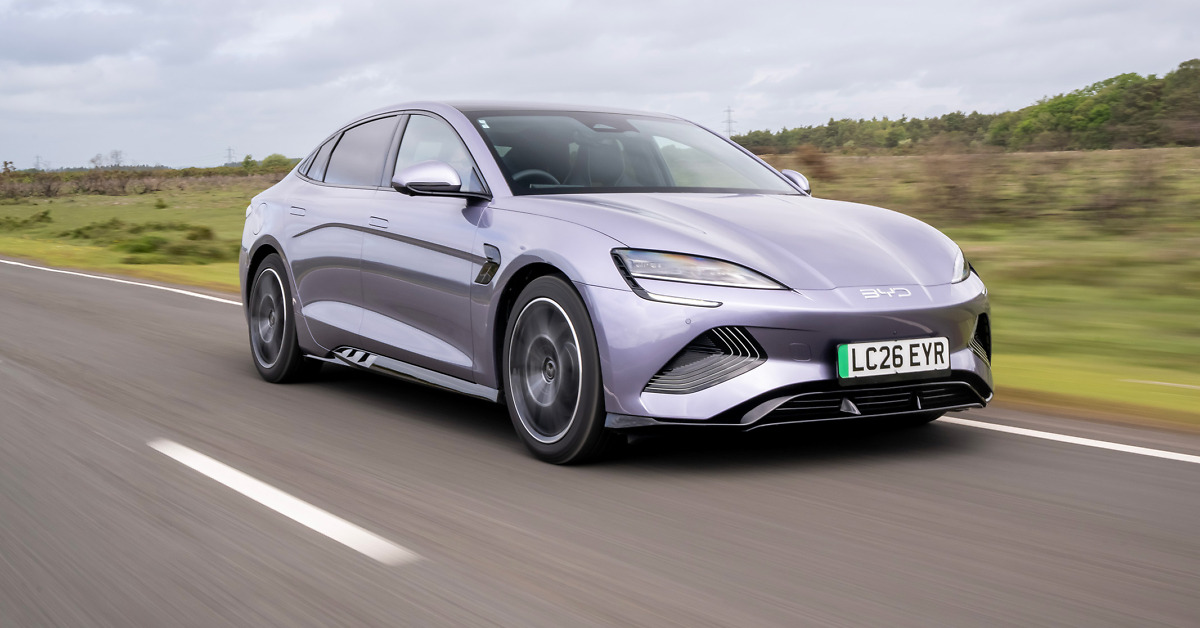
Make and model: BYD Seal
Description: Electric saloon

Price range: £45,730 to £48,730
Summary: Amongst a wide array of impressive upmarket electric motoring choices, the BYD Seal stands out as a definite challenger to the big-hitters from Germany and that EV standard-bearer, Tesla.
For a broader ownership picture, see our BYD Seal Expert Rating, which combines media reviews, safety data, reliability, running costs and warranty cover.

Additional reporting by Sean Rees.
Anyone who regularly browses The Car Expert cannot have failed to have noticed the rapid expansion of Chinese brand choices in the UK over the last three years. One of the first of these marquees to arrive was BYD – or ‘Build Your Dreams’ – which has recorded more sales than the likes of Tesla, Renault and Volvo so far in 2026.
First setting up shop in the UK in 2023, the BYD range now consists over over ten models, ranging from the all-electric pint-sized Dolphin Surf city car to the upcoming seven-seat Ti7 plug-in hybrid SUV.
The Seal, however, is the model that introduced many to the BYD name – a big upmarket saloon with 0-62mph times in supercar territory, plush interiors and lots of equipment, all in a package costing less than £50,000. BYD gave the model a minor facelift in 2026, giving the car a larger boot, three new exterior colour options and a few interior and exterior design tweaks.
This car is targeted firmly at the premium sector and designed to attract those who would normally buy cars from the likes of Audi, BMW, Mercedes-Benz and particularly Tesla. And on the evidence of our drive of the updated Seal, it’s a serious contender.
Price and equipment
BYD does not like to do options lists, so the Seal comes with an array of equipment as standard, topped by a long list of safety features. In addition to adaptive cruise control, lane keeping assistance, blind spot detection and a surround view panoramic parking camera, the saloon’s 2026 update added a driver monitoring system that tracks the driver’s attention and fatigue using an in-cabin camera.
Mind you the standard safety specification does include BYD’s now better but still over-aggressive ‘aids’ – the scolding voice should you dare to stray even slightly over the speed limit or drive too near a school has thankfully been replaced by a single note of warning, but it can become repetitive and irritating.
Plenty of other equipment that the executive buyer will expect, but also expect to pay for, comes at no extra cost on the Seal, such as keyless entry and start, an electric tailgate, upmarket audio, electric seats that adjust in multiple directions, voice control, wireless phone charging – the list stretches long and even includes a full length panoramic glass roof on every model. All versions also offer ‘vehicle to load’, allowing use of the battery to power electrical equipment outside of the car.
Then you look at the price – the choice comes down to the rear-wheel-drive ‘Design’, which costs £45,730, or the AWD ‘Excellence’ at £48,730. The £3,000 pays for a more powerful battery and faster acceleration while sacrificing a little range, but these are highly competitive prices event before one factors in what you get for the money.
How does it look?
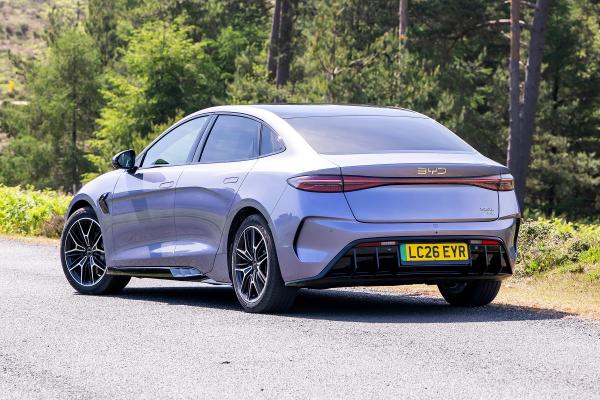
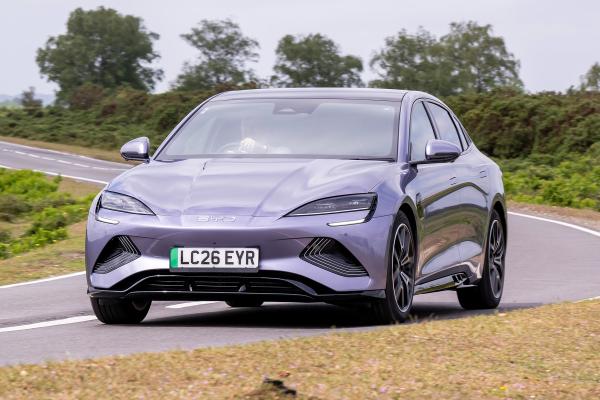
The Seal is a purposeful-looking saloon. It’s a low, slippery shape based around ‘cell to body’ technology, integrating the battery into the body structure – more on which shortly.
This allows a slightly lower exterior height without sacrificing any interior space. Combined with streamlined styling, the Seal cuts through the air very smoothly with one of the most aerodynamic shapes on the market. This is all the more important on electric cars as reducing drag improves the battery range – one good reason for the natty door handles that disappear into the body as the car moves away.
BYD likes to evoke elements of the model name in the visual design of all its cars and we are told the front of the Seal boasts an X-shape that “represents the ocean and the unknown,” the body contours providing “a sense of the momentum of the waves”.
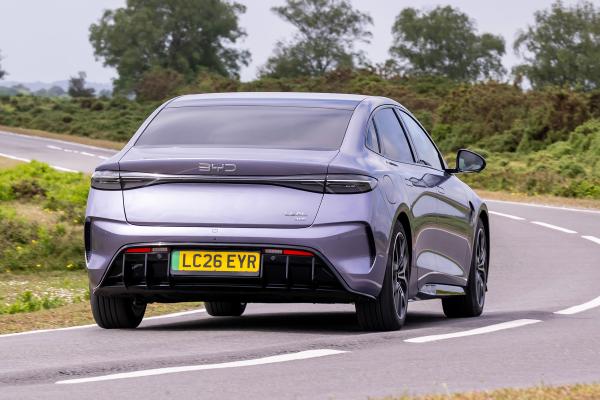
Even if you ignore all that, visually the Seal is certainly a head-turner in a positive way. There are none of the featureless bluff panels that several EVs are afflicted by but instead quality detailing, from the strong converging lines up front to the light panel on a vaguely Polestar-esque rear end.
The 2026 Seal update introduced some small exterior design tweaks. The car’s block-letter BYD logo and ‘Seal’ badge have been repositioned on the boot lid, a fresh 19-inch alloy wheel design scraps the plastic inserts found on older models and BYD has swapped out three old shades for a trio of new colours – a red, black and a grey.
There are a couple of oddities that BYD haven’t addressed after the recent facelift. The boot of the upper-spec all-wheel-drive version carried a badge stating ‘BYD Seal 3.8 S’ which sounds like an engine size but actually refers to its 0-62mph time. Even more confusingly, all versions carry discreet ‘BYD Design’ badges on their flanks, whether you are driving the AWD model, which is actually called the ‘Excellence’, or the lesser rear-wheel-drive version, dubbed, you guessed it, ‘Design’. That has probably caused a fair few headaches at used car dealerships by now…
Inside the car
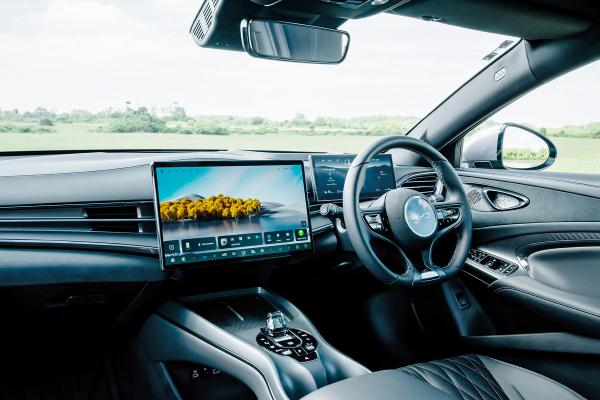
Executive cars must feel plush when one slips inside them and the Seal certainly meets the brief. The interior is finished to a high level in muted shades that compliment the car, while the delicate stitching in the seats is just one of many upmarket elements.
We’re told that the centre console design represents a seal leaping from the sea. Not quite sure about that one, but it is a sensibly laid out design, dominated as in all BYD models by the gargantuan 16-inch landscape-oriented infotainment screen in its centre.
Pre-facelift this infotainment screen could rotate, but BYD decided to lock it in one position as customer feedback revealed that buyers rarely rotated it in practice and there were some issues with Apple CarPlay and Android Auto compatibility. That’s a shame, as in the rotated vertical mode this screen actually seemed most at home in this car – put Google Maps in satellite mode on it and it looked quite something…
Talking of mobile phones, there are not one but two wireless charging points in the front centre console, preventing potential occupant arguments. And while the car follows the trend of just about everything being done via menus on touchscreens, using them soon becomes second nature.
One aspect that certainly impresses, mostly, is the interior space, something that BYD has promoted as an advantage of using its different to the norm ‘Blade’ battery system. Front and rear-seat passengers have plenty of room to stretch out and one can easily imagine eating up lots of motorway miles carrying five adults in the Seal.
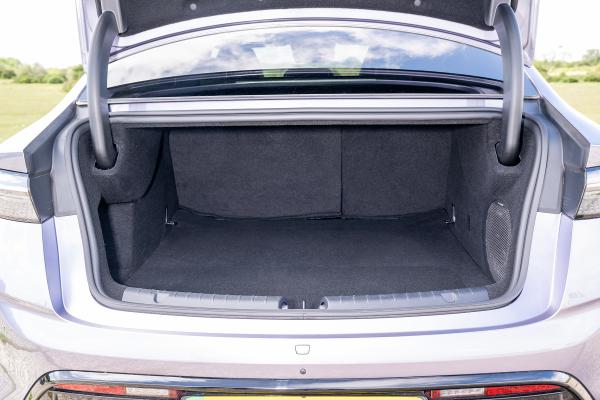
There’s plenty of luggage room too, particularly post-facelift, as the car now offers 485 litres in the boot plus a little usefully hidden 72-litre compartment under the bonnet which BYD dubs a ‘frunk’. The deep boot is capacious enough to accommodate two large suitcases with room to spare, but if you are choosing between this and a Tesla, keep in mind that the slightly shorter and narrower Tesla Model 3 offers 594 litres of boot space.
The only area in which space is slightly compromised is above the head. All Seals come with an enormous sunroof as standard, basically the whole upper surface is glass, and this does make things a little cosy for taller occupants. Mind you it does also make for a very bright and airy interior.
Driving range and charging
Like other options in BYD’s all-electric range, the Seal is powered by a rather different battery technology, the ‘Blade’, which is more effective and rather safer than a traditional EV battery pack, while not using the controversial rare-earth minerals, especially cobalt, required for typical lithium-ion cell productions.
The Seal took the technology further, being the first BYD car to actually incorporate the battery into the structure of the body shell, adding significantly to its rigidity which is better for both safety and handling.
This ‘cell to body’ technology caused questions in some quarters as to what might happen when or if the battery needs replacing. BYD answered this in emphatic fashion with a video at the launch event which showed the battery pack of a crash-tested Seal being simply unbolted, bolted into a new chassis and then driven away.
The drivetrain of the Seal follows BYD’s established ‘8 in one’ methods which incorporate all the elements required for electric propulsion into one integrated unit. Included as standard is a heat pump which greatly reduces the fall-off in performance that typical EV battery packs suffer in cold temperatures.
The rear-wheel-drive Seal has a single 230kW motor driving the rear wheels, while the all-wheel-drive version adds an extra 160kW motor on the front axle. This makes for some astonishing acceleration – 5.9 seconds to 62mph for the RWD model is fast enough, but the official 3.8 -second time of the AWD model is up with the best performance sports models. And on a closed track and using the ‘launch control’ feature that comes fitted to the car, your correspondent actually managed 3.7 seconds…
The extra power of the AWD model does mean a slight reduction in range, but a WLTP-certified 323 miles is still well out of range-anxiety territory – how many owners will routinely need to do more than 320 miles in a day? The RWD version will go up to 354 miles before needing plugging in.
While the car’s facelift didn’t a introduce bigger battery or more range, it made a big difference to charging speeds. The Seal now comes with the latest 800V architecture, the updated model cutting the 10% to 80% DC rapid charging time down from 37 minutes to roughly 25 minutes.
All Seals carry an 11kW three-phase onboard charger as standard – while also boasting technology to suit the 420 to 750-volt range of the most modern chargers – and a maximum DC rapid charging speed of 150kW, as before. While there are now alternatives that can charge at a faster rate, like the Hyundai Ioniq 6 and Kia EV6, the Seal’s new 800V system handles the current much more efficiently than the previous 400V setup.
On the road
When one steps into a car with the knowledge that it will sprint from rest past 60mph in under four seconds, it’s very easy to wax lyrical about such performance.
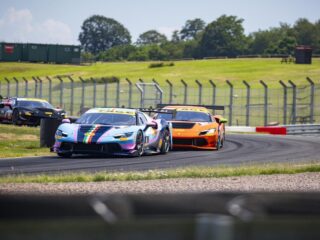
A few laps around a track with the AWD Seal proved that for a large car it is surprisingly agile as well as being swift. Such prowess is no doubt aided by BYD’s ‘iTAC’, which stands for Intelligent Torque Adaption Control – this system basically monitors such things as wheel and motor speeds, we are told some 300 times faster than any previous technology, and can predict such situations as a loss of traction and accordingly reset all the dynamics, adjusting power, increasing or reducing torque, to prevent any issues.
All of which means the Seal is a capable performance car – not quite as satisfying to drive on the limit as some rivals, but not far off. However, very few owners will of course routinely be hustling their car around race tracks – the Seal’s natural environment will be mile after mile of motorway, and no matter how much power it has it will need to sit in traffic jams like everything else.
Extensive road driving in both versions proved that there has been no sacrificing of on-road versatility for performance headlines. The Seal is an equally capable machine on motorway or A-road, a supremely comfortable car to travel in or drive. It cruises along in a refined and totally unflustered manner, with the very useful extra of when necessary being able to dispatch a crawling vehicle in front in very few seconds indeed.
One surprise of the road route test was the performance of the rear-drive version. This is of course under-powered when compared to its sibling, but feels nothing of the sort, relaxed and smooth except when one requires it to be very perky indeed, when it answers the throttle with great eagerness.
That said, the Seal RWD is only £3,000 less than the AWD version. If one is spending more than £40,000 on an electric car, is the extra really too much to find when it will reward you with more potency but crucially the extra security all-wheel-drive brings, especially in the kind of wintry weather that much of the UK encounters each year?
Ownership
The Seal is equipped as standard with a stand-out list of safety features, including 18 active electronic systems – little wonder the car scored a five-star rating when crash-tested by Euro NCAP in October 2023. While that assessment is now three years old – and Euro NCAP has further toughened up its safety standards since – safety body commented that in its most stringent testing yet the car proved well-equipped with an impressive range of safety technologies, including lane and speed assistance.
On the warranty front, the Seal comes with strong coverage. Every new car comes with six years or 93,750 miles of cover, whatever comes first. The battery is also covered for eight years or 125,000 miles, which is reassuring for buyers switching to electric from an ICE-powered executive saloon.
The review scores here reflect the driving experience. Our BYD Seal Expert Rating tells a broader story, combining the subjective opinions of car reviews with objective safety data, running costs, warranty information and more. It’s worth reading both before making any buying decision.
Verdict
So many new electric cars have arrived on the market in recent times, especially from China and bearing names unrecognisable to UK buyers, that it’s easy to be hesitant when shopping. But over the last three years, the BYD Seal has become an increasingly popular choice in the UK, and for good reason. This is a Chinese competitior that should not be passed by, particularly for those in the executive market.
The Seal does the upmarket necessities of comfort, quality and tech very well, stirs in a whole lot of performance, and packages it all with a price that will buy something much more ordinary from a European manufacturer. Would you rather drive a Tesla Model 3 or Hyundai Ioniq 6 than something called a Seal? You could well be missing out…
We like:
- Performance to challenge supercars
- Quality build
- Strong specification with few options
- Extensive active safety package
We don’t like:
- Doesn’t drive quite as well as some rivals
- Still some electric oddities
- Not so generous headroom
Similar cars
Alfa Romeo Giulia | Audi A4 | BMW 3 Series | BMW i4 | DS 9 | Genesis GV60 | Hyundai Ioniq 5 | Hyundai Ioniq 6 | Jaguar XE | Kia EV6 | Mercedes-Benz C-Class | Polestar 2 | Tesla Model 3 | Volkswagen ID.7 | Volvo S60
Key specifications
Model tested: BYD Seal AWD Excellence, RWD Design
Price (as tested): AWD £48,730; RWD £45,730
Powertrain: Twin 160 and 230kW (AWD), single 230kW (RWD)
Gearbox: Single-speed automatic
Power: 530hp (AWD); 313 hp (RWD)
Top speed: 112 mph
Acceleration (0-62mph): 3.8 seconds (AWD), 5.9 Seconds (RWD)
Range: 323 miles (AWD); 354 miles (RWD)
CO2 emissions: 0 g/km
Euro NCAP safety rating: Five stars (2023)
TCE Expert rating: 69% (as of November 2023)
This review was originally published in December 2023, and was updated in September 2026 to better reflect the car’s 2026 facelift.
Buy a BYD Seal
If you’re looking to buy a new or used BYD Seal, The Car Expert’s partners can help you find the right car.


Subscribe to a BYD Seal
Subscriptions are becoming a very popular way for consumers to try an electric car for a few weeks or months to help decide whether it’s a suitable alternative to a petrol car. If you’re interested in a car subscription, The Car Expert’s partners can help. (PS: What’s a car subscription?)





Related posts


Latest Post


No Comments