
Yamaha’s Two-Year Muscle Cruiser Was Forgotten Before The VMAX Ever Arrived
Back in ’81, Yamaha displayed a total monster at the Tokyo Motor Show: a turbocharged, fuel-injected 1,101cc prototype called the ‘XJ1100 Turbo’ that was supposedly pushing 120 to 130 mad horses. However, the brand quietly scrapped the concept before it ever hit showroom floors, never officially explaining why. Right when the Japanese Big Four were obsessed with turbo technology, this prototype hinted just how wild things could get. When it came to showroom floors, however, Yamaha opted for a far more conventional approach to muscle-cruiser engineering.
Yamaha Tried A Different Approach To American Cruisers
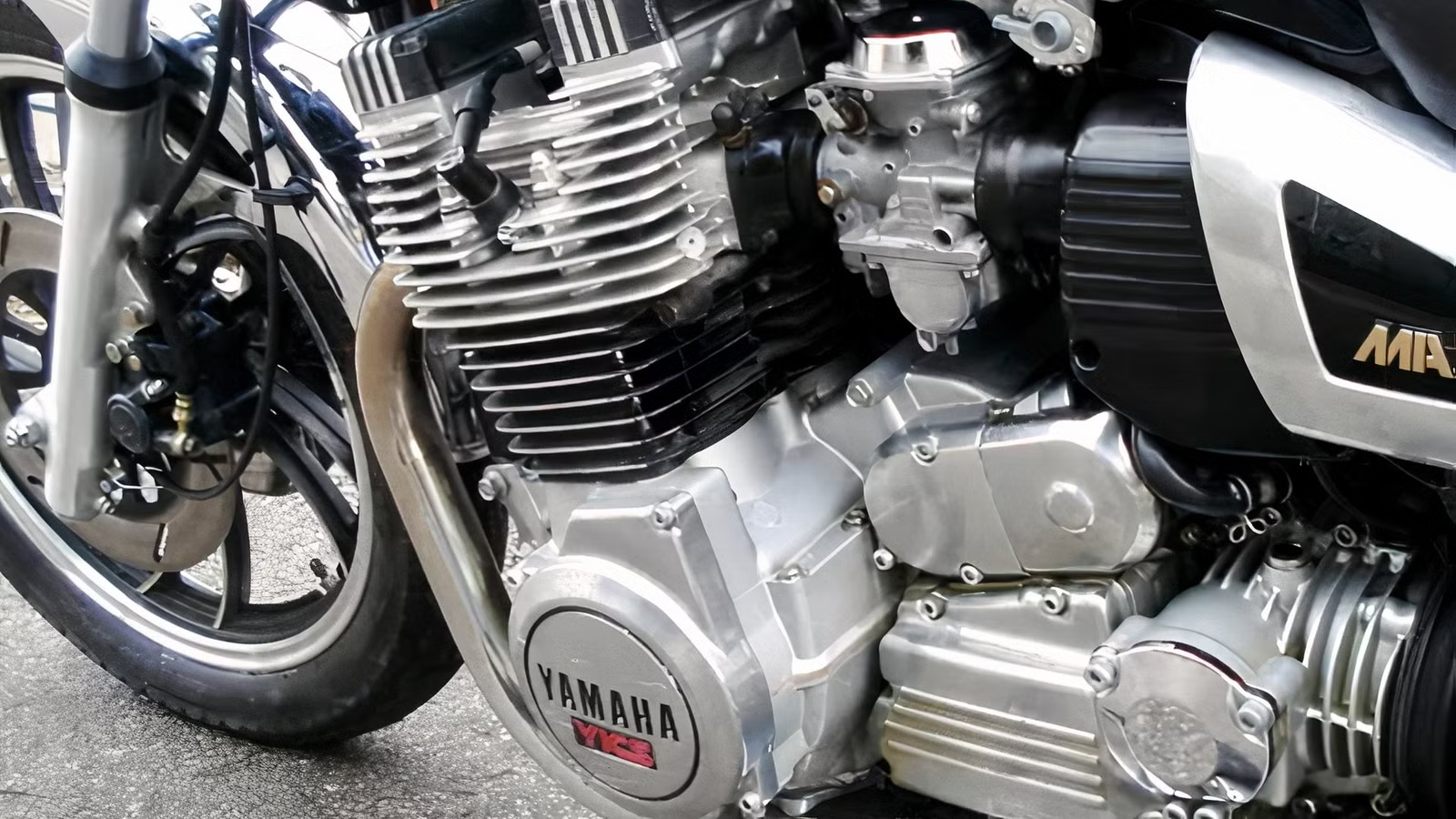
Back in the day, the American cruiser scene was pretty much Harley’s turf: wall-to-wall low-slung V-twins, feet-forward ergonomics, and that lazy, Milwaukee thump. Yamaha decided to crash that party with a totally different recipe. They fit custom cruiser styling around a big, air-cooled inline-four backed by low-maintenance shaft drive.
Yamaha was aiming directly at US riders, including the diehard Milwaukee loyalists who wouldn’t normally look twice at a Japanese badge. Rather than copying the V-twin character, they aimed for smooth multi-cylinder power and serious straight-line performance. And honestly, employing a big-block inline-four into a cruiser was a weird, almost backwards recipe for the time. But Yamaha already had a bulletproof heavy-duty motor sitting right on the shelf.
The XJ1100 Maxim Packed Serious Performance


That machine was the ’82 Yamaha XJ1100 Maxim. Stateside dealer sheets carried it through ’83, and guys in Canada could still buy one off the floor in ’84, but because it disappeared so fast, most people just write it off as a one-year experiment.
Beneath the tank sat an air-cooled 1,101cc DOHC four straight off the XS1100, breathed on by four 34mm Mikuni CVs, a 71.5mm bore, a five-speed, and shaft drive. With a mild 9.0:1 compression ratio, it pushed out 95 hp and 65 lb-ft of torque at 6,500 rpm.
That was monster muscle for anything wearing pullback handlebars back then. Up front, 36mm air-assisted forks with 136mm of travel held twin discs and a 100/90-19 tire, while a chunky 130/90-16 sat out back. It tipped the scales at 560 lbs dry and had a rather tiny 3.38-gallon tank for all its bulk.
The Starship Enterprise Dashboard And Royal Barge Handling

Visually, the Maxim was a pure 1980 custom. Key highlights included a chrome-slathered front end, cast-alloy bars, an optional windshield, and a stepped king-and-queen seat ending in a built-in sissy bar. It certainly knew how to turn heads. The instrumentation was just as wild for its era. Housing fluid-level indicators, warning lights, and a digital sidestand monitor, it was light-years ahead of the plain speedo-and-dummy-light setups on most bikes back then.
The linked brakes were … a unique setup. The hand lever only clamped the right front disc. Pull the hand lever and you only got the right front disc. Stomp the foot pedal, and it grabbed the rear disc plus the left front rotor all at once. That left the hand lever feeling pretty weak until you got used to stopping with your foot.
Low-speed handling was its true Achilles’ heel. The low seat coupled with kicked-out forks and leading-axle front dropouts made tight turns plain awkward, forcing you to reach way out for the far handlebar. Crawling through a parking lot felt like helming a barge, though everything settled down nicely once you picked up the pace.
Yamaha’s Turbocharged XJ1100 Never Made Production

The turbocharged 1100 was far more than a hasty motor-show party trick. Yamaha had been quietly refining the concept long before wheeling it out in Tokyo, packing the powerplant with its proprietary YICS induction system, reed valves, a bespoke motorcycle turbocharger, and electronic fuel injection. They weren’t starting from scratch on forced induction, either. Yamaha had already helped build Toyota’s wild 1970 race car, the Toyota 7, which packed a twin-turbo, fuel-injected 5.0-liter V8.
Styling-wise, the prototype closely mirrored the export-market 1980 XS1100LG Midnight Special rather than the Maxim cruiser line. Its cockpit featured Yamaha’s Sycom electronic instrumentation, which included a real-time fuel-consumption monitoring system. The rumored 120–130 horsepower would have marked a massive leap over the standard Maxim’s output. By forcing extra air into the combustion chambers to burn more fuel, the turbo promised serious muscle, though that figure is a prototype estimate rather than a factory-certified spec.
Why did Yamaha pull the plug? Nobody really knows. Word is, an early-’80s flexy frame and a skinny rear tire would’ve turned 130 boosted horses into a total handful. Toss in brutal turbo lag and heat issues, and the whole thing was likely a nightmare waiting to happen, though Yamaha never said a word.
Yamaha did ultimately enter the turbo wars, but not with the big block. The smaller XJ650 Turbo (shown at that same 1981 Tokyo show) hit showrooms in 1982 using simpler carburetors, while the fire-breathing, fuel-injected 1.1-liter prototype was quietly locked away for good.
Did The Maxim Help Set The Stage For The VMAX?

When the Yamaha VMAX debuted in 1985, it housed a liquid-cooled V4. That was a radical departure from the Maxim’s old air-cooled inline-four. There isn’t an official paper trail tying them together. But line them up, and the shared muscle-bike genes are clear.
Truth is, both bikes proved you didn’t have to settle for weak performance just because you wanted a cruiser. Looking back, the Maxim appears to be the rough draft for the whole muscle-bike formula the VMAX ended up perfecting. You won’t find that in any factory manual, but line them up in a garage and the connection is impossible to ignore.
The turbo prototype leaves us with a great “what-if.” Had Yamaha built it, that monster output could have completely rewritten their performance legacy. Ultimately, Yamaha tried two different paths to speed. One made it to dealer floors as a glorious Japanese weirdo. The rest stayed stuck in development limbo, leaving us to daydream about a world where Yamaha actually dropped the hammer.

Related posts

Latest Post


No Comments