
Yamaha TX750: The Parallel Twin Built to Beat Britain That Failed Spectacularly
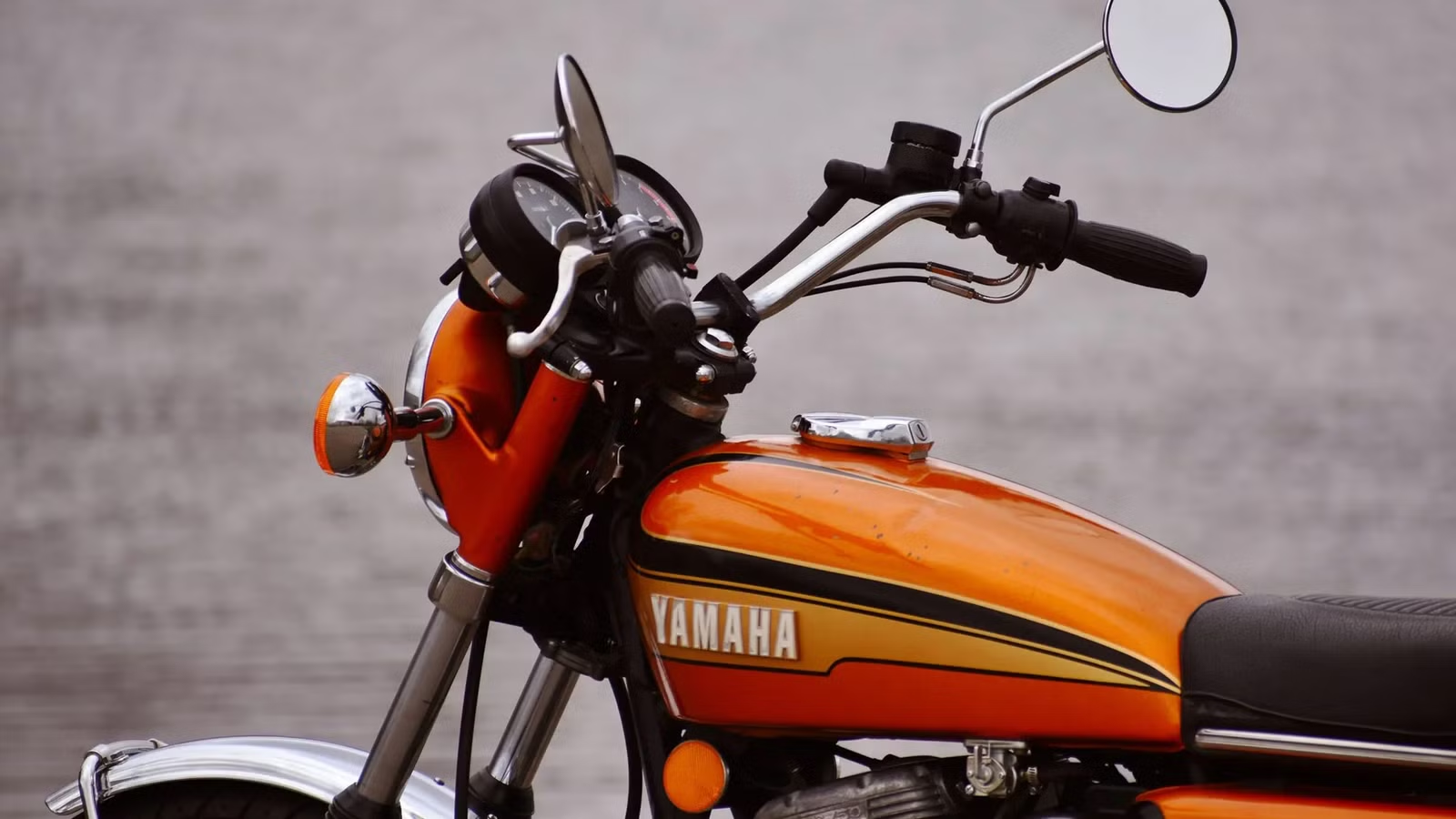
The Honda CB750 irrevocably changed the motorcycle market, challenging manufacturers to keep up. Many British ones couldn’t, while Japan’s best scrambled to create something with which to compete with the new benchmark. Yamaha went all-in on their solution to the CB750 and, while it seemed strong at first, the bike blew up in Yamaha’s face and almost cost them their reputation.
The 1970s Motorcycle Arms Race And Britain’s Grip On The Middleweight Twin Class

Britain built its reputation on 650 cc bikes like the Triumph Bonneville, BSA A65 Lightning, Norton 650 Dominator, and Royal Enfield Interceptor. Bikes were exciting, powerful, and celebrated for their speed and agility. But by the early 1970s, British motorcycling wasn’t what it once was. The industry had been declining for some time, its 1950s glory days were well over, and this was only exacerbated by the introduction of the Honda CB750 in 1969.
The CB750 almost single-handedly showed riders that they didn’t need to put up with oil leaks, patchy mechanicals, and dubious reliability anymore, and both they and manufacturers took notice. British brands suddenly didn’t have the same sway with consumers that they once had, as foreign brands increasingly looked to provide bikes that satisfied riders frustrated with the relative lack of innovation seen from British bikes. With Honda having opened the door, other Japanese brands were quick to walk through it.
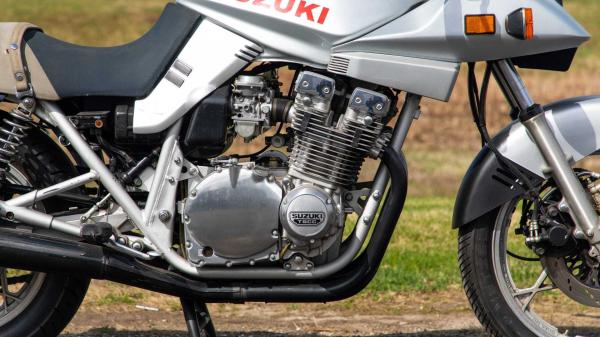

The German-Designed Japanese Superbike That Was Briefly The Fastest Production Bike On Earth
This bike was radical, divisive, and incredibly fast — and for a brief window, no production motorcycle on earth could touch it.
Japan Enters The Fight And Targets The British 650 Formula With Modern Engineering

The success of the CB750 highlighted the huge demand for reliable, high-performance mid-size bikes and exposed the weaknesses of Britain’s aging 650 cc twins. It also demonstrated consumers’ willingness to abandon the typical British stalwarts that had been under-serving them for years, paving the way for Japan’s culture of mass-production and precision engineering to fill a growing void.
The big four of Yamaha, Honda, Kawasaki and Suzuki all started designing machines to directly answer the issues that still existed with British bikes — things like vibrations, oil leaks, inconsistent build quality, and reliability. They took some design cues from the bikes, but were much more efficient in their approach to it, creating far superior bikes to what had previously been on the market.
This resulted in the near-death of the British motorcycle industry, as bikes from Japan proved to be far more competent than their British counterparts. But for all the advances made, there was one bike that didn’t quite get it right. Not only did this bike not destroy the British industry as had been hoped, but it destroyed itself instead.
The Yamaha TX750 Arrives As Yamaha’s Bold Answer To The British Parallel Twin

|
Engine |
Power |
Torque |
Top Speed |
Weight |
|
743 cc Parallel-Twin Four-Stroke |
63 HP |
50.6 LB-FT |
105 MPH |
518 lbs wet |
With the CB750 setting the standard, competitors were quick to follow. Suzuki unveiled its GT750 in 1971, while Kawasaki released the Z1 in 1972. Yamaha’s response was different. Rather than build another four-cylinder bike, it tried to modernize the British twin formula.
The bike was a 743 cc parallel-twin, similar to the British bikes it was hoping to displace. The three years of development time it had post-CB750 wasn’t particularly noticeable at first, given the bike made 63 HP to the CB750’s 67 HP, and was only capable of around 105 MPH to the Honda’s 125 MPH top speed, but that’s because Yamaha weren’t trying to compete on performance. With the TX750, Yamaha was prioritizing mechanical refinement.
Innovations included a dry-sump lubrication system to improve oil control under hard riding, improved oil cooling by adding an oil cooler as standard, and Yamaha retained a traditional 360-degree crankshaft, preserving the power delivery and exhaust note of the British twin it was trying to emulate. But the system that the bike was most well-known for was its Omni-Phase Balancer System.

British bikes were notorious for vibrations due in part to their unbalanced engines, and the Omni-Phase Balancer System aimed to fix this. It worked by using dual counter-rotating shafts that rotated in opposite directions. These were weighted, tuned relative to the crank position, and gear-driven straight from the crankshaft, which meant that, in theory, Yamaha could make the ride feel smoother without having to resort to using a bigger engine. It was an incredibly complex solution, but one which Yamaha thought would help its parallel twin feel like an inline four.
The problem was that while this all worked in theory, it was incredibly difficult to maintain. Many parts with precise timings meant that there were multiple points of failure. If timing or lubrication were off, the balance was thrown out. It needed extremely precise tolerances, which made it less forgiving than simpler designs. And while these issues could have been worked out in time, quietly kept away from the eyes of the buying public, the system failed on the world stage, in one of the most important races of its time.
The Castrol Six Hour Disaster And The First Modern Motorcycle Recall That Followed

The Castrol Six Hour was an endurance race held at Australia’s Amaroo Park circuit. A production-bike-specific event, factory-backed teams from around the world took to the 1.199-mile track to showcase bikes that could both race for six hours and be bought off the showroom floor. This real-life application made it a very important race for manufacturers, particularly Yamaha, which entered six bikes and twelve riders in the 1972 iteration.
Things would not go well for the team. The bike had a tendency to overheat and aerate the oil at a sustained high RPM, which meant that it was more difficult to circulate. This heat would then transfer to the weight-carrying chain, which stretched and impacted the timing. The bike, now with an overheated engine, incorrect timing, and even more vibrations, would shake itself to death as bearings failed, and the bike couldn’t cope. Only three of the initial six finished the race, with the highest-placed bike coming in fifth.
It was a devastating blow. Not only had the bike failed, but it had done so with the buying public watching. Sales slumped, and dealers struggled to shift the now-cursed bike. Yamaha initiated one of the largest motorcycle manufacturer recalls of its time, asking dealers to send the engines back to the Japan headquarters. This presented an issue for McCulloch Yamaha of Australia as, under Australian customs and tax rules, re-importing the engines would incur import duty and sales tax. Its solution was to take a sledgehammer to the 130 unsold engines it had, in front of the Australian customs officials, to prove that these once-viable engines were now total scrap.
12 Japanese Motorcycles That Practically Last Forever
These ten Japanese motorcycles have one thing in common: with basic maintenance, they just keep going. Some owners have even seen six-figure mileage.
How The TX750 Failure Shaped Yamaha’s Next Decade Of Big Bike Engineering Decisions

The TX750 was an ambitious bike for Yamaha. It was their first attempt to compete with larger British and European twins, along with bikes like the aforementioned CB750. It was also supposed to elevate Yamaha’s reputation, showing that they didn’t just make smaller-displacement two-strokes, but could make four-strokes with more displacement.
The engineering was supposed to prove that but, ironically, demonstrated the complete opposite. Yamaha’s ambition was a gamble, and unfortunately not one that paid off. The company did learn from this, though. The XS750, which came out in 1976, was a more conventional three-cylinder that eschewed risky engineering in favor of a larger engine that naturally led to fewer vibrations. The XS1100, which came out two years later, continued this, with an inline four engine that became known for its reliability.
In this way, the TX750 demonstrated that Yamaha was the antithesis to the British industry. Rather than ignoring an issue and carrying on with something that didn’t work, Yamaha used it as an opportunity to refine and improve, putting many of these refinements into 1974’s TX750A. But while the TX750 may have been a failure, it led to far more successful bikes because of it. In doing so, Yamaha proved that a failure isn’t what kills a bike — it’s how you deal with it. It’s a philosophy that helped Yamaha at the time, and one which has put them into the position they’re in today.
Sources: Shannons, Classic Bike Guide, Motorcycle Classics

Related posts





Latest Post


No Comments