
Why The DR650 Might Be The Most Reliable Dual-Sport Ever Built
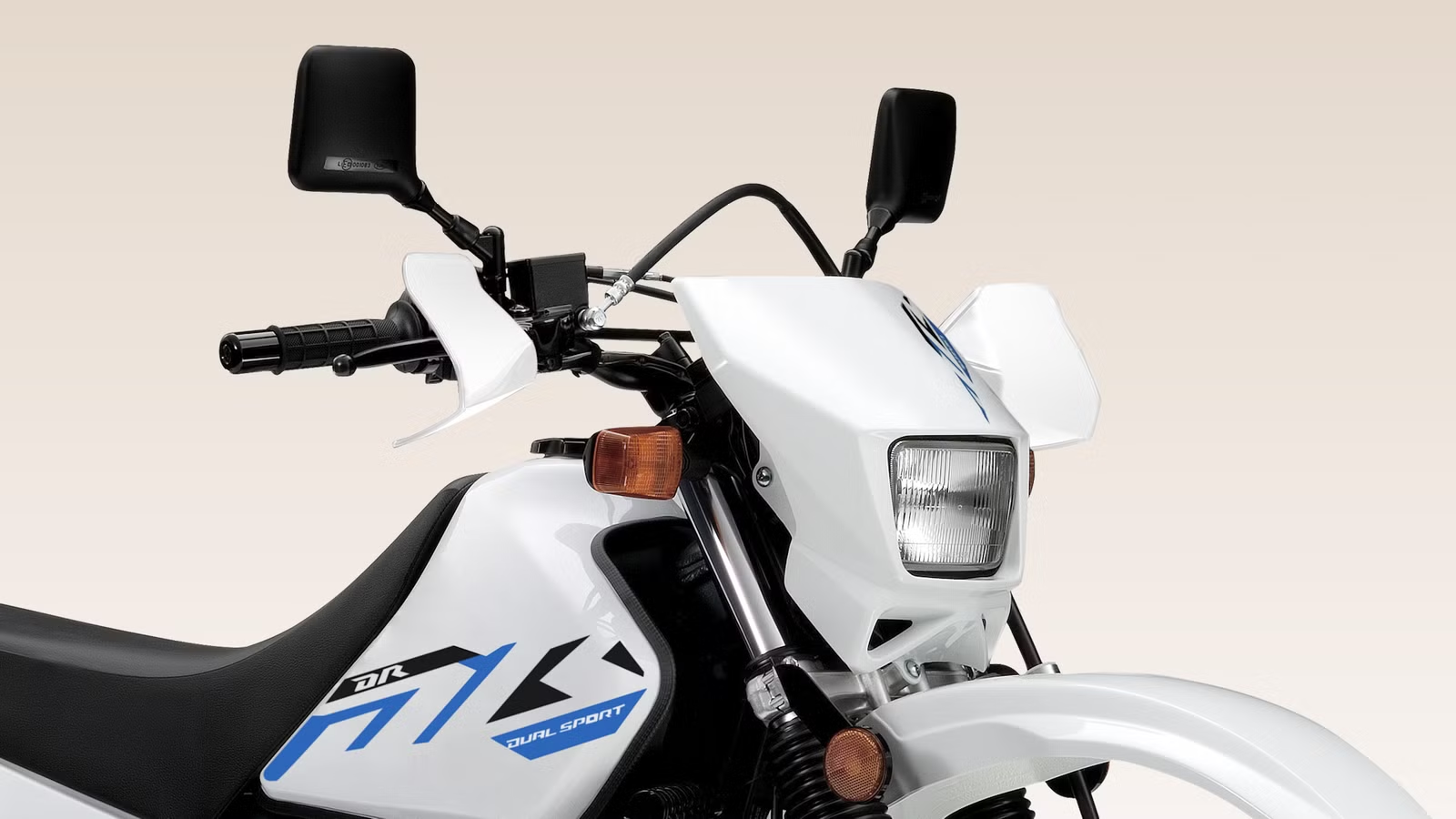
Dual-sport motorcycles have to survive a harder life than ordinary road bikes, with hours winding out their engines on highways, crawling through trails with little airflow to cool things down, inhaling dust, and occasionally ending up lying on their sides. Thus, long-term durability gets a new meaning in how well these cycle parts tolerate miles and years of abuse. But even the strongest candidates need evidence beyond reputation alone. A genuinely durable dual-sport not only should survive serious mileage, but it also has to remain straightforward to maintain and repair, both periodically as well as trail-side. And Suzuki has been the king of this for generations of riders.
Time Is The Hardest Reliability Test

Reliability reputations are easy to build when a motorcycle is still relatively new. Age, on the other hand, is less forgiving. It exposes recurring issues like oil leaks, transmission problems, electrical weaknesses, parts that wear prematurely, and maintenance jobs that become increasingly difficult as the miles pile on. A dual-sport that remains dependable after 10 or even 30 years therefore tells us considerably more. Long production runs add another advantage.

Age also changes what reliability demands from the owner. Valve inspections, oil changes, air-filter servicing, chain adjustment, and basic electrical diagnosis become part of the maintenance routine because a motorcycle that is difficult or expensive to maintain is harder to keep dependable over decades. On a dual-sport, this becomes all the more important when repairs may need to happen far from a dealership or a properly equipped workshop. Straightforward mechanical access and conventional tools can be just as valuable as a trouble-free engine.

This is also where documented mileage starts carrying more weight and builds a cleaner reputation that can be trusted more than hearsay. A motorcycle with six-figure mileage examples, well-known failure points, and decades of owner experience gives buyers a much clearer idea of what actually lasts and what eventually needs attention. Better still, a manufacturer gets years to correct recurring weaknesses without replacing the entire platform. Few dual-sports have had as much time to build that sort of record as the Japanese big single that is the Suzuki DR.
The Suzuki DR650S Has Spent Three Decades Proving Itself

The current 2026 Suzuki DR650S still uses the same basic platform introduced with the heavily revised DR650SE in 1996. Its 644cc single is air- and oil-cooled, fed by a Mikuni BST40 carburetor, and connected to a five-speed transmission. Compression is a modest 9.5:1, while a gear-driven balancer helps control the vibration expected from a large single. It’s devoid of exotic tech and electronics, but Suzuki’s cylinder coating does reduce friction and improve heat transfer.
The restraint in loading it with tech is central to the DR’s durability. There is no radiator or coolant circuit, no fuel pump or injectors, no ride-by-wire throttle, and no elaborate electronics governing the engine. At 366 pounds, ready to ride, with a 3.4-gallon tank and 21-inch front wheel, it remains as straightforward as a dual-sport gets. The $7,299 MSRP also buys a motorcycle whose basic mechanical layout has already been tested by several generations of owners.
One DR650 Has Already Gone 145,000 Miles Without Major Engine Work

High mileage is where the DR650’s reputation becomes considerably more convincing. Florida-based rider Erv Daley documented his 2005 DR650 in a 2016 Motorcyclist Magazine ‘Me & My Bike’ feature after putting 145,000 miles on it with no major engine repairs. His maintenance routine was hardly obsessive either, centered around regular oil and filter changes and periodic valve adjustments. Of course, a single motorcycle example cannot establish an entire model’s reliability, but surviving that distance on the original basic engine architecture shows what the DR can do when maintained properly.
Overland DR650s Have Added Their Own Evidence

Long-distance travelers have pushed the motorcycle through harder tests. South African overland travelers Michnus and Elsebie Olivier, who have spent years riding internationally under the PikiPiki Overland name, each put more than 100,000 kilometers, or over 62,000 miles, on their DR650s. Their bikes endured extended travel, including elevations between roughly 9,800 and 16,400 feet, yet they reported that neither engine was consuming more oil at the 100,000-kilometer mark.
The DR650 Does Have Known Problems

Thirty years of essentially continuous production now means that there is little mystery left around what can go wrong with this bike. Earlier DR650s became known for leaking cylinder-base gaskets, while the countershaft seal on some bikes could work loose and dump engine oil. Another widely discussed issue involved the neutral-sending-unit screws inside the engine backing out if they were not properly secured.
Later production models incorporated changes that reduced some of these concerns. Suzuki moved from the earlier paper-style cylinder-base gasket to a metal design, revised the countershaft-seal arrangement, and eventually began securing the neutral-sending-unit screws with threadlocker from the factory. Rare third-gear failures have also been reported, especially on hard-used or heavily loaded motorcycles.
Suzuki Designed The DR To Keep Running

Mind you, the DR650 is not reliable by virtue of being primitive. Rather, it’s how conservatively the motorcycle is engineered. The DR650’s maintenance design is where its age starts working in its favor. Valve clearance is checked every 7,500 miles, and adjustment is done through screw-and-locknut adjusters on the rocker arms rather than shims buried beneath the camshafts. That means no specialist equipment is required beyond basic hand tools and a feeler gauge.
Its long production run has also created broad parts interchangeability. Most aftermarket components made for the 1996-onward DR650 fit across model years. On a motorcycle expected to survive crashes, travel, and decades of use, longevity depends not only on what refuses to break, but also on how easily the worn or damaged pieces can be replaced when they eventually do. To be fair, Honda’s XR650L and Kawasaki’s KLR650 belong in any serious durability discussion just as much, but the Suzuki has a more complete build for its purpose.
Source: OEMs, Forums

Related posts

Latest Post


No Comments