
Why Pontiac Hid GTO Hardware in a Cheaper A-Body
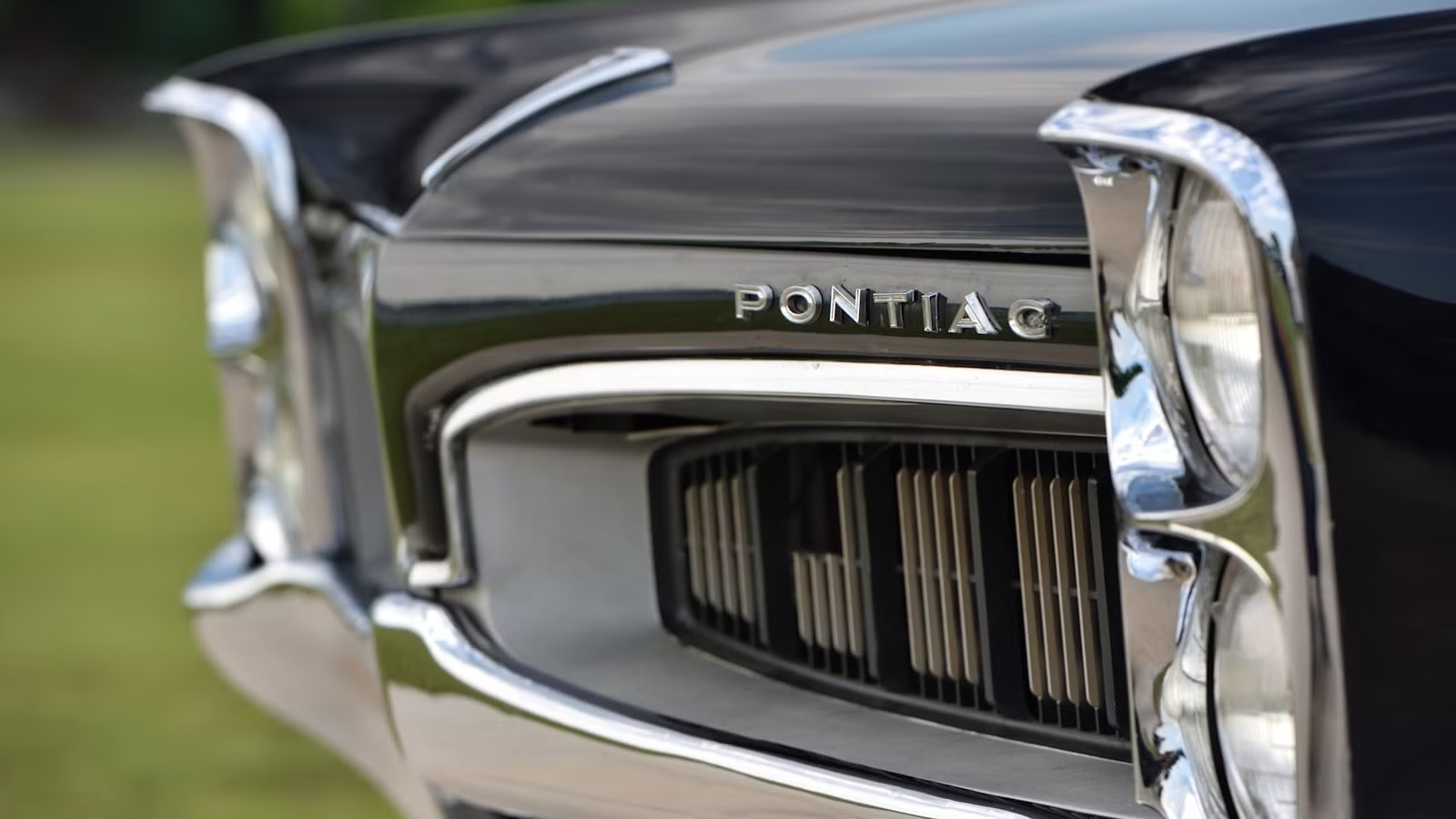
For the most part, people wanted the Pontiac GTO for its name and the high-performance power under its iconic badging. In fact, collectors are still drawn to it for similar reasons, including its historical lore as the start of the muscle car era. However, you could still get GTO hardware for a much more affordable price. A sleeper car with the same A-Body and components can be had for a fraction of the cost, providing a remarkable bargain if you know where to look.
Pontiac Needed An Affordable Alternative To The GTO

By the late 1960s, federal safety agencies and insurance companies were catching on to the fact that muscle cars were dangerous. Models like the Pontiac GTO and Dodge Charger HEMI were built for straight-line acceleration rather than cornering. Raw power was prioritized over handling, making these death traps hard to control.
In 1966, insurance rating bureaus classified cars based on their make, name, and VIN-coded performance hierarchy. Because the GTO had a high-performance VIN prefix starting with 242, it immediately received higher insurance premiums. It was flagged as a high-risk, high-horsepower, sports/muscle car.
While that makes it cooler among racing enthusiasts and thrill-seeking buyers, it was also more expensive to own. But Pontiac didn’t want to keep its high-performance recipe out of the hands of younger drivers, so it hid the same hardware under a different badge. To quote Juliet Capulet of Romeo and Juliet, “A rose by any other name would smell as sweet.”

However, General Motors quickly learned that the name of cars actually has a profound impact. The sleeper models with GTO components never became nearly as popular and remain undervalued to this day. Decades later, you can still get GTO muscle under a different moniker with an absurd amount of savings.
The 1966-1967 Pontiac Tempest Flexes GTO Hardware

By checking a few boxes on the order form at the dealership, buyers could turn the Pontiac Tempest into a full-blown GTO, only with a different look. For example, the Tempest Sprint package boosted the 230 cubic-inch (3.8-liter) SOHC straight-six engine’s power from 165 hp and 216 lb-ft of torque to 207 hp and 228 lb-ft of torque.
It did so by adding a Rochester Quadrajet four-barrel carburetor, higher-compression pistons, and a bigger camshaft. The Tempest Sprint also featured suspension upgrades like stiffer springs, heavy-duty shocks, and a larger front sway bar. The package also added more distinctive looks with custom body pinstriping, unique OHC-6/Sprint fender badging, a floor-mounted three-speed transmission with a Hurst shifter, and Rally instrumentation.
The more upscale Pontiac LeMans trim was often paired with the available 326 cubic-inch (5.3-liter) V8 with 250 hp and 333 lb-ft of torque. Upgrading to the High Output variant increased the power to 285 hp and 355 lb-ft of torque with a four-barrel carburetor, a higher compression ratio of 10.5:1, and dual exhaust.

The HO LeMans can accelerate from 0 to 60 mph in roughly 6.7 seconds and finish a quarter mile in about 15.4 seconds with a top speed of around 123 mph. Meanwhile, the Tri-Power GTO reaches 60 mph in around 6.5 seconds with a 14.0-second quarter mile time and a top speed of 125 mph.
The GTO Gets All The Fame

In 1966, the Pontiac GTO went from being an available trim package to a stand-alone model and immediately took off in popularity. Its original MSRP ranged from about $2,783 to $3,082, depending on the amount of bells and whistles buyers went for. It sold about 96,946 units that year, coming close to the 100,000 mark with its massive sales surge of about 29%.
The 1966 Pontiac LeMans HO originally cost between $2,505 and $2,901. Going to the High Output V8 added another $157.94 to the bill. There isn’t an official factory breakdown of how many LeMans 326 H.O. models were sold, but the Tempest benefited from a 16.8% sales boost, so General Motors was raking in the dough.

While the GTO stole the show as an attractive pioneer for muscle cars, the LeMans was valued for different reasons as a more affordable and luxurious family hauler. Drivers didn’t realize that the GTO’s handling and suspension components were shared with the LeMans, delivering agile cornering and a thrilling power-to-weight ratio for an athletic feel.
Collectors and enthusiasts spent 40 years overlooking the LeMans as an underrated performance package while hunting in barns and estate sales for the GTO, with its distinct Coke-bottle styling, aggressive power, rebellious nature that drew higher insurance costs, and status as a pop culture icon. Hot rod magazines called it “The Great One”, allowing it to define the peak performance era.
But Collectors Are Catching On To GTO Sleepers

Some folks have started figuring out that you can get an A-Body car with GTO hardware under a different name to save thousands. The value of 1966 Pontiac LeMans 326 HO models has been steadily climbing. For example, models found in fair condition were worth about $15,000 to $18,000 in 2018. Now, examples in fair condition are worth between $20,000 and $23,000.
On that note, LeMans HO cars found in average or good condition typically fetch between $22,000 and $32,000. Then models found in pristine condition often sell for between $45,000 and over $50,000. LeMans cars with the convertible top often hold the most value and can add $8,000 or more to the overall price.

The 1966 Pontiac GTO is known for pricing collectors out of the market. Models in project or poor condition range in price from $8,000 to $27,000, even if they need a full restoration. GTO models found in average running condition fetch between $34,000 and $55,000, blowing past museum-quality LeMans models.
Then the show-quality cars often cross the auction block for $70,000 to over $90,000. Like the LeMans, the convertibles are rarer options that hold more value. As more collectors decide to target these GTO clones, their value could continue to climb, making them a smart buy for significant savings simply because of a different badge.
Source: Classic Cars, Automobile Catalog, Hagerty

Related posts



Latest Post


No Comments