
Why Oldsmobile Hid Its Deadliest Option in Just 350 Cars
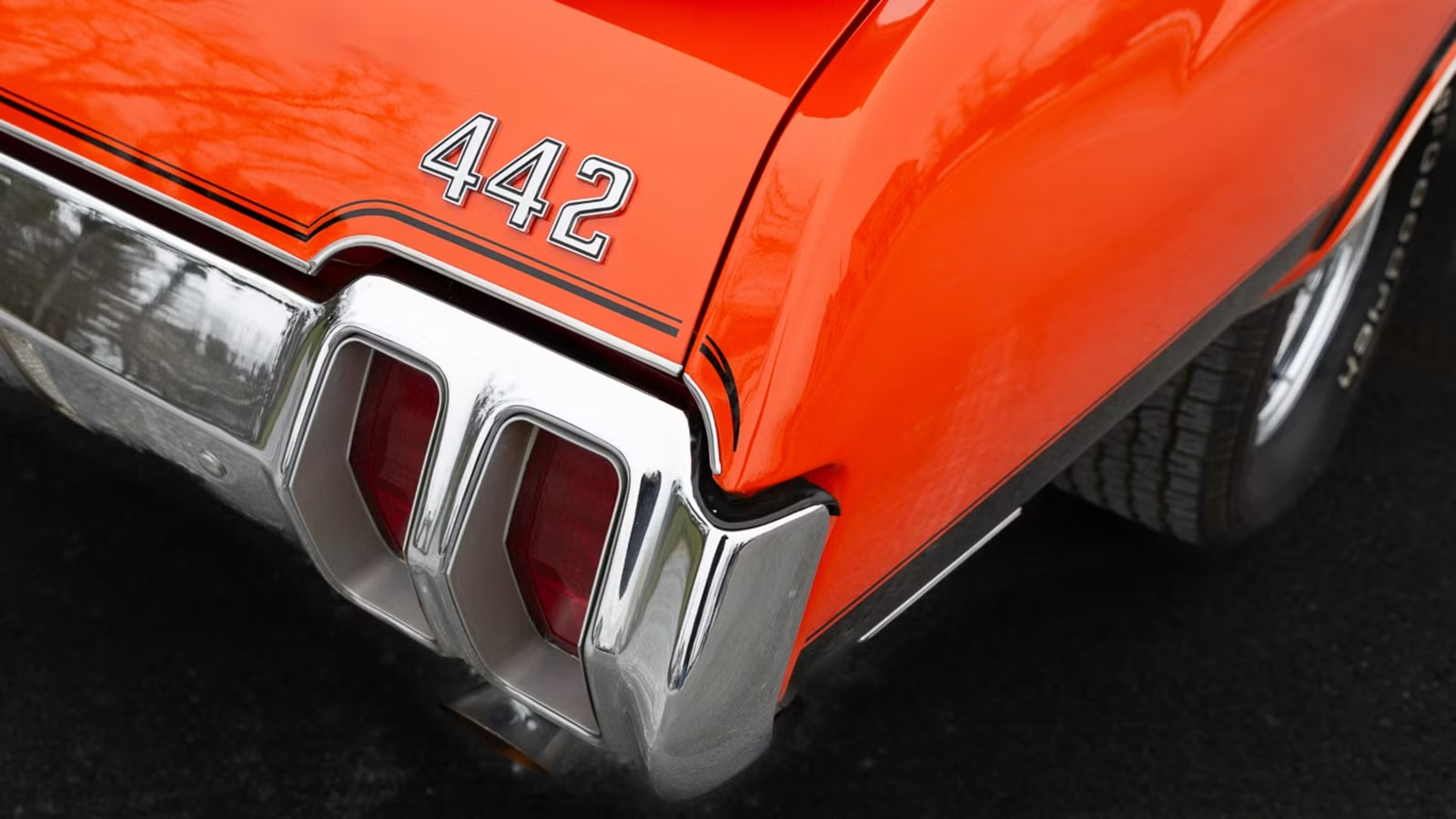
When you’re talking about muscle cars from many decades ago, sometimes it’s a big-ticket option or uncommon variant that makes all the difference in terms of collectibility. A factory 426 Hemi can turn an otherwise ordinary-looking ’Cuda into a six-figure showstopper, while the possibility of an aluminum engine block can have 1969 Camaro ZL1 fans squinting under popped hoods.

Some differences, however, are a little more subtle.
The 1970 W-30 Was Already Something Special
By 1970, Oldsmobile was deep into demonstrating that comfort and performance didn’t have to be mutually exclusive. The 4-4-2 was a formidable car to begin with, but the W-30 factory performance package took it to the next level with a drag-ready sensibility and enviable front nostrils that helped it breathe deep.

Buyers got specialized performance hardware, including an aluminum intake manifold, a hotter camshaft, and other engine upgrades that helped the W-30’s 455-cubic-inch Rocket V8 deliver 370 hp and 500 lb-ft of torque.
Between the hood scoop, badging, and a suitably antisocial exhaust note, there was plenty that an enthusiast could admire from across the street. But it turns out that one of the most obscure options was one that required a much closer look.
The Real Rarity Was Hiding Underneath

Long before the internet would provide endless opportunities to even discuss such obscurities, there was one available option so understated that nobody could possibly notice it unless they happened to be crawling around under the car. It was called the W27, and it replaced the standard cast-iron differential housing with a lightweight aluminum version.
The W27 option itself cost about $158. Estimates suggest that around 350 cars received the lightweight housing, making it one of the rarest pieces of Oldsmobile hardware someone could have picked.
And unlike a set of stripes or an exciting badge that’d be easy to showcase in an auction listing or an Instagram flex, the quietly invisible W27 actually served a mechanical function.
Why Oldsmobile Offered An Aluminum Rear End

’70s-era muscle cars aren’t known for their low curb weights, but that doesn’t mean manufacturers didn’t put thought and engineering into keeping things light. So with only so much weight available to cut, where you were able to trim some off was often as important as how much.
A lighter differential didn’t just shed pounds from the total weight of the car. It reduced unsprung weight, which is the mass that moves with the wheels and suspension rather than being supported by the springs. Less unsprung weight makes it easier for the suspension to react to bumps and keep the tires in contact with the road, which can improve handling and ride quality.
The W27 knocked roughly 20 pounds off the standard differential assembly. That wasn’t going to transform a big Oldsmobile into a lightweight sports car, but it was a meaningful reduction in precisely the sort of weight engineers prefer to eliminate.
Some Buyers Wanted Lightweight Parts And Luxury Features

Weight savings is often an exercise in compromise. Just as you can option a sports car today with heavy eight-way adjustable seats and air conditioning before choosing a weight-saving strap instead of a door handle, not every muscle car buyer in the ’70s was trying to save every possible ounce for a stripped-down drag racer shaving hundredths of a second off their quarter-mile times.
Plenty of people wanted to strike a balance between performance and comfort, with a lighter differential being a great example of hardware that could get lighter without giving up anything at all. One 1970 W-30 featured at the Muscle Car and Corvette Nationals demonstrates this ethos exactly. In addition to the ultra-rare aluminum differential housing, the car featured factory air conditioning, an 8-track player, and an automatic transmission with a Hurst Dual-Gate shifter.
The original price reportedly came to $5,350.14, which was really something in 1970 dollars. It was a substantial sum of money for an exercise in contradiction that included paying extra to eliminate roughly 20 pounds from the rear axle while paying even more to add weight elsewhere. But that was the prerogative, then as now: chasing performance where you want it while preserving comfort where you can.
Finding A Real W27 Takes More Than Looking Underneath

Adding to the enthusiast appeal of this whole idea is the fact that, in addition to the obscure nature of the W27 to begin with, there is more nuance to argue about inside the housing.
That’s because the aluminum housing and the aluminum differential cover were not one and the same. The 1970 W27 option included both for approximately $158, but the aluminum cover was also available separately through Oldsmobile’s parts department. In 1971, Oldsmobile even offered a cover-only W27 option, without the lightweight housing that made the 1970 setup so special.
It’s why original paperwork can have outsized importance on something like this. An aluminum cover might look the part, but it could be bolted to an ordinary cast-iron housing. Even the presence of a genuine aluminum housing doesn’t prove it was factory-installed on that particular car. Without factory documentation or other bona fides, there’s no saying whether you’re talking about an ultra-rare option from more than 50 years ago or an upgrade from sometime between then and now.
In practical terms, none of this matters much anymore. But in the collector community, where the little things can make all the difference, something like a genuine W27 means you’ve traced the car in front of you to a very specific and wildly uncommon piece of factory hardware that would still have collectors raising an eyebrow today.
Sources: Oldsmobile,

Related posts




Latest Post


No Comments