
What Happens To A Hybrid After 10 Years Of Daily Driving
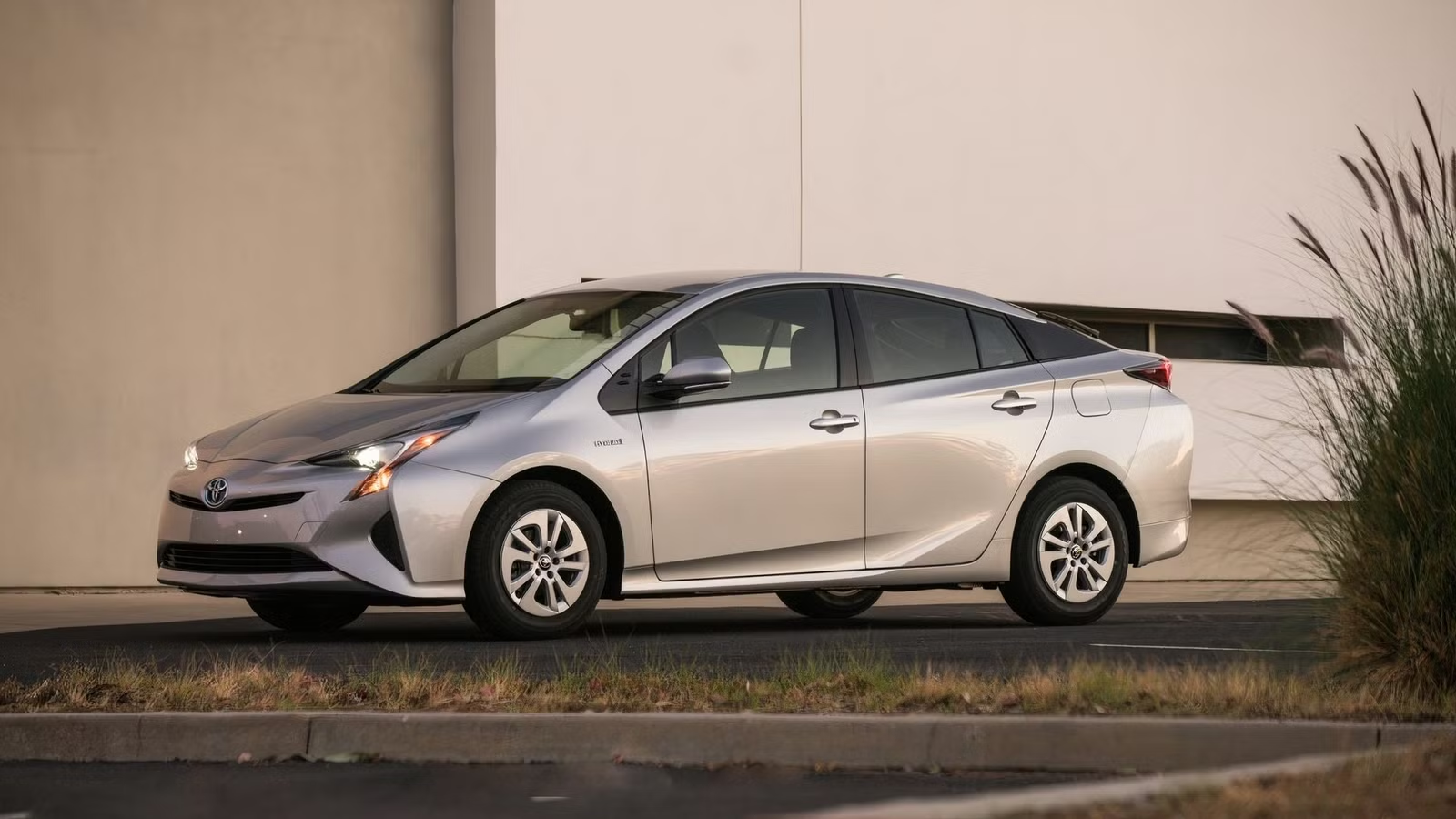
Hybrid car demands are soaring to new heights in 2026, leading a lot of consumers asking questions about what they can expect from these vehicle types over an extended ownership period. Hybrids are typically more reliable than conventional ICEs, because manufacturers fit them with more reliable engines that don’t cover the full load of driving thanks to the integrated electric motor.

Despite their improved reliability standards, HEVs are still subject to wear, with the battery pack being the most expensive component that you’ll find yourself replacing. An advantage of modern hybrids is that the replacement battery technology is substantially more affordable compared to when these types of vehicles were first introduced to the American market.
American Hybrid Popularity Reaches New Heights In 2026
Throughout this year, the U.S. hybrid vehicle market has experienced record-breaking growth, according to data sourced from Coherent Market Insights. This report reveals how hybrids secured 16 percent of new light-duty vehicle sales while pure battery electric vehicles declined to six percent. This trend is caused by a combination of economic factors and shifting federal policy, together with the practical appeal of not having to make use of charging infrastructure. Following the late-2025 expiration of federal tax credits for BEVs, pure electric models lost key price incentives. This led cost-conscious buyers to consider cheaper alternatives. High interest rates and lingering inflation push consumers toward traditional hybrids, which feature lower average MSRPs, lower monthly loan payments, and interest rates backed by incentives.

At the same time, rising fuel prices motivate consumers to prioritize fuel economy without taking on the higher upfront costs of pure electric platforms. Modern hybrids also offer practical freedom from range anxiety and public charging infrastructure gaps. The fuel efficiency benefits and widespread gasoline infrastructure position hybrids as the default choice for Americans wanting to lower their typical operational costs without compromising on daily practicality. As a direct response to this, automakers continue expanding hybrid powertrain availability across popular crossover, SUV, and truck lines to capture this strong demand.
What Hybrid Battery Degredation Looks Like After A Decade

After 10 years of daily driving, a hybrid vehicle battery experiences gradual chemical degradation, reduced energy capacity, and increased internal resistance. Continuous charge and discharge cycles over a decade cause chemical changes within the individual battery cells, leading to lower total storage capacity and reduced peak power delivery. Drivers typically notice the internal combustion engine running more frequently, decreased overall fuel economy, and reduced EV-only driving range under low-load conditions.
The rate of degradation depends heavily on operating conditions, thermal management efficiency, and total mileage. Extreme hot or cold ambient temperatures accelerate chemical breakdown, while urban stop-and-go driving places higher stress on the battery management system than steady highway cruising. As individual cell voltages diverge over time, the hybrid control unit limits overall pack performance to prevent thermal runaway or complete pack failure. While some high-mileage packs require refurbishment or module replacement at the decade mark, modern battery management software minimizes extreme capacity loss. This allows many 10-year-old hybrid packs to remain functional at reduced efficiency levels.
Hybrid Batteries Surpass 10 Years In Real-World Conditions

Real-world data and high-mileage ownership records confirm that numerous hybrid models routinely surpass ten years and well over 200,000 miles on their factory-installed battery packs. Fleet applications provide the clearest evidence, as early second- and third-generation Toyota Prius models operated as taxicabs in cities like New York and San Francisco frequently logged 300,000 to 500,000 miles over more than a decade of daily continuous operation without requiring a pack replacement.
Private consumers report similar longevity with high-volume models like the Ford Escape Hybrid, the Toyota Camry Hybrid, and the Lexus RX 400h, many of which remain on the road after 12 to 15 years with their original nickel-metal hydride or early lithium-ion chemistries fully intact. Thermal management systems, conservative charge-cycling algorithms that limit state-of-charge extremes between 40 and 80 percent, and diligent cooling fan maintenance account for this durability. Although these high-mileage packs experience gradual capacity loss and increased internal resistance over a decade of operation, their core functionality remains robust enough to keep the hybrid drive system operating efficiently without triggering high-voltage fault codes.
How Technicians Conduct A Hybrid Battery Replacement

Exchanging a high-voltage hybrid vehicle battery involves an in-depth process to isolate high-voltage current and prevent electrical hazards. The technician begins by disconnecting the auxiliary 12-volt battery to power down the vehicle control modules. They locate the high-voltage manual service disconnect plug to break the main circuit. The technician waits approximately 10 to 15 minutes to allow the high-voltage capacitors inside the inverter to discharge fully. They verify zero voltage across the terminals using a calibrated high-voltage digital multimeter before proceeding to the physical removal stage.
To reach the pack, the technician removes interior trim components, seats, and protective carpeting, as most hybrid batteries reside behind the rear seats or under the trunk floor. The technician removes the metal protective cover and disconnects the main high-voltage orange power cables, ground straps, and low-voltage wiring harnesses.

A specialized battery lift or crane supports the heavy assembly, which can weigh anywhere from 80 to 150 pounds, while the technician unbolts the battery tray from the chassis. Once lifted free, the old unit undergoes inspection. Components like the high-voltage junction block or cooling blower motor transfer to the replacement unit if required.
Installing the new battery pack requires reversing the mechanical steps while maintaining proper torque specs on all structural bolts and electrical connections. The technician hoists the replacement unit into the vehicle, secures the frame mounts, and reconnects the orange power cables and main harness connectors. They reinstall the service disconnect plug, reattach the 12-volt battery, and connect a diagnostic scan tool to clear lingering high-voltage trouble codes. The diagnostic tool performs a battery pack initialization and voltage balance check across the internal modules. A road test confirms proper charging and discharging cycles under operational loads, verifying that the battery management system operates within normal parameters.
Hybrids Are Still Cheaper To Own

Calculating the ten-year cost of ownership demonstrates that hybrids remain more economical than traditional internal combustion engine vehicles, even when accounting for a high-voltage battery replacement. Substantial fuel savings serve as the biggest financial benefit. Driving fifteen thousand miles annually at standard efficiency levels will have you spending more on fuel when driving a conventional ICE. The 2026 Toyota Corolla Sedan is a cost-effective sedan in both HEV and ICE configurations. The Edmunds True Cost to Own tool indicates that a base hybrid LE model costs $30,067 to own over five years. The ICE LE costs $31,101 over the same period. Over the course of 10 to 15 years, the HEV proves to be more economical, even when you factor in a possible $2,000 battery replacement cost.
Mechanical component longevity also expands the financial lead of a hybrid powertrain over ten years. Regenerative braking systems handle initial deceleration duties, which reduces physical friction on brake pads and rotors. This operation extends brake system service intervals significantly beyond those of non-hybrid cars. Hybrids feature specialized electronic direct-drive eCVT or planetary gears that eliminate traditional multi-speed gear clutches, hydraulic torque converters, and drive belts. The reduction in mechanical friction points lowers routine fluid service expenses and mechanical wear. Electric motors take over low-speed driving and accessories, shielding the internal combustion engine from excessive cold-start stress and urban stop-and-go wear. This reduced mechanical strain preserves internal engine components for more miles.

Resale value retention provides the final economic advantage during a ten-year ownership cycle. Modern hybrid vehicles demonstrate lower depreciation rates than purely gas-powered counterparts due to sustained used-market demand for fuel-efficient transportation. Buyers prioritize lower operating costs, allowing a ten-year-old hybrid with a documented maintenance history or a refreshed battery pack to command a higher resale price. This residual value premium offsets both the initial purchase price gap and the eventual battery service expense. Consequently, lower fuel consumption, reduced mechanical maintenance costs, and higher trade-in values ensure the hybrid delivers lower total lifetime costs.
Warranties Ensure Protection For Up To 10 Years

Federal emissions law mandates high-voltage hybrid battery warranty coverage for a minimum of eight years or 100,000 miles, extending to 10 years or 150,000 miles under California Air Resources Board rules. While these figures suggest total coverage, the fine print excludes standard chemical degradation and capacity loss. These terms define a functional failure as an outright component failure or a sudden drop in performance. Consequently, gradual range loss or reduced fuel economy through normal wear rarely triggers a warranty replacement.
Unless a specific manufacturer guarantees an explicit capacity retention threshold, the warranty solely covers defects in materials or production. Exclusions voiding coverage include unauthorized vehicle modifications, improper thermal management, neglect, or non-dealer repair attempts. Other hybrid drive components, such as the inverter, DC-DC converter, and electronic control modules, operate under separate, shorter warranty schedules. Warranties transfer automatically to subsequent owners, but missing maintenance records or delayed software updates undermine claims.
Sources: Broker Link, Coherent Market Insights, EIA, and Edmunds.

Related posts



Latest Post


No Comments