
Everything you need to know about Honda
The word Honda means different things to different people. For motorcycle enthusiasts, the Japanese brand is the biggest name around; Honda robot lawnmowers can be seen keeping the grass short on golf courses and upmarket hotels around the world, while plenty of farmers rely daily on their Honda quad bikes to get around their land.
As a car manufacturer, Honda is well known for equally wide-ranging reasons. The Honda CR-V was one of the first compact family SUVs (although it has grown considerably over the years). For performance enthusiasts, there are few hot hatches to match the renowned Civic Type-R. Even those who have no interest in cars can quote Honda’s remarkably clever television adverts.

Yet, while Honda built cars in Britain for almost 30 years from 1992 until 2021, it’s actually quite a small brand here. Honda sold only around 23,000 cars to UK buyers in 2025, down nearly 7,000 from 2024 at a time when Japanese rivals Toyota and Nissan managed 90,000 each and even Mazda, long known as one of the smallest Japanese brands, exceeded 31,000.
For many, Honda is a bit of a conundrum. Its products offer consistently high quality alongside levels of reliability rivals cannot match, but they don’t seem to resonate with the wider market. People who buy Hondas tend to love them – just not that many people do…
So who or what is Honda?
Among the more established names, Honda is quite a young car manufacturer. Founder Soichiro Honda was into automobiles from an early age and in 1937 founded a company called Tokai Seiki that won a contract to make piston rings for Toyota – quickly losing it again due to his rings not coming up to the standard Toyota expected.

So Soichiro took himself around Japan to gain a better understanding of what was needed and regained the contract in 1941 – only to have one of his factories destroyed by US bombing and another collapse in an earthquake.
What was left was sold to Toyota in 1946, and Soichiro used the funds to found the ‘Honda Technical Research Institute’, initially making powered bicycles. It soon expanded to making engines to power the bicycles, and the Honda Motor Co was formed in 1948, producing motorcycles.
These soon grew in popularity around the world, and Honda has been the world’s largest motorcycle manufacturer since the 1960s. Not until 1963 were four-wheeled vehicles contemplated, the first a pick-up truck called the T360. It was quickly followed by the S500, a small chain-driven sports car.
Despite having barely begun as a car manufacturer, within a year Honda had entered its own team in Formula One grand prix racing, winning its first race just a year after that in 1965.
Honda’s passenger car ambitions grew in 1969 with a model called the 1300, but it was the Civic, first launched in 1972, that propelled the company to international recognition as a car manufacturer. It was followed in 1976 by the larger Accord, which became one of the best-selling cars in America, while the CR-V, launched in 1995, became the best-selling SUV globally.
In that year, Honda also launched its first hybrid, the Insight, just beating rival Japanese manufacturer Toyota’s Prius, and both manufacturers have shown much dedication to hybrids since, expanding the petrol-electric drivetrains throughout their ranges.
Honda was also the first of the Japanese brands to launch a premium division, Acura, in 1985, ahead of Toyota with Lexus and Nissan with Infiniti. Unlike its rival, however, Honda has never tried to sell Acura in Europe – in America it is established as a popular maker of upmarket cars.
The Honda of today builds a vast range of vehicles and machines, from cars and motorcycles to robotic lawnmowers and even executive jet aircraft. Deep investment in technology has even seen the creation and development since 2000 of a humanoid robot called Asimo.
Honda has, however, been much slower to move to electric vehicles. The Honda e went on UK sale in 2020 as the company’s first EV and earned some praise – but its limited range and high price tag resulted in very slow sales and it was dropped in 2023. Its replacement was an SUV clumsily named the e:Ny1, but this only lasted until early 2026.
The most recent twist in Honda’s history came in early 2025 when the company started merger talks with rival Nissan, reportedly to create a larger, stronger group to fight the challenges from particularly the new Chinese brands. The merger proposal, regarded by most observers as needed more by Nissan than Honda, collapsed just a few weeks later.
Many might think that Honda is in serious decline in Europe, having turned sales figures of 313,000 in 2007 to just 72,000 in 2025. But the company’s management don’t seem to be panicking, telling media that there is a plan to slowly and steadily grow Honda sales in the region by offering quirky cars to appeal to specific audiences rather than the more mainstream models of rivals. The new Super N small car, just going on European sale, is said to be the first of these.
And Honda is not that worried about clocking up huge car sales because unlike most of its rivals, the company’s car division is just a small strand of a business dominated by motorcycle sales – it is the has more than 30% of the global market with more than 20 million sales in 2025.
What models does Honda have and what else is coming?
Evidence perhaps of Honda’s declining fortunes is the fact that while just a year ago four of the brand’s then seven-strong model range earned New Car Expert Ratings of A – the highest tier in The Car Expert’s Expert Rating programme, today just one of the now six options does, and it’s the most well-known model of all – the Civic.
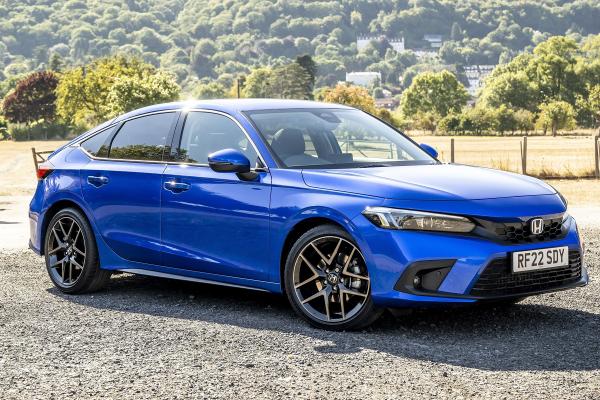
The Civic mid-sized family car has a history going back more than half a century. Now in its 11th generation, it can only be bought with a hybrid powertrain, but remains highly popular. It ticks the boxes in all areas, performance, quality and particularly reliability, earning a New Car Expert Rating of A with a score of 72%.
Honda has also long produced a performance version of the Civic, the Type R, which has become highly desirable among enthusiasts. The most recent two versions have both been described as the best hot hatch on the market, but due to tightening European Union regulations 2026 sees the end of the Type-R and Honda is no longer listing it for sale.
On sale since 2001 and now in its fourth generation, the Honda Jazz is often derided as a car for older drivers, but in fact is regarded as one of the best cars in the highly competitive supermini sector. Now only offered with a hybrid engine it scores on its practicality, with lots of interior space, and again its quality and reliability, general Honda hallmarks. It scores a New Car Expert Rating of B.
It’s a similar story for Honda’s long-lived CR-V SUV, now in its sixth generation which went on UK sale in late 2023 in hybrid and plug-in hybrid form. The car has attracted some minor criticism – it’s no longer available as a seven-seater, its styling is a little bland and it is expensive compared to rivals. But on reliability and quality it remains up with the best, helping it score a New Car Expert Rating of B.
Smaller than the CR-V and somewhat in its shadow, the Honda HR-V is a compact SUV on sale in its latest version since 2021. It comes with a hybrid engine which is praised for its smoothness but not the loudness of the engine under acceleration. It lets the Honda side down to a degree with a New Car Expert Rating of C, considered inferior to several rivals in this overcrowded sector.
Current Honda range on our Expert Rating Index
The most recent model with an engine to come from Honda is the ZR-V, launched in Autumn 2023 as effectively an SUV version of the Civic, smaller than the HR-V. Its hybrid drivetrain has again been praised but many reviewers struggle to see why anyone would want this heavier model over the regular Civic, contributing to its New Car Expert Rating of C.
Honda’s efforts to join the electric switch have been less than stellar. After the Honda e, a small car which was praised for its styling but not its range and which only lasted three years, Honda tried again with a compact SUV clumsily called the e:NY1 – and you weren’t supposed to say ‘Anyone’ but pronounce the digits separately. It too lasted a mere three years, withdrawn in early 2026.
Hopes of third time lucky rest on the Super N, a city car just going on sale in mid 2026. It’s effectively an updated version of the Honda e with more range, and initial reactions to it have been highly positive.
Honda’s reticence in launching pure EVs has long been questioned, as it has concentrated on hybrid models. Latest reports suggest that Honda plans to launch about 13 new models between 2027 and 2030, likely all featuring hybrid powertrains that combine electric motors with petrol engines, marking a transition period for the manufacturer before the inevitable shift to full electric vehicles.
The first of these is the Prelude, reviving an admired former nameplate on a new hybrid coupe rivalling the likes of the Alpine A110 and BMW 2 Series Coupe. Initial reviews have praised its general driving style but found the performance underwhelming.
EVs are also finally in the company’s plans, with £51bn pledged to their development. A new range of EVs with what is described as a radical design and called the ‘0 Series’ is set to launch first in the USA this year, and the ‘Honda O’ compact-SUV could eventually come to the UK. But for now hybrids remain very much front and centre of Honda’s future plans.
Where can I try a Honda car?
Honda is by no means the largest manufacturer on the UK market, today selling fewer cars than fellow Japanese brands Mazda and Suzuki and only a third of those sold by Chinese entrant BYD, which has been on the UK market for only three years.
In total in the UK there are just over 100 Honda full car dealerships (as opposed to those selling motorcycles and garden equipment) and they are well spread around the country – to test drive a Honda you will only have to travel far if you live in the more rural areas of Wales or northwest Scotland.
What makes Honda different to the rest?
Honda has long been seen as an ambitious and innovative manufacturer, capable of taking bold decisions such as going F1 racing just a year after launching its first car and producing in the NSX a supercar to take on Ferrari. Even Honda’s TV advertisements have inspired, productions such as ‘Cog’ and ‘Impossible Dream’ remembered long after they appeared on screen by even those viewers who had no interest in cars.
Strip all this away, however, and Honda’s reputation has been built on bedrocks of the quality of its products and levels of reliability rival manufacturers look at enviously. Even flawed models, such as the electric Honda e, have attracted praise for their looks, fit and finish and performance.
A Honda fact to impress your friends
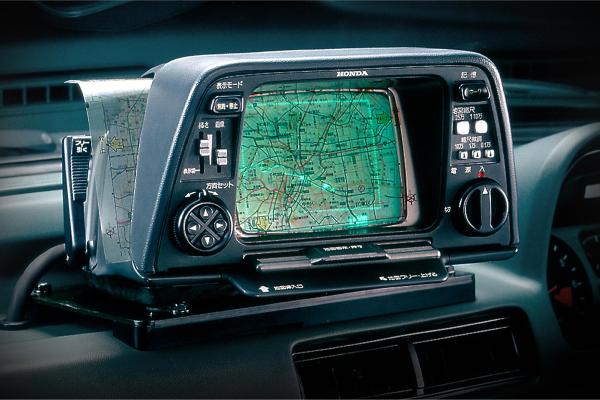
Honda’s many technical innovations extend to the first in-car navigation, invented more than a decade before GPS satellite navigation appeared on the market.
Honda Accord models built for the Japanese market in 1981 were fitted with a paper-based system called the Honda Electro Gyrocator.
Summary
Most car manufacturers are going through an electric transition, but Honda is taking the journey more slowly than most. While electric cars are coming in greater numbers, for now the company seems content to keep on making its very good hybrid vehicles for a knowing audience which is sizable, but not that sizable.
While its two major Japanese rivals remain some of the major mainstream brands around, Honda seems content to carry on doing things just a little differently.
This feature was first published in July 2025 and updated in September 2026.
Buy a Honda
If you’re looking to buy a new or used Honda, The Car Expert’s partners can help you find the right car.
Lease a Honda
If you’re looking to lease a new Honda, The Car Expert’s partners can help you find a competitive deal.

Personal contract hire deals from Select Car Leasing. Find out more

Related posts



Latest Post


No Comments