
We Asked AI To Build An All-New Motorcycle, And We Can’t Believe The Result
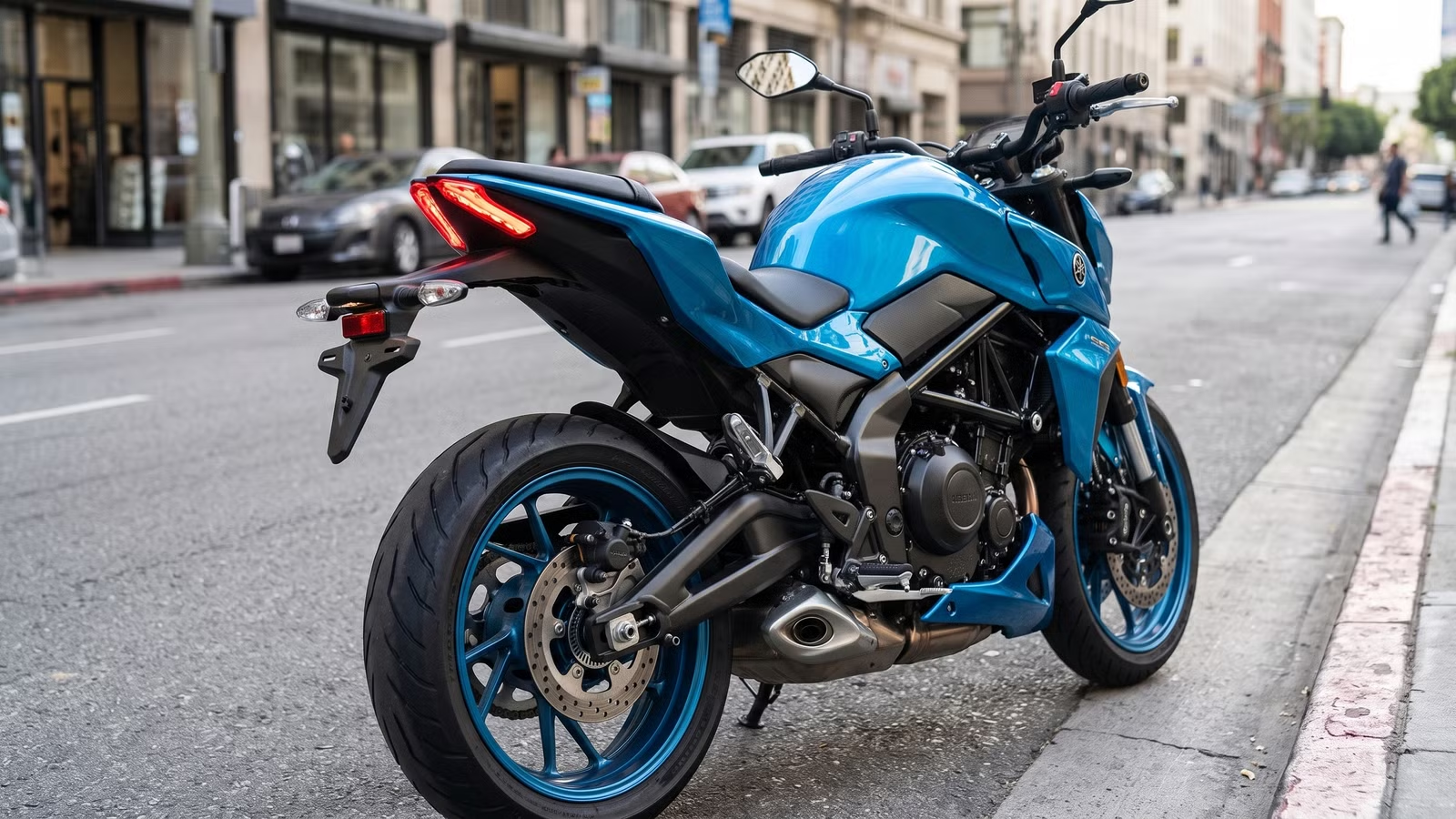
Not long ago, Artificial Intelligence was the future. And in no time, it’s become the present. This isn’t some casual exercise, either. AI is getting embedded everywhere, with the promise of doing anything you ask it to and doing it rather well. As motorcycle enthusiasts, we had to put that promise to the test in our own little way. Accordingly, we decided to task AI with designing an all-new motorcycle. The result came out shockingly more cohesive and mass-appealing than some of the existing motorcycles on the market today. Check it out below.
The AI-Imagined Motorcycle Is Neither Futuristic Nor Electric But Still Realistic

When you expect AI to imagine a motorcycle, you’d expect it to come up with something ultra-futuristic. Swooping lines, sleek aerodynamics, edgy lights, loads of tech–these are all things that come to mind. Rightly as well, considering how some new production motorcycles–like the Damon Hypersport–look. You’d also expect AI to imagine an EV, since there’s a growing emphasis on electric powertrains to reduce emissions.
Surprisingly, though, the AI-generated motorcycle is nothing like that. It takes heavy inspiration from current design trends and popular bikes to create a mass-appealing machine without overdoing things. The AI software has also picked the most obvious motorcycle type: the standard motorcycle. Or a naked bike, as their modern versions are dubbed.
A Contemporary Design Makes The AI Motorcycle Pleasing To The Eyes

Diving deeper, up top, a single LED headlight shines brightly, flanked by sharp cowls and a sporty fender. Behind this, you find an angular fuel tank with muscular radiator shrouds and a belly pan. Considering many modern-day nakeds miss out on the latter, this is a surprising touch by the software. At the rear, the design is rounded off by a split seat and double LED lamps.
Like everything else, the software keeps things realistic in the cockpit department, too. It shows a decently sized fully digital instrument cluster rather than going overboard with a massive tablet TFT we’re used to seeing. This is paired with simple switchgear.
The Mechanical Elements Match Recent Trends, Too

As good as the design is, we’re more impressed with the attention to detail. While we didn’t specify the details, the software picked one of the most common engine layouts on its own. Yes, the parallel-twin. This type of engine can be found on something as small as a 296cc Kawasaki Versys X-300 and Ninja 300 to something as large as the 1,084cc Honda Africa Twin.
It also walks the fine line between balancing easy maintenance, buttery smoothness, and tractable performance (particularly with the 270-degree crankshaft). A similar approach is followed elsewhere, be it the swingarm, wheels, disc brakes, suspension, or tubular chassis. Compile all that together, and we believe this motorcycle would fit today’s market just right. It will attract most folks and won’t be hated by anyone if it were to become an actual product.
Motorcycle Design Trends Are More Extreme Than Ever, But AI Motorcycle Gives Us Hope
To round off, motorcycle design has changed drastically over the years. Today’s market has all kinds of creations, with leading brands trying to kickstart the next trend. Take aerodynamics, for instance. The sports bike segment has ditched sleek fairings in favor of aerodynamic wings and ground effect scoops. While these make sense on the top-drawer $20k superbikes, small sports bikes have these for no real reason but aesthetics.
Likewise, this has seeped into other segments, and you will even find some ADV-type machines with aerodynamics. The result is a set of complex and busy-looking motorcycles with aesthetics that don’t really serve a purpose. KTM’s recent crop of bikes are prime examples. It started with the 1390 Super Duke, and now, the entire lineup is on course to join the new alien-y design approach. Yes, that includes its adventure bikes and sports bikes.

Given all that, it’s right to expect AI to suggest similar design ideas. Yet, AI has surprised us with its simplicity-first approach. It has shown the basic idea of an all-new motorcycle still focuses on simplicity. So with the ever-growing dependency on AI tools by designers, we’re almost glad AI is on our side.

Related posts
Latest Post


No Comments