
Volvo’s Plain Iron Four-Cylinder Outclassed The V6 Bolted Into Its 260 Sibling
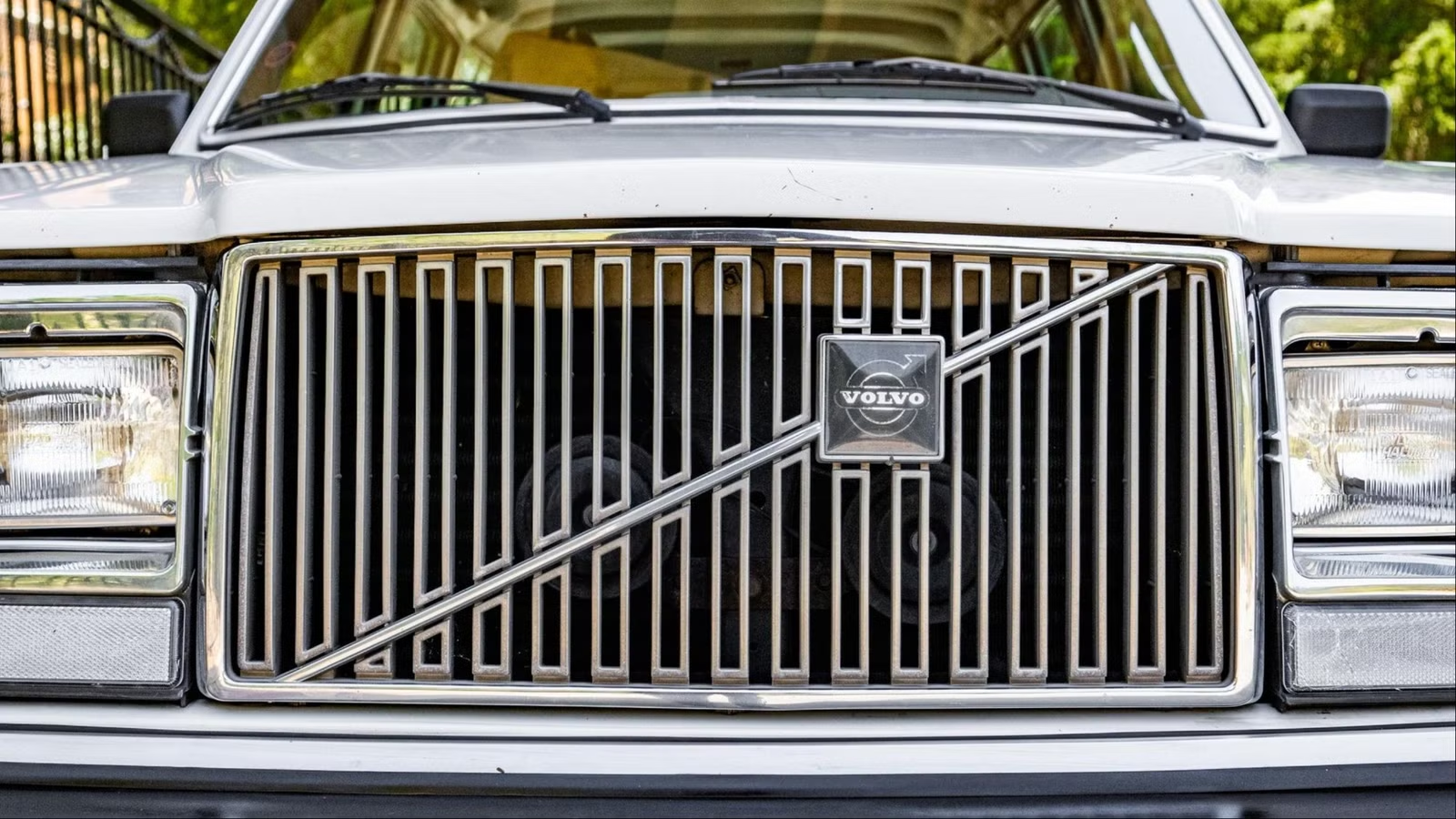
It seems like every neighborhood in both Europe and America has that one old 4-cylinder car that just refuses to die. Chances are, as well, that it was built by a European manufacturer. One of those European automakers in particular pushed pure dependability as far as it could go. That was thanks to an engine that has not only outlasted its peers, but has even outclassed more upmarket engines from the same manufacturer.
Several Volvos Have Reached Incredible Mileages

One of the ways Volvo has cemented its reputation for being a maker of incredibly dependable cars is how several old examples have reached massive mileages. Many know about the P1800 that ended up reaching 3,000,000 miles. But there’s another million-miler that fewer people talk about. That’s Selden Cooper’s Volvo 240, which reached a million miles in 2012. While the Volvo 240 is a solidly-built car in all respects, there’s one reason in particular why it’s so reliable. The engine that powers it is one of Volvo’s most legendary units – a humble 4-cylinder that’s outclassed almost everything else from its era on staying power. That even includes other engines from Volvo’s model lineup back then!
The Volvo B230 “Redblock” Is One Of The Most Reliable Engines Ever Made
|
Type |
 77 autotech Layout |
Displacement |
Power |
Torque |
|
B230F |
Inline-4 |
2.3 liters |
114-115 hp |
136 lb-ft |
|
B230FK |
Turbocharged inline-4 |
2.3 liters |
135 hp |
169 lb-ft |
|
B230FT |
Turbocharged inline-4 |
2.3 liters |
160-165 hp |
195 lb-ft |
At first glance, the B230 “Redblock” engine seems like any ordinary 4-cylinder engine. That’s because, in many ways, it is. But, this regular inline-4 that was the backbone of many of Volvo’s models in the ’80s and ’90s has survived in a way most of its peers haven’t. Why is that? Well, it’s down to a whole bunch of different factors.
It’s Overbuilt, Simple, And Was Conservatively Tuned From The Factory

Perhaps the biggest reason why the Redblock engine has survived so well is that its design is overbuilt, simple and understressed. The B230’s engine block is made of cast iron, old-fashioned even for the ’80s, but incredibly sturdy. The valvetrain is a single overhead cam design with 8 valves, again old-fashioned but simple and sturdy. That sturdy construction is combined with an incredibly conservative factory tune. Naturally aspirated B230F variants don’t produce any more than 115 hp and 136 lb-ft of torque.
The Redblock engine remained relatively unchanged from its simple design throughout its production. Only two noticeable upgrades ever happened. The first one took place in 1989, when stronger 13mm (around 0.5 inch) connecting rods and an updated oil pump were added. The original connecting rods were 11 mm (around 0.4 inches) in size. The second happened in 1993, and added piston oil cooling squirters. Both of these upgrades made the already incredibly sturdy Redblock even stronger.
Making the engine super sturdy wasn’t the only reason why these engines are a mechanic’s dream, either. The way they were positioned in the engine bay created a lot of spare space for mechanics to work in. Furthermore, as the engine was in production for such a long time and didn’t change very much, parts from all eras are completely interchangeable.
Forced Induction Versions Are Still Incredibly Durable

The super-reliable nature of the Redblock engine wasn’t hurt when Volvo decided to try turbocharging it, either. Two different turbocharged variants of the B230 were created. The B230FK has a low-pressure tune on the turbo, producing 135 hp and 169 lb-ft of torque. The B230FT has a higher-pressure tune, boosting output to as much as 165 hp and 195 lb-ft of torque. While that’s noticeably more impressive than the naturally aspirated B230F, they’re still quite conservatively rated for turbocharged 2.3-liter 4-cylinder engines. That helped to keep the dependable reputation of the Redblock going, even when more power and more mechanical complexity was added. Cars powered by these turbocharged B230 variants have been known to clock up as much as 820,000 miles, and it wouldn’t be surprising if at least one example out there crosses the million-mile mark.
The Overbuilt, Understressed Nature Opened Up Massive Tuning Potential
While the understressed factory tune of all the RB230 variants was supposed to make them as reliable as possible, it did also demonstrate that there was a lot of potential beyond that. Many tuners started taking advantage of the B230’s bombproof construction to push power well beyond what they produced from the factory. It’s not uncommon to see examples producing 400+ hp that are still running many of the B230’s stock internals. That’s especially the case with turbocharged variants, where turbos can be upgraded for even more boost while still retaining that incredibly strong cast-iron block.
The Humble Redblock Outclasses The Fancier V6 Its 260 Sibling Got
With its combination of bombproof reliability and the potential to become tuned beyond what seems like the realms of possibility, these humble Redblock engines have managed to outclass the fancier and more powerful engines put in nicer models. This includes the PRV V6 that was found in the Volvo 240’s 260 sibling. For a start, the PRV has a poor reputation in America for being underpowered, as it was notoriously underpowered in the DeLorean DMC 12. On top of that, time has proven that these engines are nowhere near as reliable as the 4-cylinder Redblocks. The PRV’s camshafts are particularly weak, and that means that they often require major work by the 100,000 mile mark.
That issue doesn’t mean that the PRV is necessarily a poor engine. In fact, European-spec PRVs are known to have good performance. It’s just that when it comes to longevity, the much more humble B230 has it beaten every single time.
Sources: Volvo, Volvo Enthusiasts Club

Related posts






Latest Post


No Comments