
Volkswagen Plans To Slash Its Model Lineup By Half In Historic Restructuring
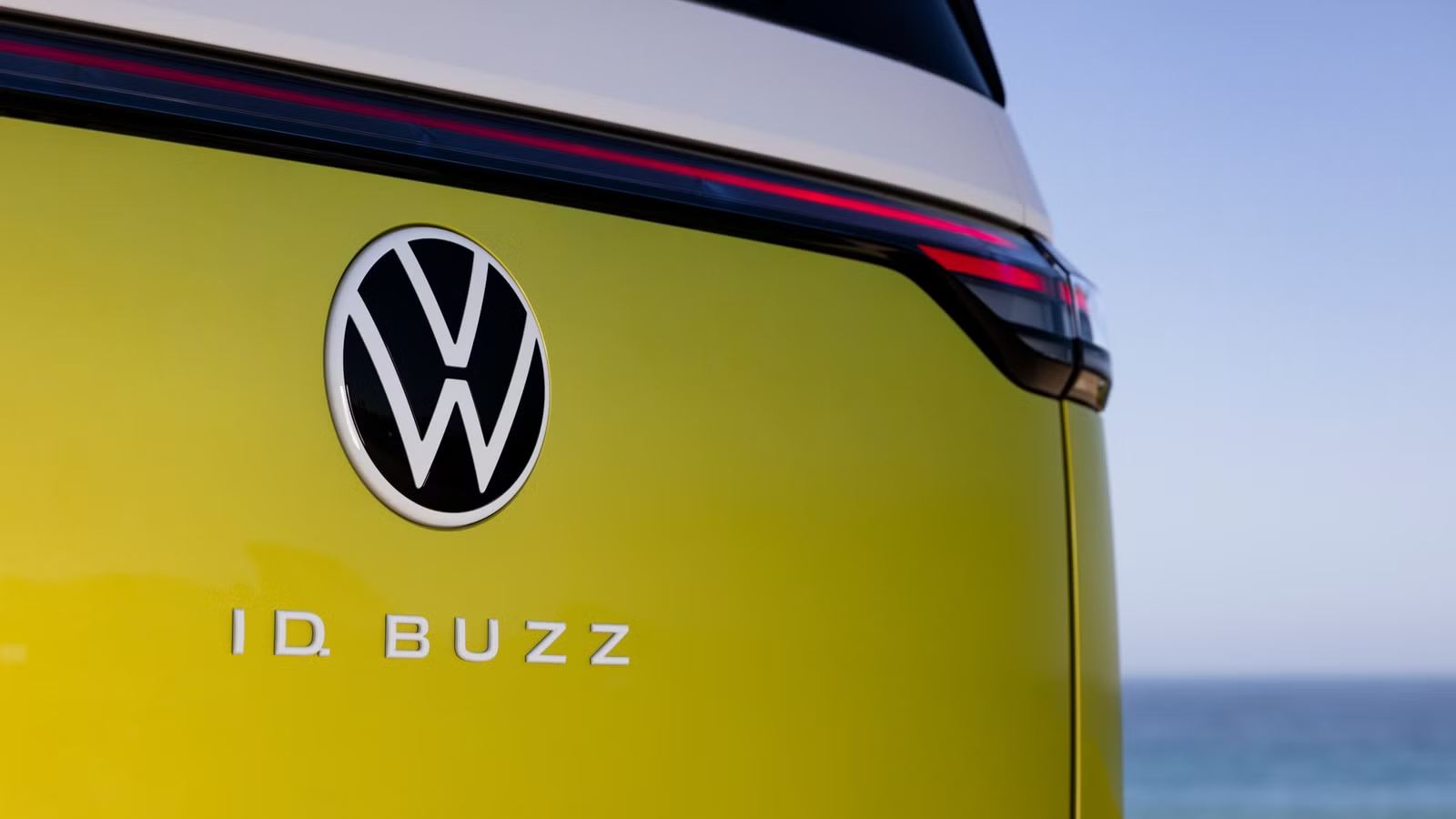
Volkswagen is preparing its most sweeping restructuring in company history. Following a supervisory board meeting on Thursday, July 9, the automaker confirmed it will gradually cut its model lineup by up to half and reduce annual production capacity from 10 million vehicles to nine million — moves that sources say could ultimately eliminate around 100,000 jobs.

The announcement landed against a backdrop of worker protests at multiple VW sites, with hundreds of employees in Wolfsburg blowing whistles and marching under union flags. CEO Oliver Blume put it plainly: “The global situation has continued to deteriorate over the past twelve months. That is why we are acting now.”
What Volkswagen Actually Confirmed — And What It Didn’t

The supervisory board meeting produced a clear headline on the product side: VW’s lineup will be trimmed to focus on what the company calls the most attractive market segments, and so-called offering complexity — the number of equipment options available across models — will be cut by up to 75%. That is a significant simplification for a group that has long competed across virtually every segment through brands including Audi and Porsche.
On the harder questions — which plants close, how many jobs go — Volkswagen stayed quiet. Sources cited by Reuters say Blume is weighing the closure of four German factories: Hanover, Emden, Zwickau, and Audi’s Neckarsulm site. The job-cut figure being discussed, roughly 100,000, would be approximately double the number previously planned. But the company made no official statement on either figure at Thursday’s meeting, a silence that frustrated workers, analysts, and investors alike.
“Not a word about production, not a word about employment,” said German automotive analyst Ferdinand Dudenhoeffer. “One could also say that uncertainty remains — which is not good for customers, employees, and investors.”
The Pressure Building on VW From Every Direction

Volkswagen’s profit margins have been cut roughly in half between 2021 and 2025, squeezed by a combination of high domestic labor and energy costs, rising Chinese competition, tightening regulation, and U.S. import tariffs. For a company founded 89 years ago and long regarded as a pillar of German industrial strength, the scale of the crisis is without precedent.
Capacity data underscores the problem. Mobility Global figures seen by Reuters project VW’s German car plants will run at just 81% of standard capacity in 2026 — and that figure is expected to slide further, to 73%, by the end of the decade. Zwickau, one of the four plants reportedly on the closure list, is forecast to drop from 88% utilization in 2026 to just 42% by 2030.
Blume is also navigating pressure from the Porsche and Piech owner families, whose core investments have shed tens of billions of euros in market value in recent years. Volkswagen’s share price has fallen more than 50% over the last three years.
Workers Push Back Hard as a Friday Deadline Looms

The IG Metall union reported roughly 400 demonstrators in Wolfsburg on Thursday, with union representative Thorsten Groeger warning the company risked a “major conflict” with its workforce. Daniela Cavallo, head of the company’s works council, said employees were not responsible for the sector’s troubles and that “great fear and deep uncertainty” were now spreading through VW’s factories and offices.
The works council issued Blume a Friday deadline to address speculation around job cuts and plant closures directly, threatening further extraordinary staff meetings in the months ahead if he fails to respond. It is a tense standoff: Volkswagen faced mass strikes as recently as December 2024, though a current agreement prevents industrial action while existing work contracts remain in force. Under Blume’s previous restructuring deal, unions extracted a commitment from management to avoid German plant closures — a promise that now appears increasingly difficult to honor.
The company has been exploring alternative uses for underutilized sites, including a search for a defense-sector partner for its Osnabrueck factory and the possibility of building China-market models on German soil. Whether those efforts can absorb the scale of overcapacity VW is now confronting remains an open question.
For enthusiasts, the lineup cuts are the detail worth watching. A VW Group that concentrates on fewer, higher-margin segments will inevitably make hard choices about which nameplates survive — and that math affects everything from the next Golf R to future Audi performance variants. The specifics are still coming.
Source: Reuters

Related posts



Latest Post


No Comments