
V-Twin Cruisers That Don’t Need Huge Engines To Be Fun
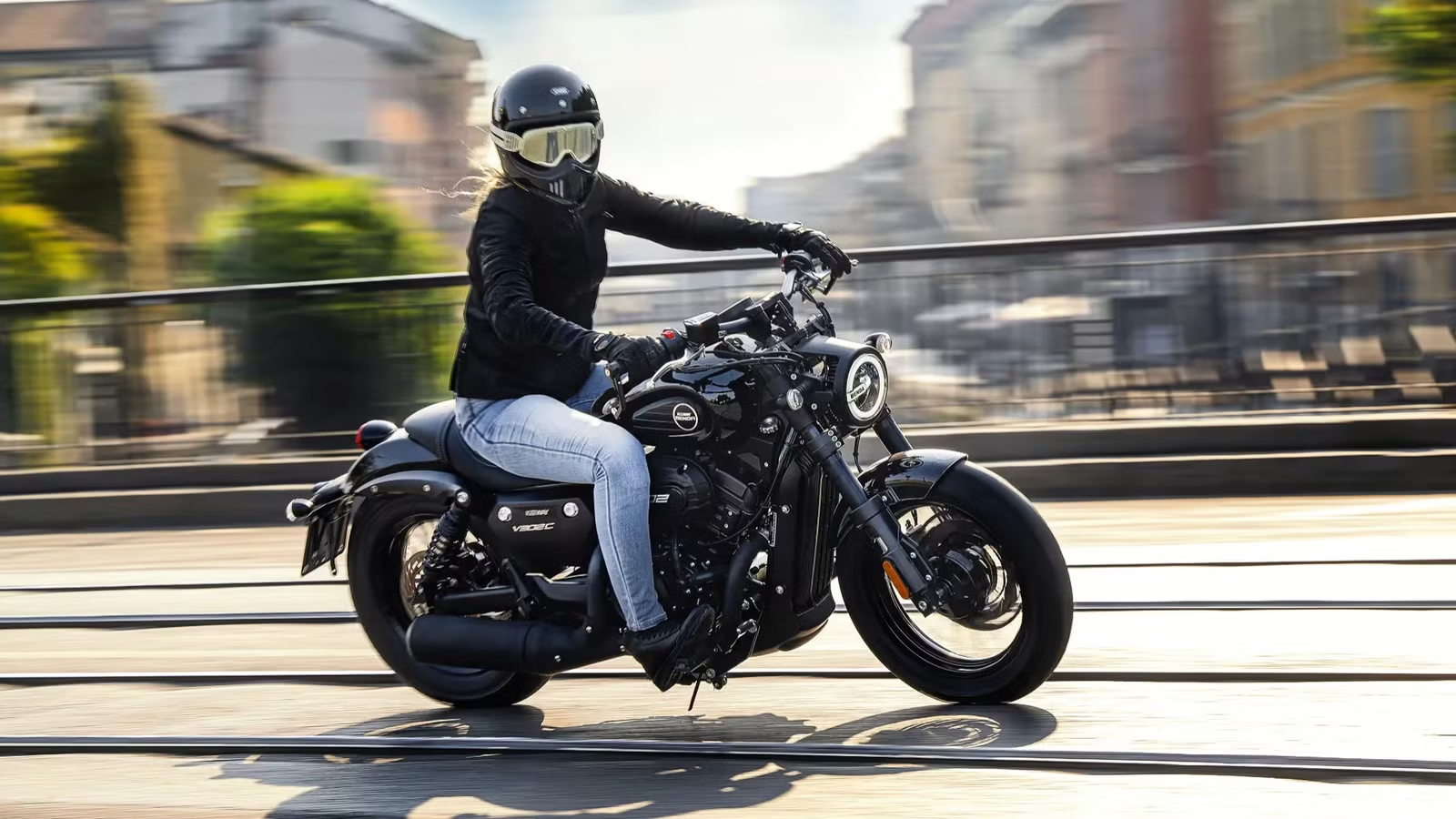
When it comes to V-twin cruisers, bigger engines are often treated as the quickest path to more fun. But displacement is only one part of the equation. Weight, torque, chassis balance, and how much of the engine’s performance a rider can actually use can matter just as much, and sometimes more. The motorcycles that follow make the case in very different ways, from lightweight machines that turn agility into entertainment to larger cruisers that prove you don’t need enormous displacement to enjoy a satisfying twist of the throttle.
Yamaha V Star 250
Displacement: 249 cc

The Yamaha V Star 250 makes perhaps the purest argument on this list: You don’t need much displacement to have fun on a V-twin cruiser. Its air-cooled 249 cc V-twin isn’t going to win a horsepower contest, but that’s beside the point. With only 324 pounds to move, the little Yamaha can make modest performance feel surprisingly lively, especially when the road starts twisting. You can use more of what the engine has without constantly riding into the edges of its capability.

The V Star’s narrow chassis, low 27-inch seat, and five-speed transmission reinforce that playful character. It is easy to maneuver, quick to change direction, and light enough that the motorcycle itself becomes part of the fun. At $4,799, the V Star 250 also makes a compelling case for spending less money and getting more than enough motorcycle to put a grin on your face.
QJMotor SRV300
Displacement: 296 cc


The QJMotor SRV300 takes the small-cruiser formula in a more modern direction without losing the V-twin character that makes these motorcycles so entertaining. Its 296 cc liquid-cooled V-twin produces 30.3 horsepower, which doesn’t sound like much until you consider that the bike weighs just 359 pounds. That gives the SRV300 a useful power-to-weight ratio, with enough performance to make winding roads more interesting without requiring a huge engine.

The lightweight chassis is a big part of the fun. The SRV300 uses a six-speed transmission, belt drive, inverted fork, and standard ABS, while its 27.5-inch seat keeps the motorcycle compact without making it feel toy-like. At $4,999, it delivers a surprisingly well-equipped package for a motorcycle whose biggest selling point is simply how much fun you can have without much engine.
Benda Chinchilla 300
Displacement: 298 cc

The Benda Chinchilla 300 looks like it should have a much larger engine tucked between its frame rails. Instead, it packs a 298 cc liquid-cooled V-twin producing 30 horsepower, and that mismatch is part of what makes it so much fun. The long, low profile, chunky tires, and stretched-out stance give it genuine cruiser attitude, while its small engine keeps the motorcycle from becoming cumbersome.

That combination makes the Chinchilla 300 a good reminder that cruiser fun isn’t measured in cubic centimeters. Its six-speed transmission, belt drive, and 27.2-inch seat make the most of the little V-twin, while the roughly 386-pound curb weight gives it some presence without burying the engine in weight. At $4,999, it delivers the look and character of a much bigger cruiser. The larger Chinchilla 500 uses a 475.6 cc V-twin and the same basic formula, but the 300 makes the stronger case for our premise.
Honda Shadow Phantom
Displacement: 745 cc

The Honda Shadow Phantom proves that you can step into a full-size cruiser without stepping into full-size engine territory. Its 745 cc liquid-cooled V-twin produces 44.9 pound-feet of torque, giving the Phantom enough low-end pull to feel substantial without making the motorcycle feel overpowered. At 543 pounds ready to ride, it has the physical presence many riders expect from a cruiser, but it remains considerably less imposing than a heavyweight machine.

That balance is where the fun comes from. The Phantom’s low seat, relatively compact dimensions, and 19-inch front wheel give it a planted feel without turning every corner into an exercise in managing mass. It is proof that a cruiser doesn’t need huge torque numbers to be satisfying when the engine, gearing, and chassis are working together. With a 2025 MSRP of $8,699 in the 2026 lineup, the Shadow Phantom delivers a lot of traditional cruiser experience without a traditional big-cruiser engine.
Suzuki Boulevard C50
Displacement: 805 cc

The Suzuki Boulevard C50 takes a different route to fun. Its 805 cc liquid-cooled V-twin makes 50 pound-feet of torque, and that low-end grunt gives the C50 enough muscle to make rolling on the throttle satisfying without turning every ride into a contest with the speedometer. The engine has the relaxed pulse and response that make a V-twin cruiser enjoyable, while the bike’s low-slung proportions give it the presence of something considerably larger.

The C50’s appeal is that it doesn’t ask the rider to work hard for the good stuff. Twist the throttle, feel the V-twin dig in, and settle into the rhythm of the road. That makes it fun at speeds riders can actually use, whether the road is winding through the countryside or opening up for a long sweep. At $9,299 for the 2025 model carried into the 2026 lineup, the C50 proves that old-school cruiser enjoyment doesn’t require massive engine displacement.
Moto Guzzi V7 Sport
Displacement: 853 cc

The Moto Guzzi V7 Sport proves that fun can come from character as much as horsepower. Its 853 cc V-twin produces 67 horsepower and 58 pound-feet of torque, but the numbers don’t tell the whole story. The transverse engine layout, shaft drive, and distinctive V7 chassis give it a mechanical personality that is difficult to duplicate with a conventional cruiser. It feels like a motorcycle with something to say rather than simply something to transport you.

The Sport backs up that character with a chassis built to encourage spirited riding. An inverted fork, dual front brake discs, traction control, and a Sport riding mode give the V7 more appetite for corners than its classic styling might suggest. At $10,990, it isn’t inexpensive, but it earns that price with an 853 cc V-twin that delivers entertainment without relying on brute force. Moto Guzzi also offers Stone and Special versions, but the Sport’s performance-focused chassis makes it the better fit here.
Kawasaki Vulcan 900 Classic
Displacement: 903 cc

The Kawasaki Vulcan 900 Classic proves that a cruiser can feel substantial without carrying a huge engine. Its 903 cc liquid-cooled V-twin produces 58 pound-feet of torque, giving the Vulcan enough grunt to make acceleration satisfying without requiring the rider to chase the tachometer. The low-slung chassis, floorboards, wide rear tire, and generous proportions give it the visual and physical presence many riders want from a cruiser.

That combination makes the Vulcan fun in a different way from the smaller bikes here. It has enough torque to settle into a relaxed rhythm, yet there is still plenty of throttle to use when an open stretch of road invites it. Kawasaki also offers the Vulcan 900 Custom and Classic LT with the same 903 cc V-twin, but the Classic’s traditional proportions make it the clearest expression of the formula. At $9,599, it delivers big-cruiser character without big-cruiser displacement.
Yamaha Bolt R-Spec
Displacement: 942 cc

The Yamaha Bolt R-Spec shows how much fun can be packed into a relatively compact V-twin cruiser. Its 942 cc air-cooled V-twin produces 54 pound-feet of torque, but the number matters less than the way that torque works with the Bolt’s stripped-down 542-pound chassis. There isn’t much motorcycle between the rider and the engine, which gives the Bolt a direct, mechanical feel that suits riders who would rather twist the throttle than admire a spec sheet.

The R-Spec’s low seat, mid-mounted controls, and relatively short wheelbase make it feel more willing to play than its displacement suggests. It isn’t a heavyweight cruiser with a smaller engine; it’s a compact motorcycle built around a V-twin with enough muscle to make every roll-on satisfying. At $8,999, the Bolt R-Spec shows that plenty of attitude can come without the bulk that often accompanies a much larger cruiser engine.
Harley-Davidson Nightster
Displacement: 975 cc

The Harley-Davidson Nightster is proof that you don’t need a massive V-twin to get serious performance. Its liquid-cooled 975 cc Revolution Max 975T produces 91 horsepower and 72 pound-feet of torque, and it has only 481 pounds to move. That combination gives the Nightster a very different personality from a traditional big-inch Harley. Roll on the throttle, and the engine responds with an urgency that makes the motorcycle feel considerably more athletic than its displacement suggests.

The Nightster’s low center of gravity and 27.1-inch seat height help keep that performance manageable, while selectable ride modes let the rider choose how aggressively the engine responds. It also carries the familiar Sportster silhouette without the weight and bulk associated with many larger Harleys. At $9,999, the Nightster makes a strong case that fun comes from the relationship between an engine and the motorcycle around it, not simply from adding more cubic centimeters.
Indian Sport Scout Sixty
Displacement: 999 cc

The Indian Sport Scout Sixty brings the argument right up against the 1,000 cc ceiling without crossing it. Its 999 cc liquid-cooled V-twin produces 85 horsepower and 65 pound-feet of torque, giving this Scout enough muscle to make the throttle genuinely entertaining. More importantly, Indian doesn’t surround that engine with heavyweight hardware. The Sport Scout Sixty combines its V-twin with a 19-inch front wheel, mid-mounted controls, and a quarter fairing, creating a cruiser that encourages the rider to use its performance rather than simply admire it.

That sporting intent makes the Sport Scout Sixty a fitting choice here. Indian also offers Bobber and Classic forms with the same 999 cc engine, but the Sport makes the strongest case for extracting fun from modest displacement. At $10,499, it demonstrates just how much performance and personality can come from a V-twin that hasn’t reached four digits in displacement.
Source: Yamaha, Harley-Davidson, QJMotor, Benda, Kawasaki, Suzuki, Honda, Moto Guzzi, Indian

Related posts


Latest Post


No Comments