
Underrated Ducati-Badged Cruiser Outran Japanese And American Bikes, Then Bombed On Looks And Price
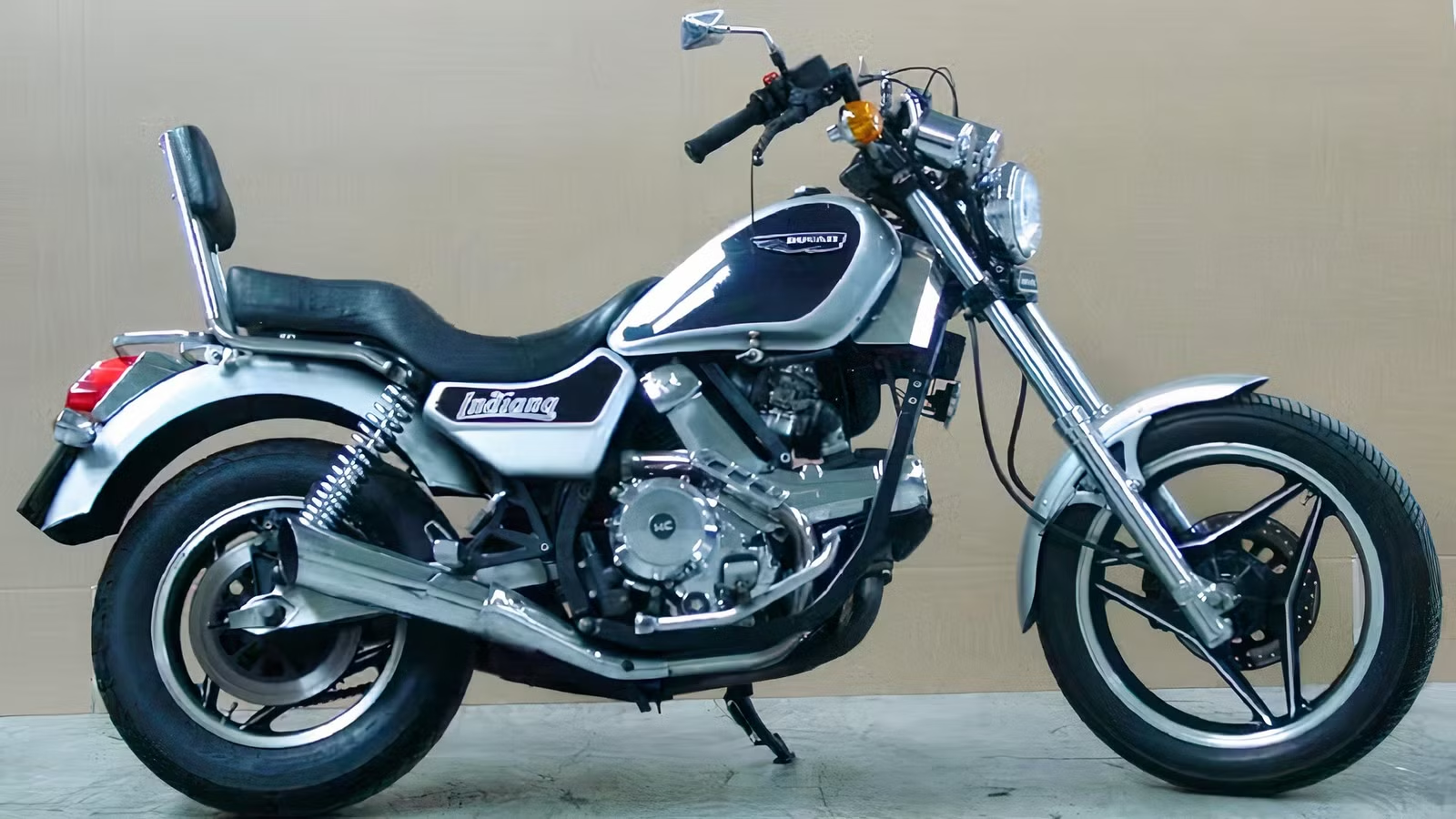
Cruisers have never been entirely about outright performance. For decades, their primary attraction has been the comfortable riding position, distinctive curvy styling, and engines with relaxed character that demand minimal effort from the rider. Americans understood this particularly well, while the Japanese had an independent idea of what a cruiser should be. But, what happens when an Italian decides to challenge them both? During the 1980s, one Italian motorcycle manufacturer attempted to cut a piece into the American cruiser market. That too, with a machine that had much more performance than its looks.
When Italian Manufacturers Tried To Crack The American Cruiser Market

The 80s were an interesting time period for cruisers. The Harleys still remained one of the most recognizable names in America, but Japanese manufacturers were actively attracting buyers who wanted the cruiser experience without necessarily being in a constant relationship with maintenance.
Major Japanese manufacturers had motorcycles that were heavily inspired by the traditional American cruisers with low seats, relaxed ergonomics, plenty of chrome, and V-twin engines. But the Japanese weren’t the only ones paying attention, though. Italian manufacturers also wanted a share of this increasingly popular market. Moto Guzzi introduced the Florida, while Moto Morini developed the Excalibur. Both motorcycles approached the cruiser concept with distinctly Italian mechanical foundations, even if they looked American.
A Cruiser That Had The Performance To Challenge Its Rivals


This Italian cruiser had more bite than its rivals expected. Its racing-derived V-twin, inspired by the 1973 Ducati GP500 Armaroli, delivered serious performance, while its established Italian chassis gave it a sportier character. The larger-displacement version could run the quarter-mile in approximately 13.2 seconds, impressive for the 1980s. However, despite its strong acceleration and braking, the bike had some notable shortcomings. Its failure wasn’t down to poor engineering. The real problem was far more complicated.
Meet The Ducati Indiana: A Ducati That Wasn’t Entirely A Ducati

The motorcycle in question was the Ducati Indiana. It is one of the strangest machines ever to wear the famous Italian badge. And there’s an important distinction to make here. Despite the Ducati name on its fuel tank, the Indiana wasn’t developed independently by Ducati in Bologna. It was a Cagiva project—CAstaiglioni GIovanni VArese.
Cagiva acquired Ducati in 1985, taking the established Italian performance brand under the control of the Castiglioni family. The Indiana emerged during this period, making its production debut in 1986. Designed and built in Varese, the motorcycle used a frame closely related to the Cagiva Elefant, an adventure bike that’s much further from America’s cruiser concept. Its square-section tubular chassis was adapted for the new application, complete with cruiser-oriented geometry and a steering-head angle approaching 33 degrees.
The Indiana’s production strategy made commercial sense on paper. But it also created an awkward question. Was this new Ducati supposed to attract a traditional cruiser audience or Ducati fans? As things turned out, it struggled to convince either group.
The Ducati Engine Was Indiana’s Biggest Strength

Fortunately, the Indiana had considerably more going for it than an unusual badge and an adapted chassis. Its greatest strength was undoubtedly its characterful motor. The Indiana range had 350cc, 650cc, and 750cc variants, with the largest model getting a 748cc, air-cooled, desmodromic L-twin motor. The Ducati Indiana 750 produced approximately 53–55 horsepower. That might not sound particularly impressive right now, but in the 80s, it was impressive.
Braking equipment was similarly impressive. Indiana featured Brembo brakes, with twin 280 mm front discs and four-piston calipers. Marzocchi suspension components further distinguished it from some of its softer-sprung cruiser rivals. In other words, it has genuinely impressive hardware beneath its cruiser shell.
The Styling And Ergonomics Let It Down

There’s nothing wrong with taking inspiration from a tested formula. Some of the most successful motorcycles have done exactly that. However, Indiana’s styling proved particularly divisive. It had a stepped seat, raised handlebars, a small fuel tank, an elongated front end, and plenty of chrome. Its proportions were distinctly American-inspired, but the overall design lacked the visual identity that made cruisers appealing.
And the styling wasn’t its only problem. Its unusual riding position was criticized. Despite having a seat height of just 31 inches (approx. 787 mm), the handlebars, seat, and foot pegs didn’t make it particularly comfortable. Indiana placed its rider in an awkward position between a conventional roadster and a laid-back cruiser.
A $4,295 Price Tag And An Identity Crisis

Even if buyers overlooked the Indiana’s unconventional styling and ergonomics, there was another obstacle. The price tag. The Indiana carried a reported price tag of $4,295 in 1987. That was a substantial amount of money for a motorcycle entering a segment already crowded by established manufacturers.
For Ducati enthusiasts, Indiana presented an entirely different problem. The engine might have been familiar, but the riding position, styling, and overall concept were far away from the sporty motorcycles that had helped establish Ducati’s reputation. The result was a motorcycle that didn’t fit comfortably into either market.
And hence, Indiana never achieved the commercial success Cagiva had hoped for.
Why It Deserved Better

Looking back, the Ducati Indiana is an interesting reminder that a motorcycle can be mechanically quite capable but still fail in the market. The Pantah-derived L-twin offered genuine character and performance; its braking hardware was impressive for the period, and its acceleration could challenge established cruisers.
However, Indiana also showed how important styling, ergonomics, pricing, and brand identity can be. It simply arrived with the wrong qualities for the buyers it was supposed to attract. Even if you build an exciting motorcycle, it won’t tell you whether buyers will like it or not. Sometimes, building a good motorcycle, and building a desirable one are very different things.

Related posts

Latest Post


No Comments