
Toyota’s $25,000 SUV Still Offers Something The New RAV4 Doesn’t
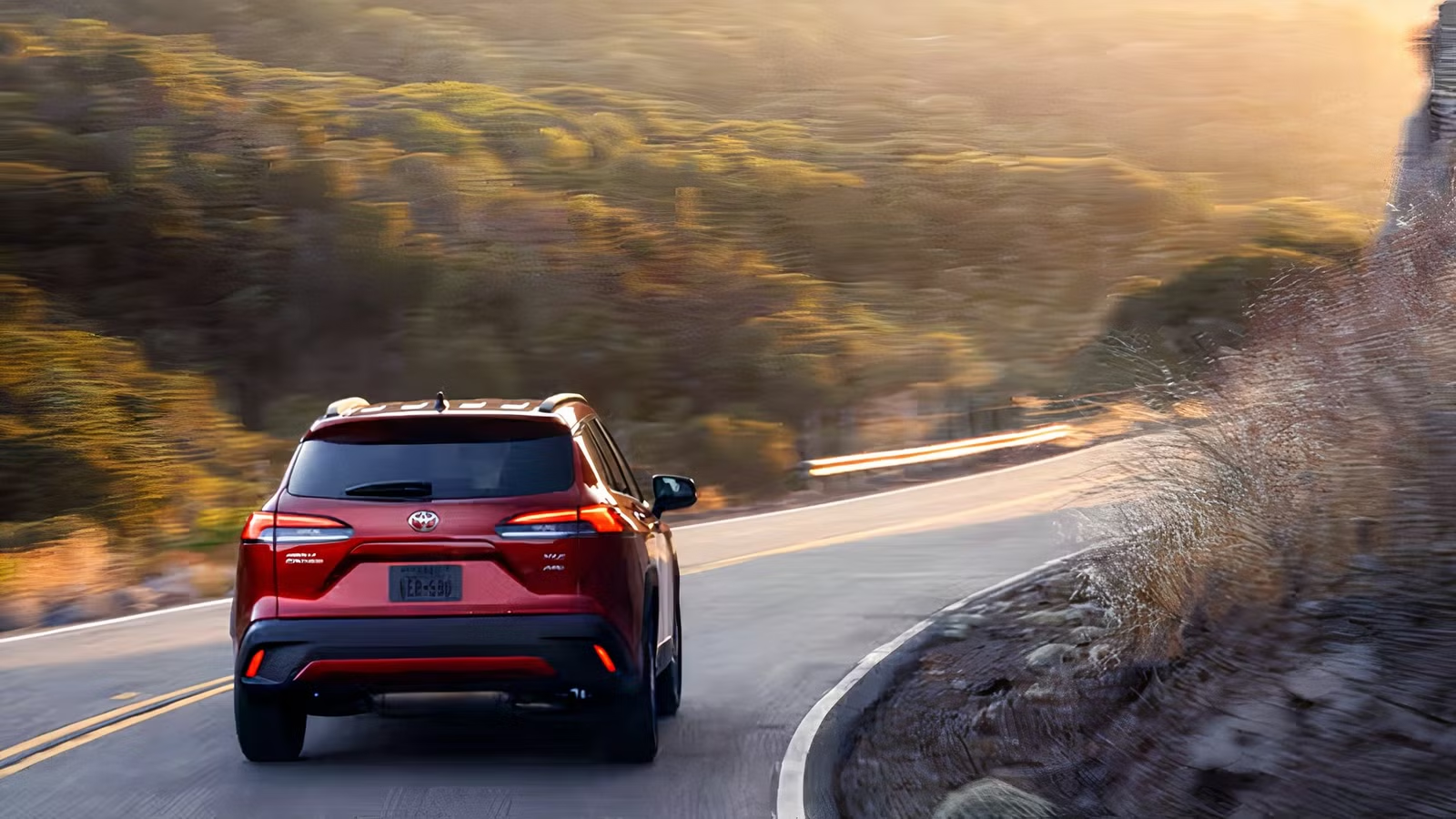
Toyota’s best-selling SUV just went all-in on electrification. The redesigned RAV4 now comes only as a hybrid or plug-in hybrid, and the entry price has moved up with it. Yet one Toyota SUV in the showroom still starts around $25,000 and burns nothing but gasoline. It is smaller, slower, and far less glamorous than its big brother, and that is precisely why some shoppers will care. As the family’s headline model leaves conventional engines behind, this quieter sibling suddenly looks like Toyota’s clearest answer for budget-minded shoppers who still want a gas-only engine. Here is what it offers, and who should buy it.
The Toyota Corolla Cross Keeps Gasoline SUV Ownership Within Reach At $25,335

Toyota priced the 2026 Corolla Cross L at $25,335, a figure that excludes the $1,595 destination and handling fee. Add that and the sticker lands near $26,930, still well below what most new compact SUVs ask. The base car is front-wheel drive with a 2.0-liter four-cylinder making 169 horsepower, rated at up to 32 mpg combined. AWD versions slip slightly to 30 mpg.
The cheapest Corolla Cross, however, is not stripped bare. It offers, as standard, Toyota Safety Sense 3.0, nine airbags, an eight-inch touchscreen with wireless Apple CarPlay and Android Auto, and a seven-inch digital gauge cluster. Higher trims add a 10.5-inch display, heated seats, and an available power liftgate, but the base model already covers the modern basics.
Toyota’s Hybrid-Only RAV4 Leaves Conventional Gasoline Buyers With Fewer Choices

The redesigned RAV4 has no gas-only option left. Every 2026 model is a hybrid or plug-in hybrid, and Toyota’s pricing starts at $31,900 for the front-drive hybrid LE, before destination. With the $1,450 freight charge, Edmunds lists that car at $33,350. InsideEVs notes the new base costs about $2,100 more than the old gas-only entry model.
Comparing the two Toyotas on the same basis, the gap is about $6,420. $33,350 for the RAV4 LE against $26,930 for the Corolla Cross L. In return, the RAV4 delivers up to an estimated 43 mpg combined with front-wheel drive and 226 horsepower. It is the better vehicle on paper. It is also a much bigger commitment when it comes to long-term ownership costs.

Rivals offer little relief; for example, the base Chevrolet Equinox LT at $30,795 delivered and the Hyundai Tucson Hybrid SE at $32,550. The RAV4’s strength is a hybrid system at a price near gas competitors. The catch is that anyone who wants a cheap gas SUV must now shop a class lower.
The Corolla Cross Makes A Stronger Case For Buyers Who Prefer A Simpler Powertrain

The gas Corolla Cross uses a tried-and-tested 2.0-liter engine and a continuously variable transmission with a physical first gear, so it launches more like a geared automatic. There is no battery pack, no electric motors and no hybrid-specific hardware to think about replacing once the warranty lapses.
The real saving is the entry price. Within the Corolla Cross family, the 2026 hybrid started at $31,390 against $26,930 for the gas L, a $4,460 premium. Assuming 12,000 miles a year and $3.50 a gallon, the hybrid’s 42 mpg versus the gas model’s 32 saves $310 annually. Recouping the 2026 premium that way takes about 14 years.

Charging is a non-issue on a standard hybrid, but the RAV4’s plug-in variants need a plug to deliver their promised efficiency and cost far more, topping out at $49,950 for the GR Sport. A gas car asks nothing of a garage or an apartment complex. Toyota covers Corolla Cross Hybrid components for eight years or 100,000 miles and the battery for 10 years or 150,000, so fear of hybrid failure is overblown but battery replacement costs outside of the warranty are real. The simpler powertrain wins on cost of entry and long-term ownership, not on reliability horror stories. Both versions include ToyotaCare, covering scheduled maintenance for two years or 25,000 miles.

Picture a young family with a child in a car seat, a stroller and a weekly grocery run, shopping on a tight monthly payment. They need a rear hatch and easy parking, not a three-row hauler or a 300-horsepower plug-in.
The Corolla Cross suits that brief perfectly. At 176.1 inches long, it is about five inches shorter than the new RAV4’s 180.9, and its 35.4-foot turning diameter takes the stress out of tight parking garages. KBB lists 24.3 cubic feet of cargo space, and the standard 60/40-split rear seats fold to swallow bigger loads. An available power liftgate helps when hands are full.

The trade-offs are honest ones, though. Rear legroom is a modest 32.0 inches, so adults in the back will notice, and 169 horsepower is more adequate than exciting. Towing tops out at 1,500 pounds. For commuting, school runs, and weekend errands, none of that is a deal-breaker, and the buyer keeps thousands of dollars a bigger vehicle would take.
Why Toyota’s Affordable Crossover Could Become More Important As The RAV4 Goes Hybrid-Only

Toyota’s SUV lineup now reads as a clear split. The RAV4 carries the brand’s electrified ambitions, while the Corolla Cross keeps a conventional engine available at the bottom of the range. A hybrid Corolla Cross still exists, but its 2027 entry price of $31,415 sits above every gas trim except the top AWD XLE at $31,910. For shoppers who want to stay under $30,000, gas is the lane Toyota left open for budget-conscious buyers.
That makes the Corolla Cross more important by default. Buyers priced out of the RAV4 have fewer places to go inside the Toyota family, and the old gas RAV4 is no longer there to catch them. Whether Toyota keeps this option open for the long term is an open question, so shoppers who value this formula should not assume they have unlimited time. For now, it is the cleanest answer to a simple question: what is the cheapest way into a new Toyota SUV that needs nothing but a fuel pump? The gas-only Corolla Cross does well to fill that gap at a reasonable price.
Sources: Toyota U.S., Edmunds & Kelley Blue Book

Related posts



Latest Post


No Comments