
The Three-Row Japanese Hybrid SUV With The Highest Fuel Cost Savings
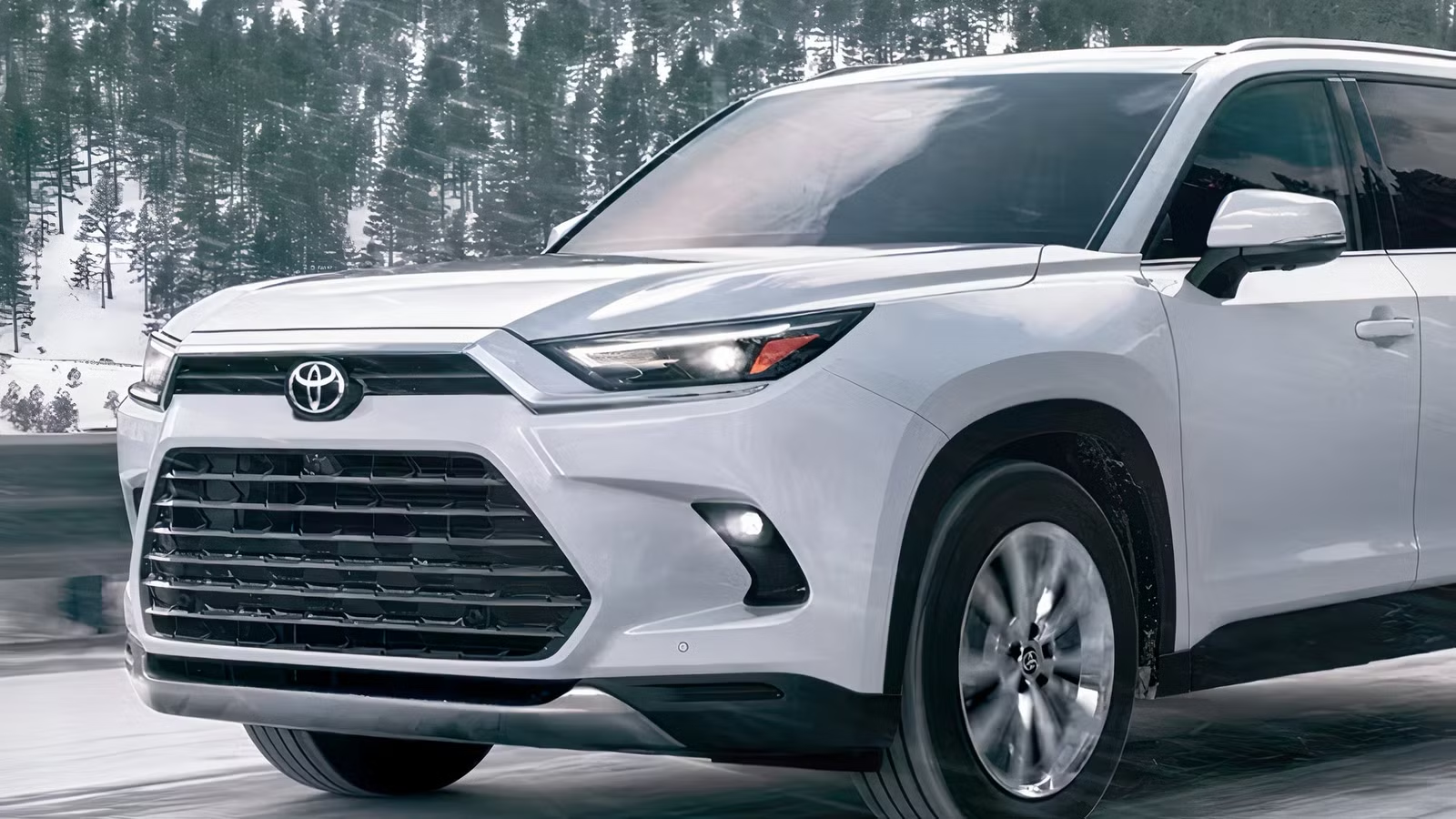
Fuel costs have a way of creeping up on families who drive a lot — and families with three-row SUVs tend to drive a lot. Whether it’s the daily school run, a weekend road trip, or a marathon errand day that somehow involves every member of the household, a big SUV earns its keep. The question is whether it has to drain your wallet at every fill-up. Hybrid technology offers a compelling answer, and in the three-row segment, the options from Japanese automakers are surprisingly narrow — but one stands clearly above the rest.

Early hybrids were compact models, maximizing economy and mostly glossing over utility. But as technology improved, automakers created larger hybrid offerings, expanding into mid-size sedans and increasingly larger SUVs, allowing those traditionally thirsty vehicles to travel farther on a tank of gasoline.
And although the hybrid SUV market has grown over the past two decades, most of that advancement has come in compact crossovers, with only a handful of three-row hybrid SUVs available — four of them are Japanese, all from the same company, with one standing out for its combination of space and fuel-cost savings.
The 2026 Toyota Grand Highlander Hybrid Is A Frugal Sipper
The EPA Estimates Drivers Will Save $2,500 Over 5 Years

The 2026 Toyota Grand Highlander Hybrid is a spacious three-row SUV designed for families who need room without sacrificing efficiency. Offering more passenger and cargo space than the standard Highlander, the Grand Highlander Hybrid blends Toyota’s proven hybrid technology with practicality and long-range efficiency.
According to EPA formulas, the Toyota Grand Highlander Hybrid spends about $1,800 per year on gasoline, saving owners $500 annually compared to the fuel costs of the average new ICE vehicle. Those savings compound over time, making the Grand Highlander Hybrid a more cost-effective choice for long-term ownership than a comparable non-hybrid model.
How The Toyota Grand Highlander Is Ideal for Families
For some families, a spacious SUV isn’t just about comfort — it’s a necessity. Daily life involves juggling school drop-offs, grocery runs, and weekend activities, all of which demand a blend of passenger space and cargo capacity. A three-row SUV like the Toyota Grand Highlander ensures that kids, car seats, sports gear, and shopping bags all fit.
Larger SUVs traditionally come with higher fuel costs, but hybrid technology has changed that equation. By pairing a fuel-efficient gas engine with electric power, hybrid SUVs deliver better mileage without giving up size or capability — offering families the best of both worlds: roomy, versatile transportation and lower running costs.
The Growth Of The Toyota Grand Highlander

Japanese automakers have long been known for producing smaller, more fuel-efficient vehicles, with no better examples than the Honda CR-V and Toyota RAV4 compact SUVs of the mid-1990s, and the Honda Insight and Toyota Prius hybrids of 2000. As global demand for larger SUVs grew, Japanese brands — particularly Toyota — expanded their lineups accordingly.
Toyota experimented with third-row seating in several models, including the third-generation RAV4 (2005–2011) and the Lexus RX, before settling on the Toyota Highlander (2004) and building on that foundation two decades later to create the longer and roomier Grand Highlander. Toyota also offers three rows of seats in the Sequoia and the Lexus TX (more on those later).
The 2026 Toyota Grand Highlander Hybrid Is One Step Up On The Highlander Hybrid
The Toyota Grand Highlander was developed for the 2023 model year as a response to growing demand for three-row SUVs that offered more space than the standard Highlander, without stepping up to a full-size truck-based SUV like the Toyota Sequoia. While the standard Highlander had been a popular choice for years, its third row was frequently criticized for being practical only for smaller occupants.
Designed to compete with larger three-row SUVs like the Dodge Durango and Volkswagen Atlas, the Grand Highlander maintains a more manageable footprint while delivering improved third-row comfort and expanded cargo space over its Highlander sibling. By stretching the Highlander Hybrid’s platform, Toyota created a fuel-efficient three-row SUV that fills a genuine gap in the market.

The Toyota Grand Highlander Hybrid offers significantly more passenger and cargo space than the standard Highlander Hybrid, despite sharing the same 2.5-liter hybrid powertrain (with the Grand Highlander also gaining access to the i-FORCE MAX system). The Grand Highlander is 6.5 inches longer, with a 4-inch increase in wheelbase, with most of that extra length translating into more usable space behind the middle seats.
The Toyota Sequoia is another of the only four Japanese three-row SUVs (all Toyotas) with a self-charging hybrid powertrain, but its size and performance come with trade-offs. Unlike the Highlander and Grand Highlander Hybrids, the Sequoia is a full-size, truck-based, body-on-frame SUV, making it less fuel-efficient — though it delivers the towing capacity some families require.
It Doesn’t Need Stump-Pulling Power
Toyota’s decision to build the Grand Highlander as an elongated version of the Highlander was driven by growing demand for larger three-row SUVs that balance space, efficiency, and practicality — a segment that had previously meant stepping up to bigger, more powerful, costlier, and less fuel-conscious options like the full-size Sequoia.
Although Toyota has more powerful hybrid powertrains — such as the i-FORCE MAX found in the Sequoia — it chose to power the lighter-weight Grand Highlander with the ubiquitous 2.5-liter four-cylinder to maximize efficiency, while keeping the vehicle dynamics close to those of the non-hybrid Grand Highlander. The Grand Highlander simply doesn’t need the Sequoia’s pulling power.
The 2026 Toyota Grand Highlander Hybrid features a 2.5-liter four-cylinder Atkinson-cycle powertrain, prioritizing fuel efficiency over raw power. While it delivers adequate performance for family driving, its primary advantages are lower fuel costs and long-term affordability.
Compared to the ICE Grand Highlander, which uses a turbocharged 2.4-liter engine (the same unit that powers the top-tier Grand Highlander Hybrid trim), the hybrid version offers considerably better mileage and exceptional long-term savings.
The 2025 Lexus TX offers both hybrid and plug-in hybrid (PHEV) powertrains, giving buyers a choice between efficiency and performance. While the PHEV provides an all-electric driving range that Lexus estimates at 33 miles, that capability doesn’t fully offset the higher purchase price — and research suggests many PHEV owners rarely plug their vehicles in regularly.
It Beats Out Family Members As The Best Fuel-Saving Three-Row Japanese Hybrid SUV

The Toyota Grand Highlander Hybrid stands out as the top choice among three-row, self-charging hybrid SUVs from a Japanese automaker. It delivers the same five-year fuel cost savings as the smaller Highlander Hybrid while offering substantially more interior space and versatility, making it an ideal option for families who want both room and running-cost efficiency.
It’s worth noting that there are only four models in the entire three-row, self-charging Japanese hybrid SUV segment, and they’re all Toyota-built — the Highlander Hybrid, Grand Highlander Hybrid, Sequoia Hybrid, and Lexus TX 500h. Other Japanese brands have embraced PHEVs, like Mitsubishi and Mazda, or focused on smaller self-charging hybrids, such as Honda and Subaru.
Self-charging hybrid SUVs will continue to serve as cost-effective alternatives to fully electric models for the foreseeable future, particularly for buyers who prioritize fuel efficiency without the commitment of a charging routine. For families who need the interior space to match, there is no better option from Japan than the Toyota Grand Highlander Hybrid.
Sources: Toyota, EPA

Related posts


Latest Post


No Comments