-
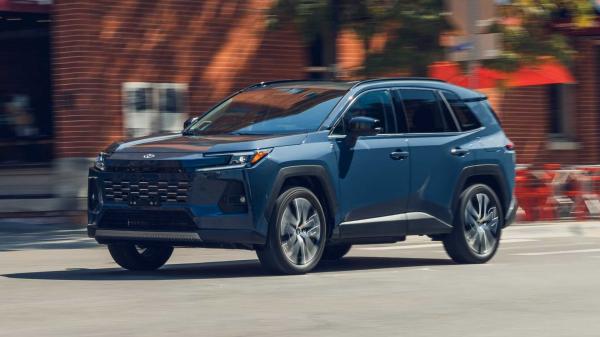
Dynamic 3/4 shot of 2026 Toyota RAV4 Hybrid AWD driving Toyota -
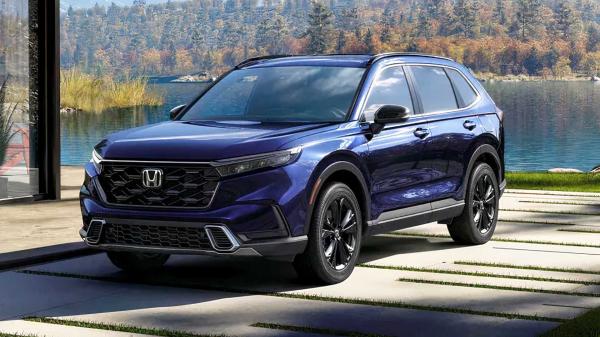
Front 3/4 shot of 2026 Honda CR-V Sport Touring Hybrid parked Honda

Toyota RAV4 Vs Honda CR-V: Which Used SUV Is The Better Buy?
12 minutes reading
Tuesday, 8 Sep 2026 15:01 0 33 autotech
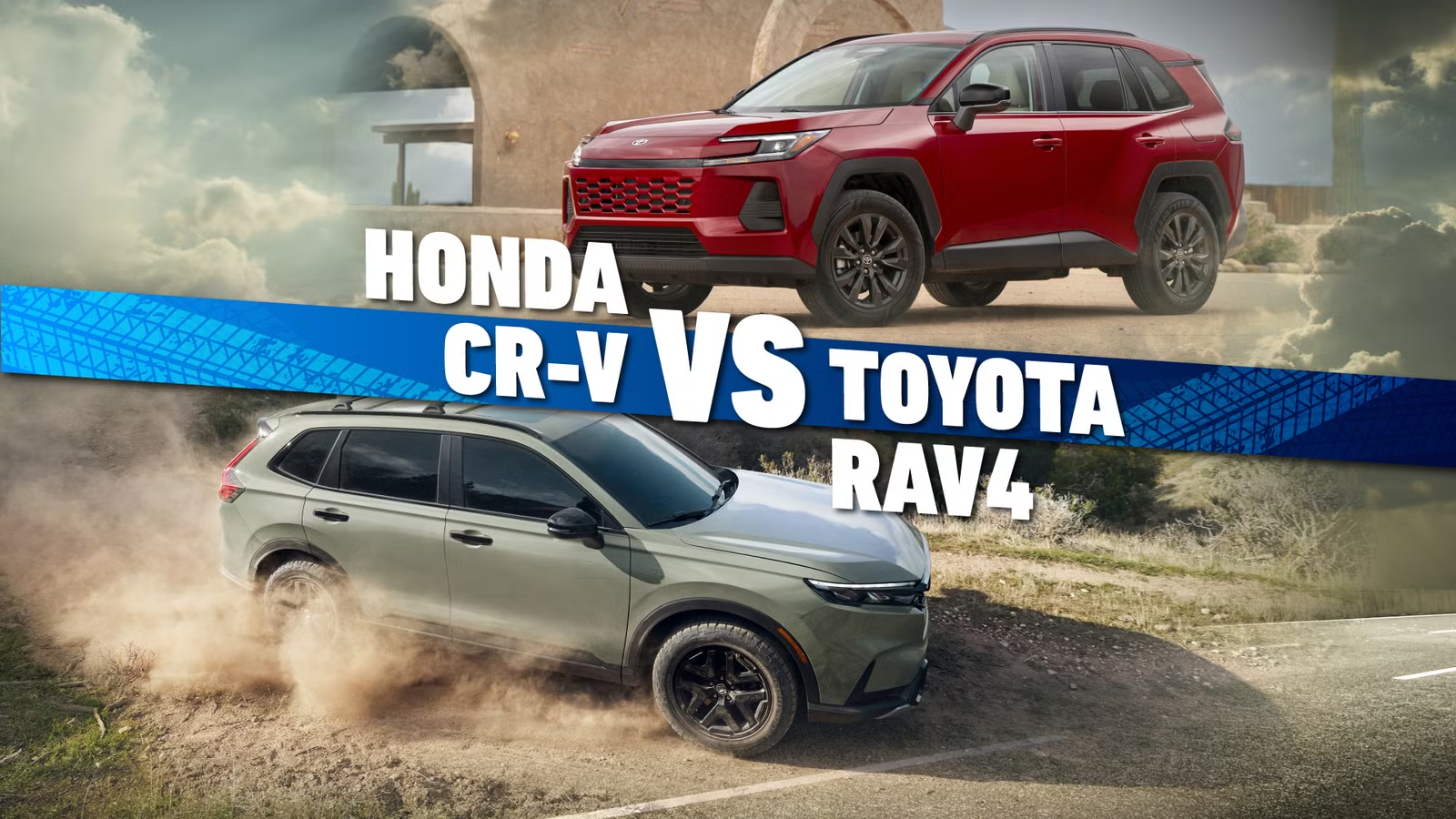
The Toyota RAV4 and Honda CR-V have spent decades fighting for the attention of SUV buyers, but neither has needed to shout particularly loudly to make its case. Both have become familiar sights on suburban driveways, school pickup lines, commuter lots, and road-trip parking lots because they offer essentially what many buyers want from a compact SUV: enough space for a family, reasonable running costs, good fuel economy, and a reputation for lasting a long time.

44 autotech
That reputation is particularly important when shopping in the used market. A new SUV comes with a warranty and the reassurance that nobody else has spent years behind the wheel. A used RAV4 or CR-V comes with history. That history can be excellent, or it can be a warning sign disguised as a bargain price.
So, which is better: the Toyota RAV4 or Honda CR-V? While there is no universal answer, there is a clear way to approach the decision. Reliability, practicality, ownership costs, and the condition of the individual vehicle all matter. And while these two SUVs occupy much the same space in the market, they have taken somewhat different routes to get there.
The RAV4 And CR-V Took Different Routes To The Same Destination

108 autotech
The Toyota RAV4 and Honda CR-V helped define the modern compact SUV long before every automaker seemed determined to offer one. Their basic formula was simple: take the useful dimensions and higher driving position of an SUV, make it easier to live with than a traditional truck-based 4×4, and package it into something that works equally well for weekday commuting and weekend errands.
The RAV4 has traditionally leaned into Toyota’s reputation for durability and dependable ownership. Over several generations, it has evolved from a relatively quirky compact utility vehicle into one of the most mainstream SUVs on the road. Modern RAV4s can be equipped with everything from conventional gasoline powertrains to highly efficient hybrid systems, while some versions add all-wheel drive and a more rugged appearance.
The Honda CR-V followed a similar evolutionary path, although its personality has generally been more focused on maximizing everyday usability. Honda has long emphasized clever interior packaging, passenger space, comfortable driving manners, and practicality. The CR-V has consequently become a favorite among families and buyers who want SUV versatility without moving into a larger, more expensive vehicle.
That distinction is useful when comparing the two as a used buy. The RAV4 often appeals to the buyer who thinks about long-term ownership first. It has a reputation for being the vehicle you buy, maintain, and keep for years. The CR-V, meanwhile, has built much of its reputation around being exceptionally easy to live with.
Of course, there is plenty of overlap. A RAV4 can make an excellent family vehicle, while a CR-V can rack up years of reliable service. Neither is a specialist off-roader, and neither is designed to be a sports car. Their real strength is being competent at almost everything.
That is precisely why the used RAV4 vs. CR-V debate is so interesting. These aren’t two radically different SUVs where one is obviously intended for a completely different buyer. They are competing interpretations of the same basic idea. And that makes reliability one of the most important places to start.
Which Used SUV Is More Reliable: RAV4 Or CR-V?
If you are buying a used SUV, reliability should probably be higher on your list than horsepower, touchscreen size, or whether one model has slightly more cargo room. A broken infotainment system is annoying. A neglected transmission is expensive. Both the RAV4 and CR-V have strong reputations for reliability, which is one of the reasons they remain so desirable on the used market. But that does not mean every RAV4 or CR-V is automatically a good buy. Model year, generation, powertrain, mileage, maintenance, accident history, and how the previous owner treated the vehicle can make an enormous difference.
So, is a RAV4 more reliable than a CR-V? The safest answer is that both can be extremely dependable when properly maintained, with Toyota enjoying a particularly strong reputation for long-term durability. The RAV4’s reputation is one reason used examples can command strong prices even when they have accumulated significant mileage. Honda has a similarly impressive history. A well-maintained CR-V can comfortably serve as a high-mileage daily driver, and its mechanical simplicity in certain generations has helped establish the model’s reputation as a sensible long-term purchase.
That makes the question less about which badge is inherently superior and more about which specific vehicle has been looked after better.
A 10-year-old RAV4 with a patchy service history should not automatically beat a 10-year-old CR-V with meticulous maintenance records. The Toyota nameplate doesn’t make years of neglect irrelevant. This is particularly important because reliability reputations can sometimes distort the used-car market. Buyers know that RAV4s and CR-Vs are reliable, so sellers can price them accordingly. That means you may encounter an older RAV4 selling for considerably more than another compact SUV simply because of the reputation attached to the name.
It also means buyers should resist assuming that a high price guarantees a good vehicle. Service records for both models are worth examining carefully. Look for evidence of regular oil changes, scheduled maintenance, fluid changes where applicable, and repairs that have already been completed. Check whether recalls were addressed and whether the vehicle has been involved in a significant accident.
Mileage matters, but it should not be viewed in isolation.
A 120,000-mile SUV that has spent its life on the highway and received regular maintenance could potentially be a better proposition than a 70,000-mile example that has been neglected. The same principle applies to both the RAV4 and CR-V. The hybrid question also deserves attention. Toyota’s hybrid technology has become a major part of the RAV4’s appeal, offering the possibility of impressive fuel economy without turning the SUV into a plug-in vehicle. For buyers considering a used RAV4 Hybrid, battery condition and the price of a replacement unit and the vehicle’s maintenance history should be part of the inspection process. Ultimately, there is no magic mileage number at which either SUV suddenly becomes unreliable. The better question is: how well has this particular RAV4 or CR-V been maintained? That mindset can save used-car shoppers from one of the biggest mistakes in the market: buying the reputation instead of buying the vehicle.
The CR-V Has The Practicality Advantage, But The RAV4 Fights Back
Reliability might get a buyer through the dealership door, but practicality is what they experience every day afterward. This is an area where the Honda CR-V has traditionally made a particularly strong case for itself. Honda has long been good at using interior space efficiently, and the CR-V’s cabin has generally prioritized passenger room and everyday versatility. For families, that can be more meaningful than a small difference in exterior dimensions. Rear-seat passengers benefit from a useful amount of space, while the cargo area offers up to 39.3 cu.ft. of storage capacity depending on the derivative. The latter figure is enough to accommodate the kind of stuff people actually carry in compact SUVs: groceries, luggage, sports equipment, strollers, and all the miscellaneous items that seem to multiply whenever a family leaves the house.
The RAV4 is hardly impractical, though. In fact, one of its strengths is that it manages to combine useful passenger and cargo space with a more rugged overall character. Depending on the generation and configuration, all-wheel drive can make it a more appealing choice for buyers who regularly deal with snow, rougher roads, gravel, or outdoor activities. Neither SUV should be mistaken for a serious off-road vehicle, but the RAV4’s available all-wheel-drive configurations and tougher styling can make it feel more adventurous.
There is also a difference in driving character.
The CR-V has generally favored comfort and ease of use. It is the sort of SUV that works well when the daily routine involves commuting, dropping kids off at school, running errands, and taking the occasional highway trip. Its appeal is not that it is exciting; it is that it rarely makes ordinary driving feel like a chore.
The RAV4 has become more distinctive over time. Depending on the generation and trim, it can feel more substantial and rugged, particularly in versions designed to emphasize the SUV’s adventurous side. That raises an important question: Which is bigger and more practical, the RAV4 or CR-V? The answer depends somewhat on the model year being compared, because both SUVs have grown and changed over the years. The RAV4 offers 37.8 cu.ft. of cargo space regardless of the variant, while the CR-V’s storage capacity varies across the range. The CR-V’s storage capacity is rated at 39.3 cu.ft. for the gas-powered model, while the hybrid variant decreases that figure to 36.3 cu.ft. and 34.7 cu.ft. for the range-topping Sport Touring model. In general, though, the CR-V has a reputation for making excellent use of its interior dimensions, while the RAV4 counters with a useful combination of cargo capacity and passenger room.
For a family that spends most of its time in town, the CR-V’s packaging may be the deciding factor. For a buyer who wants an SUV that feels a little more rugged and offers strong hybrid and all-wheel-drive options, the RAV4 can be more appealing. In other words, this isn’t really a question of which one is practical. They’re both practical. It’s a question of what kind of practicality you need.
RAV4 Vs CR-V: Which One Costs Less To Own?
The Honda CR-V generally has the lower entry price on the used market, but the Toyota RAV4 can make up some of that difference through its running costs. Edmunds currently estimates the used price of a clean 2021 RAV4 LE FWD at around $24,692 from a dealer, compared with $22,342 for a 2021 CR-V LX FWD. J.D. Power shows a similar pattern, with average prices paid of $24,036 for the RAV4 LE 2WD and $19,853 for the CR-V LX 2WD.
That higher purchase price doesn’t necessarily make the RAV4 more expensive to own, though. Edmunds’ five-year True Cost to Own estimates put a 2021 RAV4 XLE FWD at $38,333, compared with $39,354 for a 2021 CR-V EX AWD. The RAV4 also has slightly lower estimated fuel costs over that period, at $8,336 versus $8,921, while estimated repair costs are $2,269 versus $3,193 for the RAV4 and CR-V, respectively. Maintenance is almost identical, at $5,453 for the RAV4 and $5,472 for the CR-V.
Depreciation also deserves attention when buying used. Edmunds estimates roughly $11,950 in depreciation for the 2021 RAV4 XLE FWD in its five-year ownership calculation, compared with $12,203 for the 2021 CR-V EX AWD. That helps explain why the RAV4’s higher purchase price doesn’t automatically translate into a higher overall cost of ownership.
So, while the CR-V can be the cheaper option upfront, the RAV4 makes a strong financial case over the longer term. Neither is likely to be dramatically more expensive to own, but the RAV4’s combination of fuel economy, repair costs, and depreciation gives it a slight advantage in this particular comparison. Actual ownership costs will still depend heavily on mileage, condition, maintenance history, and the specific trim you choose.
So, Should You Buy A Used Toyota RAV4 Or Honda CR-V?
After comparing the two, the Toyota RAV4 and Honda CR-V end up looking less like rivals with a clear winner and more like two very good answers to slightly different questions. If your priority is long-term durability, strong resale value, hybrid efficiency, and a slightly more rugged character, the RAV4 makes a compelling used purchase. Toyota’s reputation for reliability is a major part of its appeal, and the availability of hybrid and all-wheel-drive versions gives buyers plenty of flexibility.
If your priorities are interior space, comfort, family practicality, and an easy-going driving experience, the CR-V deserves serious consideration. Its clever packaging and mature road manners have made it one of the most consistently useful compact SUVs available. Potential buyers considering a used CR-V also have the added benefit of a wider choice of powertrains, with both gas-powered and hybrid variants available.
But there is one factor that can trump all of those differences: the individual vehicle. When shopping used, a carefully maintained CR-V is a better buy than a neglected RAV4. A clean RAV4 with a complete service history is a better buy than a CR-V that has been poorly maintained. That may sound obvious, but it is easy to forget when a particular model has an unusually strong reputation.
So, is the RAV4 or CR-V the better used SUV? For buyers who want the strongest all-around combination of reliability, resale value, efficiency, and versatility, the Toyota RAV4 gets the slight edge. It is the more compelling choice for someone planning to keep the SUV for many years and place a high value on dependable ownership.
The Honda CR-V, however, is not far behind. In fact, for buyers who place greater emphasis on interior practicality and comfort, it could easily be the better choice. The real winner, then, may not be the RAV4 or CR-V at all. It is the buyer who takes the time to find the right example. Check the service records. Inspect the vehicle properly. Verify the mileage and accident history. Look for evidence of neglected maintenance, and don’t be afraid to walk away from a supposedly great deal if the vehicle itself raises too many questions. Because when buying a used SUV, the question isn’t simply whether RAV4 or CR-V is the better name. It is whether the particular one sitting in front of you is the better vehicle.
Sources: Toyota, Honda, Edmunds, J.D. Power, U.S News

Related posts





Latest Post

16 minute ago
4 autotech

45 minute ago
7 autotech


No Comments