
Toyota RAV4 Hybrid Is Now Snagging Tesla Defectors, And Edmunds Has The Data To Prove It
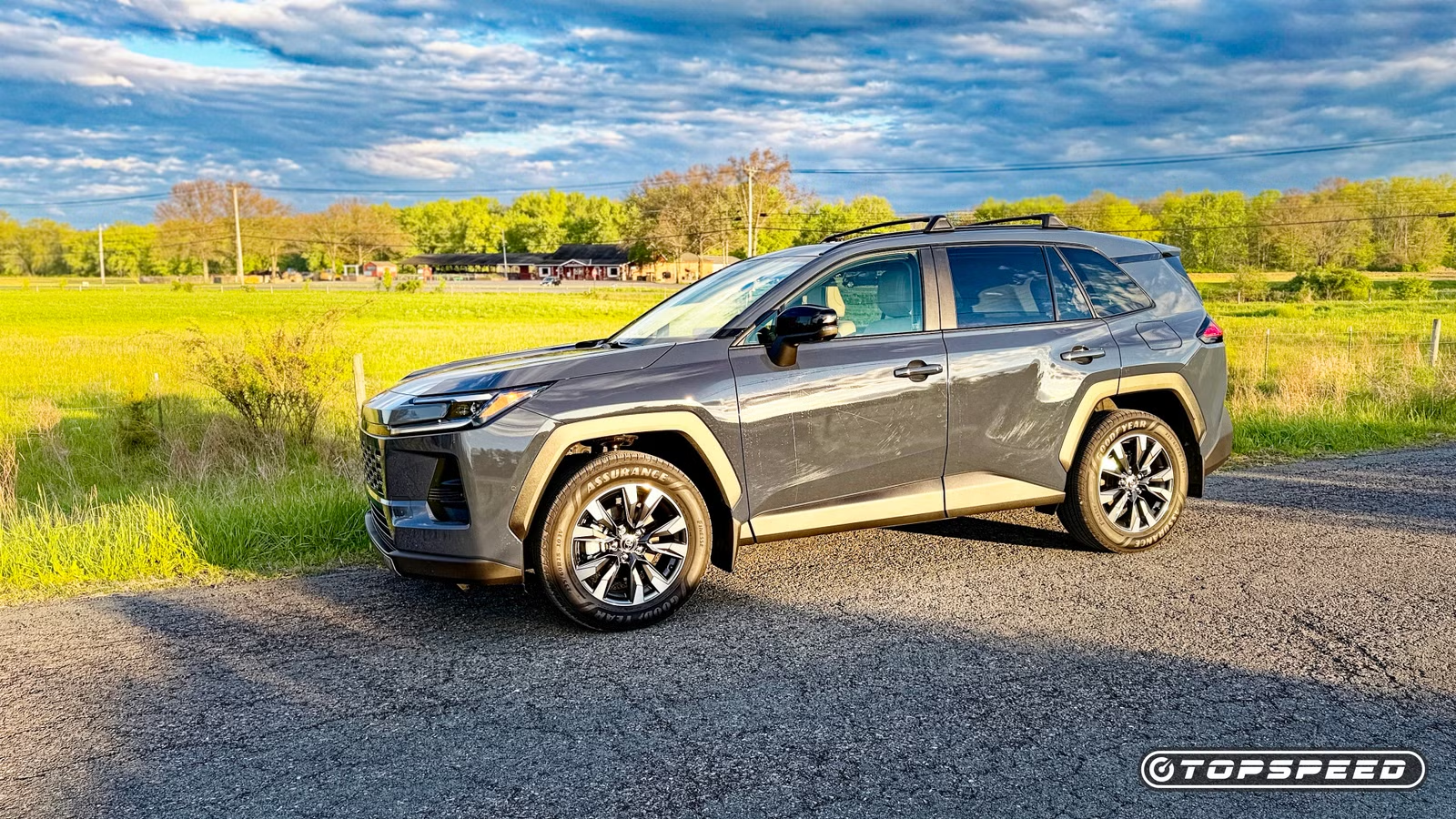
Former Tesla owners are increasingly landing in Toyota showrooms, and Edmunds has the transaction data to back it up. According to findings released this week, the RAV4 and Toyota’s broader hybrid lineup are actively pulling in buyers who previously owned a Tesla — a concrete sign that the EV-to-hybrid migration isn’t just anecdotal chatter anymore.

The timing matters. U.S. battery-electric vehicle sales dropped 24.7% in the first half of 2026, while Toyota’s hybrid models climbed to the top of the sales charts. The Edmunds data puts a buyer-behavior face on those broader numbers: people who tried full electrification are now choosing a middle path, and the RAV4 Hybrid is the vehicle they’re landing on most.
What the Edmunds Data Actually Shows
Edmunds tracks conquest and defection rates across the market — essentially, where buyers came from before purchasing their current vehicle. The data released this week identifies Toyota’s RAV4 and hybrid models as notable gainers among former Tesla owners, a segment that has historically been among the most brand-loyal in the industry.

That loyalty appears to be softening. Tesla’s second-quarter 2026 earnings call saw CEO Elon Musk pivot focus toward the Optimus humanoid robot, framing the company’s future around robotics and AI rather than cars. Whether or not that shift in messaging is influencing buyer confidence, the Edmunds data suggests some Tesla owners are already looking elsewhere — and Toyota’s hybrid lineup is where many of them are ending up.
Why the RAV4 Hybrid Makes Sense for Buyers Leaving EVs

For someone stepping back from full electrification, the RAV4 Hybrid addresses most of the friction points directly. There’s no charging infrastructure to plan around — the hybrid system recharges itself through regenerative braking and the gasoline engine, so range anxiety simply isn’t part of the ownership equation. Real-world fuel economy sits in the mid-to-upper 30s mpg, which represents a meaningful running-cost advantage over a gasoline-only SUV without requiring any behavioral changes around charging.

Reliability reputation plays a role here too. Toyota leads the American Customer Satisfaction Index for the auto industry in 2026, according to ACSI data released this month — a ranking that carries weight with buyers who may have had mixed service experiences elsewhere. The RAV4 Hybrid also holds its resale value well compared to the broader SUV segment, which matters to buyers who are thinking about their next trade-in before they’ve even signed the current deal.
The RAV4 Hybrid’s starting price positions it well below the entry point of most Tesla models, and it comes without the software-update dependency or the need to factor in home charger installation costs. For a buyer who wanted the efficiency and tech appeal of electrification but found full-EV ownership more complicated than expected, that combination is a straightforward value proposition.
What This Shift Signals Heading Into 2026 and Beyond

The RAV4 conquest numbers aren’t happening in isolation. The broader H1 2026 sales picture shows BEV demand contracting sharply while hybrid sales expand — Toyota’s hybrid wave, as one market report described it this week, is carrying the brand to the top of the U.S. sales charts. The Edmunds defection data adds a qualitative layer to that story: it’s not just that hybrids are growing in the abstract, it’s that specific buyers who already committed to EVs are reconsidering.

For SUV shoppers currently weighing their options, the practical read is straightforward. The RAV4 Hybrid offers most of what made electrification appealing — lower fuel costs, a quieter and smoother driving experience, reduced emissions compared to a conventional engine — without the infrastructure commitment that full EV ownership requires. As charging networks continue to develop unevenly across the country, that middle-ground appeal is likely to remain strong through the rest of the model year and into 2027 planning cycles.
The Edmunds data doesn’t suggest a collapse in EV demand overall, but it does indicate that the buyer pool for full electrification is more fluid than brand loyalty figures once implied. For Toyota, the RAV4 Hybrid is proving to be exactly the right product at exactly the right moment.

Related posts





Latest Post


No Comments