
This Used Hybrid Sedan Offers German Luxury With Toyota Running Costs
In a segment where luxury and affordability rarely share the same showroom floor, the Lexus ES 300h continues to make a compelling case for itself. While European rivals pile on the prestige and the price tags to match, this hybrid sedan quietly delivers a genuinely upscale experience — refined cabin, strong fuel economy, and bulletproof reliability — for a price that won’t require a second mortgage. If you’ve been eyeing the luxury hybrid market but balking at the sticker shock, the ES 300h deserves a serious look.

For less than $45,000, this Lexus model offers a luxurious design, great fuel efficiency, and a reputation for long-term reliability. It provides a solid alternative to pricier European rivals while still delivering the comfort and quality expected from a luxury sedan. Paired with top-notch efficiency and a comfortable interior, this Lexus sedan stands out as a great option for those looking to step into the world of luxury without breaking the bank.
The 2025 Lexus ES Hybrid Offers The Perfect Balance Between Luxury And Affordability
KBB Fair Purchase Price: $41,900
When new, the Lexus ES 300h came with a starting price of $44,615 in 2025. Today, KBB reports a fair purchase price of $41,900. This luxury sedan delivers a level of refinement typically found in much more expensive models. Competing luxury brands, especially those high-end brands found in Germany, consistently price their hybrid sedans significantly higher, making the Lexus a compelling option for buyers seeking affordable luxury. For context, the BMW 5 Series hybrid starts roughly $15,000 higher, while the performance-oriented BMW M5 and the luxury-focused BMW 7 Series and Porsche Panamera push near, or well into, six-figure territory.
Premium Design And High-End Features

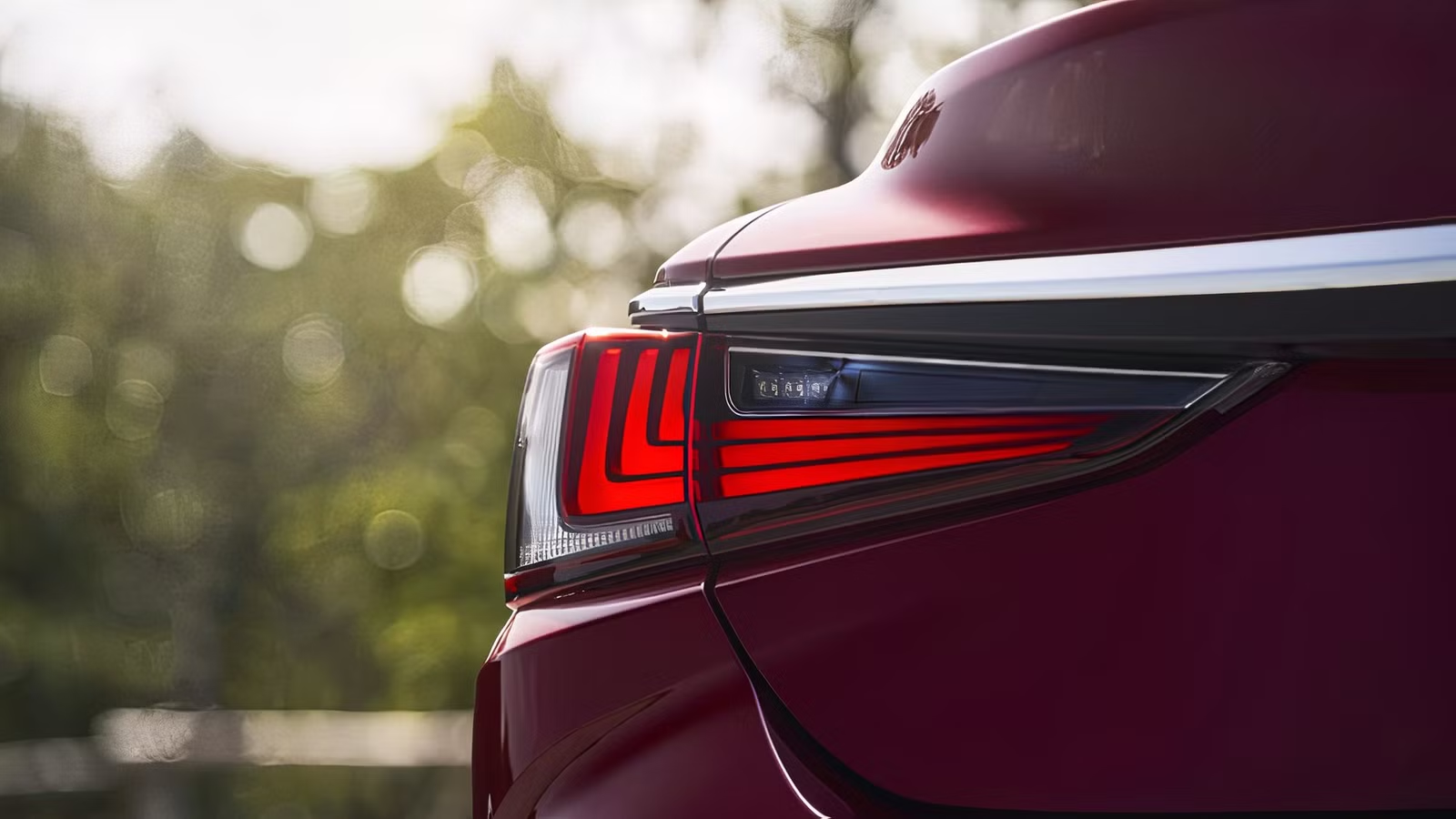
The exterior of the Lexus ES Hybrid follows the brand’s familiar design language, featuring sharp LED lighting and a prominent grille that gives it a distinct Lexus identity. The overall shape is sleek but not aggressive, leaning toward elegance over sportiness. While some rivals emphasize bold, athletic styling, the ES Hybrid takes a more traditional luxury approach.
Inside, the cabin is designed with comfort and practicality in mind. The dashboard layout is clean and functional, with high-quality materials throughout. Standard models come with synthetic leather upholstery and power-adjustable seats, while higher trims upgrade to genuine leather, wood or aluminum trim, and ambient lighting. Lexus prioritizes a hushed ride with extensive noise insulation, keeping the cabin well isolated from road and wind noise.
Spacious And Comfortable Interior With Top-Notch Tech
Both front and rear passengers have plenty of space, with generous legroom in both rows — up to 42.4 inches up front and 39.3 inches in the rear. The seats provide solid support on long drives, and the cabin comfortably accommodates up to five adults within its 97.4 cubic feet of passenger volume. The most notable drawback is that the rear seats do not fold down, limiting cargo capacity to just 13.9 cubic feet, a bit lower than many other options in its class.
As with most modern luxury vehicles, technology takes center stage in the ES 300h. A standard 8.0-inch touchscreen includes Apple CarPlay, Android Auto, and Amazon Alexa integration. A larger 12.3-inch screen is available on higher trims, offering improved visibility and functionality. Other standard features include a 10-speaker audio system, SiriusXM satellite radio, Bluetooth, and a Wi-Fi hotspot.
215 Horses On Tap

The Lexus ES Hybrid uses a 2.5-liter four-cylinder hybrid engine — the same proven powertrain found across many of Toyota’s hybrid models. This hybrid system produces a combined 215 horsepower and sends power to the front wheels; all 2025 ES Hybrid models are front-wheel drive only. Built far more for comfort, luxury, and efficiency than outright performance, the ES 300h takes 8.1 seconds to reach 60 MPH from a standstill. It will eventually top out at 112 MPH — far faster than you’ll ever realistically need.
Base Model Lexus ES Hybrid Performance Specifications
|
Engine |
2.5-liter, four-cylinder hybrid engine |
|
Horsepower |
215 HP |
|
Driveline |
FWD |
|
0-60 MPH |
8.1 Seconds |
|
Top Speed |
112 MPH |
Nearly 600 Miles On A Full Tank Of Gas
According to EPA estimates as provided by Lexus, the 2025 ES 300h has an estimated range of 581 miles on a full tank. Fuel efficiency is one of the ES 300h’s strongest suits, courtesy of Toyota’s well-developed hybrid powertrain. The EPA rates it at 43 MPG city, 44 MPG highway, and 44 MPG combined — figures that make it one of the most fuel-efficient luxury sedans in its class and add meaningfully to its overall value proposition.
Lexus ES Hybrid vs. Toyota Crown

The Toyota Crown is another hybrid sedan that offers more horsepower and standard AWD at a lower price. Its 2.5-liter turbocharged hybrid engine delivers 236 horsepower, making it quicker off the line with a 0-to-60 MPH time of 7.2 seconds. However, its combined fuel economy is a tick lower than the Lexus at 41 MPG, and its luxury features don’t quite match those found in the 2025 ES Hybrid. While the Crown provides a sportier alternative — especially with the 340-horsepower Platinum trim — the ES Hybrid focuses more on comfort, efficiency, and a polished luxury experience.
There Are Plenty Of Trims To Choose From

The ES 300h is the best value in the Lexus ES Hybrid lineup, offering a luxury experience at a price that undercuts not just its higher trims, but many competitors from other top brands. While upper trims add premium touches, the base model already arrives well-equipped with upscale materials, a whisper-quiet ride, and a fuel-efficient hybrid powertrain.
Stepping up to trims like the Luxury and Ultra Luxury brings features such as semi-aniline leather, an optional 17-speaker Mark Levinson audio system, and parking assist. For most buyers, the used ES 300h provides everything needed for a comfortable and genuinely luxurious driving experience, making it the clear choice for those who want a high-end hybrid sedan without breaking the bank.
Sources: Lexus, Toyota, EPA

Related posts



Latest Post


No Comments