
This Used Budget Plug-In Hybrid Will Make You Rethink Speed And Affordability
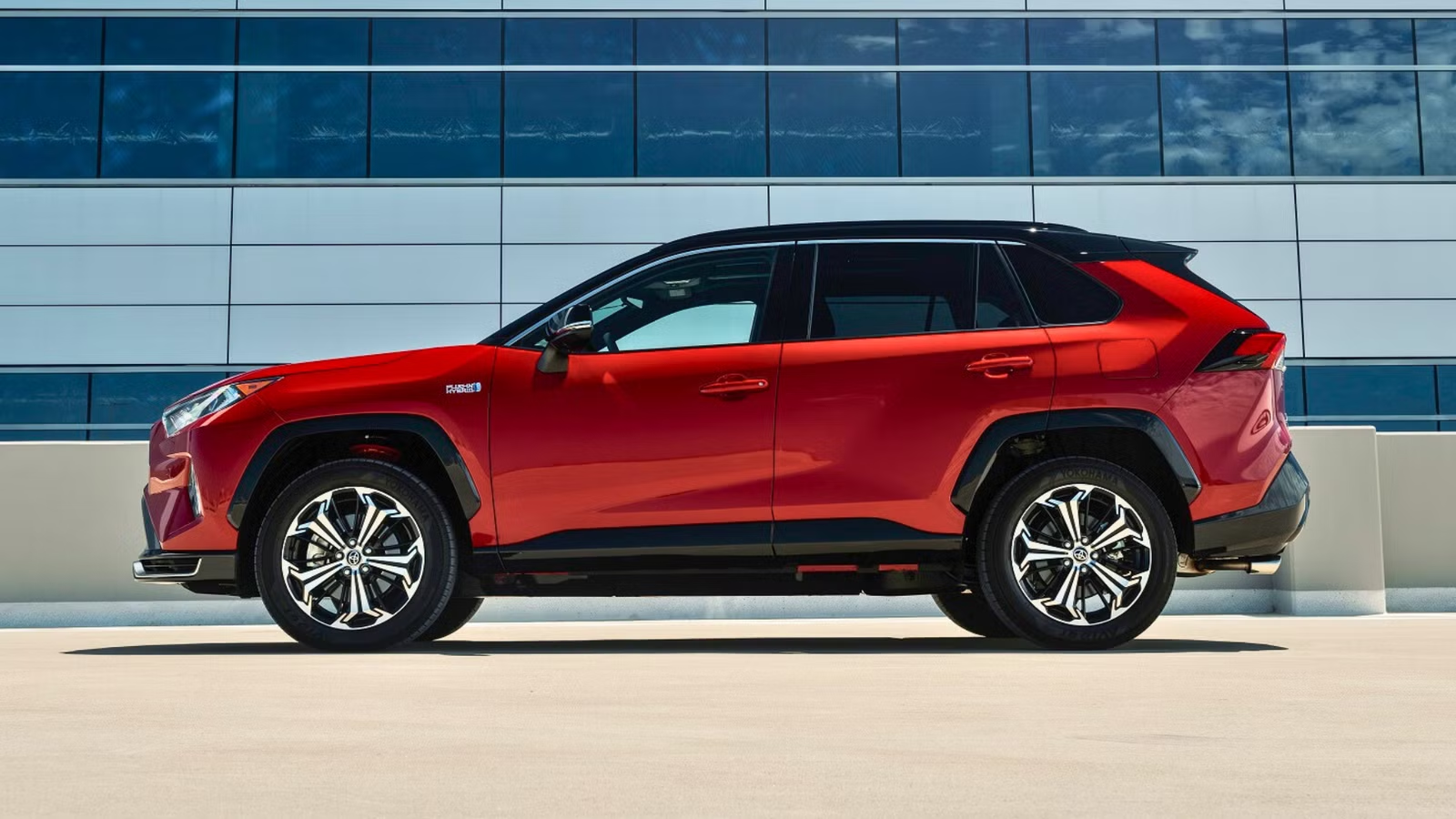
Plug-in hybrid vehicles (PHEVs) have moved well past the novelty stage — they’re now a genuinely compelling choice for families who want real-world efficiency without giving up the versatility of a traditional SUV. By pairing electric motors with a gasoline engine, a good PHEV slashes fuel costs on daily driving while keeping long-range confidence intact for road trips. The category has matured fast, and the options available today are sharper, better-equipped, and more affordable than ever.

Among those options, one model keeps rising to the top of the conversation: the Toyota RAV4 Prime. It wraps a surprisingly potent plug-in hybrid powertrain inside the familiar, family-proven RAV4 body — and the result is an SUV that quietly outperforms expectations on nearly every front. If you’ve been sleeping on it, here’s why it deserves a much closer look.
What Makes The 2024 Toyota RAV4 Prime A Sleeper
The Toyota RAV4 is many things, but exciting is hardly the word that its fans would use to describe the best-selling small SUV model. Instead, it’s best characterized by its affordability, practicality for small families, and reliability. The RAV4 is a sales hit because it’s exactly what many American families are searching for in a small SUV. On the other hand, many of its competitors offer high power outputs and provide more exhilarating driving experiences.

The RAV4 was never intended to be exciting. Consumers can upgrade the small SUV through configurations and options to make it more appealing, but it was never a performance vehicle. With its many iterations and the availability of many different packages, the RAV4 has become more refined and even more capable. Now, the Japanese automaker has also found a way to make it performance-oriented via a plug-in hybrid powertrain system.
2024 Toyota RAV4 Prime Specifications
|
Powertrain |
2.5-Liter Four-Cylinder Atkinson, Twin Permanent-Magnet Motors |
|
Horsepower (Combined) |
302 Horsepower |
|
Torque |
288 Pound-Feet |
|
Transmission |
Electronic CVT |
|
Driveline |
All-Wheel Drive |
|
Battery |
18.1 kWh |
|
Range |
600 Miles (42 Miles Electric-Only) |
|
Fuel Economy (combined) |
38 MPG |
|
kWh/100 Miles |
36kWh/100 Miles |
|
0-60 MPH |
5.7 Seconds |
|
Top Speed |
124 MPH |
|
Towing Capacity |
2,500 Pounds |
|
Payload Capacity |
1,230-1,295 Pounds |
|
Starting Price |
$43,690 |
The RAV4 Prime earns its sleeper status by hiding sports-car performance specs beneath the exterior of a perfectly ordinary small SUV. It is the second-quickest Toyota in the brand’s lineup, trailing only the Toyota Supra — two vehicles that couldn’t look more different, yet both deliver genuinely exciting driving dynamics. Unlike the Supra, the RAV4 Prime doesn’t telegraph its performance. Its two electric motors give the small SUV enough thrust to embarrass many rivals, and the combined output represents a gain of 99 horsepower over the standard internal combustion engine RAV4.
Why The Toyota RAV4 Prime Is Seriously Underrated
When you think of exciting SUVs, the RAV4 is hardly the first thing that comes to mind for most drivers. The RAV4 isn’t as adventure-ready as the Ford Bronco or as luxurious as the Genesis GV70. It isn’t as quick as a Porsche Macan or as durable as a Land Rover Defender. The Toyota RAV4 is a best-selling SUV in America because it’s affordable to refuel, reliable enough for families, and has a low starting price compared to many rivals. The RAV4 Prime is seriously underrated largely because of its close visual resemblance to the standard internal combustion engine model.
Though the RAV4 Prime shares a very similar body style with the regular RAV4, it has an entirely different heart and soul — one that makes the plug-in hybrid genuinely unique. Many consumers simply expect standard RAV4 performance and overlook the Prime’s substantial electric-only driving range. The RAV4 Prime’s ability to travel for 42 miles on just electricity makes it incredibly efficient. That electric-only capability could save drivers hundreds of dollars a year in fuel costs. Many of the RAV4 Prime’s best attributes remain unknown to buyers who aren’t deep into the automotive world, which means they risk missing out on the most exciting version of Toyota’s small SUV yet.
The 2024 Toyota RAV4 Prime Can Be Had For Less Than $40,000 Today

Depreciation can make vehicles much more affordable over time, and the RAV4 Prime is no exception. The 2024 Toyota RAV4 Prime started at $43,690. It was available in a base SE configuration and an XSE trim. The XSE includes more advanced technology and additional creature comforts. According to Kelley Blue Book, the fair purchase price of the base SE trim is $38,000, whereas the XSE is $40,500. It may seem expensive for a RAV4, but its plug-in hybrid powertrain fundamentally changes the vehicle’s value proposition.

Used examples of the earlier model years can be found at significantly discounted prices depending on mileage and condition. According to KBB, a used 2021 Toyota RAV4 Prime with under 51,000 miles carries a fair purchase price in the low-to-mid $30,000 range — well below its original MSRP of $38,350. The 2021 model has shed depreciated around 13-percent of its original value in just a few years, so buying used can represent excellent value for drivers looking to save thousands on a RAV4 Prime.
No Dearth Of Features
A plug-in hybrid powertrain is just part of the RAV4 Prime’s appeal. The 2024 model arrives loaded with strong standard features, and the XSE trim adds a long list of premium upgrades. The RAV4 Prime is easily the most technologically advanced version of the small SUV available.
Toyota has also paid particular attention to refinement, giving the RAV4 Prime a more upscale feel that you simply won’t find in a standard RAV4. So, what comes standard, and what are the best features the optional configuration adds?
Toyota RAV4 Prime Standard Features
- Electronic on-demand all-wheel drive.
- Roof rails.
- Height-adjustable power liftgate.
- Front door handles with touch-sensor lock/unlock.
- Heated power outside mirrors with turn signal and blind spot warning indicators.
- Leather-trimmed steering wheel.
- Blind spot monitor with rear cross-traffic alert.
- Lane departure alert.
- Lane tracing assist.
- Backup camera with dynamic gridlines.
The RAV4 Prime’s standard safety and driver assistance suite is genuinely comprehensive. These features make the plug-in hybrid SUV safer for its occupants and easier to manage in everyday traffic. Creature comforts like the leather-trimmed steering wheel add a premium touch even at the base SE level, though some of the most desirable features are reserved for the XSE.

Toyota RAV4 Prime Optional Features
- Power tilt/slide moonroof with one-touch open/close.
- 12.3-inch digital gauge cluster.
- Leather-trimmed steering wheel with paddle shifters.
- Wireless smartphone charging.
- SofTex-trimmed seats.
- 11-speaker JBL premium audio sound system.
- Anti-theft system with alarm and engine immobilizer.
The RAV4 Prime XSE is an easy choice for drivers who want the best version of this plug-in hybrid family SUV. Paddle shifters sharpen the driving experience, while SofTex-trimmed seats elevate the cabin’s feel. Wireless smartphone charging and an 11-speaker JBL sound system round out a package that leaves very little on the table. While the SE delivers solid value, the XSE’s feature set is genuinely hard to walk away from.
Safety Features And Ratings

Safety Features
The Toyota RAV4 Prime comes equipped with an impressive array of safety technologies, anchored by Toyota Safety Sense 2.5+, which includes key features such as:
- Pre-Collision System with Pedestrian Detection: Helps detect pedestrians and vehicles, providing automatic braking assistance.
- Dynamic Radar Cruise Control: Maintains a safe following distance by automatically adjusting speed to match traffic ahead.
- Lane Departure Alert with Steering Assist: Warns if the vehicle unintentionally drifts out of its lane and can provide corrective steering assistance.
- Road Sign Assist: Detects and displays road signs on the dashboard for added convenience and awareness.
In addition to these, the RAV4 Prime includes essential safety features like:
- Blind Spot Monitor (BSM): Alerts drivers to vehicles in their blind spots.
- Backup Camera: Provides a clear view of what’s behind the vehicle when reversing.
- Emergency SOS System: Automatically contacts emergency services in the event of a collision.
- Advanced Airbag System: Offers multiple airbags throughout the cabin for enhanced occupant protection.

Safety Ratings
The RAV4 Prime has performed admirably in safety tests conducted by the National Highway Traffic Safety Administration (NHTSA), earning strong ratings across multiple categories:
- NHTSA Overall Frontal Star Rating: 4 stars
- Overall Side Star Rating: 5 stars
- Rollover Resistance Star Rating: 4 stars
- NHTSA Overall Safety Rating: 5 stars
The RAV4 Prime also meets all performance criteria for advanced safety assist systems. These include:
- Forward Collision Warning: Detects potential frontal collisions and alerts the driver.
- Lane Departure Warning: Warns if the vehicle drifts out of its lane.
- Crash Imminent Braking: Automatically applies the brakes to prevent or mitigate a collision.
- Dynamic Brake Support: Provides additional braking force if necessary to avoid a crash.
Backed by Toyota’s trusted reputation for safety and quality, the RAV4 Prime is engineered to deliver both peace of mind and real-world performance — a combination that reinforces its standing as a reliable and well-engineered vehicle.
How The 2024 Toyota RAV4 Prime Fares Overall

Toyota’s small plug-in hybrid SUV may seem like a great deal, but there’s a reason it hasn’t yet cracked the best-seller charts. There are real trade-offs to choosing a RAV4 Prime over a standard internal combustion engine or hybrid RAV4. Here’s a quick look at the pros and cons.
Pros
- Electric-only driving range.
- 302 horsepower.
- Plenty of standard features.
- Quick acceleration.
Cons
- High starting price compared to gas and hybrid RAV4 models.
- It needs to be charged to get the full benefits of the powertrain.
- The best features are reserved for the final configuration.
- Handling could be better for a performance-oriented vehicle.
The RAV4 Prime may be one of the most exciting SUVs in Toyota’s lineup, but it isn’t perfect. Its higher starting price will deter some buyers, and the need to charge regularly to maximize efficiency adds a layer of commitment that not every driver is ready for. Is the 2024 Toyota RAV4 Prime worth the premium to you, or does a gas or hybrid RAV4 make more sense for your situation?
How The RAV4 Prime Stacks Up Against Its Rivals

Toyota has long been a leader in the hybrid market, and the RAV4 Prime exemplifies its commitment to innovation and reliability. With 302 horsepower and an electric-only range of 42 miles, it delivers an impressive blend of performance and efficiency that few rivals in the segment can match. Add a spacious interior, a thorough safety suite, and Toyota’s well-earned reputation for long-term dependability, and the RAV4 Prime makes a compelling case as the benchmark plug-in hybrid SUV.
RAV4 Prime vs. Hyundai Tucson PHEV vs. Ford Escape PHEV Specifications
|
2024 Toyota RAV4 Prime |
2024 Hyundai Tuscon PHEV |
2024 Ford Escape PHEV |
|
|
Powertrain |
2.5-Liter Four-Cylinder Atkinson, Twin Permanent-Magnet Motors |
1.6-liter Turbocharged Four-cylinder, Single Electric Motor |
2.5-liter 4-cylinder engine paired with an electric motor |
|
Horsepower (Combined) |
302 Horsepower |
261 Horsepower |
210 Horsepower |
|
Torque |
288 Pound-Feet |
258 Pound-Feet |
155 Pound-Feet |
|
Transmission |
Electronic CVT |
6-Speed Automatic |
Continuously variable transmission |
|
Driveline |
All-Wheel Drive |
All-wheel Drive |
Front-wheel Drive |
|
Range |
600 miles (42 Miles Electric-Only) |
420 miles (33 miles Electric-Only) |
520 miles (37 Miles Electric-only) |
|
Fuel Economy (combined) |
38 MPG |
35 MPG |
40 MPG |
|
0-60 MPH |
5.7 Seconds |
8.2 seconds |
N/A |
|
Top Speed |
124 MPH |
116 MPH |
N/A |
|
Starting MSRP |
$43,690 |
$38,725 |
$40,500 |
When comparing the RAV4 Prime to rivals like the Hyundai Tucson PHEV and Ford Escape PHEV, its strengths become even more apparent. The Tucson offers a competitive electric range and the Escape carries an accessible price point, but neither can match the Toyota’s class-leading power output and EV capability. For drivers who want the best balance of performance, practicality, and proven reliability, the RAV4 Prime clearly stands out in this competitive segment.
Sources: Toyota, EPA

Related posts





Latest Post


No Comments