
This Underrated Cruiser Is The Harley-Davidson Alternative Everyone Keeps Ignoring
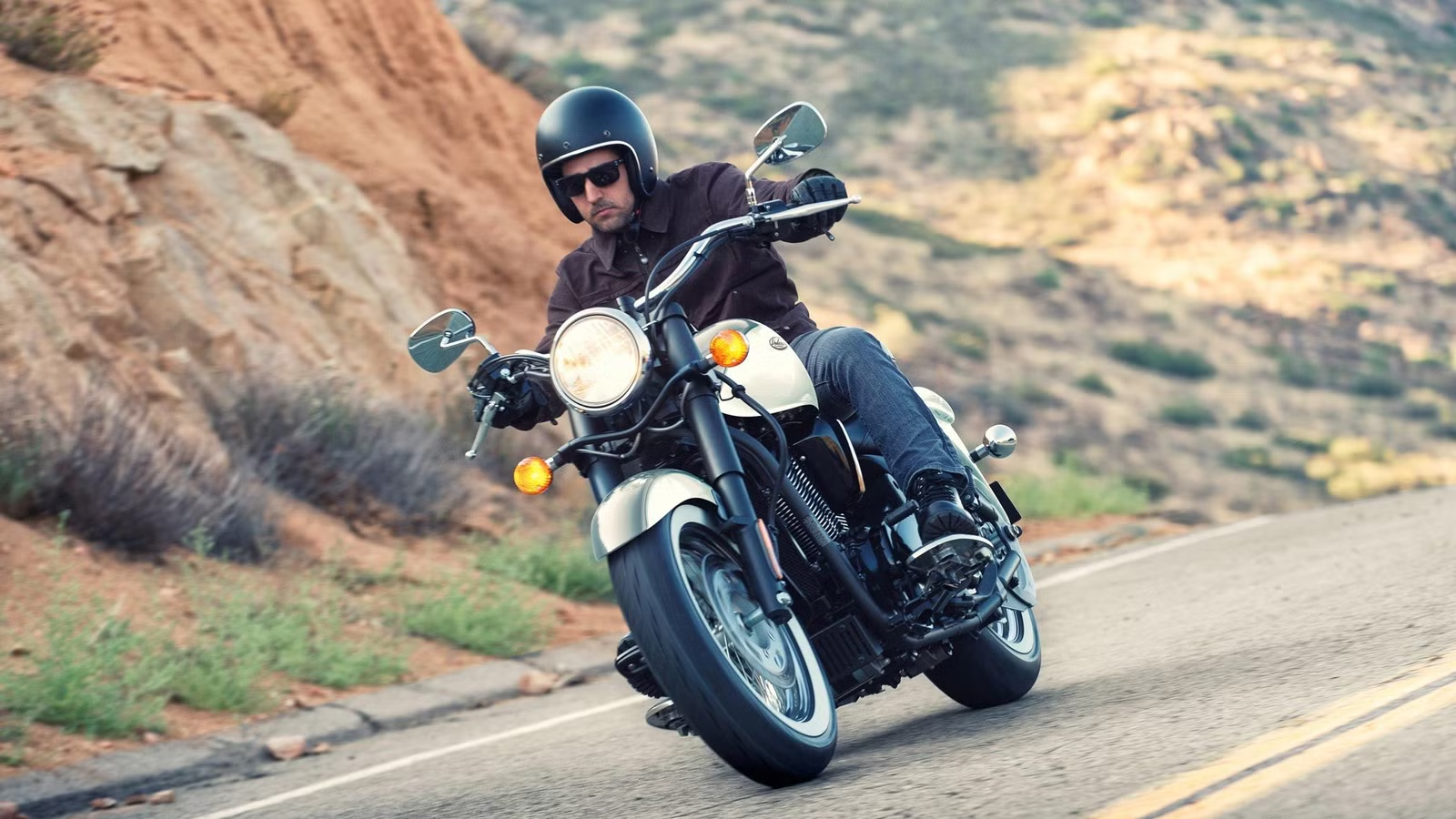
When it comes to cruiser motorcycles, Harley-Davidson has certainly cornered the market with its century-plus heritage, and big-bore V-twin thumps. That is why buyers are drawn to the brand and often end up narrowing down their search long before they ever step foot in a dealership. As a result, a lot of excellent machines get passed over entirely. Among those overlooked options, one metric cruiser makes a good case for being a smart alternative to the usual American suspects.
Why Modern Riders Are Looking Beyond Harley-Davidson

Harley-Davidson still commands respect, but modern riders want more than a famous badge. A great cruiser should fit your budget, start every morning, and feel comfortable commuting or cruising on weekends. Reliability, everyday usability, and maintenance costs now matter just as much as character. After all, the open road doesn’t care what logo is on your tank.
The Kawasaki Vulcan 900 Is The Cruiser Harley Buyers Often Overlook

Kawasaki first introduced the original Vulcan 700 in 1985, it used the brand’s first liquid-cooled V-twin engine on a cruiser. Over four decades of evolution, today, the Vulcan family spans from the urban sport cruiser Vulcan S 650 and goes all the way to touring models of the Vulcan 1700 series (the Vaquero and Voyager). Sitting in the middle ground is the Vulcan 900 platform, available in three distinct variants. Between Custom trim and Classic LT, the base Classic trim offers more of a traditional American cruiser formula with minimalist styling.
Built Around Classic Cruiser Fundamentals


That American-style formula traces back to the Vulcan 800, launched in 1995 and eventually replaced by the 900 series in 2006. Designed to directly challenge Harley’s Softail dominance, it featured Kawasaki’s Uni-Trak rear suspension system, hiding the rear shock out of sight to deliver that iconic sleek, hardtail rear profile. Moreover, a low-slung profile, wide handlebars, and a relaxed seating position round out the familiar cruiser silhouette.
More Affordable Than Many American Rivals

Starting at $9,599, the Vulcan 900 Classic’s price is arguably one of its biggest strengths. For reference, Harley’s entry-level cruiser Nightster starts at $9,999, while the cheapest Softail model, the Street Bob, sits at $14,999. That’s a gap of $400 and a massive $5,400. It is a similar story for Indian motorcycles, with the cheapest Scout starting at $9,999. As a result, you can’t miss the compelling value proposition with Kawasaki, delivering a full-size V-twin cruiser at a lower price.
Bulletproof Torque-Rich V-Twin Built For Real-World Riding

Coming to performance, unlike the biggest production V-twin from Kawasaki, the Vulcan 900 brings a battle-tested platform, perfected over nearly two decades. Its 903-cc liquid-cooled 55-degree V-twin uses an 88 mm bore and 74.2 mm stroke alongside an under-stressed 9.5:1 compression ratio, designed around real-world usability rather than top-end performance. Moreover, fuel injection with dual 34mm throttle bodies and sub-throttle valves ensures throttle response is crisp across the rev range.
Smooth Power Delivery For Highway And City

On paper, output stands at 51 horsepower at 5,500 rpm and a healthy 58.3 pound-feet of torque at just 3,500 rpm. Sure, those numbers might seem modest in comparison to larger V-twins. But its accessible low-end pull and smooth power delivery ensure usable performance. Meanwhile, a five-speed transmission paired with a low-maintenance Kevlar-reinforced belt final drive rounds out the drivetrain, delivering renowned long-term reliability that outlasts the owners.
Planted Stance and Cruiser Comfort Without Premium Tag

Along with a torquey V-twin, comfort in the saddle is also equally important. Therefore, Kawasaki built the Vulcan 900 around a double-cradle frame with a stretched-out 64.8 inches of wheelbase, giving it a total length of 97 inches and 619.6 pounds wet weight, providing a planted feel on highways. Meanwhile, a low 26.8-inch seat height allows you to flat-foot at stops, and forward-set controls give you a natural, easygoing riding posture.
Underpinnings Tuned For Everyday Cruising

Durable underpinnings support a relaxed experience. Upfront, a 41 mm Showa telescopic fork and a Uni-Trak monoshock linkage-type rear suspension hidden under the seat sets the tone. In addition, the rear gets seven-step preload adjustment, and the suspension travel available is 5.9 inches at the front and 4.1 inches at the rear. Likewise, braking comes from a single 300mm front disc and a single 270mm rear disc, delivering enough stopping power without complexity.
Why The Vulcan 900 Classic Deserves More Attention

The Vulcan 900 Classic checks an impressive number of boxes, making it a well-balanced cruiser that demands your attention. For starters, you get a more comfortable cockpit out of the box, complete with standard rider floorboards, a heel-toe shifter, and a thick, wide bucket seat that cradles your lower back. Better yet, visual appeal and durability further sweeten the pot.
Classic American Styling and Details

In the looks department, the 900 Classic nails the old-school vibe with acres of chrome. Its swept steel fenders front and rear, chrome spoked wheels, a wide 180 mm rear wheel and dual parallel chrome exhaust pipes complete the visual drama. Also, a 5.3-gallon teardrop fuel tank comes with an integrated chrome instrument console with a large analog speedometer and center LCD screen. In addition, along with comprehensive factory accessories, you also have access to aftermarket options.
Backed By Japanese Dependability

Ultimately, perhaps the biggest selling point of the Vulcan 900 over Harley is its backing of twenty years of proven Japanese engineering dependability. Also, combined with simple maintenance requirements, you can easily expect low drama and low-cost ownership. Put everything together, and the Vulcan 900 Classic comes across as far more than just a budget alternative to a Harley that often goes unnoticed.
Sources: Kawasaki Motorcycles

Related posts
Latest Post


No Comments