
This Rare Pontiac Is The Most Underrated Muscle Car Of The ’80s
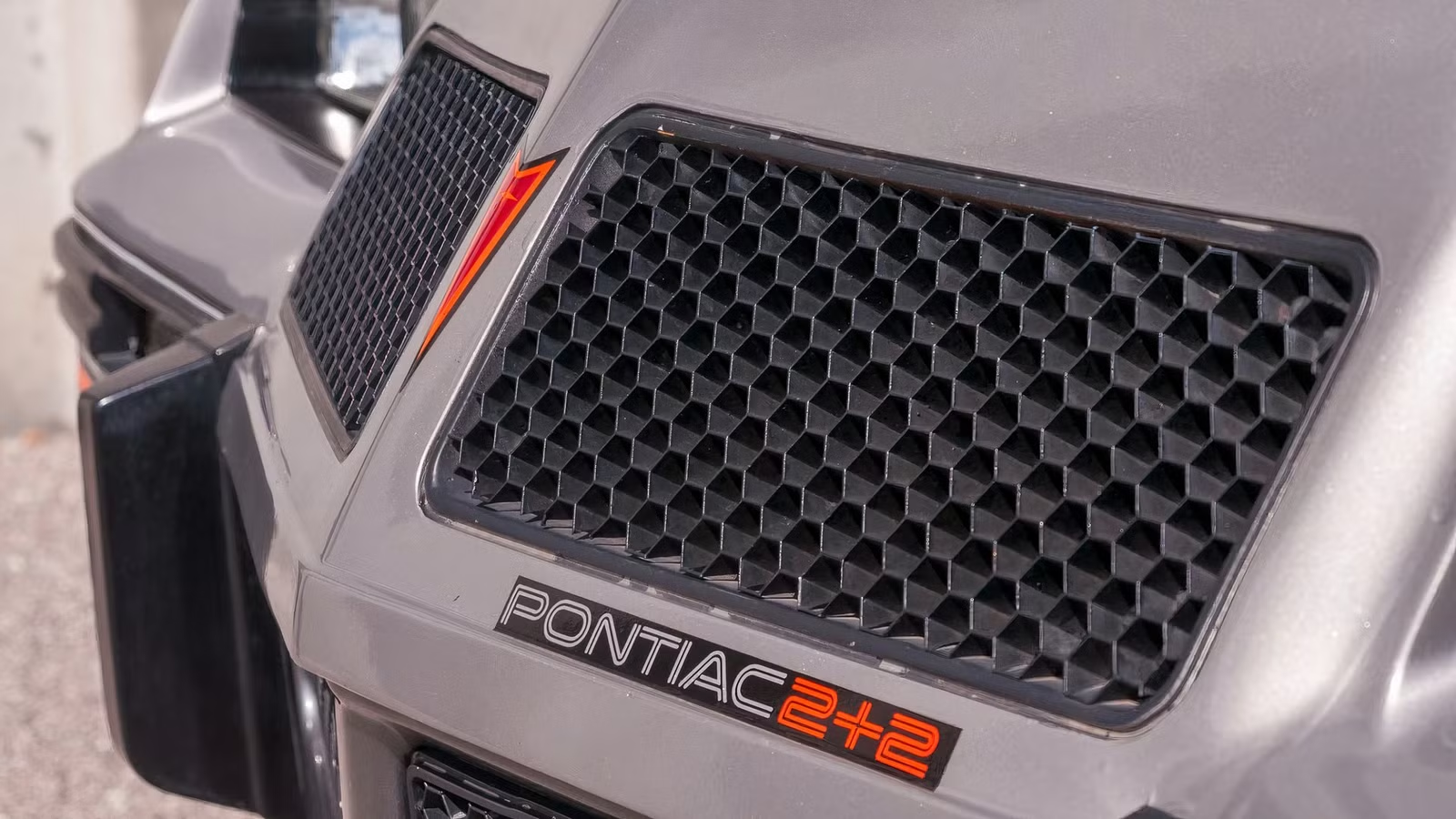
Homologation specials occupy a fascinating corner of automotive history. Built to satisfy racing rulebooks rather than showroom demand, they carry genuine motorsport DNA in a road-legal package — and collectors have long known it. Because of their ties to motorsports history, homologation specials typically command a premium over your run-of-the-mill production vehicle. And it’s often for good reason — after all, these kinds of models present unique opportunities to experience race-proven technology in a road-going car. Beyond their purebred engineering, they often come with flashy appearance packages, bright liveries, and special badging indicative of their significance.

The ’80s wasn’t a great era for muscle cars, with perhaps only the Buick GNX qualifying to be called one based on its performance alone (and that thing had a V6). However, one Pontiac muscle car from the ’80s remains criminally underappreciated — even despite its NASCAR-honed design. Granted, the car’s performance wasn’t groundbreaking; it would still be some time before the industry had fully recovered from the effects of the malaise era. However, this particular Pontiac was about more than raw power. What truly set it apart was its innovation and its adaptation in the face of corporate restraint. It emerged as a direct response to aerodynamic deficits, providing a cost-effective solution to GM’s G-body platform drag problems.
The Grand Prix 2+2 Is The Most Underrated Muscle Car Of The 1980s
While the 1970s made for a marked reduction in overall muscle car output, the onset of the 1980s meant that some manufacturers could start working to reclaim the performance they were known for. Pontiac put out a number of hits in the Firebird and the Trans Am during this time, but many enthusiasts tend to forget about the 1986 Grand Prix 2+2. And it’s a shame, because in being among the more overlooked options of the era, the Aerocoupe is, in our estimation, one of the most underrated muscle cars of the 1980s.

After all, Pontiac developed the Grand Prix 2+2 for the express purpose of improving its NASCAR efforts, and GM only sold the car to the public to comply with series rules. It was produced for just one model year, making it rarer than other muscle cars of the time, like the IROC-Z, the Charger, and the Mustang GT. And even though it didn’t come with the High Output engine of the Monte Carlo SS Aerocoupe, it proved a more aerodynamically efficient car through the wind.
The Grand Prix 2+2 Was Born Out Of Need For A NASCAR Competitor
Back in the late 1960s and early 1970s, Ford and Chrysler were busy battling it out in the aero wars, releasing slippery NASCAR competitors in the Torino Talladega and the Charger Daytona/Superbird. At the time, General Motors wasn’t officially involved in racing, so it continued to design its vehicles without consideration for things like drag and aerodynamic performance.
That all changed during the 1980s. Thanks to the flowing lines of the redesigned Thunderbird coupe, Ford demonstrated a clear aerodynamic advantage over GM’s boxy G-bodies on the NASCAR circuit. While the Monte Carlo and the Grand Prix had been restyled back in 1978, they were all but sails compared to the ‘Aerobird’. Still, because General Motors wouldn’t sign off on an entirely new design, Chevrolet and Pontiac put their heads together to engineer a solution. What resulted was a glass bubble — the Aerocoupe — that effectively transformed the notchback roofline into a hatchback-style fastback.
A Rarer Twin To Chevrolet’s Monte Carlo SS
Chevrolet and Pontiac both introduced their Aerocoupe designs for the 1986 model year, with the former building some 200 Monte Carlos and the latter building 1,225 Grand Prix 2+2s. The Monte Carlo SS would live on for the 1987 model year as well — resulting in an additional 6,052 examples — meaning the Pontiac is a far rarer sight on the road today. Even so, as you’ll see once we get into pricing, the Chevy typically commands higher sums. The Grand Prix 2+2 is comparatively underappreciated, making it an attainable head-turning collectible.
Pontiac’s Aerocoupe Put NASCAR Tech On The Road
1986 Pontiac Grand Prix 2+2 Specs
|
Engine |
LG4 V8 |
|
Displacement |
305 Cubic-Inches |
|
Output |
165 Horsepower |
|
Torque |
245 LB-FT |
|
0-60 MPH |
10.2 Seconds |
Hemmings
The 1986 Grand Prix isn’t exactly ‘muscled’ compared to cars from the golden era. When mated to a four-speed 200-4R automatic transmission, the 305-cubic-inch LG4 V8 produced 165 horsepower and 245 lb-ft of torque. The High Output V8 of the Monte Carlo SS would have added an extra 15 ponies, but at the cost of nearly 20 lb-ft of torque. Either way, both cars are severely underpowered by modern standards — one owner reported running a 16.10-second quarter mile in the Monte Carlo SS and a 17.7 in the Grand Prix.
Regardless, this is one muscle car that proves power isn’t everything. The aerodynamic gains from the revised rear window yielded a significantly improved drag coefficient — dropping from 0.453 down to 0.368 — and added five miles per hour to the car’s top speed. On the oval, the slipperier shape was also more stable through the turns. It wasn’t enough to shake Ford’s NASCAR dominance entirely, but it did ensure that Chevrolet spent much more time on the podium.
Grand Prix 2+2 Standard Equipment
- G80 limited-slip rear axle
- FE2 ride and handling package
- N83 15 x 7-inch Rally II wheels
Beyond its revised styling, the Grand Prix Aerocoupe boasted the upgrades listed above. It also came fitted with a range of factory options including power door locks, electronic cruise control, and air conditioning.
How Much An Aerocoupe Will Cost You Today
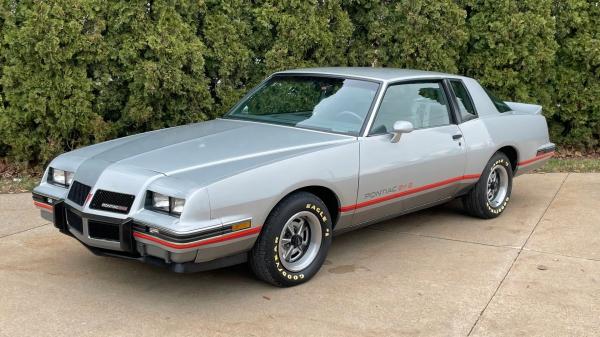
By all accounts, Chevrolet proved far more committed to the Aerocoupe concept than Pontiac when these cars were on the market. The Monte Carlo SS came in four colors compared to the Grand Prix’s sole livery, and Chevrolet produced an additional 6,052 cars after fulfilling NASCAR’s minimum requirement of 200. Moreover, even though the Grand Prix didn’t come with the H.O. engine, Pontiac priced the car roughly $2,000 more than the Monte Carlo and constructed the rear parcel shelves from fiberglass on account of the model’s short production run. And while an estimated 1,225 Grand Prix Aerocoupes were slated for production in 1986, it’s rumored that Pontiac ran out of parts — meaning the final few cars did not receive the distinctive bubbled back glass.
A Comparison Of Classic.com Grand Prix And Monte Carlo Aerocoupe Sales
|
Classic.Com Sale |
1986 Grand Prix 2+2 Aerocoupe |
1986 Monte Carlo SS Aerocoupe |
1987 Monte Carlo SS Aerocope |
|
Last Sale |
$30,000 |
$48,000 |
$33,000 |
|
Average Model Sale |
$16,960 |
$21,204 |
$21,990 |
|
Lowest Sale |
$6,500 |
$16,500 |
$10,000 |
Still, a look at past sales confirms that Chevrolet’s Monte Carlo SS makes for the more expensive Aerocoupe. Given how limited the run was, it makes sense that one of the 200 original 1986 models would sell for a premium. But even accounting for the higher production numbers, the last 1987 Monte Carlo to sell also cleared roughly $3,000 more than the most recent Grand Prix sale. At the lower end of the market, it’s no contest: with the Pontiac having sold for as little as $6,500 and the lowest-priced Monte Carlo examples fetching $10,000 to $16,500, the 2+2 Aerocoupe has real potential as a bargain buy.
Chevrolet’s Monte Carlo SS: Another ’80s Aerocoupe
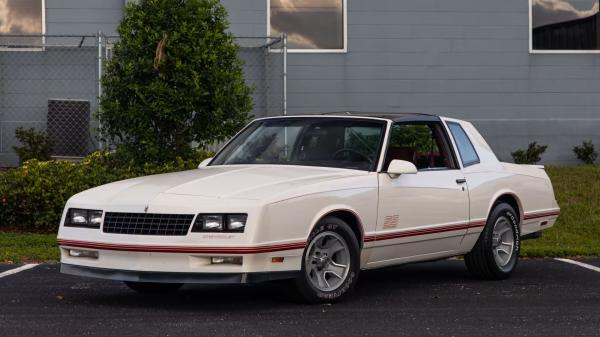
If you’re not sold on Pontiac’s Aerocoupe, Chevrolet’s Monte Carlo SS of the same vintage is well worth a look. Because total production runs to roughly five times that of the Grand Prix, examples come up for sale more frequently — and when bidding is soft, deals can be had. Hagerty couldn’t compile an estimate for the Pontiac due to the scarcity of auction data; however, it values the Monte Carlo SS Aerocoupe at $23,800 in ‘Good’ condition and a fixer-upper at $12,200.
1986-1987 Monte Carlo SS Aerocoupe Hagerty Values
|
Hagerty Valuation |
Price |
|
|
‘Fair’ |
$12,200 |
|
|
‘Good’ |
$23,800 |
|
|
‘Excellent’ |
$32,000 |
|
|
‘Councours’ |
$46,300 |
|
And besides, beyond the more powerful engine, Chevy’s Aerocoupe brings a few different things to the table. The glass wasn’t as dramatic in its size or its angle — making the trunk more usable day-to-day — and the car shared many styling touches with the standard 80s Monte Carlo SS.
Other Reasons You May Want Chevy’s Aerocoupe
- Chevrolet offered the car in four colors: Black, White, Burgundy, and Silver
- The SS included the F41 Sports Suspension package
- The Monte Carlo Aero Coupe racked up 18 wins during its NASCAR career
Sources: Classic.com, Driving Line, Hagerty, MotorTrend, Mac’s Motor City Garage

Related posts


Latest Post


No Comments